Find us at booth #83, join us for a harbor side happy hour, or catch Gorish’s talk.

Sept, 16-18 > Learn more


Tamanna Mishra

March 18, 2026
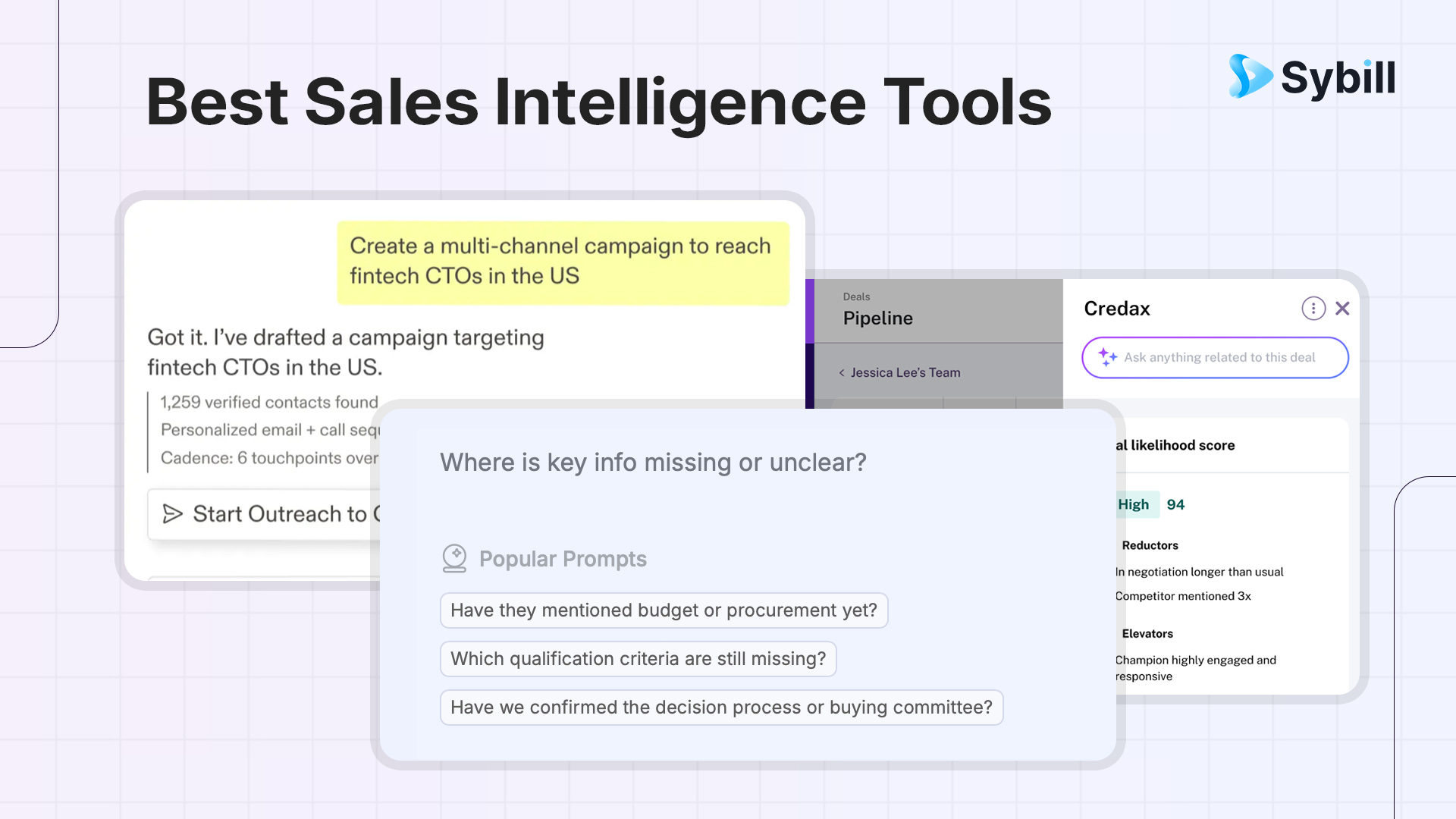
Modern sales teams are drowning in information.
Reps have:
CRM data
Call recordings
Email threads
Slack updates
Meeting notes
And yet the same questions keep showing up in pipeline reviews:
Who should I prioritize today?
Why is this deal actually stuck?
What objection killed the last ten deals?
This is the difference between sales data and sales intelligence.
Data tells you what happened.
Sales intelligence explains why it happened and what to do next.
That is why modern teams rely on sales intelligence tools.
Instead of leaving reps to stitch signals together manually, modern sales intelligence software analyzes sales activity and surfaces actionable insight. The best platforms help teams understand:
The demand for these capabilities is growing fast as revenue teams invest heavily in insight-driven selling.
Not every sales intelligence platform is designed for modern AI-driven sales execution.
Many tools still focus on only one slice of the intelligence puzzle.
Some tools focus on contact databases.
Some focus on call recording and transcription.
Some surface intent signals from marketing data.
Very few connect deal intelligence, buyer signals, and coaching insights in one place.
That gap is exactly why so many revenue teams are reevaluating their stack.
In this guide, we break down:
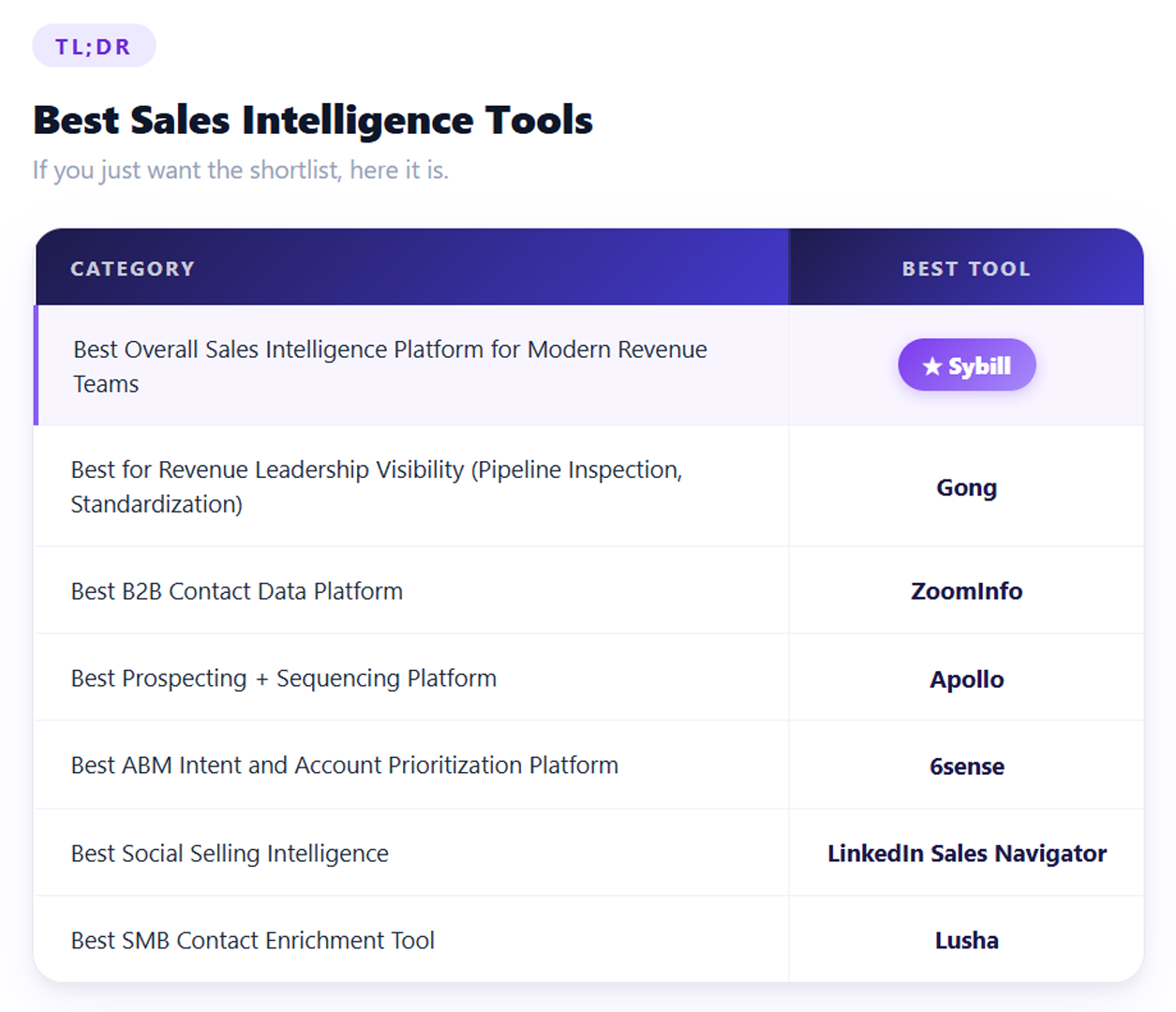
Most “sales intelligence tools” only solve one layer of the problem.
Modern AI tools - like Sybill - stand out because it connects the layers into execution. You do not just see what happened. You see what to do next. And sometimes, you don’t even have to do it! The AI handles it for you.
Also read: Best AI sales intelligence tools in 2026
Below is a practical sales intelligence tools comparison of the platforms modern B2B teams actually use. It is a “what will move pipeline this quarter” comparison for modern sales teams that know what they really want.
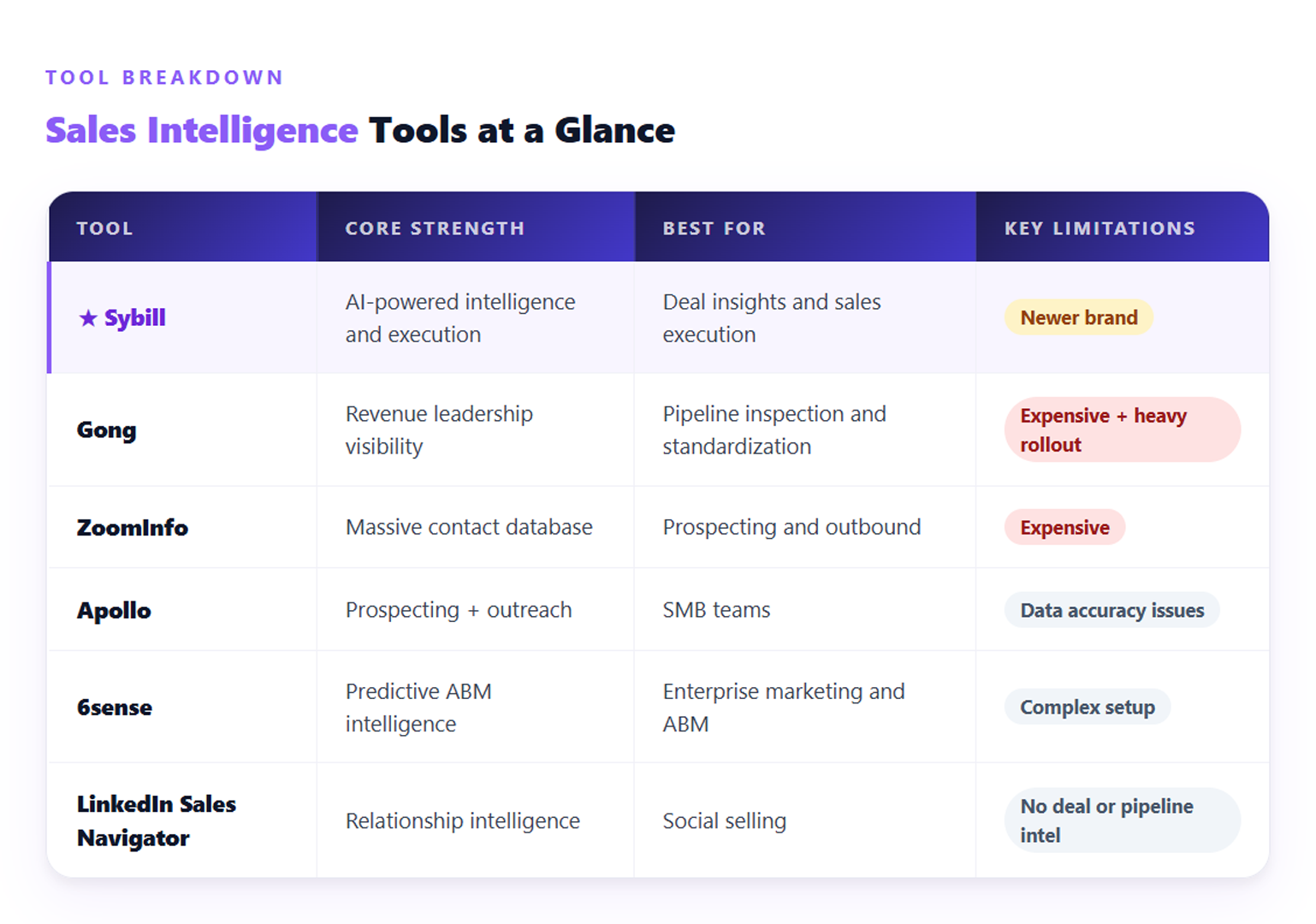
Let’s break down how each tool actually performs.
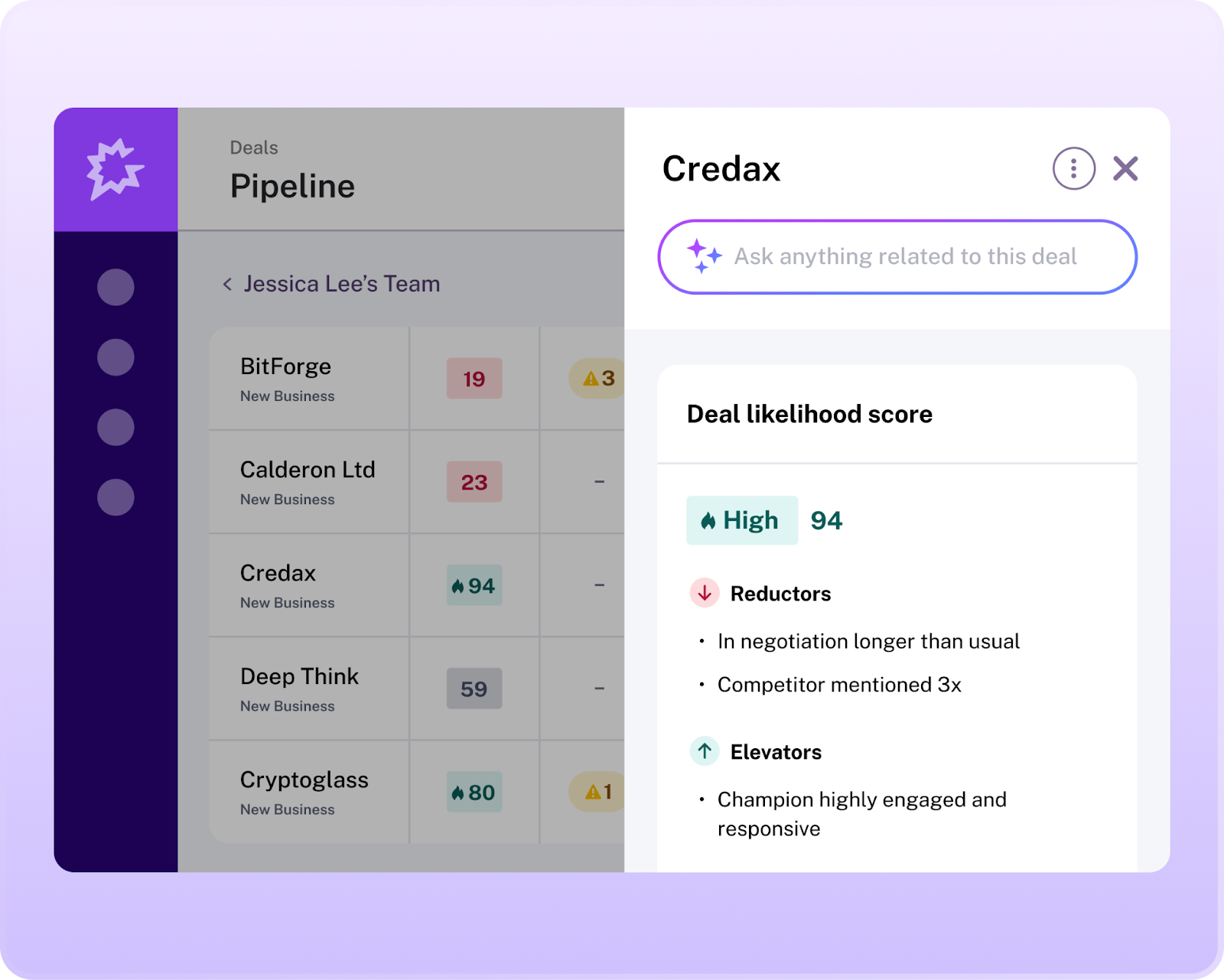
Most tools analyze data about prospects. Sybill analyzes actual sales conversations and buyer behavior, then turns that into actions reps can execute.
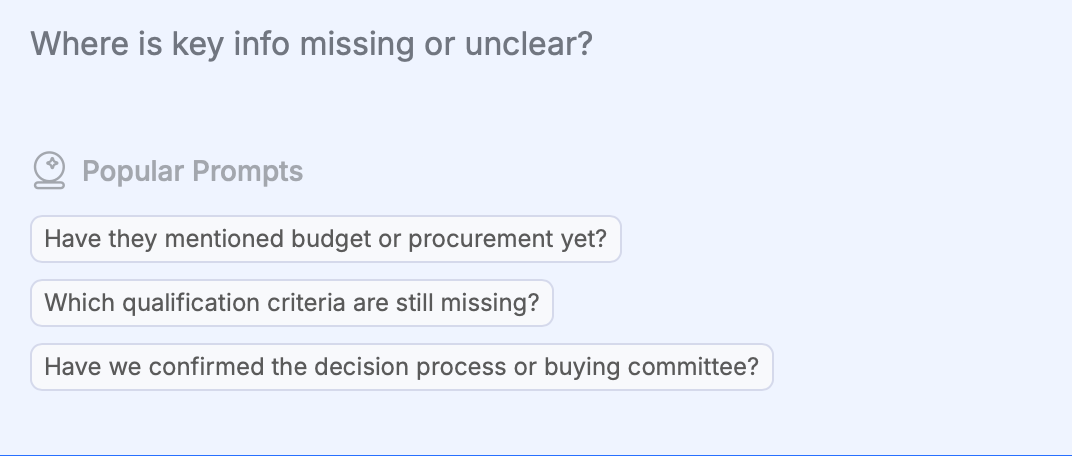
What makes Sybill different:
Better deal visibility across the pipeline
Stronger coaching with real call context
Faster follow-ups because context is already captured
Gong earns its reputation in orgs where leadership wants consistent inspection and coaching frameworks across teams.
Click here to read Gong reviews.
Gong is frequently used as the “leadership visibility layer,” while newer AI platforms like Sybill handle execution workflows, follow-ups, and deal intelligence. Click here to learn how.
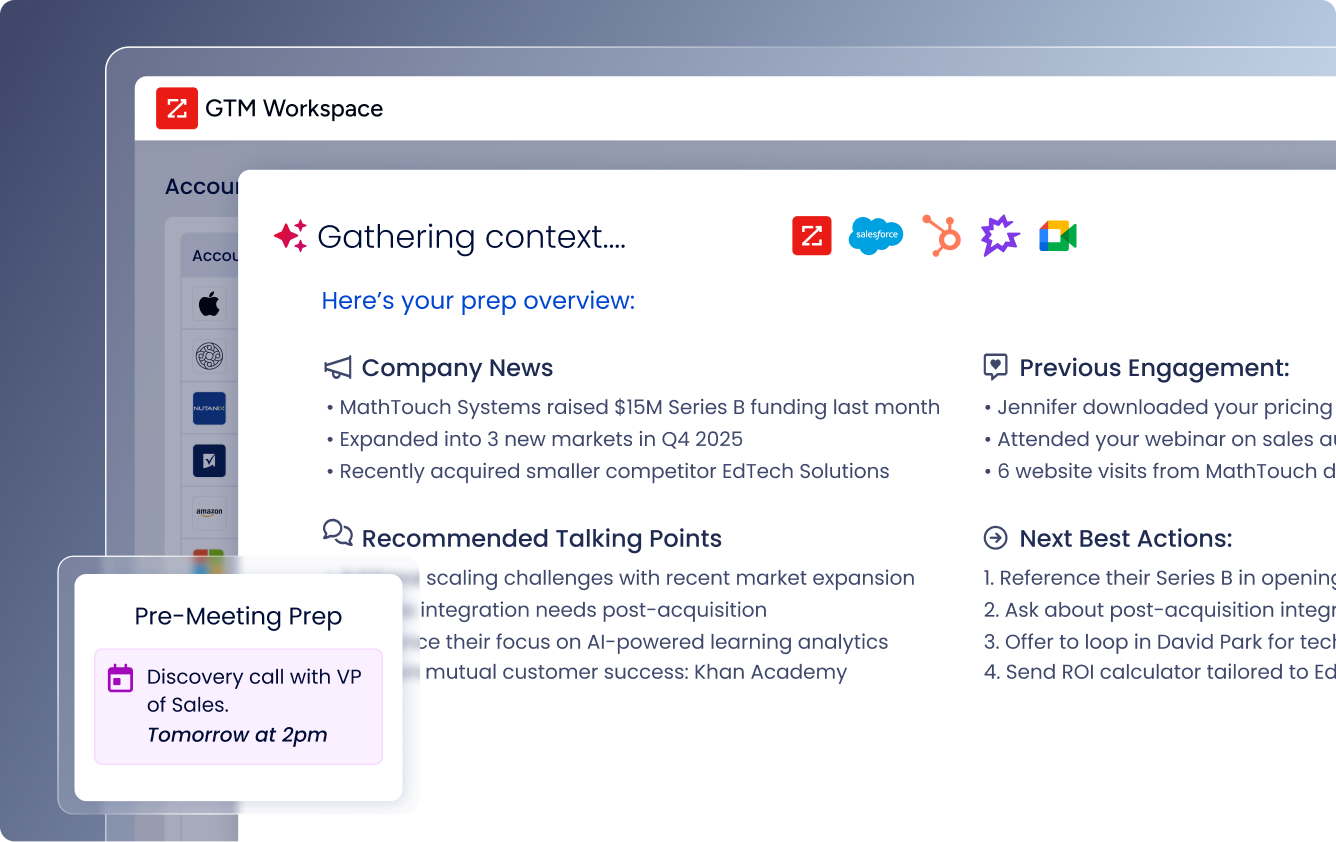
If your main problem is “we need more contacts and better lists,” ZoomInfo is built for that.
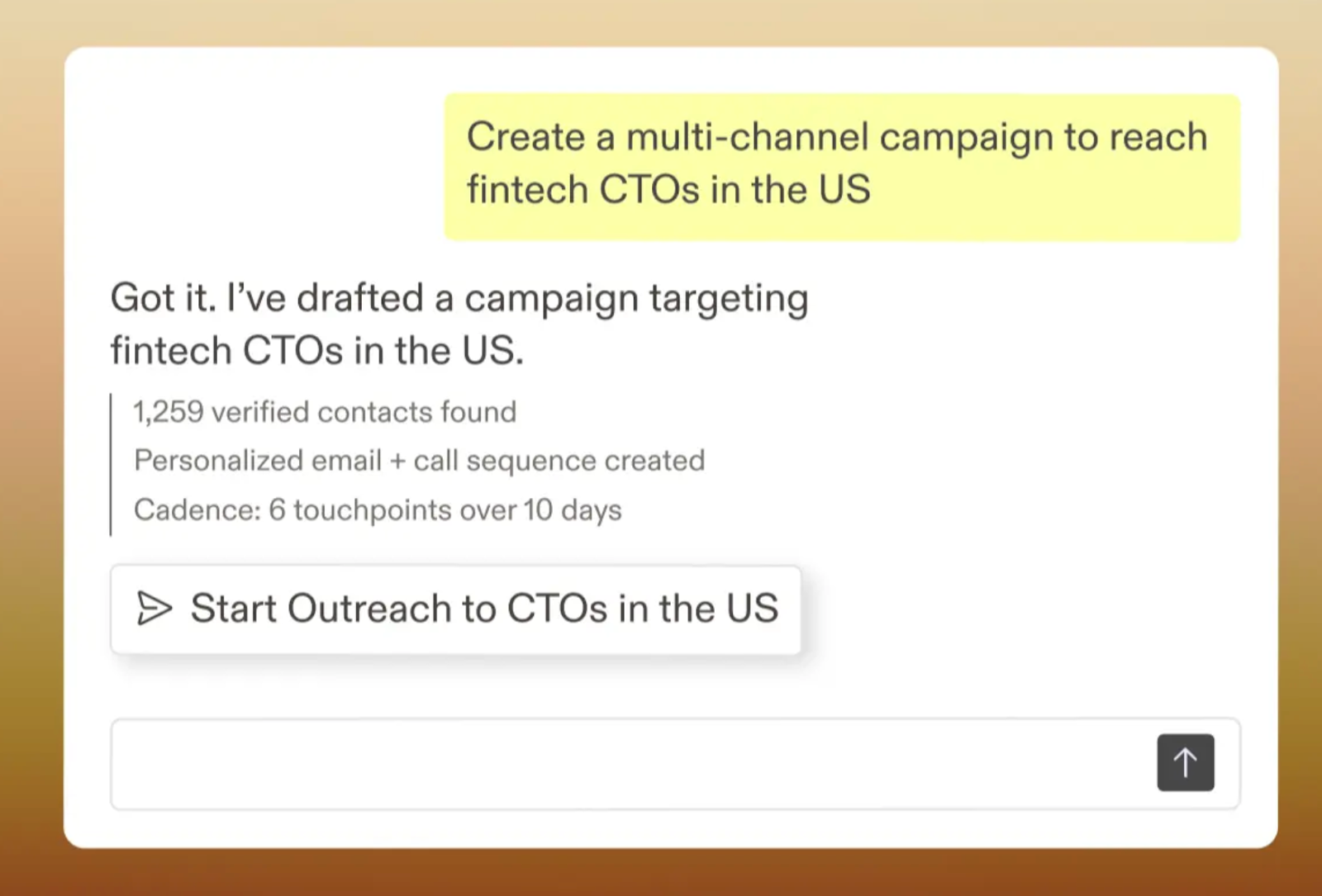
Apollo is popular because it bundles multiple outbound workflows into one place.
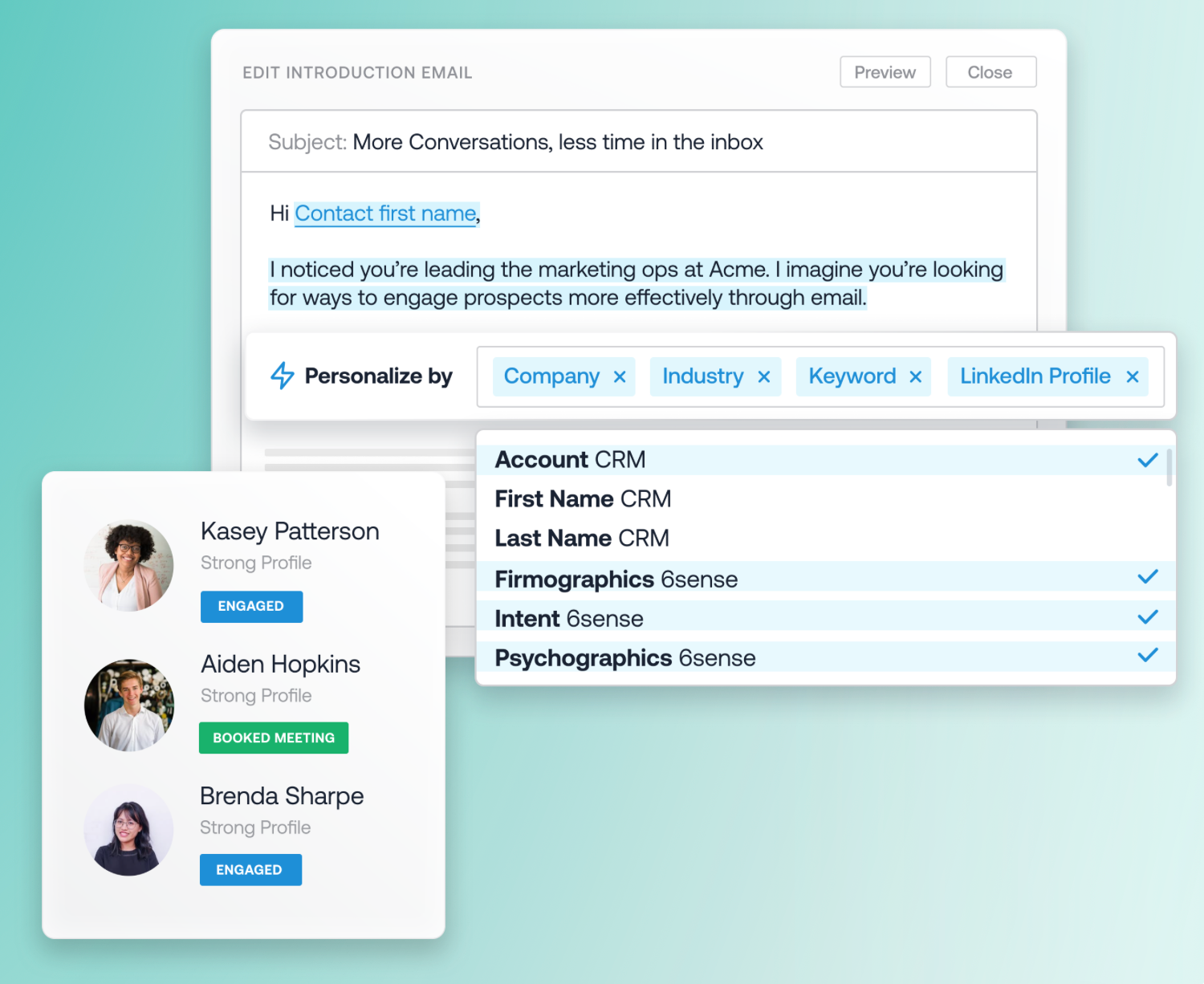
6sense is built for teams running serious account-based motions where prioritization is everything.
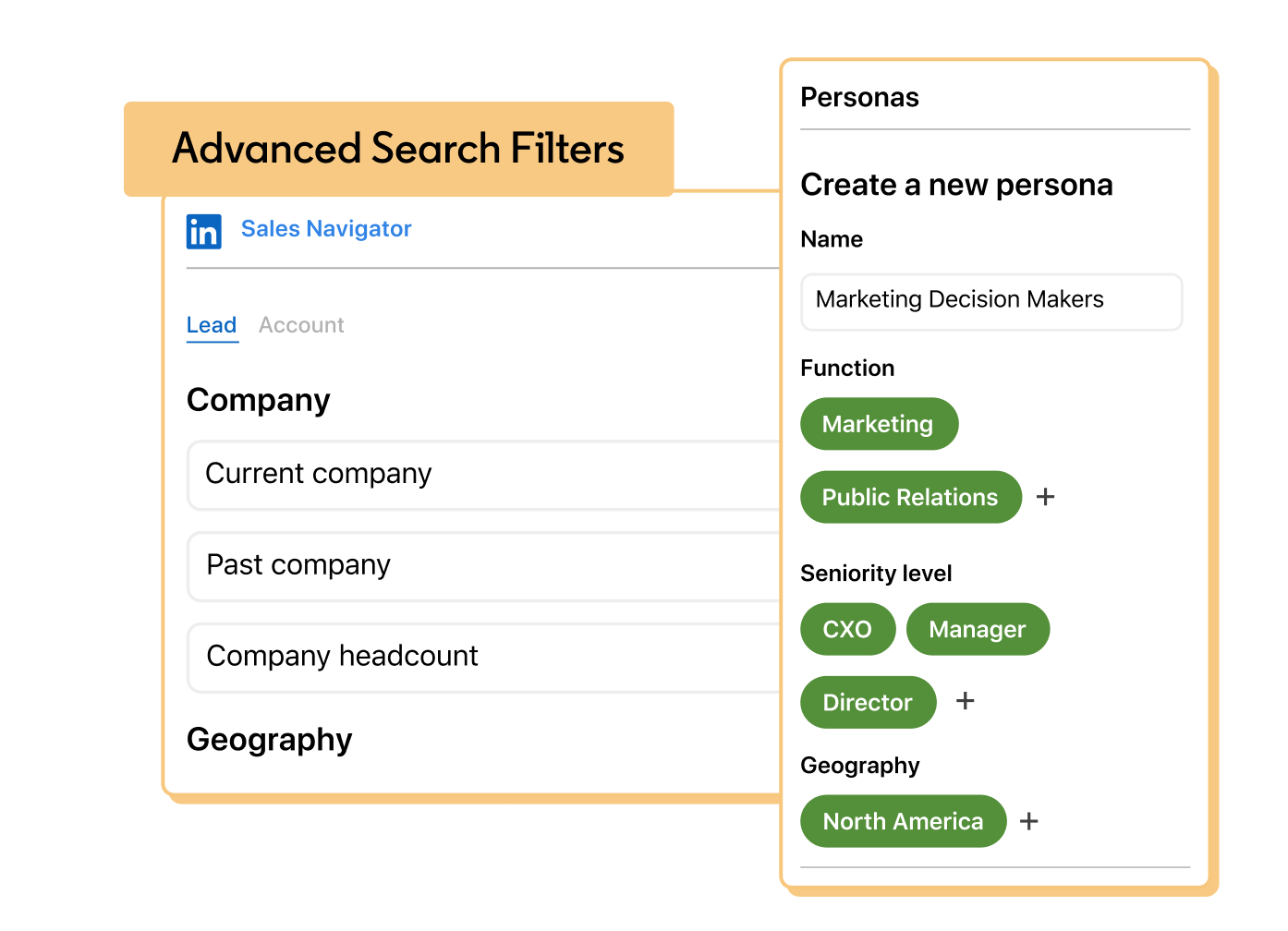
Overview: Best social selling intelligence
Sales Nav is unbeatable for relationship-led selling, especially when your motion depends on warm intros and credibility.
Also read: LinkedIn InMail Samples
Lusha is widely used by smaller sales teams that want quick access to verified contact data without committing to a large enterprise data platform.
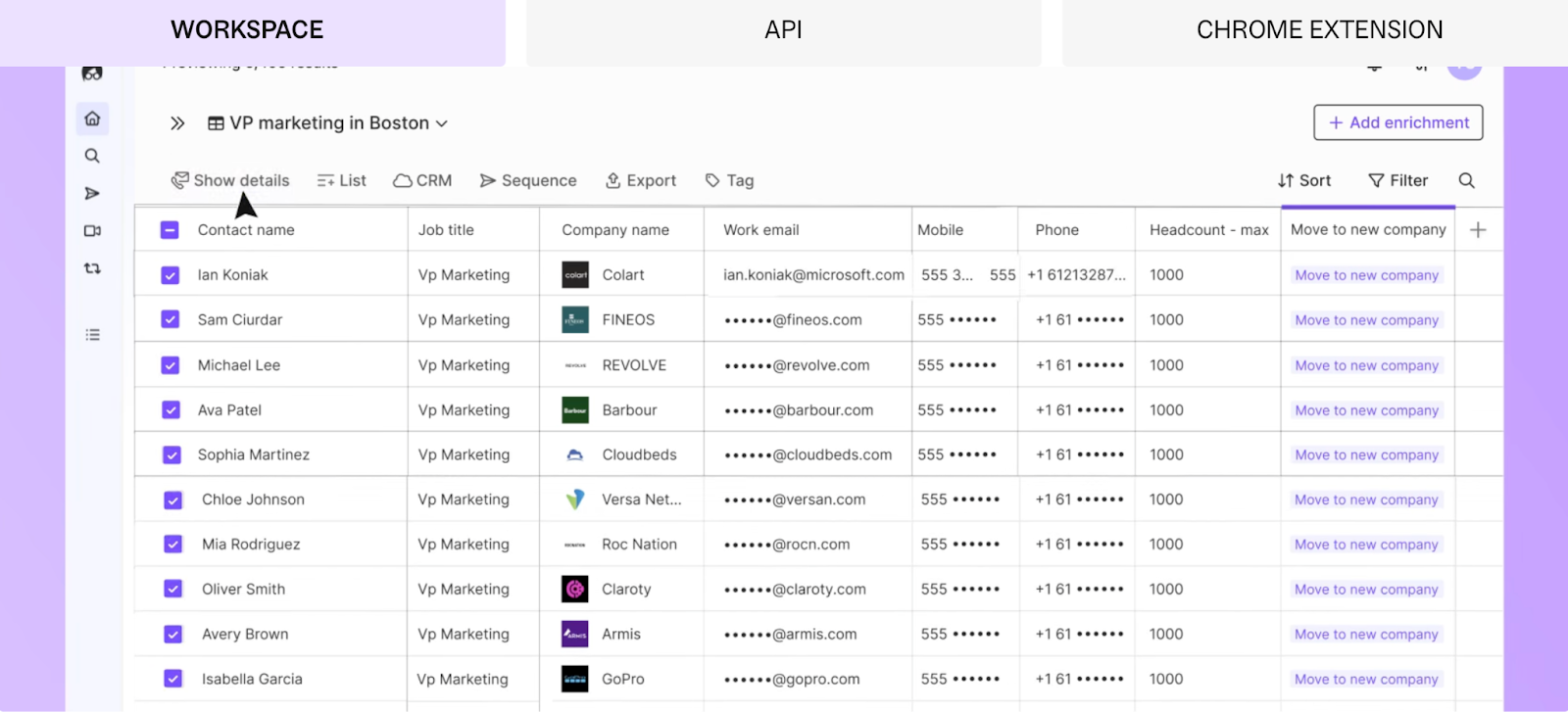
Many teams start with Gong because it helped define the conversation and revenue intelligence category. For years, it was one of the few tools that could systematically analyze sales calls and give leadership visibility into what was happening inside deals.
But the market has evolved.
Revenue teams today are not just asking for call analysis. They want tools that help reps execute better deals in real time. That shift is exactly why many organizations evaluating sales intelligence tools are now comparing Gong with newer AI-driven platforms.
Also read:
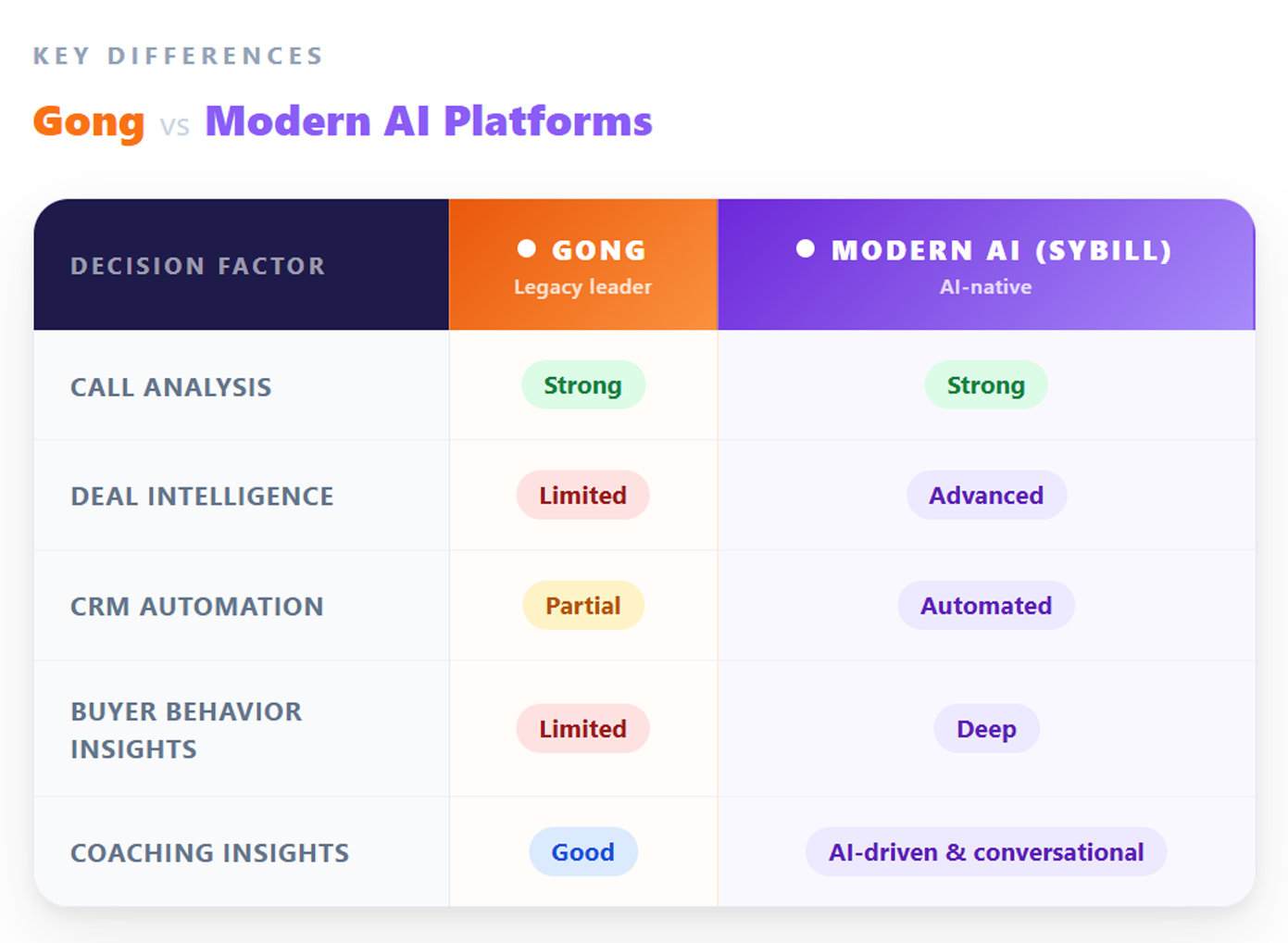
Gong excels at leadership visibility and pipeline inspection. It gives managers a structured view of calls, deal activity, and rep performance across the organization.
However, many newer sales intelligence platforms focus more heavily on execution intelligence. Instead of simply reviewing conversations after the fact, they analyze buyer behavior, surface deal insights automatically, and remove administrative work from reps.
The difference comes down to the goal.
If your priority is leadership visibility and standardized inspection, Gong remains a decent option.
If your priority is deal intelligence and revenue execution, modern AI-driven platforms like Sybill provide deeper operational insight for reps and RevOps teams.
Adopting a sales intelligence tool is usually faster than most teams expect, especially when the platform integrates cleanly with your CRM and existing sales workflows.
A typical adoption timeline looks like this:
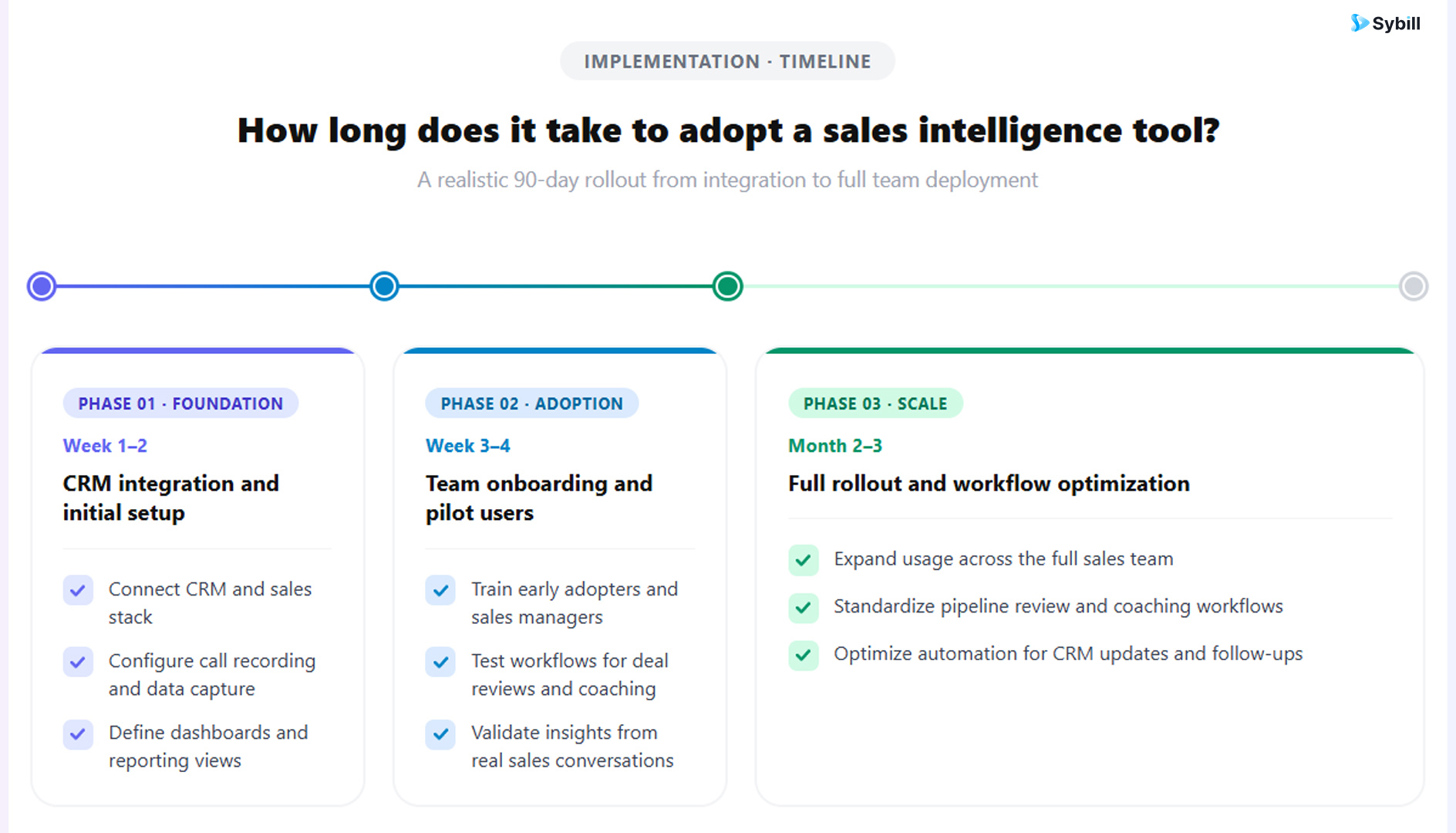
Many teams see meaningful productivity improvements within the first 90 days of implementing sales intelligence software.
The biggest factor that speeds up adoption is automation.
Platforms that automatically generate insights, update CRM fields, and summarize conversations remove manual work for reps. As a result, sales teams are far more likely to adopt the tool as part of their daily workflow instead of treating it as another dashboard they rarely open.
Investing in sales intelligence software should translate into measurable revenue outcomes. The easiest way to evaluate a sales intelligence platform is to track both pipeline impact and rep behavior changes.
Start with the metrics that leadership already cares about:
Pipeline growth
Also read: Sales pipeline reporting 101
Win rate improvement
Sales cycle reduction
Also read: How to shorten sales cycle using AI
Rep productivity
Also read: Best sales productivity tools compared
Across many organizations, implementing a modern sales intelligence platform leads to measurable performance improvements such as:
These improvements usually come from better prioritization, faster follow-ups, and stronger insight into buyer behavior.
More mature RevOps teams go deeper and track intelligence-driven indicators like:
These metrics reveal something important.
The best sales intelligence tools do not just increase revenue. They improve how sales teams behave, helping reps focus on the right deals, respond to real buyer signals, and execute better conversations.
With dozens of B2B sales intelligence tools in the market, the real challenge is not finding options. It is choosing a platform that actually improves how your team sells.
The best sales intelligence tools do more than collect data. They help reps act on the right signals at the right time.
When comparing platforms, use a practical checklist:
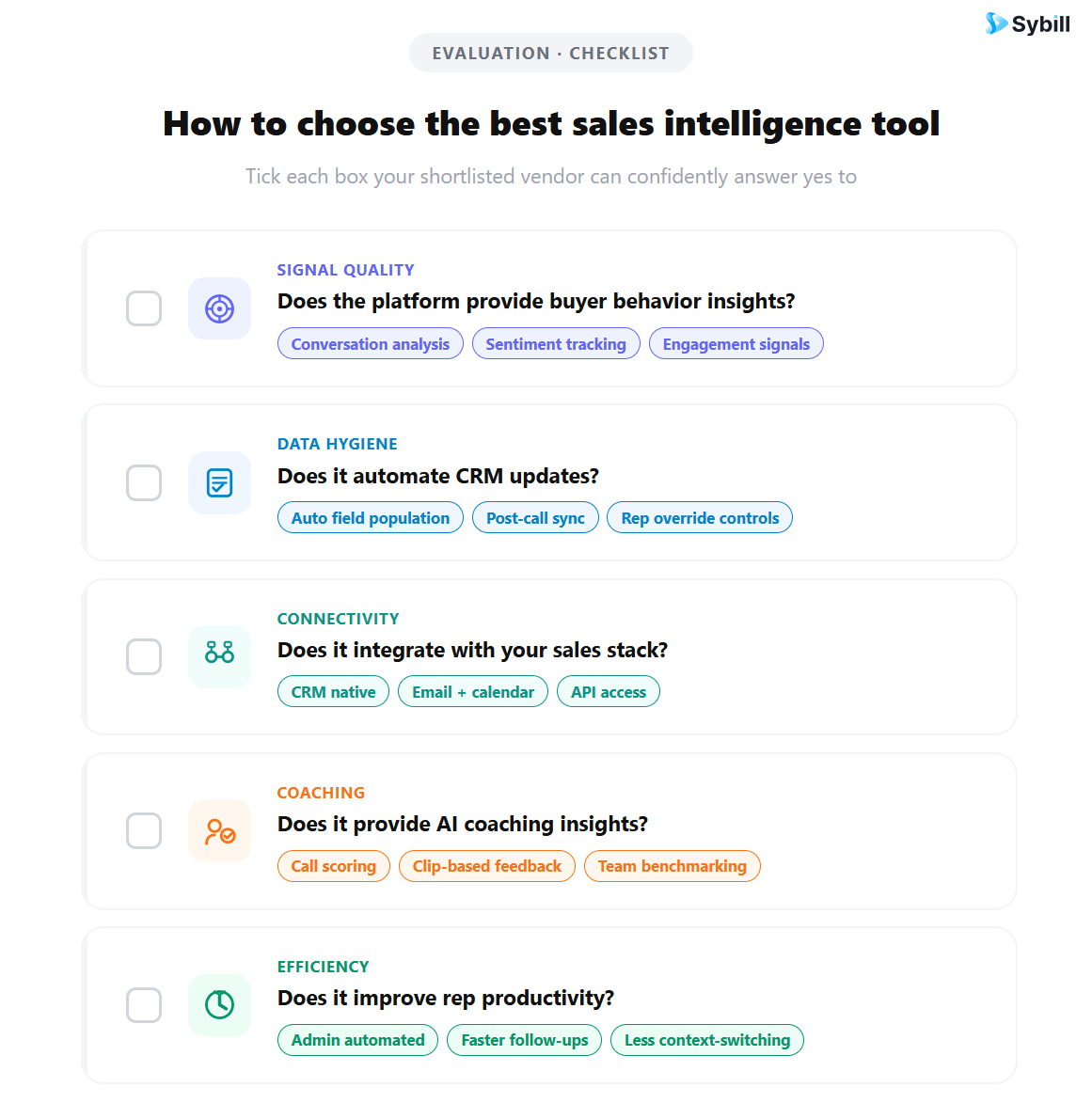
Does the platform provide buyer behavior insights?
Does it automate CRM updates?
Does it integrate with your sales stack?
Also read: Sales Engagement Platform vs CRM: Complete Guide
Does it provide AI coaching insights?
Does it improve rep productivity?
Many traditional sales intelligence tools focus heavily on collecting data.
But data alone does not improve the pipeline.
If a tool provides more dashboards but fewer decisions, it is probably not the intelligence layer your revenue team actually needs.
Sales teams no longer need more data. They need faster, clearer decisions.
That is why modern revenue teams are adopting AI-driven sales intelligence platforms that analyze sales activity in real time.
AI-powered tools now enable:
The bigger shift happening in the market is this:
Sales intelligence is moving from data enrichment to behavioral intelligence.
Instead of simply showing who a prospect is, modern platforms analyze how buyers behave inside real sales conversations.
Platforms like Sybill are already building toward this future by connecting buyer behavior, deal intelligence, and AI coaching into a single sales intelligence layer.
Sales teams today do not suffer from a lack of data. They suffer from a lack of clarity.
The best sales intelligence tools do far more than enrich contact records. They reveal what actually drives revenue.
They help teams understand:
That is the real difference between sales intelligence and sales noise.
Most tools give you more dashboards. The best platforms give you better decisions.
A sales intelligence tool helps revenue teams gather and analyze data about prospects, buyers, and deals so they can sell more effectively. These platforms combine contact data, buyer signals, conversation insights, and AI analysis to help teams identify prospects, prioritize opportunities, and improve sales conversations.
Modern sales intelligence software goes beyond basic data enrichment by surfacing deal risks, highlighting buyer behavior patterns, and automating insights directly inside sales workflows.
Some of the best sales intelligence tools in 2026 include:
The best tool ultimately depends on your sales motion, team size, and whether you prioritize prospecting, pipeline visibility, or AI-driven deal intelligence.
Pricing for sales intelligence platforms varies widely depending on features and scale.
Smaller SMB tools typically start around $50 per user per month, while enterprise platforms with advanced data, AI analytics, and revenue intelligence capabilities can cost $10,000 or more per year. Sybill falls in the lower end of this spectrum and Gong on the higher end.
Factors that influence pricing include data coverage, AI capabilities, CRM integrations, and the number of users across the revenue organization.
A sales intelligence tool helps revenue teams gather and analyze data about prospects, buyers, and deals so they can sell more effectively. These platforms combine contact data, buyer signals, conversation insights, and AI analysis to help teams identify prospects, prioritize opportunities, and improve sales conversations. Modern sales intelligence software goes beyond basic data enrichment by surfacing deal risks, highlighting buyer behavior patterns, and automating insights directly inside sales workflows.
Some of the best sales intelligence tools in 2026 include: Sybill for AI-driven deal intelligence and sales execution Gong for revenue leadership visibility and pipeline inspection ZoomInfo for B2B contact data and prospect intelligence Apollo for prospecting and outbound sequencing 6sense for account-based marketing and intent intelligence LinkedIn Sales Navigator for relationship-driven social selling The best tool ultimately depends on your sales motion, team size, and whether you prioritize prospecting, pipeline visibility, or AI-driven deal intelligence.
Pricing for sales intelligence platforms varies widely depending on features and scale. Smaller SMB tools typically start around $50 per user per month, while enterprise platforms with advanced data, AI analytics, and revenue intelligence capabilities can cost $10,000 or more per year. Sybill falls in the lower end of this spectrum and Gong on the higher end. Factors that influence pricing include data coverage, AI capabilities, CRM integrations, and the number of users across the revenue organization.