Find us at booth #83, join us for a harbor side happy hour, or catch Gorish’s talk.

Sept, 16-18 > Learn more


Tamanna Mishra

May 7, 2026
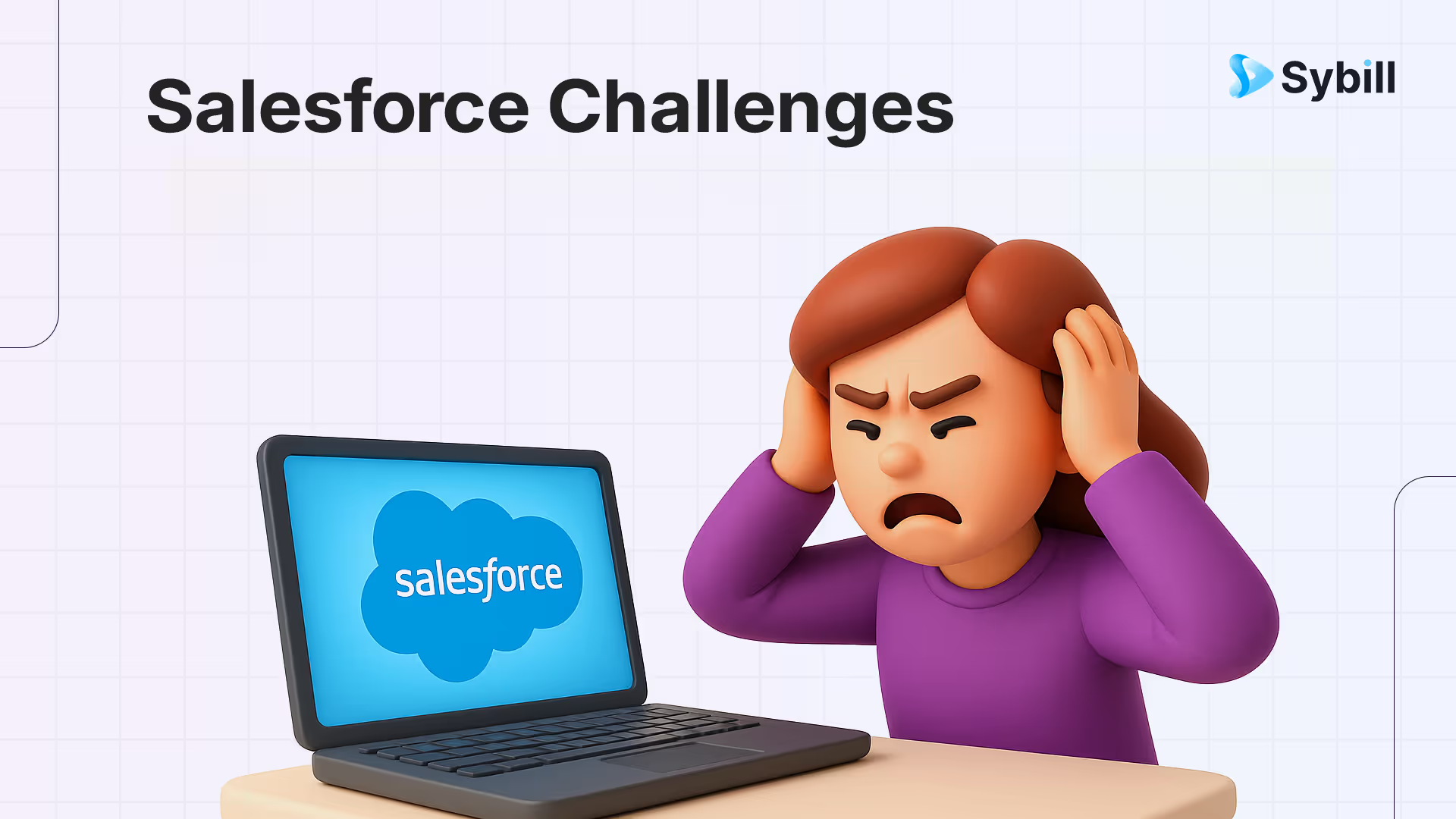
Salesforce challenges are not a new story. If anything, they feel a bit like season 12 of a show that should have wrapped up at season 8. You know it's iconic. You know it's important. But you also know the cast is tired, the plot is messy, and someone desperately needs to clean things up behind the scenes.
The 5 biggest Salesforce challenges in 2026 are low user adoption by sales reps who view CRM updates as admin burden rather than selling aid, poor data quality from inconsistent manual entry that undermines forecasting and reporting, implementation complexity requiring expensive consultants and months of configuration, integration friction with the rest of the sales stack creating data silos, and high total cost of ownership when factoring licenses, add-ons, and admin headcount. The highest-leverage solution for most Salesforce challenges is automating CRM data entry — tools like Sybill that auto-fill Salesforce fields from sales conversations address adoption, data quality, and ROI simultaneously by making accurate CRM updates the path of least resistance rather than an extra chore.
Salesforce is powerful, but Salesforce implementation challenges still flatten even the most seasoned RevOps teams. The CRM itself isn't the problem. The real problem is the gap between how Salesforce is built and how real sales conversations actually unfold. Reps hate admin. RevOps lives in spreadsheet purgatory. Leaders keep fighting "happy ears" updates that don't match forecasting reality.
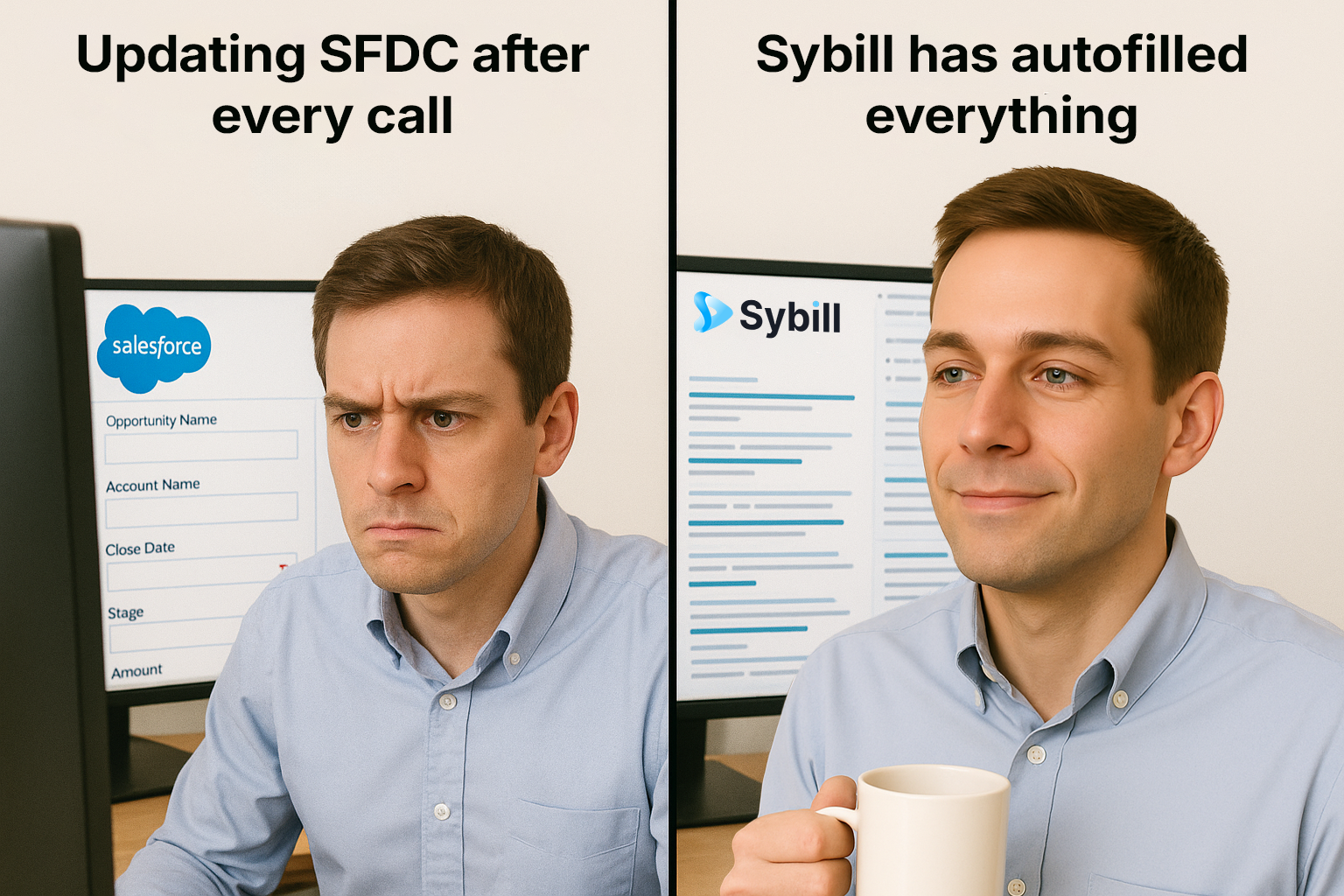
It shouldn't take heroics for SFDC to work. And it definitely shouldn't feel like a second job. Modern AI tools like Sybill finally solve the challenges in Salesforce implementation by removing the friction everyone pretends isn't there.
Let's see how.
For all its maturity, Salesforce still creates the same roadblocks it did ten years ago. Most teams aren't suffering from lack of features. They're suffering from the disconnect between how Salesforce is supposed to be used and how selling actually happens in the real world. That's why the biggest challenges of Salesforce keep repeating across revenue orgs around the world.
And these aren't minor issues with Salesforce. They're structural problems that slow down revenue teams and drain RevOps capacity. The good news is that every one of these Salesforce challenges has a modern, AI-powered solution.
Related read: Best practices for taking notes in CRM

Salesforce's greatest strength often becomes its biggest weakness. As teams scale, SFDC turns into a cluttered maze of fields, custom objects, validation rules, and drop-down options nobody remembers creating. The assumption is simple: more fields must mean more insight. But in reality, more fields usually mean more noise. Reps don't know what actually matters for forecasting or deal inspection, so they fill everything halfway or ignore half of it entirely.
This is how Salesforce gets bloated. The CRM starts storing data, not insight.
How Sybill addresses this: Instead of dumping every word from a call into Salesforce, Sybill's CRM Autofill captures the real sales conversation and extracts only the high-signal details: objections, buying triggers, decision criteria, next steps, risks, and commitments. Clean inputs mean cleaner dashboards, stronger forecasts, and far better accuracy across the board.
If there is one universal truth in sales, it's this: reps avoid CRM updates like it's a gym membership in February. Not because they don't care, but because it is tedious, disruptive, and hours of selling time lost to clicking, typing, and hunting for fields. Salesforce's own research shows that reps spend over one-third of their time on admin work instead of talking to customers. And manual CRM updates always follow the same pattern: missed fields lead to bad data, bad data leads to bad forecasting, and bad forecasting leads to late-quarter panic.
This isn't a small inconvenience. It is the number one reason CRMs fail.
How Sybill fixes this: With CRM Autofill, reps never need to update Salesforce manually. Sybill captures the details from calls and emails, fills the right fields automatically, mirrors the team's terminology, and keeps the CRM clean. Adoption stops being a problem because there is nothing left to "adopt."
Salesforce paints a neat picture of pipeline health, but the problem is the picture is often fiction. Reps write optimistic notes. Or vague notes. Or, on busy days, nothing at all. Managers try to inspect deals based on half-filled fields and optimistic summaries, not the real buyer sentiment. Forecasts end up depending on interpretation, not evidence, which is why so many quarter-end surprises feel avoidable in hindsight.
This gap between what happened on the call and what ends up in Salesforce is one of the most damaging Salesforce challenges for revenue teams.
How Sybill closes this gap: It captures objections, tone shifts, risks, commitments, competitor mentions, and next steps directly from every conversation. No interpretation. No missing context. Your Salesforce CRM finally reflects the truth instead of a hopeful, bright eyed, bushy tailed version of truth.
Some Salesforce orgs age like wine. Most age like a shared Google Sheet with 14 authors and no owner. Over time, SFDC becomes overloaded with custom objects, unused fields, outdated validation rules, and legacy workflows nobody remembers setting up. What starts as "just one more field" eventually turns into a brittle system where every change feels dangerous and every update risks breaking something critical.
RevOps teams inherit this clutter. They spend hours untangling old logic, rewriting workflows, and cleaning up fields no one has touched in years. And the more complex the org becomes, the harder it is for reps to navigate and update correctly.
How Sybill reverses this damage: Sybill's AI-driven field mapping automatically identifies and updates only the fields that matter, reducing clutter and preventing bad data from piling up. Salesforce becomes cleaner, lighter, and far easier to maintain.
Salesforce reporting is incredibly powerful, but it's only as accurate as the data feeding it. And too often, that data is built on "happy ears" updates that smooth over objections, minimize risk, or overestimate buyer enthusiasm. Pipeline optimism hides real problems until it's too late, leaving leaders scrambling at the end of the quarter. What teams need is actual buyer intent, not rep-filtered interpretations.
The solution isn't another dashboard. It's better truth.
How Sybill gives Salesforce the grounding it's been missing: By extracting real buyer signals from calls - objections, tone shifts, hesitation, excitement, risks, urgency - Sybill turns subjective updates into evidence-based truth. Forecasts stop being wishful thinking and start reflecting what's really happening in the deal.
Through its Deal Inspection engine, Sybill analyzes deal momentum, qualification gaps, stalling signals, red flags, stakeholder silence, and internal misalignment. Leaders finally see the actual state of every deal, not the sanitized version.
Layer that with Buyer Needs & Intent, and Salesforce data gets enriched with what really drives decisions: pain points, urgency, buying triggers, priority conflicts, and stakeholder motivations. Sybill surfaces the patterns behind buyer behavior so forecasts stop being wishful thinking and start reflecting real purchase likelihood.
The result is simple and powerful:
You finally get the clearest view of reporting accuracy, forecasting confidence, and buyer signals that actually drive deal closures.
Every sales team knows the loop. Reps spend hours trying to keep Salesforce up to date, only to capture a fraction of the nuance from their calls. Manual notes flatten real buyer conversations into a few rushed lines. Autofill tools promise relief, but most miss key fields, misunderstand context, or duplicate noise. The result is predictable: Salesforce goes stale the moment reps stop typing. And stale CRM data is the root of most Salesforce implementation challenges.
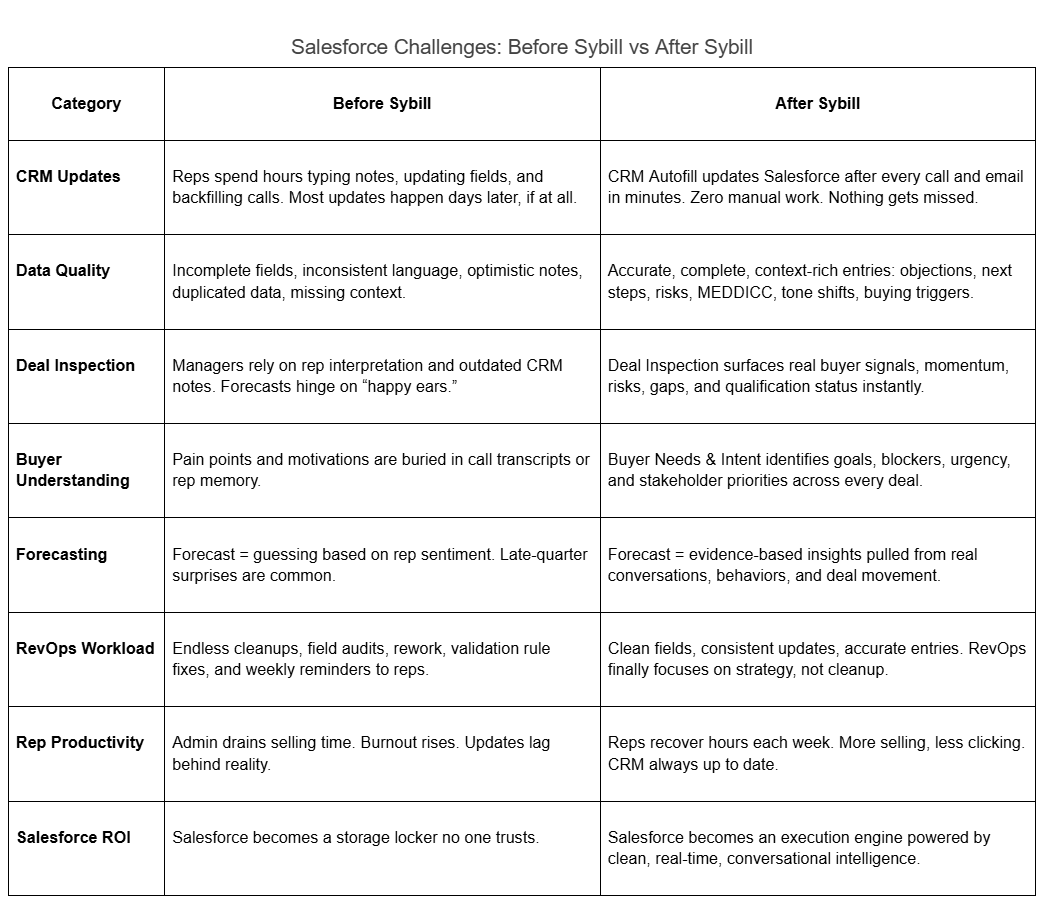
Sybill's CRM Autofill replaces guesswork with a precise, automated system designed for real-world selling.
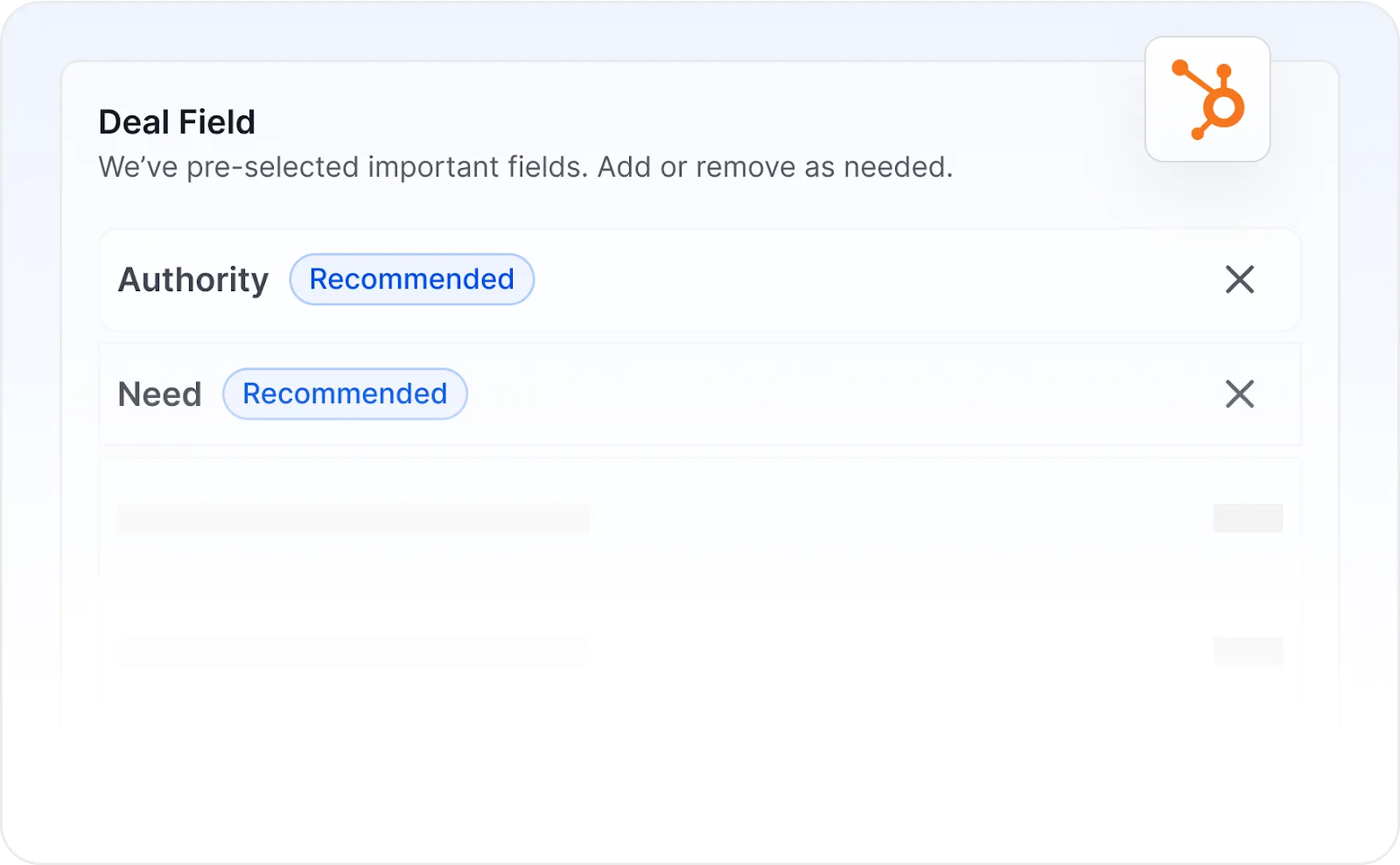
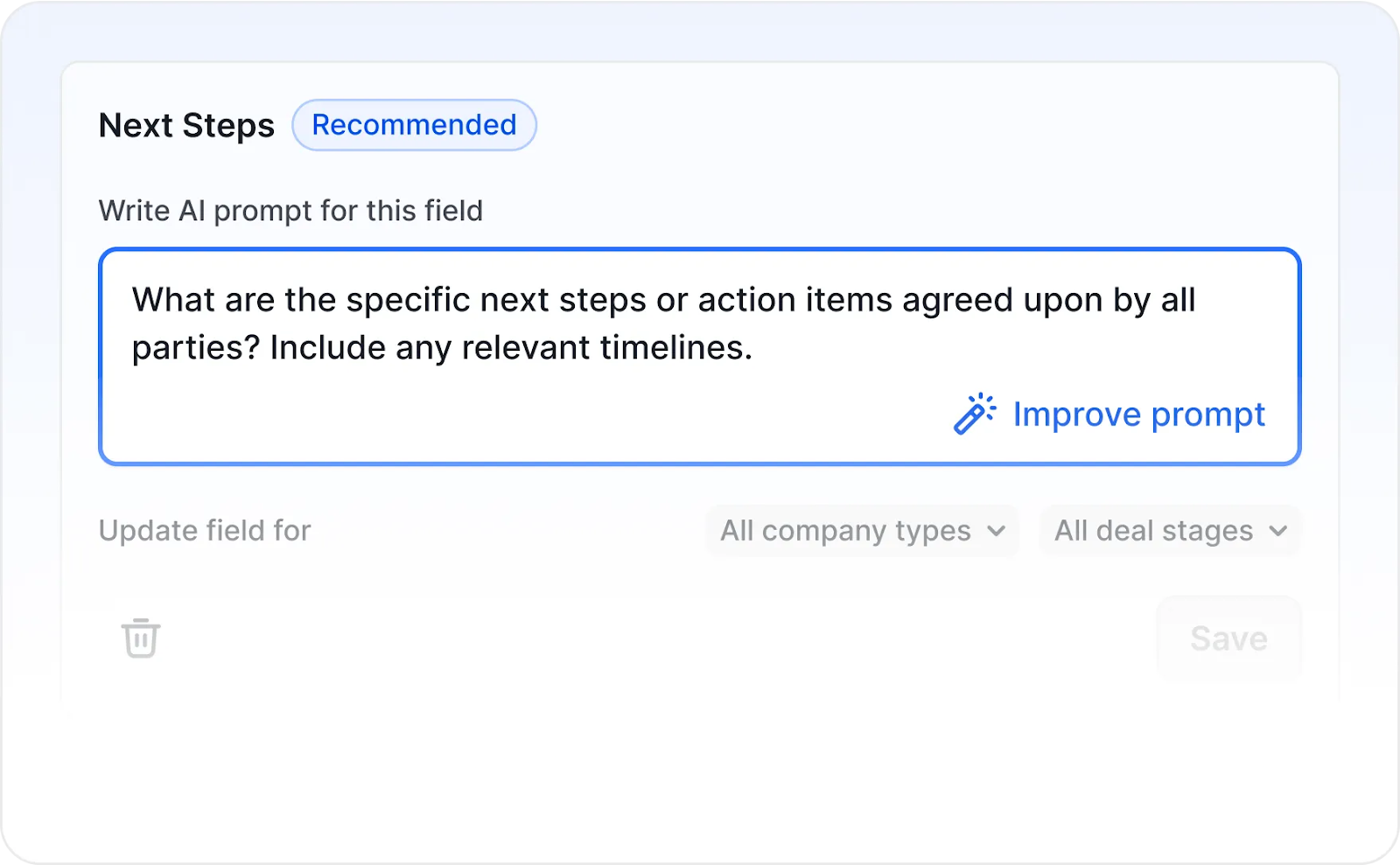
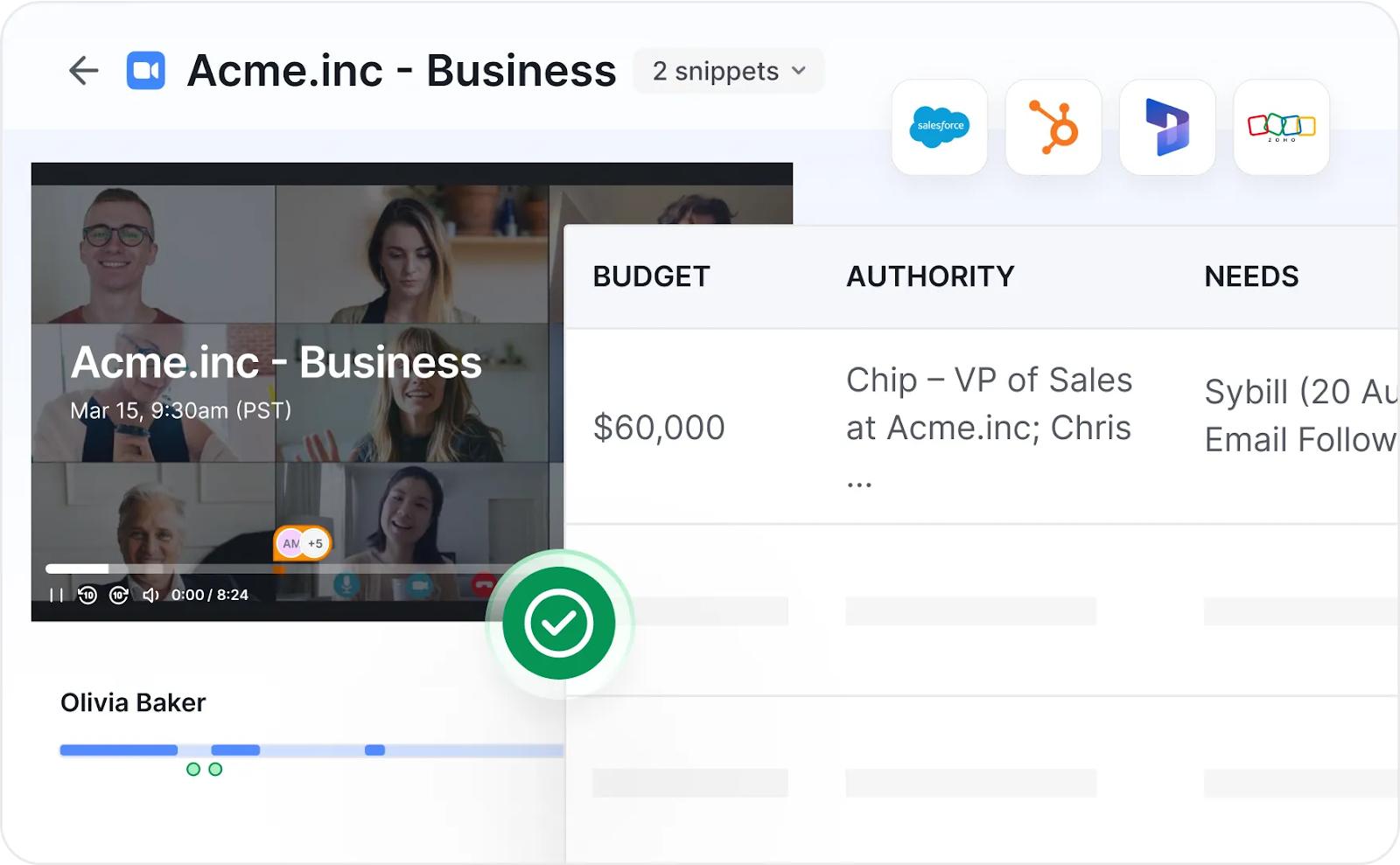
If Salesforce implementation challenges come from bad data and inconsistent updates, Sybill's CRM Autofill is the cleanest and fastest fix. This is CRM automation built for teams who don't have time for administrative overhead masked as "process."
Short answer: yes. But only if you use it the way modern revenue teams are meant to.
Salesforce is absolutely worth it for scaling organizations because it gives you structure, visibility, governance, and a single source of truth. The problem isn't Salesforce. The problem is what happens when teams rely on it without the right processes or automation.
Salesforce isn't expensive. Bad data is expensive. In fact, for U.S. businesses alone, the annual cost is estimated to be around $3.1 trillion, with individual organizations losing an average of $12.9 million or more per year.
Inaccurate updates, manual admin work, and missing buyer context cost far more than any CRM license ever will.
Salesforce becomes ROI-positive the moment your data and CRM hygiene becomes trustworthy. That only happens when administrative overhead drops and data quality rises. AI tools like Sybill finally close that gap. With CRM Autofill, Deal Inspection, and Buyer Needs & Intent, Salesforce stays accurate without relying on reps to manually maintain it.
When that happens, SFDC transforms from a cost center into one of the highest-leverage assets in your entire go-to-market engine.
Salesforce challenges are real, but none of them are unsolvable. The CRM becomes exponentially more valuable when it's paired with AI that captures what actually happens in calls and emails, not just what gets typed in after the fact.
Sybill turns Salesforce from an admin burden into a true execution engine by keeping data clean, accurate, and grounded in real buyer intent. The result is better forecasting, fewer happy ears, and far happier reps.
Try Sybill free and make Salesforce finally work the way it should.
The biggest Salesforce challenges stem from data overload, low user adoption, broken processes, brittle customizations, and reporting that depends on optimistic inputs instead of real buyer signals. These SFDC challenges happen because Salesforce is powerful but complex, and most teams rely on manual updates that degrade accuracy over time. The good news: pairing Salesforce with AI automation with tools like Sybill solves these issues by improving data quality and reducing administrative burden.
Common issues with Salesforce include duplicate data, inconsistent manual updates, slow user adoption, overly complex workflows, and poor reporting accuracy caused by low-quality inputs. These SFDC challenges create friction for sales teams and RevOps, leading to unreliable forecasts and wasted time. Most of these problems disappear when automation tools ensure cleaner data and reduce the need for reps to maintain the CRM manually.
Salesforce’s biggest competitors are HubSpot, Microsoft Dynamics 365, Zoho CRM, and Oracle CX. HubSpot competes through ease of use and native marketing automation. Dynamics appeals to enterprises already invested in the Microsoft ecosystem. Zoho CRM attracts fast-growing SMBs with its affordability and broad app suite. Oracle CX competes in large, complex environments with deep enterprise functionality. Despite strong alternatives, Salesforce remains the leader because of its ecosystem, customization options, and AppExchange depth.