Find us at booth #83, join us for a harbor side happy hour, or catch Gorish’s talk.

Sept, 16-18 > Learn more


Tamanna Mishra

February 7, 2026
You are five minutes into the call.
You have barely finished your opening question when the buyer smiles and says, “Yeah, we are already doing something similar.”
That sentence is not confidence. It is pre-research talking.
Today’s buyers walk into sales conversations armed with blogs, peer reviews, LinkedIn opinions, analyst reports, and half-formed conclusions. Gartner estimates buyers spend only about 17 percent of the buying journey talking to sales. The rest happens without you. Relationship building alone cannot save that gap anymore. Being helpful, friendly, and responsive stopped being a competitive advantage years ago.
Buyers are not uninformed. They are misaligned. They are confident, but incomplete. They know what they have seen, not what they have missed. The Challenger Sales model exists to surface those blind spots, reframe assumptions, and guide buyers toward better decisions they could not reach on their own.
Think Tony Stark. Everyone thinks they are Iron Man because they read the manual. Challenger sellers are the ones pointing out the arc reactor flaw before the suit fails mid-flight.
This is not another The Challenger Sale summary or theory-heavy breakdown. This is a practical, no-nonsense look at how the Challenger Sales technique actually works, where Challenger Sales breaks down in the real world, and how to use it without turning into the rep buyers mute on LinkedIn.
The Challenger Sales model is a sales approach built around one idea: the best sellers do not respond to what buyers say they want. They reshape how buyers think about their problem in the first place.
The Challenger Sales model comes from research conducted by CEB, now part of Gartner, based on the analysis of thousands of B2B sales reps across industries. When the data was sliced, one pattern stood out. Top performers were not the most liked. They were not the most responsive. They were the ones who brought new perspectives into the conversation and were willing to push back when a buyer’s assumptions did not hold up.
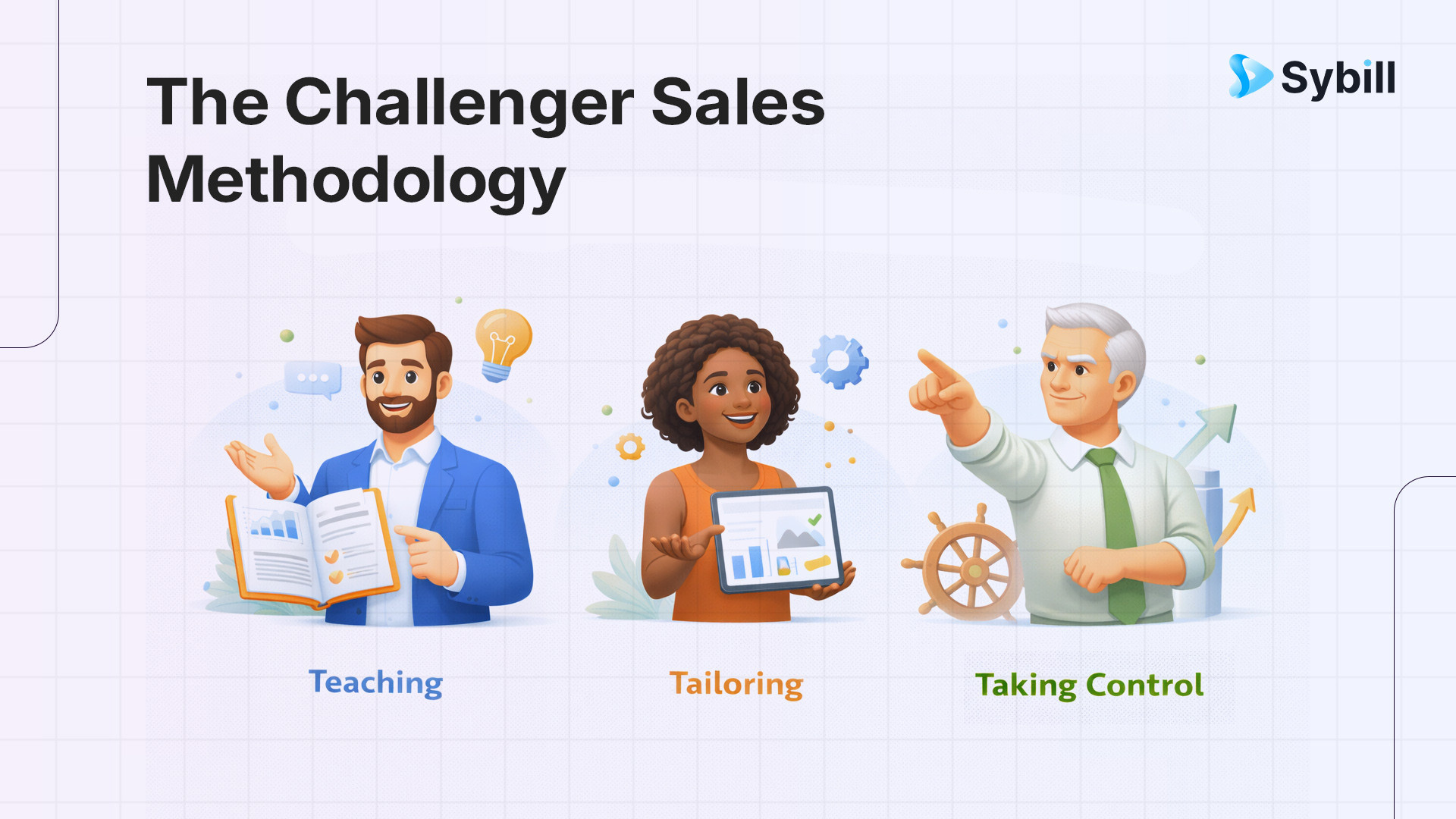
That insight became the foundation of the Challenger Sales methodology. Instead of leading with discovery questions or product features, Challenger sellers lead with commercial insight. They teach buyers something valuable about their business. They tailor that insight to different stakeholders. And they take control of the conversation so deals move forward instead of circling endlessly.
This matters because Challenger Sales is not about the seller's ego. It is a direct response to modern buyer behavior. Buyers today arrive informed, opinionated, and often overconfident in partial information. The Challenger Sales technique exists to close that gap. It challenges the status quo thinking, not the person across the table.
That distinction is critical. Challenger sellers challenge assumptions, not intelligence. They do not argue for the sake of dominance. They reframe decisions using data, patterns, and consequences buyers have not fully considered.
In these environments, CEB research found Challenger-style sellers significantly outperform their peers, often cited at around 40 percent higher performance in complex sales.
Used in the right situations, the Challenger Sales model turns sales conversations into moments of clarity. Used blindly, it turns into noise.
The Challenger Sales methodology is built on three behaviors that work together. Miss one, and the whole approach collapses. These are not steps to follow in order. They are capabilities strong sellers switch between throughout the deal.
Teaching is not pitching.
In Challenger Sales, teaching means bringing a commercial insight the buyer did not already have. Not product knowledge. Not feature depth. Insight.
Strong teaching:
Weak teaching looks like this:
Most reps fail at Teach because they confuse information with insight. They teach facts when they should be teaching implications. Facts make you sound informed. Implications change decisions.
Tailoring is not persona-lite.
In the Challenger Sales methodology, tailoring means shaping the same core insight differently for each stakeholder involved in the decision.
A CFO cares about:
An end user cares about:
A champion cares about:
The insight stays the same. The framing changes.
The most common mistake reps make here is running the same deck on different Zoom calls and calling it personalization. Same slides. Same story. Different faces. That is not tailoring. That is hoping.
Control is about pace and direction, not dominance.
Taking control in Challenger Sales means guiding the conversation so it actually goes somewhere.
This shows up as:
When done right, control builds trust. Buyers feel led, not pressured. They trust sellers who help them navigate complexity, ask the hard questions, and keep decisions from stalling.
Teach without tailoring sounds generic.
Tailor without teaching sounds familiar.
Take control without value sounds arrogant.
The power of the Challenger Sales methodology is using all three together, in the moments that matter.
The Challenger Sales methodology is based on a simple premise. Not all top-performing sellers sell the same way. CEB’s original research behind the Challenger Sales model identified five distinct seller profiles, each with different strengths, behaviors, and impact on deal outcomes.
Understanding these profiles matters because Challenger Sales is not about replacing every selling style. It is about knowing which traits win in complex environments and why.
Hard Workers are defined by effort and persistence.
They:
In straightforward or high-volume sales, this work ethic pays off. But in complex B2B deals, effort alone rarely changes how buyers think. Hard Workers move fast, but they often move inside the buyer’s existing frame instead of reshaping it.
Relationship Builders prioritize trust, rapport, and long-term connections.
They:
For years, this profile dominated sales culture. The problem is modern buyers do not need reps to be friendly. They need them to be useful. In complex deals, relationships help access, but they rarely create urgency or alignment on their own.
Lone Wolves operate on instinct rather than process.
They:
Lone Wolves can close big deals, but they are hard to coach, hard to scale, and hard to replicate. In the Challenger Sales model, they succeed despite the system, not because of it.
Reactive Problem Solvers shine once a problem is clearly defined.
They:
This profile excels in post-sale or technical environments. But in Challenger Sales methodology, success depends on shaping the problem before it is fully articulated. Reactive sellers wait too long to influence direction.
Challengers do three things consistently:
Challengers are comfortable pushing back, talking about money, and introducing tension when it moves the deal forward. They do not rely on being liked. They rely on being credible.
CEB research found that Challenger traits show up disproportionately among top performers in complex B2B sales, especially where multiple stakeholders and high switching costs are involved.
Here is what many teams miss. Most high-performing sellers are not pure Challengers. They blend Challenger traits with the work ethic of a Hard Worker, the empathy of a Relationship Builder, or the ownership of a Problem Solver.
The difference is this. As deal complexity increases, Challenger behaviors matter more than any other profile. Insight, reframing, and controlled momentum become the deciding factors.
One of the biggest mistakes leaders make with the Challenger Sales methodology is trying to turn everyone into a Challenger overnight.
Not every rep has the business acumen, confidence, or context to challenge buyers effectively on day one. Forced Challenger behavior sounds preachy, robotic, and inauthentic.
The goal is not to clone Challengers. The goal is to develop Challenger traits where the deal demands them and support reps with coaching, insight, and structure so those behaviors show up naturally.
The Challenger Sales methodology is not improvisation. It follows a deliberate progression designed to move buyers from confidence to clarity. Skip a stage, and the Challenger sales method loses its power. Rush the ending, and buyers feel sold to instead of guided.
Here are the six stages of the Challenger Sales cycle and why each one matters.
This is where credibility is earned, not claimed.
The goal is to show you understand the buyer’s world before attempting to change how they see it. Industry pressures, competitive dynamics, operational constraints. This stage is about relevance, not rapport.
If buyers do not feel understood here, they will resist everything that follows.
How AI helps
AI tools like Sybill’s Pre Meeting Brief surface account context, industry signals, and prior conversation history so reps start with insight, not small talk. It reduces prep gaps that weaken Challenger execution early.
Now you challenge what the buyer thinks the problem is.
Reframing introduces a deeper or adjacent issue the buyer has not fully considered. Not a contradiction. A perspective shift. The buyer should think, “That is not how we have been looking at it.”
This is the moment Challenger Sales starts to differentiate.
How AI helps
AI tools like Ask Sybill identify and respond conversationally regarding recurring objections, missed risks, and stalled deal patterns across similar accounts. These patterns fuel stronger, evidence-backed reframes.
This is where logic applies pressure.
Rational drowning uses data, benchmarks, and cross-customer patterns to quantify the cost of doing nothing. It makes the status quo feel riskier than change.
Facts alone are not enough. The numbers must point to consequences.
How AI helps
AI tools like Sybill pull benchmark data, historical deal outcomes, and quantified risk indicators. This makes the business case concrete - and available in minutes - without manual analysis.
Logic opens the door. Emotion creates urgency.
Here, the risk becomes personal. Reputation. Career impact. Missed growth. Team credibility. This is not manipulation. It is relevance at the human level.
Buyers act when they feel what is at stake.
How AI helps
AI tools like Sybill’s Behavior AI highlight sentiment shifts, hesitation, and emotional signals in conversations. Reps can address unspoken concerns instead of guessing what really matters.
Only now do you show a better path.
This stage introduces a new approach to solving the problem without pitching your product yet. The buyer should clearly see that their current approach is insufficient and that a different path exists.
This is where vision replaces uncertainty.
How AI helps
AI tools like Ask Sybill recommend and create tailored frameworks, playbooks, or success patterns that match the buyer’s situation. It helps reps present a credible future state without jumping to features.
Finally, the product enters the story.
By this point, the buyer already agrees with the insight, the risk, and the new approach. Your solution simply fits. It does not interrupt the narrative. It completes it.
This is why Challenger Sales works when executed correctly.
How AI helps
AI tools like Sybill ensure solution positioning aligns with the insight already established. It reinforces continuity across messaging, follow-ups, and stakeholder conversations, and helps sales managers spot problems with this continuity.
Most failed Challenger implementations skip straight from reframe to pitch. Without rational and emotional grounding, the solution feels premature. Buyers disengage, even if the insight was strong.
Pressure. Quotas. Time. Comfort.
Stage 6 feels productive because it is familiar. But Challenger Sales methodology is built on earning the right to pitch. When reps rush the ending, they undo everything Challenger was designed to fix.
In Challenger Sales, the product should feel inevitable. Not introduced.
Before diving into nuance, here is the quick scan.
Now let’s break down where the Challenger Sales methodology truly differs and where it fits.
Consultative selling is built on listening, empathy, and collaboration. The seller asks questions, uncovers needs, and positions themselves as a trusted advisor.
The Challenger Sales technique keeps the advisor role but shifts who drives insight. Instead of discovering what the buyer already knows, Challenger sellers introduce perspectives the buyer has not considered.
Key difference:
Consultative selling works when buyers understand their problem. Challenger Sales works when they do not.
SPIN selling relies on structured questioning to guide buyers from situation to implication to need. It is highly effective when buyers can articulate their challenges.
Challenger Sales flips the information flow. Instead of extracting insight through questions, the seller brings insight into the conversation.
Key difference:
When buyers already feel stuck or uncertain, SPIN can stall. Challenger Sales creates momentum by introducing external perspectives.
Solution selling assumes the buyer’s problem statement is accurate. The seller’s job is to match the right solution to that pain.
The Challenger Sales model questions whether the buyer has diagnosed the right problem at all. It prioritizes reframing before solving.
Key difference:
In crowded markets, solution selling often leads to feature comparison. Challenger Sales creates differentiation before features enter the discussion.
This is where many teams get confused.
MEDDIC is not a sales methodology. It is a qualification framework. It tells you what to verify in a deal, not how to influence the buyer.
Challenger Sales defines how sellers engage buyers. MEDDIC defines how sellers assess deal health.
Key difference:
High-performing teams often use Challenger Sales within MEDDIC-qualified deals. One does not replace the other.
Blending works when each approach serves a distinct purpose:
Blending fails when teams dilute Challenger behaviors to avoid tension. If insight disappears, Challenger disappears with it.
Challenger Sales is frequently mistaken for confrontational selling because it introduces tension. But tension is not aggression.
Aggression pressures buyers to decide.
Challenger Sales pressures assumptions to evolve.
When insight leads and respect is maintained, Challenger sellers feel decisive, not domineering. When insight is weak, the same behavior feels abrasive. That is not a Challenger problem. That is an execution problem.
Used correctly, the Challenger Sales technique does not overpower buyers. It helps them make better decisions faster.
We cannot talk about the Challenger Sales methodology without talking about the book that started it all.
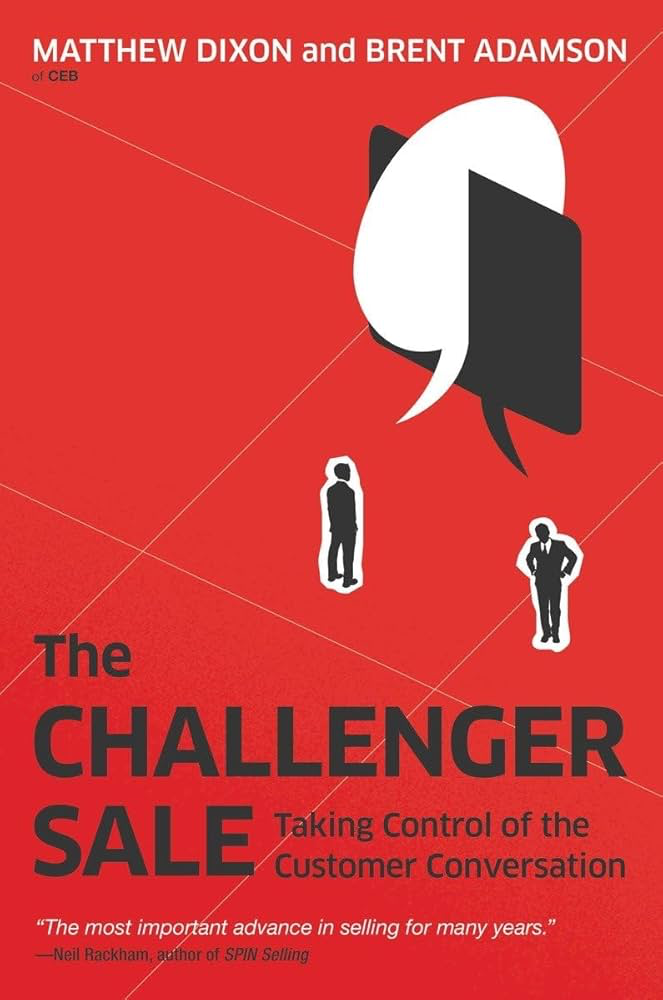
The Challenger Sale by Matthew Dixon and Brent Adamson is the foundation of the entire Challenger Sales model. Published after extensive CEB research across thousands of B2B sales reps, the book challenged one of sales’ most sacred beliefs: that relationship builders are the best sellers.
They are not. At least not in complex B2B sales.
The book’s central argument is simple and provocative.
Top-performing sellers do not win by being liked.
They win by teaching buyers something new, tailoring that insight to different stakeholders, and taking control of the sales conversation.
This became the now-famous Challenger Sales framework built on:
The research showed that sellers who consistently demonstrated these behaviors outperformed peers in complex deals by a wide margin.
The Challenger Sale nailed several things that still hold true today:
Most importantly, the book correctly identified that sales success is driven by the quality of the sales experience, not just the solution itself.
Where the book struggles is execution.
It makes Challenger behaviors sound easier to develop than they are. Teaching insight, tailoring across roles, and taking control require:
Many teams read the book and assume reps can simply start challenging buyers the next day. That is where things go wrong.
If anything, the buying environment has moved closer to the Challenger world the book described.
Today’s deals involve:
Buyers are overloaded with information but starved for clarity. Challenger behaviors help buying committees align around a shared understanding of risk, value, and priority. That makes the methodology more relevant now than when the book was first published.
This is where the gap shows.
The Challenger Sale does not go deep on:
The book explains what great looks like, not how to build it across an organization.
You should read The Challenger Sale if:
You should not expect it to:
Think of the book as a mindset shift, not an implementation guide. It explains why Challenger Sales works. The real work begins after the last page.
The Challenger Sales model works because it aligns with how B2B buying actually happens today, not how sales teams wish it did.
Modern buyers arrive informed. Product pages, demos, reviews, and competitor comparisons are easy to access. Feature knowledge no longer creates advantage. It creates parity. Challenger Sales shifts the conversation away from what a product does to why a buyer’s current approach is insufficient.
When products look similar, perspective becomes the differentiator. Challenger Sales replaces feature selling with commercial insight. Sellers who can connect market trends, risk exposure, and business outcomes stand out in crowded categories where solutions feel interchangeable.
Most deals do not lose to competitors. They lose to inaction. Buyers default to staying where they are because change feels risky. The Challenger Sales methodology directly addresses this by quantifying the cost of doing nothing and reframing inaction as the riskiest option.
B2B purchases now involve larger buying committees with competing priorities. Without a shared problem definition, decisions stall. Challenger Sales helps align stakeholders by introducing a common insight that everyone can react to, debate, and rally around.
Even when buyers agree, they still need to sell the decision inside their organization. The Challenger Sales model equips them with data, language, and logic to build an internal business case. That reduces friction long after the sales call ends.
CEB and Gartner research consistently shows that Challenger-style sellers outperform peers in complex B2B environments. When insight leads and conversations are controlled with purpose, deals move faster and close more often.
Challenger Sales works because it helps buyers think better, not because it helps sellers talk louder.
This is where most Challenger Sales initiatives fail. Not because the Challenger Sales methodology is flawed, but because teams try to roll it out as inspiration instead of infrastructure.
If you want Challenger Sales to stick, treat it like an operating model.
Not every rep is ready to challenge buyers on day one.
Start by assessing:
Challenger behaviors compound with experience. Forcing them too early creates awkward conversations and buyer resistance.
Do not ask every rep to invent insights on their own.
High-performing teams centralize insight creation using:
This ensures insight quality stays high and messaging stays consistent across the team.
Challenger Sales is not a slide deck skill.
Training should focus on:
Reps need to practice moments, not memorize models.
Challenger behaviors show up in live conversations, not CRM fields.
Effective coaching focuses on:
Real calls reveal real gaps. Everything else is guesswork.
Challenger Sales breaks when teams operate in silos.
Marketing fuels insight.
Sales applies it.
Enablement reinforces it.
Without alignment, reps fall back to features and decks because insight is hard to find or harder to trust.
Enthusiasm fades. Process scales.
Teams that successfully implement Challenger Sales use tooling that:
This is where platforms like Sybill support Challenger Sale execution. By capturing real buyer conversations, surfacing insight signals, and helping managers coach what actually happened on calls, Challenger Sales becomes repeatable instead of personality-driven.
Challenger Sales does not fail because reps resist it.
It fails when teams expect mindset to replace systems.
The Challenger Sales methodology is powerful, but it is not universal. In the wrong environment, it can slow deals instead of accelerating them.
Challenger Sales is usually a poor fit when:
The biggest risk is forcing Challenger behaviors where insight is thin or confidence is low. Without strong commercial insight and support, challenging buyers feels unnecessary or combative. Instead of creating clarity, it creates friction.
Challenger Sales works when it earns its place in the conversation. When it is forced, buyers disengage and deals stall.
The Challenger Sales methodology is not a script to follow or a persona to perform. It is a mindset backed by real insight. The best Challenger reps do not feel confrontational or clever. They feel helpful. When buyers leave a conversation thinking more clearly than when they entered, trust builds and deals move forward.
Challenger Sales is not the only effective approach, and in some environments, alternatives perform better. Common alternatives include: SPIN Selling for deals where buyers can clearly articulate their problems and need help uncovering implications MEDDIC combined with consultative selling when qualification rigor and deal inspection matter more than reframing Sandler for environments focused on mutual qualification, boundaries, and buyer commitment Value-based selling when pricing and ROI justification are the primary blockers These alternatives outperform Challenger Sales when deals are transactional, buyer problems are already well-defined, or the seller lacks strong commercial insight.
The 2 2 2 rule has multiple interpretations, but it typically refers to structuring time or follow-up. Two minutes to open strong, two key points to land, and two clear next steps. Rules like this exist to create focus and discipline in conversations. Challenger sellers should treat them as structure, not a crutch. Without insight, tight structure alone does not change buyer thinking.
The 3-3-3 rule often refers to breaking a conversation into three segments, landing three insights, or keeping meetings within thirty minutes. It helps with clarity and pacing, especially in shorter calls. Challenger Sales goes deeper by focusing less on time boxes and more on impact. The goal is not efficiency. It is changing how buyers see the problem.