Find us at booth #83, join us for a harbor side happy hour, or catch Gorish’s talk.

Sept, 16-18 > Learn more


Tamanna Mishra

July 28, 2026
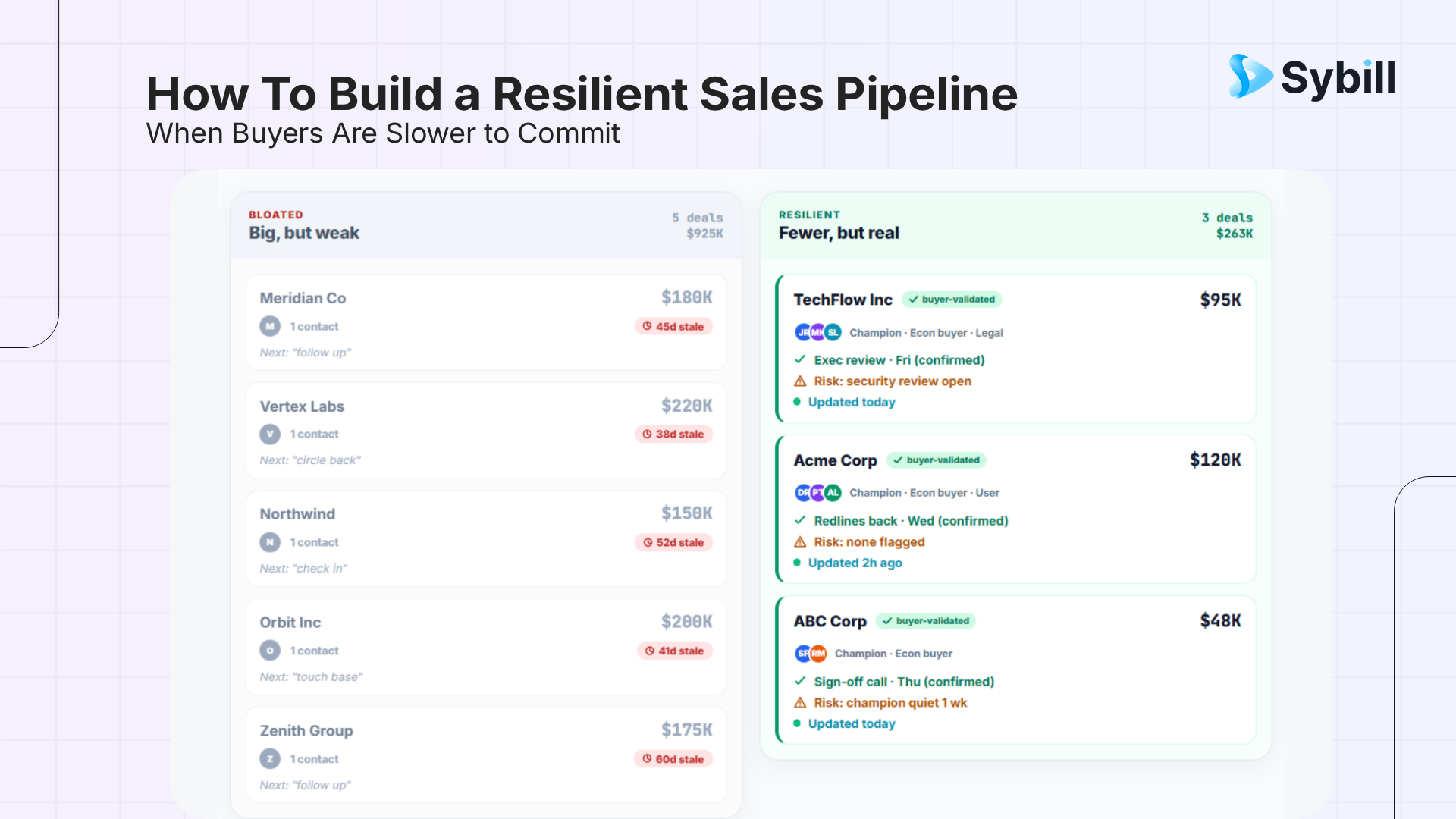
TL;DR: A resilient sales pipeline is a diversified, evidence-backed portfolio of qualified opportunities that can absorb normal deal delays and losses without derailing revenue targets. Build one by calculating coverage from current conversion data, qualifying around buyer urgency, engaging multiple stakeholders, tracking buyer momentum, keeping deal data current, and acting on risks before deals stall.
A big pipeline can make a quarterly review look comforting. So can putting all your laundry on one chair and calling the room clean.
A resilient sales pipeline contains enough qualified, diversified, actively progressing opportunities to withstand ordinary slippage without turning the forecast into crisis management.
Modern B2B buyers are slower, more independent, and surrounded by more opinions than ever. Forrester’s 2026 research found that the typical purchase decision involves 13 internal stakeholders and nine external influencers. Gartner also found that 74% of B2B buying teams experience unhealthy conflict.
The answer is not simply “generate more pipeline.” More unqualified opportunities just create a larger graveyard of deals nobody wants to close-lost. Improve pipeline quality, buyer coverage, execution, and visibility instead.
A resilient sales pipeline is a portfolio of qualified opportunities that can withstand changes in buyer priorities, timelines, budgets, and stakeholder alignment while still supporting predictable revenue.
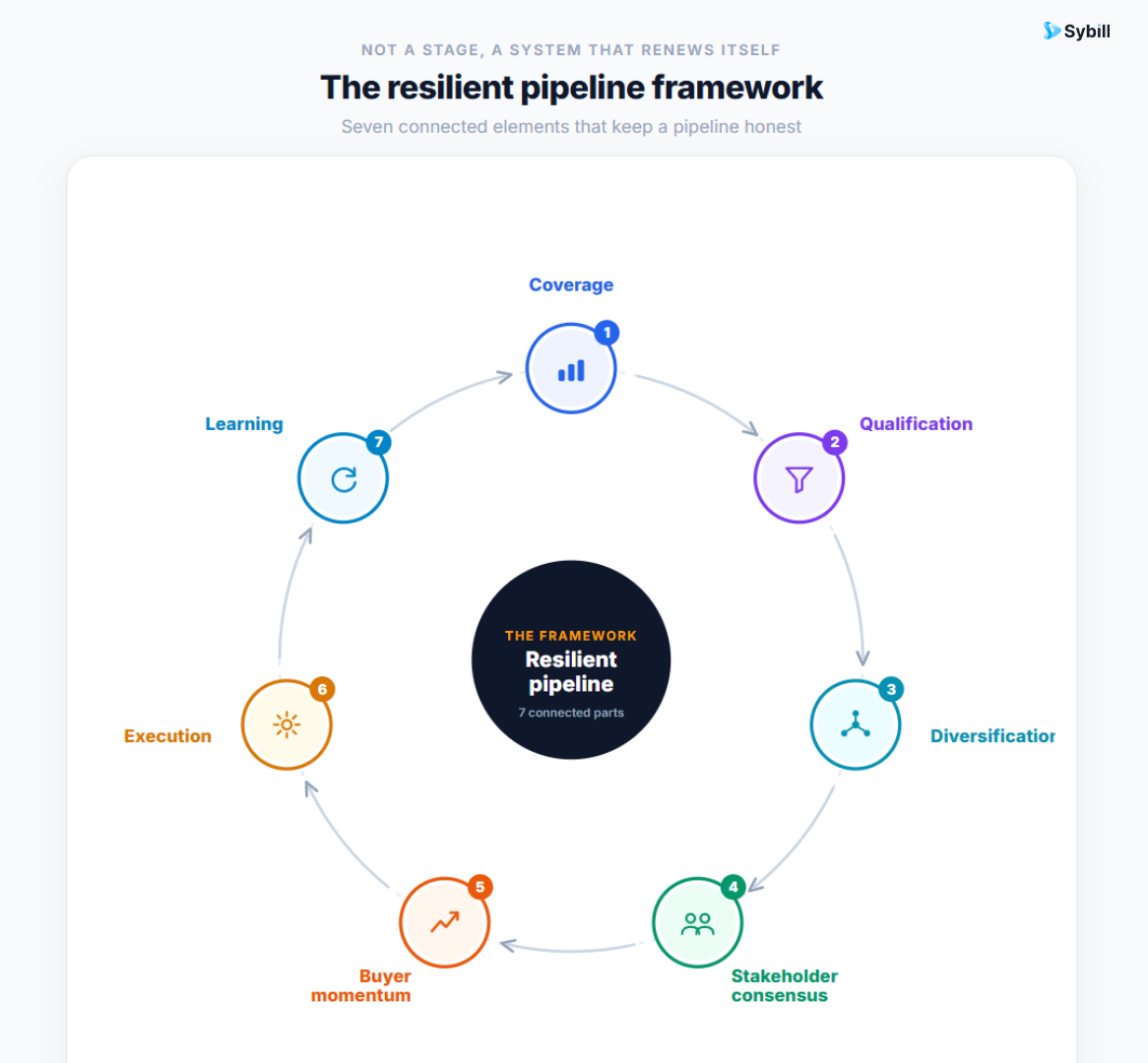
It combines credible coverage, diversified opportunity sources, buyer-backed qualification, multiple relationships inside key accounts, visible momentum, and current deal data managers can trust.
A resilient pipeline survives contact with reality.

Pipelines rarely collapse in one dramatic event. They weaken quietly.
A priority changes. The champion cannot secure budget. Procurement appears three weeks before signature. The economic buyer has never attended a call. The close date moves, but the stage does not. Everyone remains “positive,” which is sales language for “we have no usable evidence.”
Gartner reported in 2026 that 67% of B2B buyers prefer a rep-free experience. Reps often enter after buyers have formed views through websites, peers, communities, reviews, and AI-generated research.
Pipeline resilience now depends on seeing the whole deal story:
This is where pipeline management becomes a deal-context problem.
Sybill brings together calls, emails, CRM activity, and deal history so teams can inspect qualification, buyer intent, stakeholders, objections, competition, risk, and next actions. It then supports execution through briefs, follow-ups, CRM updates, tasks, collateral, and a shared Deal Workspace.
A pipeline cannot be resilient when the truth lives in seven tabs and one rep’s memory.

The famous “3x pipeline coverage” rule is not a law of physics. A team with a 40% win rate does not need the same coverage as one closing 15%. Enterprise deals do not behave like transactional SMB opportunities. Neither do inbound and outbound pipelines.
Calculate required coverage using your own:
Build a base, upside, and downside case. One heroic forecast is not a strategy. It is fan fiction with currency symbols.
See Sybill’s guide to sales pipeline management for the underlying mechanics.
Qualification is not a form completed after discovery and preserved in amber. When budget, leadership, timing, or priorities change, ask again:
Do not reposition every product as a cost-cutting tool. Connect your value to the consequence the buyer cares about now, whether that is revenue, risk, compliance, cost, or capacity.
A resilient B2B sales pipeline is not overdependent on one channel, one whale account, or one suspiciously productive rep.
Balance opportunities across inbound, outbound, partners, referrals, customer expansion, previously closed-lost accounts, product intent, events, segments, and deal sizes.
Existing customers are valuable because trust exists. But “sell more to current customers” is not a complete resilience plan. Concentration risk remains concentration risk.
Single-threaded deals are one resignation, reorganisation, or unanswered email away from disaster.
Map the champion, economic buyer, technical evaluator, procurement, legal, security, end users, executive sponsor, and potential blockers early.
Then understand what each person needs to believe. Your champion may care about speed, finance about payback, security about controls, and the executive sponsor about strategic risk.
Modern purchasing decisions involve networks, not lone heroes. A rep who knows one friendly contact does not have an account relationship. They have a pen pal.
A CRM stage tells you where the seller placed the deal. Momentum tells you whether the buyer is moving.
Healthy momentum includes dated next meetings, completed buyer-owned actions, new stakeholders, shared internal information, active procurement or security work, and a buyer-confirmed timeline.
Warning signs include repeated rescheduling, champion silence, close-date movement without evidence, no access to decision-makers, and “let us circle back next quarter.”
Use Sybill's Deal Inspection to evaluate qualification, momentum, risk, missing stakeholder information, objections, and communication gaps across the opportunity.
For a practical warning-sign checklist, read How to Spot Deal Risk Before Forecast Review.
Execution gaps make healthy deals fragile.
A follow-up arrives late. An agreed action disappears into meeting notes. The CRM still shows last month’s reality. The next call begins with ten minutes of “remind me where we landed.”
Salesforce’s 2026 research says reps spend 60% of their time on non-selling work, including finding content, entering notes, and chasing approvals.
Automate the administrative layer, but judge automation by whether it protects deal momentum. Useful workflows include meeting summaries, contextual follow-ups, CRM updates, pre-meeting briefs, task capture, mutual action plans, and handoff notes.
Sybill’s CRM Autofill captures deal signals from calls and emails and updates configured CRM fields after interactions. That gives pipeline reviews fresher evidence without asking reps to become full-time data clerks.
The strongest pipelines improve because the team studies outcomes, not just activity.
Review where deals stall, which objections kill them, which stakeholders appear in wins, which sources produce durable revenue, which qualification gaps correlate with losses, and why competitors win.
This is where AI can move beyond summarising individual calls. Sybill’s Competitor Intelligence feature, for example, can surface competitor mentions across calls, emails, summaries, and pipeline history and identify patterns across won and lost deals.
Sybill connects pipeline intelligence and deal execution in one workflow.

Ask Sybill and Deal Inspection identify qualification gaps, stalled momentum, missing stakeholders, buyer needs, objections, competitor pressure, and risk across deals or the wider pipeline.
Sybill turns that context into Pre-Meeting Briefs, Magic Summaries, follow-ups, CRM updates, tasks, mutual action plans, and collateral. Insight without action is just an expensive observation.
Deal Workspace gives teams a shared view of stakeholder context, objections, budget discussions, buyer intent, activities, and next actions. Reps, managers, RevOps, and customer success can work from the same story.
Useful pipeline questions include:
Which late-stage deals have no confirmed next meeting?
Which opportunities are still single-threaded?
Which Commit deals have unresolved objections?
Which active deals resemble opportunities we previously lost?
What is the biggest risk and next action for every open opportunity?
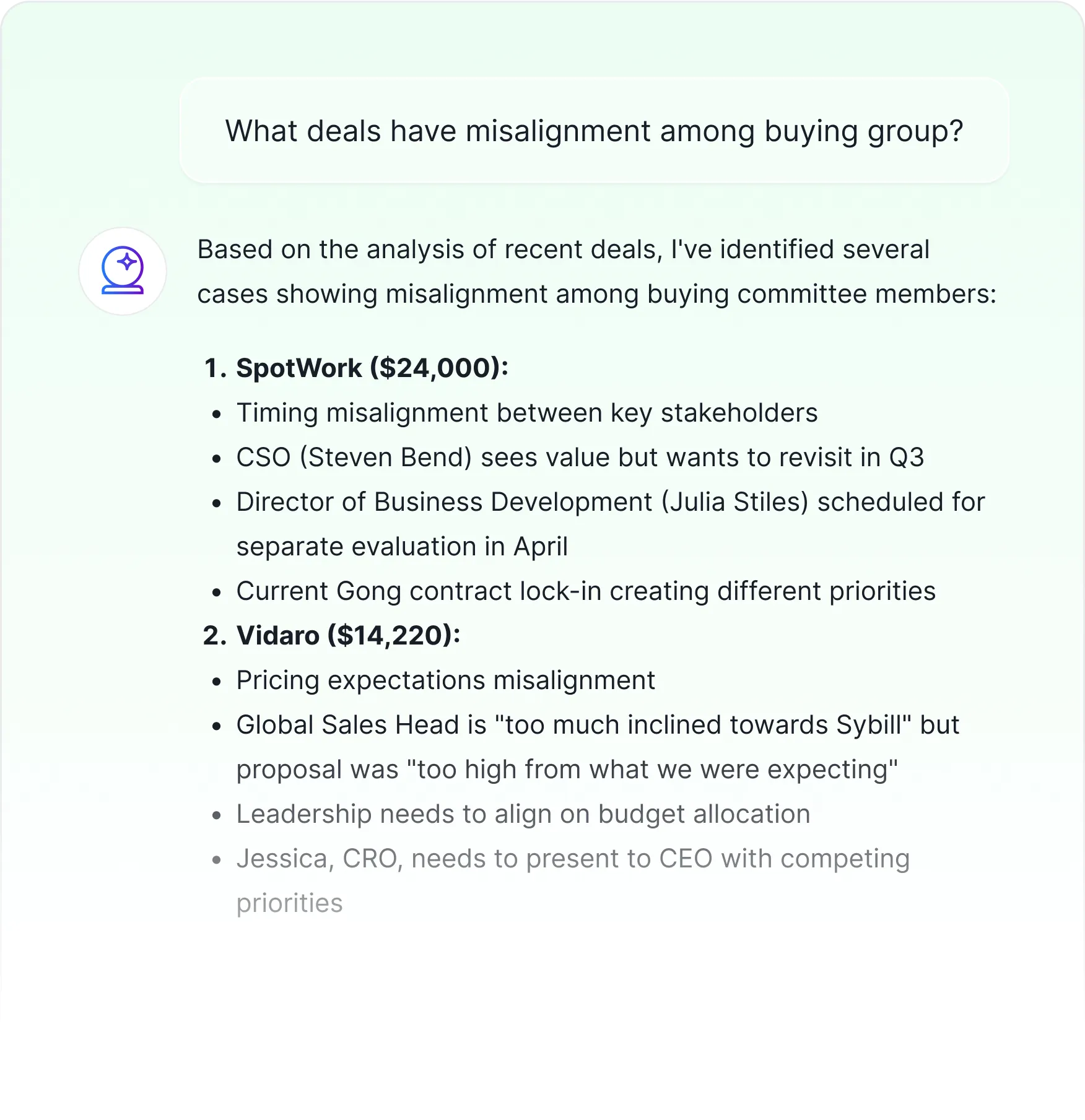
Read Best AI Prompts for Sales Reps to Get Deal Context Quickly for more questions reps can use before calls and pipeline reviews.
Use this scorecard during your weekly sales pipeline review. Focus on opportunities large, urgent, or risky enough to change the number.

A resilient sales pipeline is not the one with the largest number at the top of the dashboard. It is the one your team can explain, defend, and act on.
Qualify harder. Diversify intelligently. Multithread early. Track buyer momentum. Keep the data honest. Learn from what wins and what dies.
Most importantly, stop waiting for forecast review to discover that the pipeline has been cosplaying as healthy.
Ask Sybill which deals are real, which are risky, and what your team should do next. Click here to book a demo.
A sales pipeline is resilient when it has credible coverage, diverse sources, qualified deals, multiple engaged stakeholders, visible buyer momentum, accurate CRM data, and clear next actions. It absorbs ordinary delays without making the revenue target depend on one or two optimistic opportunities.
Recalculate coverage, requalify when buyer conditions change, sharpen the business case, diversify sources, engage the buying group, and inspect risk continuously. Do not keep stale deals open to preserve the appearance of coverage. False pipeline is not protection.
Track coverage, stage conversion, win rate, velocity, sales cycle, stage ageing, slippage, no-decision rate, average deal size, source performance, stakeholder coverage, and next-step quality. Segment the data because company-wide averages can hide weaknesses.
There is no universal ideal ratio. Required coverage depends on win rate, stage conversion, sales cycle, segment, deal size, push rate, and time remaining. A team with a 33% win rate may start near 3x coverage, but current data should determine the ratio.
AI can capture deal context, update CRM records, find qualification gaps and risk signals, compare deals with past outcomes, prepare reps, and recommend next actions. The value is not better summaries alone. It is earlier visibility and faster execution.
Look for vague next steps, missing decision-makers, unconfirmed budget, close-date changes, declining engagement, unresolved objections, competitor mentions, delayed procurement, single-threading, and CRM stages unsupported by buyer activity. Several together deserve immediate inspection.
A sales pipeline is resilient when it has credible coverage, diverse sources, qualified deals, multiple engaged stakeholders, visible buyer momentum, accurate CRM data, and clear next actions. It absorbs ordinary delays without making the revenue target depend on one or two optimistic opportunities.
Recalculate coverage, requalify when buyer conditions change, sharpen the business case, diversify sources, engage the buying group, and inspect risk continuously. Do not keep stale deals open to preserve the appearance of coverage. False pipeline is not protection.
Track coverage, stage conversion, win rate, velocity, sales cycle, stage ageing, slippage, no-decision rate, average deal size, source performance, stakeholder coverage, and next-step quality. Segment the data because company-wide averages can hide weaknesses.