Find us at booth #83, join us for a harbor side happy hour, or catch Gorish’s talk.

Sept, 16-18 > Learn more

%20(1).avif)
Mamta Tainwala

September 22, 2026
Every lead scoring rollout starts with the same promise: sales stops guessing who to call first. And most end the same way: a score column nobody sorts by, because the reps learned that an 85 means "downloads ebooks enthusiastically" and the deal that closed last month scored a 41. The gap between those two outcomes is not the tooling, which HubSpot ships in genuinely capable form. It is what the model counts, and what it was never told about.
This guide covers the full HubSpot implementation: the native scoring options and their tier gates, a build sequence that survives contact with your sales team, the maintenance loop, and then the input most models never receive, which is what buyers actually say in conversations. The platform-agnostic foundations (scoring theory, ICP definition, MQL design) live in our B2B lead scoring guide; this post is the HubSpot-specific machinery.
Three, gated by tier (verify against HubSpot's documentation at publish time, since packaging moves):
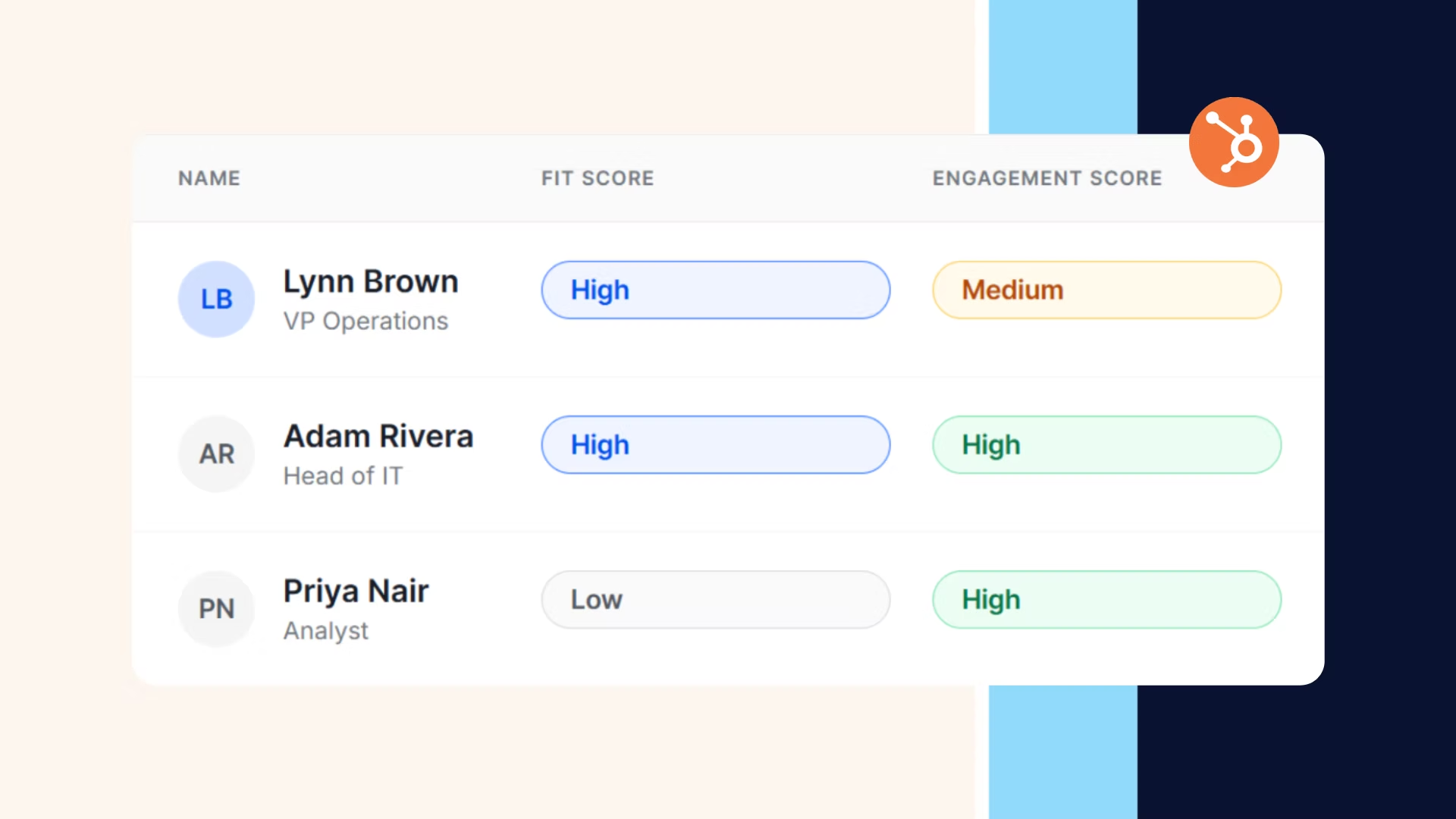
The practical read: separate fit from engagement even when the tooling lets you blend, because the two answer different questions. Fit says whether this lead could ever be your customer; engagement says whether now is the moment. A hot score on a bad-fit lead is the most expensive kind of noise, and it is exactly what a blended model manufactures: enough webinar attendance and a student researching a thesis outscores a VP who visited pricing twice.
Keep the numbers separate, route on the pair (high fit plus rising engagement is the call-now quadrant), and the model starts matching how sales already thinks about leads, which is most of the adoption battle.
Five steps, in an order that matters:
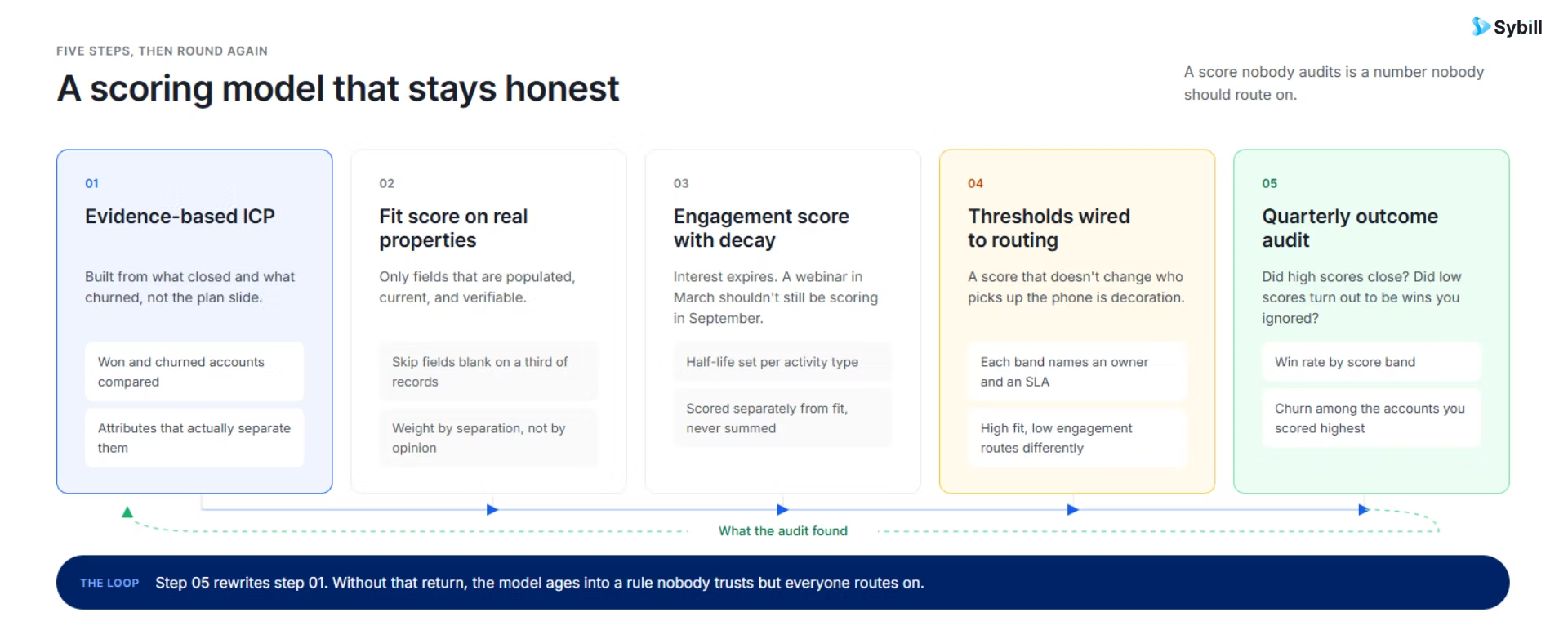
A score is only worth what fires when it moves. The wiring that makes thresholds real, all of it property-driven and therefore inheriting the hygiene rule above:
Three failure patterns account for nearly all the dead score columns in HubSpot instances, and all three share one root cause:
The root under all three: the highest-intent data a company possesses never reaches the score. A prospect who said "we have budget approved for Q1" on Tuesday's call is the hottest lead in the database, and in most HubSpot instances that sentence lives in a rep's memory while the model dutifully adds two points for an email open. The score is precise about weak signals and silent about strong ones, which is the exact inversion of what sales needs.
Stated buying signals outrank inferred ones, always: "we're evaluating you against [competitor] and deciding by March" beats any click pattern ever recorded. The reason models skip them is mechanical, not conceptual: conversation signals only become scoreable when someone turns them into properties, and manual logging loses that race every busy week.
This is where the conversation layer becomes a scoring input rather than a separate tool. Sybill has analyzed around 33 million sales conversations, and in a HubSpot scoring architecture its role is precise: every call and meeting becomes a summary and HubSpot fields that fill themselves through the native integration, which means the stated signals (budget language, named timelines, decision authority, competitor presence, stakeholder breadth) land as properties your fit and intent criteria can score natively. The model doesn't change; its diet does.
The same layer closes the validation loop from step five. Ask Sybill answers the audit questions across closed deals ("which signals appeared in the deals we won that our score missed?"), deal inspection reads the live pipeline against those patterns, and the buyer intelligence view shows what prospects say they need by segment, which is your fit criteria's reality check. Scoring stops being a marketing artifact and becomes what it promised: the database sorted by evidence.
Score what buyers say, not just what they click. Sybill turns every call and meeting into the HubSpot properties your lead scoring can actually count. Get started for free with Sybill.
HubSpot's scoring machinery is not the problem: the rules engine is transparent, the new builder finally separates fit from engagement and makes decay a toggle, and predictive is genuinely useful at Enterprise data volumes. The problem is the diet. A model fed only digital body language will be precise about curiosity and blind to intent, and sales will learn its real accuracy within a quarter and stop sorting by it, at which point the rollout failed regardless of the configuration. Feed it what buyers say, audit it against what actually closed, and the score column becomes the first thing reps check in the morning, which was the promise all along.
Build the model in a week. Feed it what buyers say, audit it against what closed, and earn the only metric that matters: reps sorting by it voluntarily.
Get started for free with Sybill or book a demo and put stated buying signals into every score.
Lead scoring assigns numerical values to contacts (and, depending on subscription, companies and deals) based on how well they fit your ideal customer profile and how actively they engage, so sales knows who to work first. HubSpot offers rules-based score properties on Professional and Enterprise, a lead scoring tool building separate fit and engagement scores with native decay, and machine-learning predictive scoring on Enterprise.
Manual (rules-based) scoring applies criteria you define, with positive and negative point values, and stays fully transparent to the team. Predictive scoring, on Enterprise, models your historical closed contacts with machine learning and outputs Likelihood to close (probability of closing within 90 days) and Contact priority tiers. Predictive needs meaningful closed-won history, commonly cited at several hundred contacts, to model reliably.
Separate fit from engagement. Fit scores encode who the lead is (segment, size, role, ICP match) from populated properties; engagement scores encode what they do, weighted toward actions that historically precede pipeline, with decay on so recency matters, and negative criteria removing disqualified patterns. Thresholds should trigger real machinery: lifecycle changes, routing, and sequence enrollment.
Because the score got caught being wrong: hot-scored leads that were bad fits, and closed deals that scored cold. The usual causes are models built only on marketing-visible signals (clicks and forms), never validated against closed outcomes, and blind to stated buying signals from actual conversations. Reps re-trust a score only after its diet and its audit loop change.
Yes, and it is the highest-intent input available: stated budget, named timelines, decision authority, competitor presence, and stakeholder breadth outrank any click pattern. The mechanical requirement is that those signals land as HubSpot properties automatically, which is what Sybill's CRM autofill does from every call and meeting, making them scoreable by your existing criteria and auditable against outcomes.
Audit quarterly against outcomes: pull closed-won and closed-lost, check what each scored at first sales touch, and adjust the criteria the results contradict. Score decay handles the passage of time automatically in the current builder; only the outcome audit handles whether the model still describes your buyers.
Lead scoring assigns numerical values to contacts (and, depending on subscription, companies and deals) based on how well they fit your ideal customer profile and how actively they engage, so sales knows who to work first. HubSpot offers rules-based score properties on Professional and Enterprise, a lead scoring tool building separate fit and engagement scores with native decay, and machine-learning predictive scoring on Enterprise.
Manual (rules-based) scoring applies criteria you define, with positive and negative point values, and stays fully transparent to the team. Predictive scoring, on Enterprise, models your historical closed contacts with machine learning and outputs Likelihood to close (probability of closing within 90 days) and Contact priority tiers. Predictive needs meaningful closed-won history, commonly cited at several hundred contacts, to model reliably.
Separate fit from engagement. Fit scores encode who the lead is (segment, size, role, ICP match) from populated properties; engagement scores encode what they do, weighted toward actions that historically precede pipeline, with decay on so recency matters, and negative criteria removing disqualified patterns. Thresholds should trigger real machinery: lifecycle changes, routing, and sequence enrollment.