Find us at booth #83, join us for a harbor side happy hour, or catch Gorish’s talk.

Sept, 16-18 > Learn more

%20(1).avif)
Mamta Tainwala

August 22, 2026
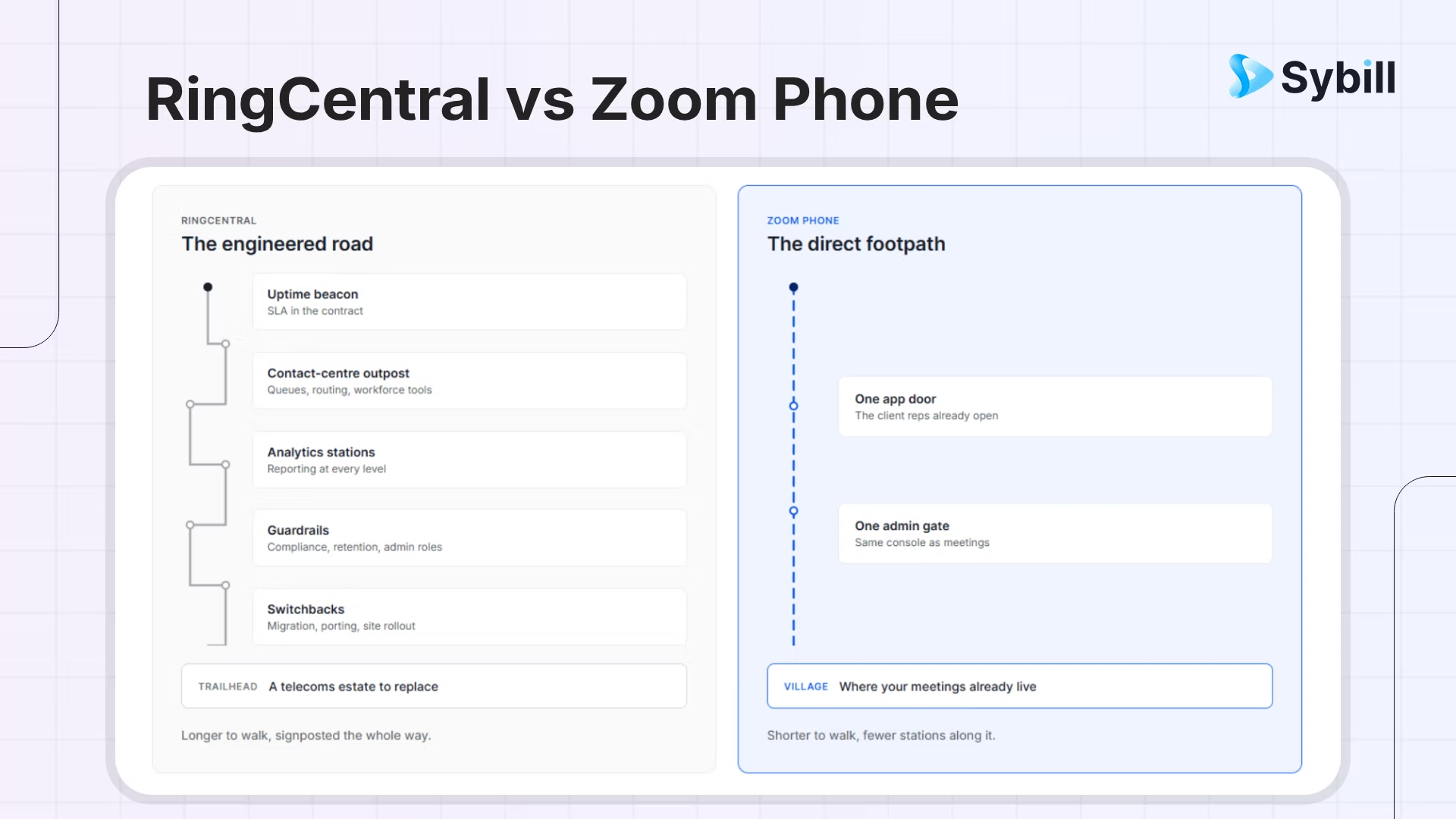
RingCentral and Zoom Phone are both credible cloud phone systems arriving from opposite directions. RingCentral built telephony first, across two decades: deep call routing, granular analytics, contact-center capability, enterprise controls, and a marketed five-nines uptime SLA, with cost and weight to match. Zoom Phone extends the platform your team already meets on: one app, one admin console, one vendor, the simplest user experience in the category, and a lighter cost posture, with telephony depth that is honest about being the newer, simpler layer. The trade is depth versus the path of least resistance.
For revenue teams there is a wrinkle the generic comparisons miss, and we will get to it: your customer conversations already happen on Zoom. First, the standard dimensions, from the standard seat: Sybill integrates with both platforms, sees both platforms' calls daily, and has no side to take.
Structurally yes, historically no, and the history is the comparison: both are UCaaS platforms offering phone, video, and messaging, but RingCentral is a phone company that added everything else, while Zoom is a meetings company that added a phone. Each platform is strongest at its origin and serviceable at the rest, which is why the decision usually reduces to which origin matches your center of gravity.
That asymmetry shows up everywhere once you look for it. RingCentral's phone system has the accumulated depth of a product that has been the whole business for twenty years: routing edge cases handled, analytics granular to the extension, admin controls for every policy a telecom manager ever requested. Zoom Phone has the polish of a company that won on user experience: the app your team already knows, calling added so naturally that adoption is a non-event. Neither can fully counterfeit the other's origin, and the honest evaluations stop asking them to.
For calling fundamentals, both cover a revenue team: click-to-dial, CRM logging, local numbers, mobile apps. The separation appears at the edges. RingCentral's depth matters when your motion needs complex routing, serious call analytics (volumes, hold times, abandonment, per-extension performance), or a real contact-center layer as you scale. Zoom Phone's simplicity matters when the goal is reps making and taking calls inside the app they already live in, with nothing new to adopt and nothing extra to administer. Neither is a volume-dialing specialist.
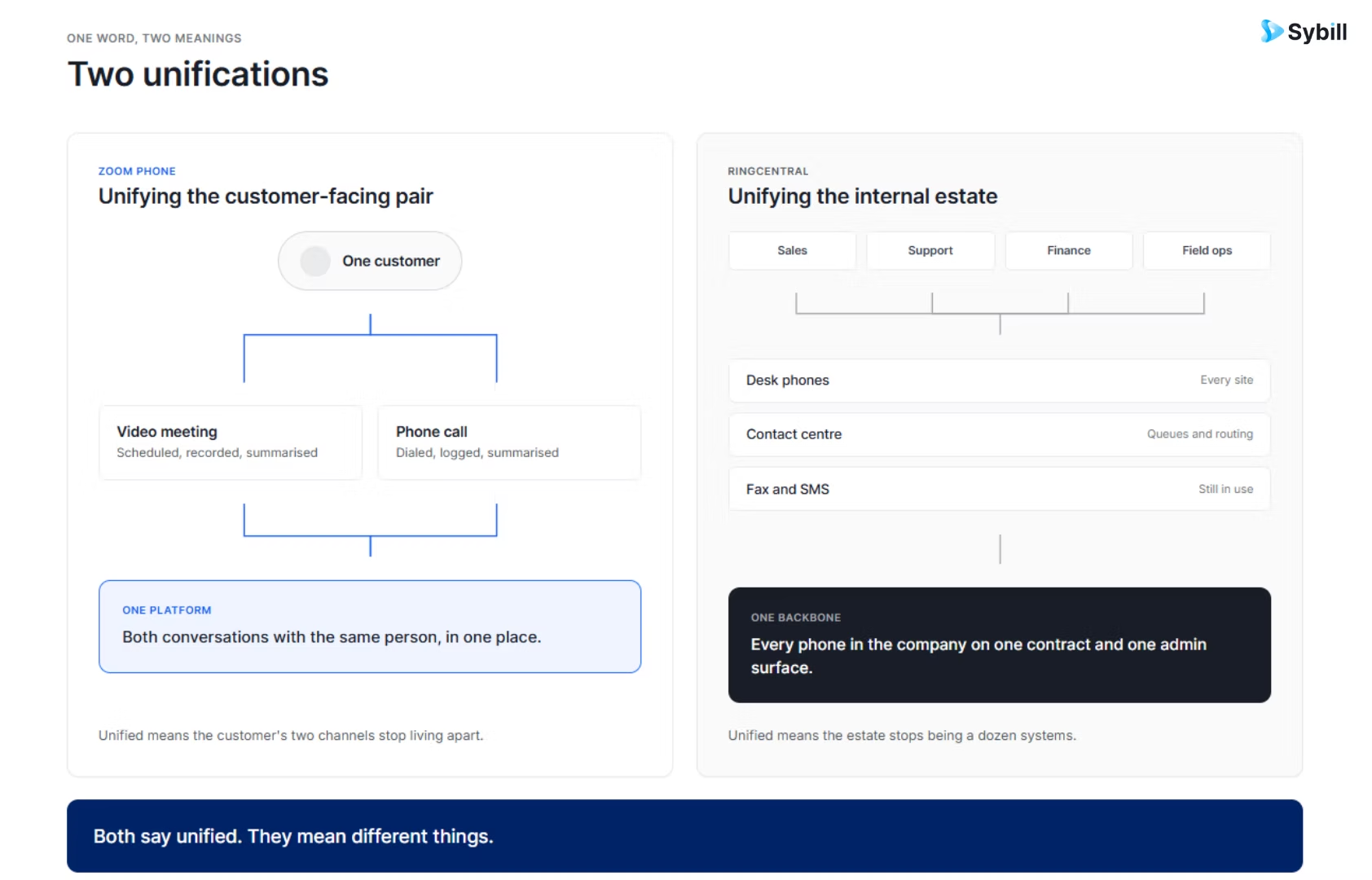
The sales-specific wrinkle, and it is genuinely this pair's most interesting angle: for most B2B teams, the two channels customers actually touch are scheduled video meetings and phone calls, and the meetings already happen on Zoom. Zoom Phone unifies the customer-facing pair (one platform carrying both conversation types), while RingCentral unifies the organization's internal communications estate. Those are different unifications, and knowing which one you are buying clarifies the whole evaluation. A sales org whose deals run through Zoom meetings gets a specific convenience from the phone living there too; an operations org consolidating telephony across departments gets a different convenience from RingCentral's estate management. That framing is ours, from watching both platforms' calls, so weigh it accordingly.
Series-standard limits: genuinely volume-shaped SDR motions (hundreds of dials daily) belong with the specialists in our dialer roundup, with the mode taxonomy in our full dialer guide. And the craft layer travels with neither logo: timing and openers still move connect-to-meeting rates more than the platform does.
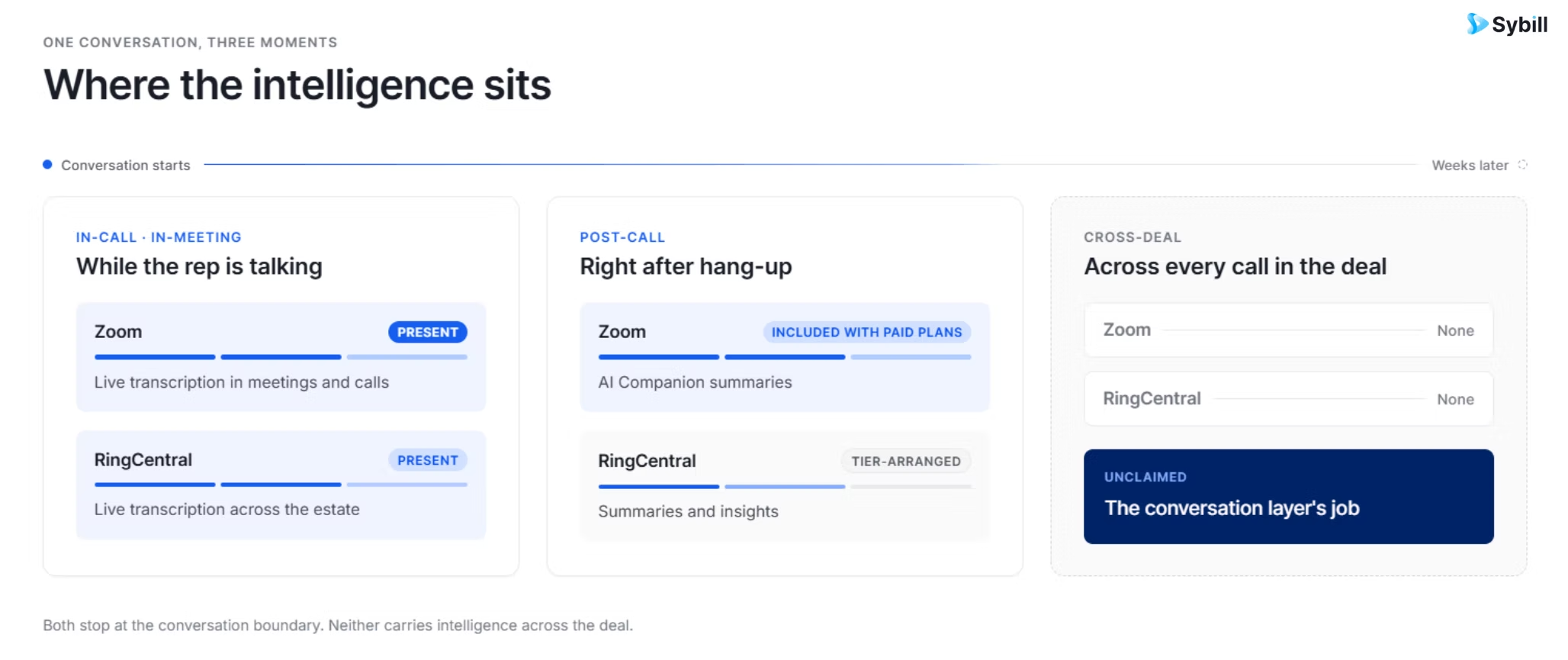
Both platforms now ship meaningful AI, with postures that match their characters: Zoom's AI Companion is famous for its bundling (included with paid plans at no extra per-seat cost, covering meeting summaries and extending across the platform, phone included), while RingCentral's AI layer brings summaries, transcription, and conversation insights with more of its depth arranged across tiers and products. Neither is AI-native the way the specialist corner of this category is; both deliver useful call-level intelligence. Verify current inclusion and tier placement on both, since AI packaging is the fastest-moving detail in this market.
The buyer's read: Zoom's included-at-no-extra-cost posture is a genuine budget advantage for teams that would otherwise pay per-seat for summaries, and it fits the platform's whole simplicity thesis, one app, one bill, intelligence included. RingCentral's AI earns its keep further up the requirements inventory, where conversation analytics meet its heavier reporting machinery. And the series-standard boundary applies unchanged: platform AI on both sides is call-level and meeting-level. The cross-deal layer, what was said across every conversation on an account, written into CRM fields, follow-ups, and risk flags, is neither platform's job, which is why it should not decide this comparison for teams already running a conversation layer.
RingCentral's territory, decisively: analytics granular to call volumes by hour, hold times, abandonment rates, and individual extension performance; routing and IVR built for complex, multi-team, multi-site estates; and a marketed 99.999% uptime SLA that reads as a promise to organizations that treat the phone as mission-critical infrastructure. Zoom Phone administers beautifully for what it is (one console shared with meetings, policies an IT generalist can run), and its depth is honest: enough for straightforward calling needs, lighter where telecom estates get complicated.
The right question is not "which has more" (RingCentral, by a distance) but "which failures would you actually have." Teams with simple calling needs pay RingCentral's depth premium and never open the analytics; teams with complex needs adopt Zoom Phone for its simplicity and hit feature walls mid-quarter, exactly the mismatch pattern this whole series keeps finding. Inventory your actual requirements (queues? multi-site routing? per-extension reporting? contact center on the roadmap?) before either demo, and let the inventory choose.
Compliance and controls follow the same shape: RingCentral leads on enterprise certifications and controls like data residency, while Zoom Phone covers mainstream compliance well, with one honest flag from current buyer guides worth pricing in: compliance-grade recording on Zoom Phone can require additional licensing, so teams with recording obligations should model that cost explicitly rather than discovering it post-contract. [VERIFY-FEATURES] Whichever platform you pick, recording is also where legal obligations start, and the state-by-state consent map is yours to configure during the pilot.
RingCentral's integration marketplace is one of the category's largest, reaching CRMs, help desks, and vertical systems, with the heavier CRM automation to match; Zoom Phone covers the mainstream stack (major CRMs, calendars, Slack and Teams coexistence) cleanly, and its deepest integration is the one nobody lists: the Zoom meetings your team already runs. Cost posture: Zoom Phone's is meaningfully lighter for straightforward needs, RingCentral's reflects its depth and accumulates add-ons at ambition, and current buyer guides note the gap narrows in negotiation, so treat list prices as opening positions.
The licensing-trap honesty, both sides, because every platform in this series gets one: Zoom Phone's attractive entry posture can grow a second subscription when compliance recording or advanced needs arrive; RingCentral's sticker looks expensive until you count the admin time its depth saves, and then looks expensive again when add-ons stack. The two-year total-cost model (seats, add-ons, admin time, negotiated rates) is the only comparison that means anything, and it is a spreadsheet afternoon, not a vendor call.
The series-standard integration test also stands: your five daily tools against both catalogs, thirty minutes, settles more than any comparison page. For revenue teams, remember the floor-versus-ceiling distinction: both platforms log call activity to the CRM competently, and activity logging is the floor, as our CRM automation guide lays out. What the call meant is a different layer entirely.
Choose RingCentral if: your phone is mission-critical infrastructure with complex routing, multi-site estates, or a contact center on the roadmap; you need analytics granular enough to staff by; procurement requires enterprise controls and certifications; and you are consolidating the organization's communications, not just adding calling. The shape: an org whose telephony requirements fill a real inventory.
Choose Zoom Phone if: your team already lives in Zoom and adoption friction is the enemy; your calling needs are genuinely straightforward (numbers, routing basics, CRM logging); one app and one admin console beat feature depth you would not open; and the customer-facing pair (meetings plus calls on one platform) is the unification you actually want. The shape: a Zoom-native org buying the path of least resistance, honestly assessed.
The tiebreaker: write the requirements inventory before either demo. This pair punishes skipped homework in both directions, and rewards teams that know whether their phone needs fit on one page or ten.
Meetings and calls, one conversation record. Sybill captures every RingCentral and Zoom Phone conversation, and your Zoom meetings too, turning all of it into summaries, CRM updates, follow-ups, and deal intelligence automatically. Get started for free with Sybill.
Here is the observation this specific pair sets up better than any other in the series: whichever platform wins, your customer conversations still end up split across channels (scheduled meetings, outbound calls, inbound calls), and the phone system unifies at most the plumbing. What it does not unify is the substance: what the buyer said in Tuesday's Zoom meeting, what they said in Thursday's phone call, and the fact that those two statements contradict each other on timeline, which is exactly the kind of signal deals turn on.
That substance layer is the conversation layer, and it is channel-agnostic by design: Sybill has analyzed around 33 million sales conversations across the meeting and dialer platforms it connects to, turning every conversation, on either platform in this comparison and the meetings besides, into a summary, CRM fields that fill themselves, a follow-up in the rep's voice, captured commitments, and account-level intelligence (risk flags, queryable history) that spans channels the way deals actually do. Pre-meeting briefs assemble everything said everywhere before the next touch. The full integration list covers both sides of this page.
Which resolves the wrinkle from the top: Zoom Phone unifies where customer conversations happen; the conversation layer unifies what they mean. Teams running both stop losing signal at the channel boundary, on either phone platform.
For Zoom-native teams with straightforward calling needs, Zoom Phone is the right answer and the cheaper one, and pretending otherwise inflates requirements nobody has. For organizations whose telephony inventory runs long (routing complexity, analytics, contact center, estates, certifications), RingCentral's depth is the actual product, and the simplicity premium of choosing against it gets repaid in feature walls. The failure mode of this pair is skipped homework: the requirements inventory is one page or ten, and the page count picks the platform.
Count your requirements. Then stop overthinking it.
Get started for free with Sybill or book a demo and unify what the conversations mean, on either platform.
For straightforward sales calling inside a Zoom-native org, Zoom Phone: nothing new to adopt, one platform carrying both customer meetings and calls. For teams needing complex routing, granular call analytics, or contact-center capability as they scale, RingCentral's telephony depth wins. Inventory your requirements first; the page count decides.
Origin. RingCentral is a phone company that added video and messaging across two decades of telephony depth. Zoom is a meetings company that added a phone with the simplest user experience in the category. Each is strongest at its origin, and the right choice matches your center of gravity.
Generally yes in posture, especially for smaller teams with straightforward needs, though current buyer guides note the gap narrows in negotiation and both are opening positions rather than final prices. Model two-year total cost including add-ons (compliance recording licensing on Zoom Phone, capability add-ons on RingCentral) rather than comparing stickers. [VERIFY-PRICING]
Zoom Phone supports call recording, and teams with formal compliance-recording obligations should verify current licensing carefully, since compliance-grade recording capabilities have required additional licensing per current buyer guides. Recording consent rules also vary by state regardless of platform, so configure disclosure during rollout, not after.
Yes, Sybill integrates natively with both, and with Zoom meetings besides, capturing every conversation across channels and turning it into summaries, CRM updates, follow-ups, and deal intelligence automatically. The conversation layer spans meetings and calls the way deals actually do, on either platform.
For straightforward sales calling inside a Zoom-native org, Zoom Phone: nothing new to adopt, one platform carrying both customer meetings and calls. For teams needing complex routing, granular call analytics, or contact-center capability as they scale, RingCentral's telephony depth wins. Inventory your requirements first; the page count decides.
Origin. RingCentral is a phone company that added video and messaging across two decades of telephony depth. Zoom is a meetings company that added a phone with the simplest user experience in the category. Each is strongest at its origin, and the right choice matches your center of gravity.
Generally yes in posture, especially for smaller teams with straightforward needs, though current buyer guides note the gap narrows in negotiation and both are opening positions rather than final prices. Model two-year total cost including add-ons (compliance recording licensing on Zoom Phone, capability add-ons on RingCentral) rather than comparing stickers. [VERIFY-PRICING]