
Find us at booth #83, join us for a harbor side happy hour, or catch Gorish’s talk.

Sept, 16-18 > Learn more

%20(1).avif)
Mamta Tainwala

August 18, 2026
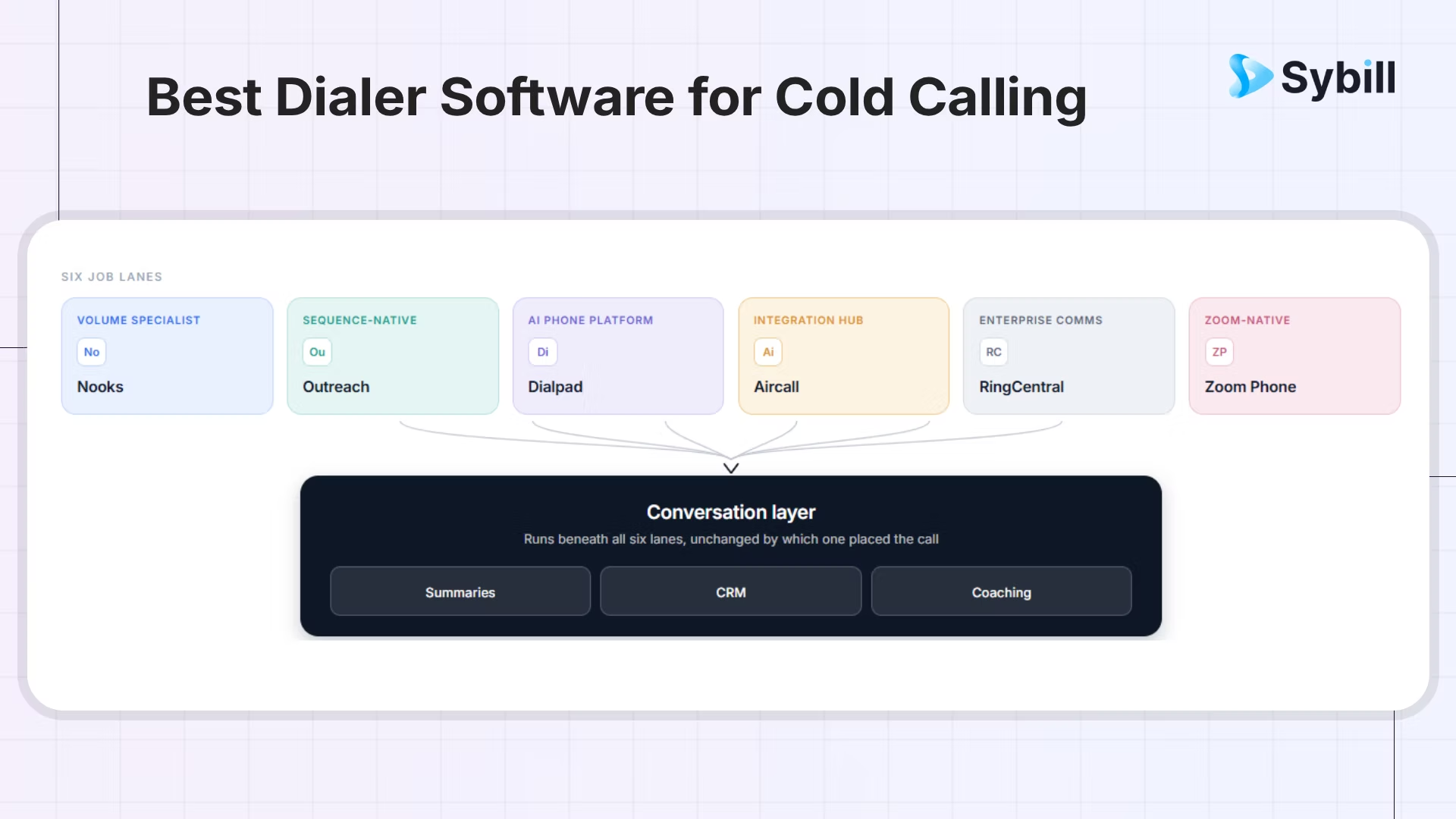
The six best dialer software tools for cold calling in 2026, by the job each owns: Nooks for AI parallel dialing at SDR volume, Outreach for calling native to your sequences, Dialpad for an AI-first phone platform with real-time transcription, Aircall for a cloud phone system that plugs into everything, RingCentral for enterprise-grade communications at scale, and Zoom Phone for teams already living in Zoom. Different motions need different dialers; what every motion needs is for the conversations those dialers create to actually go somewhere.
One selection disclosure before anything else, because it is also this list's authority claim: these six are the dialers Sybill integrates with, which means they are the six whose calls we capture, summarize, and analyze every single day. We are not reviewing pricing pages here. We see what these tools' calls look like in the wild, and the assessments below come from that seat.
Dialer software automates the mechanics of outbound calling: dialing from lists, dropping voicemails, rotating numbers to protect reputation, displaying local presence, and logging every attempt to the CRM, so a rep's calling block is spent talking instead of operating a phone. The mode matters most: power dialing (one line, sequential) optimizes connect quality; parallel dialing (several lines at once) optimizes volume.
That is the two-minute version. The full taxonomy, the power-versus-parallel trade-offs our SDR team would tell you about over coffee (including why parallel dialers struggle with AI gatekeepers), and the compliance checklist live in our complete dialer guide, and the business case is made in our outbound dialing benefits guide. This post does the tool-by-tool work.
Selection was deliberate and narrow: these are the six dialers Sybill integrates with natively, which means two things for you as a reader. First, honesty about scope: excellent dialers exist outside this list, and if none of these fit your motion, our criteria below still apply to whatever you evaluate. Second, depth you cannot fake: around 33 million sales conversations have flowed through Sybill's analysis, a meaningful share of them originating in these six tools, so the strengths and watch-fors below reflect observed reality, not brochure copy.
The evaluation lens, applied to each: what job the tool actually owns (a parallel specialist and an enterprise phone system are different purchases wearing one category label), how deep the CRM and stack integration goes, what the number-reputation and compliance tooling looks like, and what a team honestly gives up by choosing it. Every tool below gets a watch-for, because a roundup where everything is wonderful is an ad.
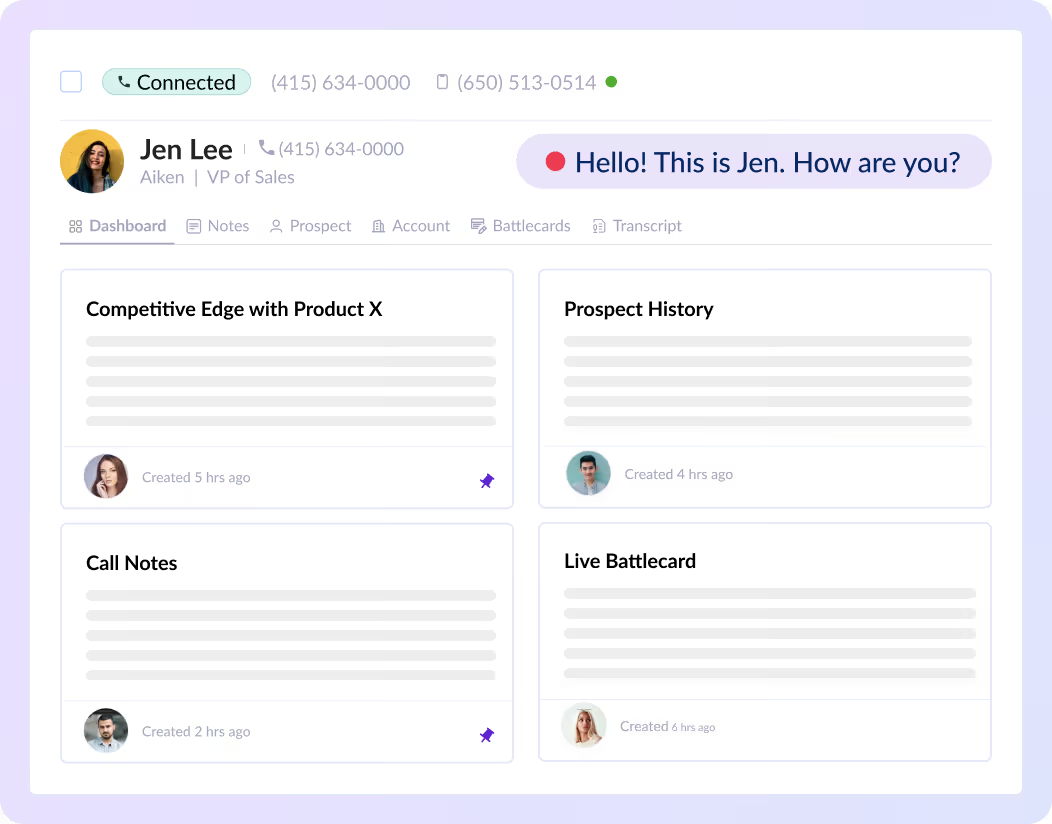
What it is: A dialing platform built around AI-powered parallel dialing, ringing multiple lines at once and connecting the rep to whoever answers, with a virtual sales floor for live coaching and call analytics layered on top.
Best for: SDR teams whose motion is genuinely volume-shaped: long cold lists, high daily dial targets, and a manager who wants to coach the floor live rather than after the fact.
Strengths: This is the specialist on the list. Where the others treat dialing as one feature among many, Nooks exists to maximize conversations per calling block, and for teams working big lists the throughput difference is real. The salesfloor concept also deserves credit: remote SDR teams get back the overhear-and-coach dynamic that died with the office bullpen.
What to watch for: Parallel dialing's structural trade-offs apply here as everywhere: the pickup lag some prospects read as a cold-call tell, friction with AI gatekeepers, and connect experiences that are volume-optimized rather than white-glove. For senior, high-value lists, run power mode or slow down deliberately.
Pricing posture: Per seat, sales-team focused.

What it is: The dialer inside the Outreach sales engagement platform: calls live as sequence steps alongside emails and LinkedIn touches, with local presence and automatic activity logging into the workflow reps already run.
Best for: Teams already running Outreach as their engagement layer, for whom a standalone dialer would mean a second queue, a second log, and a second place for tasks to die.
Strengths: Context is the whole pitch, and it is a good one: the call happens inside the sequence, so the rep sees every prior touch at dial time, and the outcome routes the prospect's next step automatically. For multichannel motions, calling as a sequence step beats calling as a separate app, a logic our sales engagement platform guide unpacks in full.
What to watch for: You are buying an engagement platform, not a dialer; evaluating Outreach on dialing alone is backwards, and teams not committed to the platform should not enter for the phone. Dialer-specialist features are also not the point here. (Salesloft users: the equivalent logic applies, and that integration is on our coming-soon list.)
Pricing posture: Platform pricing, per seat, quoted.
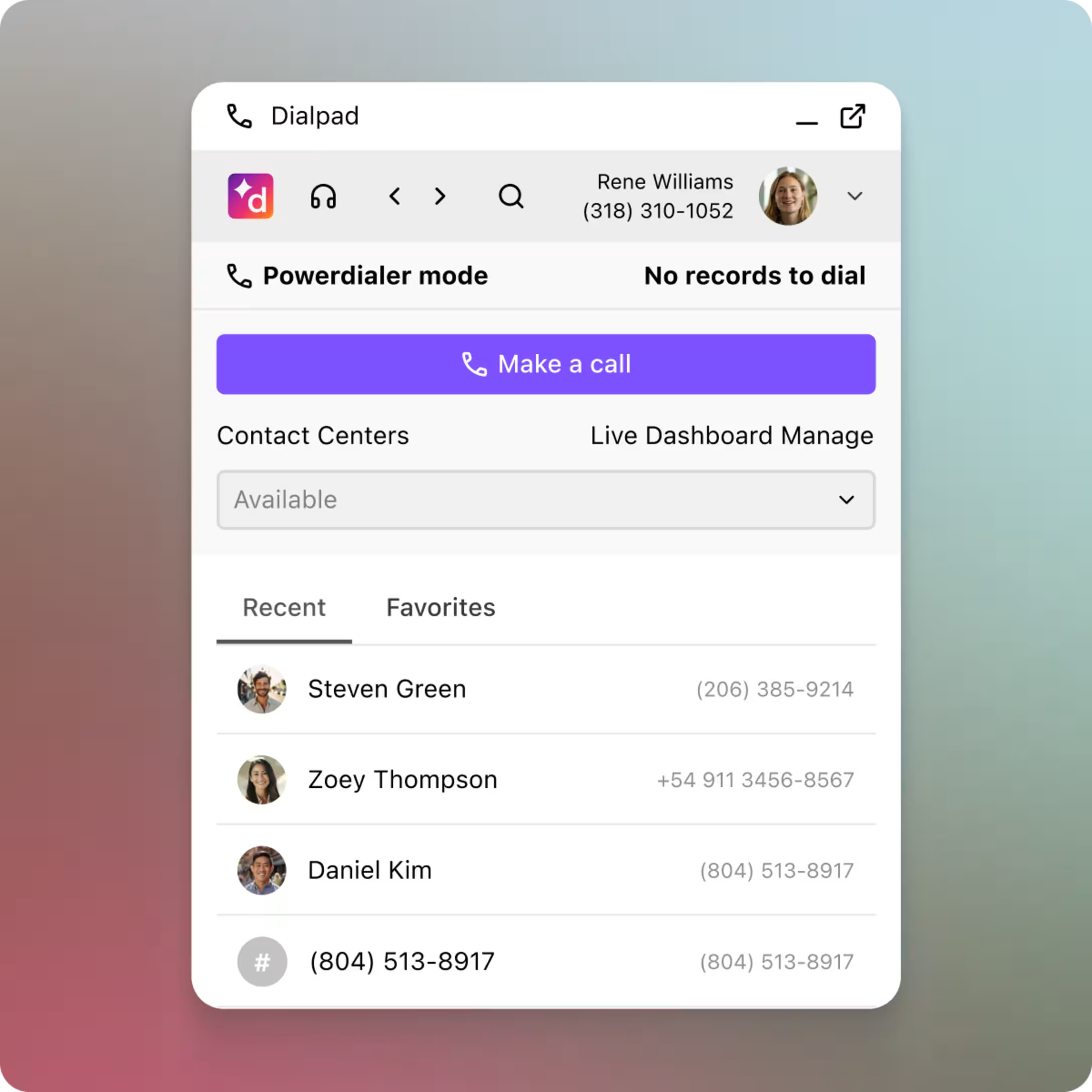
What it is: A cloud communications platform with AI built into the telephony itself: real-time transcription during calls, live coaching prompts, and conversation analytics, alongside a sales dialer and full business phone system.
Best for: Teams that want intelligence in the phone layer itself and a modern UI their reps will not fight, without assembling it from parts.
Strengths: Credit where due: Dialpad took AI in telephony seriously earlier than most, and the real-time transcription and in-call assistance are genuinely useful for reps mid-conversation, not just after it. As an all-in-one voice platform for a sales team, the experience is clean and the learning curve short.
What to watch for: Platform breadth is the trade: dialing-specialist capabilities are not the design center, and teams whose entire problem is outbound throughput may find the volume tooling lighter than a specialist's. Some capabilities also sit in higher tiers, so match the plan to the feature list before budgeting.
Pricing posture: Tiered per seat; free trial available.
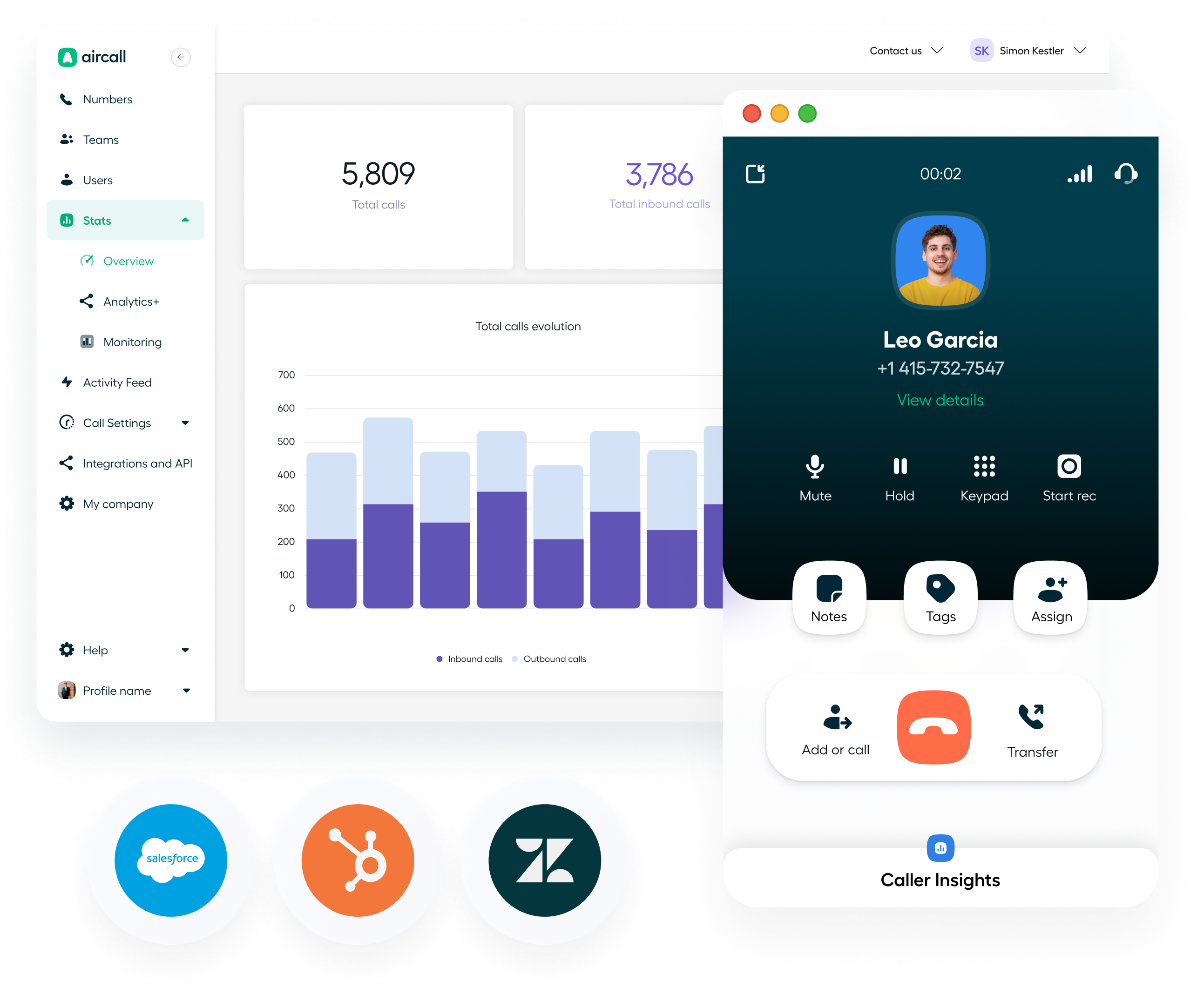
What it is: A cloud-based phone system built for sales and support teams, with a power dialer, call routing, and a very large integration marketplace that writes call activity into whatever your team already runs.
Best for: SMB and mid-market teams whose stack is the point: CRM, helpdesk, and revenue tools that all need to know about every call, connected in an afternoon rather than a quarter.
Strengths: The integration surface is the honest headline, and setup speed is the recurring compliment: teams get numbers, routing, and CRM logging live fast, without telephony expertise. As shared infrastructure across sales and support, it earns its keep.
What to watch for: Advanced outbound modes are not the focus; volume-obsessed SDR teams will notice the ceiling. The right frame: Aircall is the phone system your whole customer-facing org shares, with solid outbound features, not an outbound weapon.
Pricing posture: Per seat, tiered; minimum seat counts on some plans.
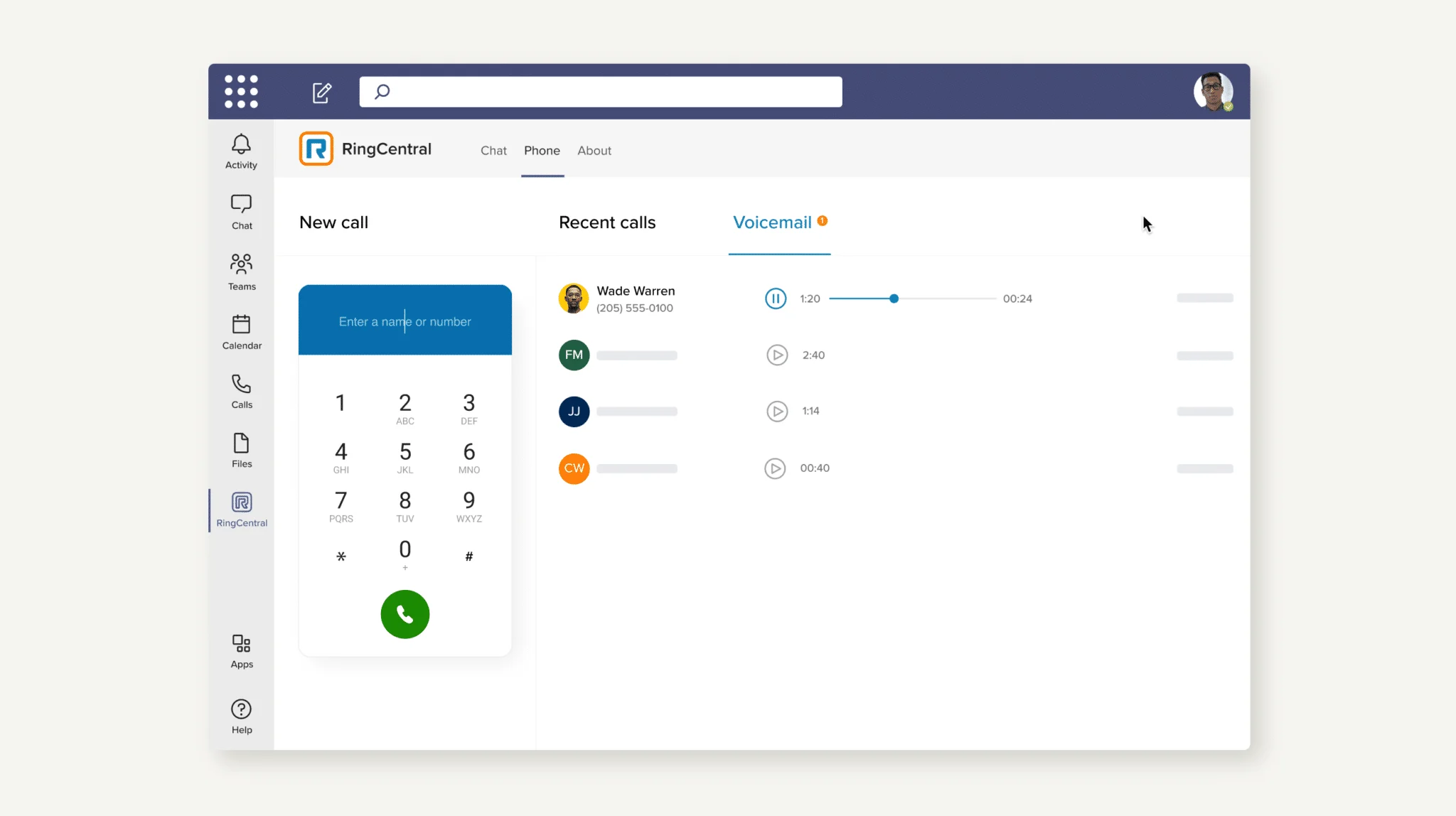
What it is: One of the category's enterprise anchors: cloud phone, video, and messaging at global scale, with outbound and contact-center capabilities for teams that need calling infrastructure with governance, reliability, and international reach.
Best for: Large organizations consolidating communications onto one vendor, where the sales dialer is one workload on a platform serving the whole company.
Strengths: Scale and maturity are real: global numbers, enterprise administration, compliance tooling, and the reliability posture procurement wants. When a 2,000-person company standardizes its telephony, this is the shortlist, and the sales team inherits serious infrastructure.
What to watch for: Weight, in both senses: implementation cycles and admin overhead befit the enterprise ambition, add-ons accumulate, and a 15-rep SDR team buying it purely as a cold-calling dialer is bringing a container ship to a fishing trip.
Pricing posture: Per seat, tiered; enterprise quotes for advanced capabilities.
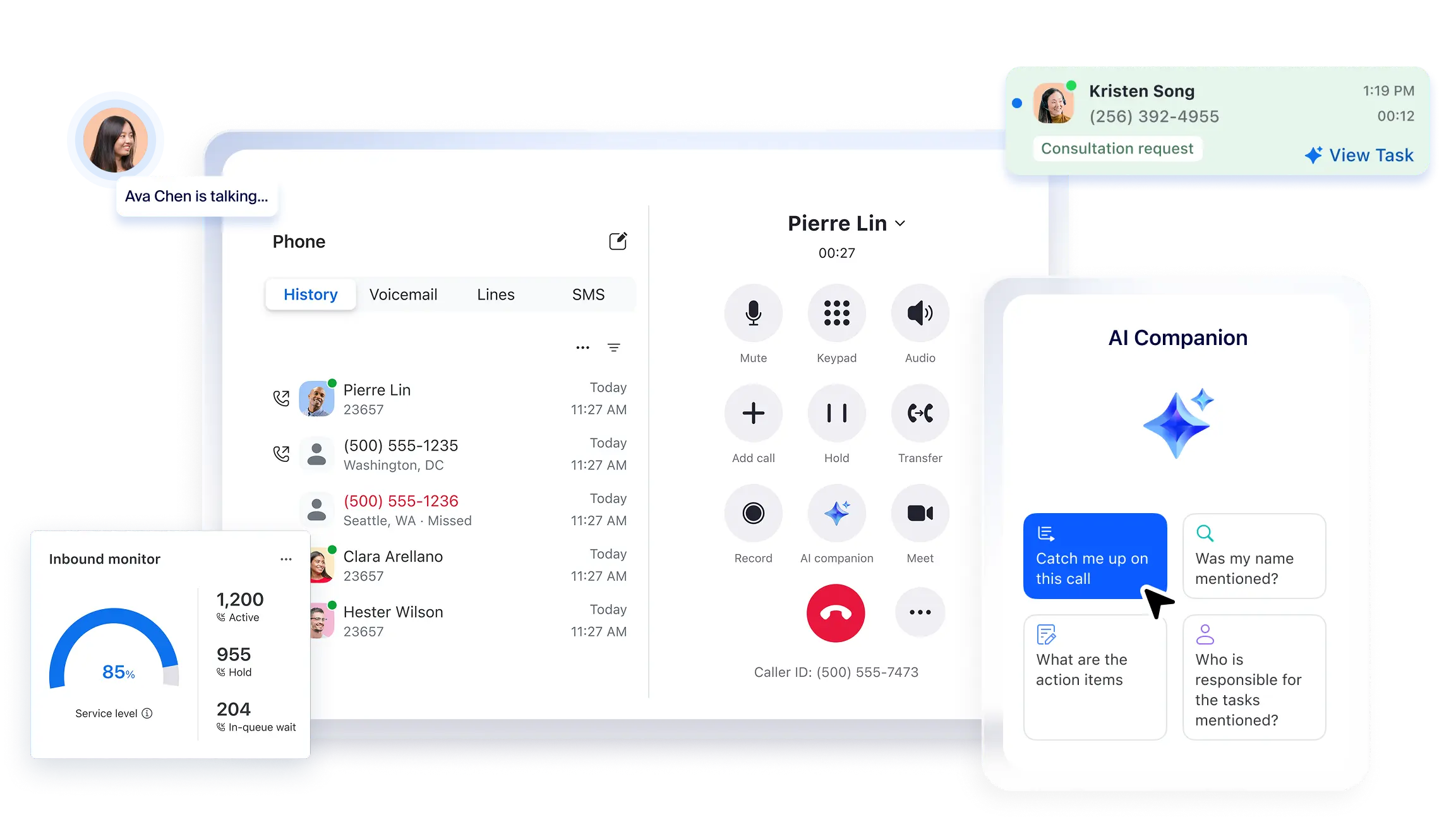
What it is: Zoom's cloud phone system: full business calling inside the platform your team already uses for meetings, with click-to-dial, CRM logging, and the familiar Zoom admin layer.
Best for: Zoom-native organizations that want calling added to the tool everyone already has open, with one vendor, one admin console, and zero new-app resistance.
Strengths: Adoption friction is the quiet killer of phone rollouts, and Zoom Phone's answer is that there is nothing new to adopt. For teams whose calls are a mix of scheduled meetings and outbound dials, having both in one ecosystem, under one admin model, is genuinely convenient.
What to watch for: It is a phone system first; outbound-sales dialing features are the lighter layer, and volume SDR motions will want more machinery. The evaluation question is honest fit: is this a calling-enabled workplace or an outbound engine? For the former, strong; for the latter, look up-list.
Pricing posture: Per seat add-on within Zoom plans.
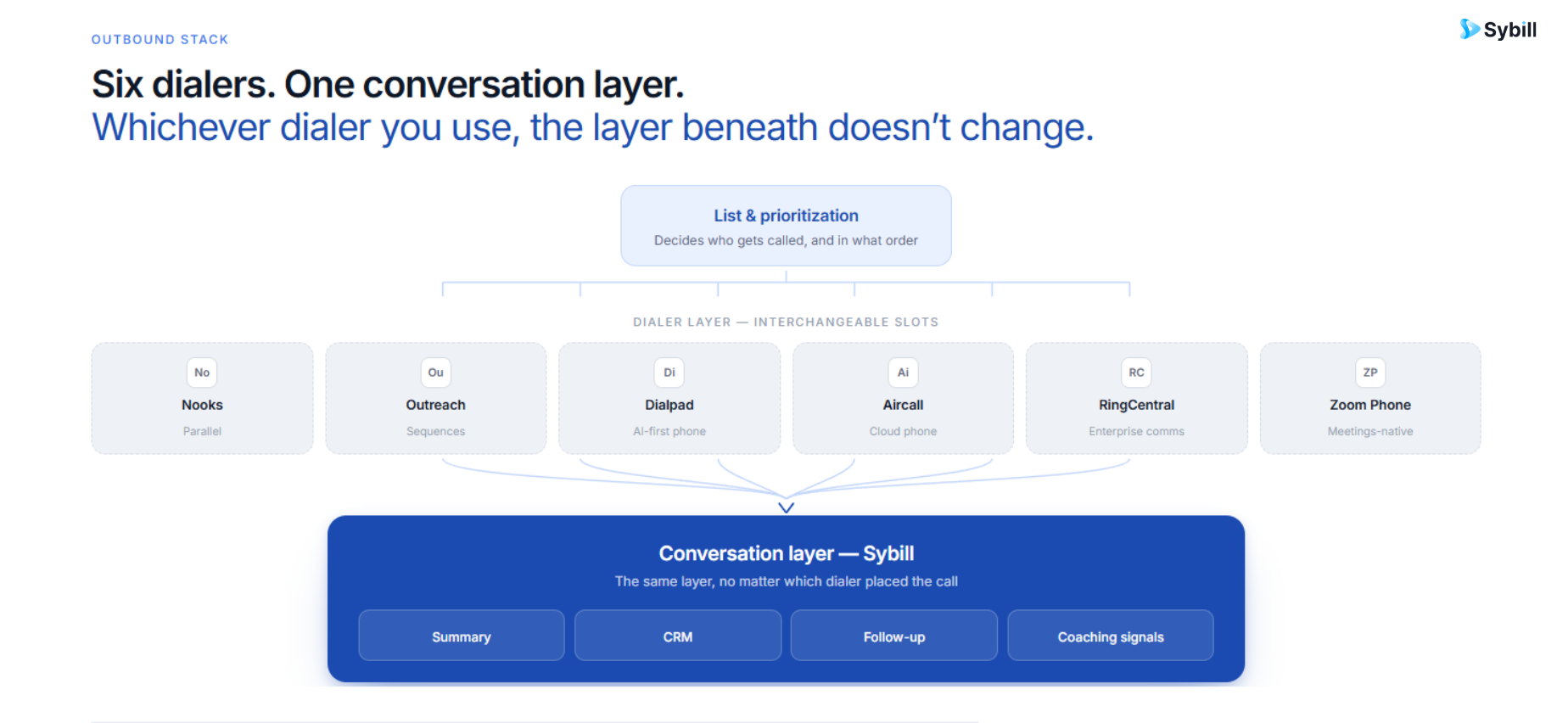
Whichever dialer you pick, the calls should not evaporate. Sybill integrates with all six tools on this list, turning every dial into a summary, a CRM update, a follow-up, and a coaching signal. Get started for free with Sybill.
Choose Nooks if your motion is volume: long cold lists, high dial targets, live floor coaching. Choose Outreach if it is already your engagement platform; calling belongs inside your sequences. Choose Dialpad if you want AI in the telephony itself with a clean all-in-one experience. Choose Aircall if integration breadth and fast setup matter most across sales and support. Choose RingCentral if you are an enterprise consolidating communications at scale. Choose Zoom Phone if your company lives in Zoom and adoption friction is the enemy.
And before any of them, run the fit questions from our full dialer guide which dialing modes your list mix actually needs, what the number-reputation tooling looks like, how deep the CRM logging goes, and what the compliance features handle versus leave to you, including the call recording consent rules that come with capturing conversations. A dialer that fits your motion beats a dialer that won a feature comparison, every time.
Here is the pattern we see across the millions of dialer calls flowing through Sybill, and it is the most commercially useful sentence in this post: teams do not underperform because they picked the wrong dialer; they underperform because the conversations their dialer creates go nowhere. The connect happens, the objection surfaces, the timing hint drops, and then it all lives in one rep's memory until it does not.
That is the layer Sybill owns, identically across every tool above: pre-meeting briefs so reps dial senior contacts prepared, summaries of every connect, CRM autofill writing what was actually said into the record, follow-ups drafted in the rep's tone, and the pattern layer on top: which openers survive the first ten seconds, which objections cluster by segment, what your best reps say after "not interested," feeding straight back into your SDR playbook and coaching.
The stack logic, one line per layer: your list and prioritization decide who gets called, the dialer executes the call, and the conversation layer makes the call count. Six good options for the middle layer are above. The full integration list is here.
The dialer category's oldest sales pitch is speed, and speed is real: every tool on this list will multiply your team's dials per hour. But cold calling in 2026 is not won on dials; it is won on conversations, timed well, run well, and remembered well, inside a multichannel motion where every touch knows about the others.
So pick the dialer whose job matches your motion, and then ask the question that separates outbound teams that compound from outbound teams that just stay busy: when the prospect says something that matters, where does it go?
If the answer is a CRM field that fills itself and a playbook that gets smarter, you built a system. If the answer is "the rep will remember," you bought a faster phone.
Get started for free with Sybill or book a demo and connect whichever dialer you choose.
It depends on your motion: Nooks leads for AI parallel dialing at SDR volume, Outreach for calling native to sequences, Dialpad for AI-first telephony, Aircall for integration breadth, RingCentral for enterprise scale, and Zoom Phone for Zoom-native teams. Match the tool's job to your list mix and team size rather than chasing a universal winner.
A power dialer calls one number at a time in sequence, giving every connect a clean, lag-free start, which suits senior and high-value lists. A parallel dialer rings several numbers at once and connects whoever answers first, multiplying volume at the cost of a brief pickup lag and friction with AI gatekeepers. Match the mode to the list.
Yes, all six log calls to major CRMs, though depth varies: activity logging is universal, while richer outcomes and dispositions depend on the tool and plan. Pairing any of them with a conversation layer like Sybill adds what dialers alone cannot: the content of the call itself, written into the CRM automatically.
Yes, arguably most of all: small teams cannot solve capacity with headcount, and removing manual dialing recovers meaningful selling hours per rep immediately. Start with a tool matched to your motion and pricing posture, confirm CRM fit, and skip enterprise platforms whose weight you would pay for and never use.
Yes, used correctly: US outbound calling is governed by the TCPA, FTC telemarketing rules, and state mini-TCPA laws covering automated-dialing consent, Do Not Call scrubbing, calling hours, and caller-ID accuracy, plus state-level call recording consent rules. Choose dialers with compliance features built in, and have counsel review your specific motion.
It depends on your motion: Nooks leads for AI parallel dialing at SDR volume, Outreach for calling native to sequences, Dialpad for AI-first telephony, Aircall for integration breadth, RingCentral for enterprise scale, and Zoom Phone for Zoom-native teams. Match the tool's job to your list mix and team size rather than chasing a universal winner.
A power dialer calls one number at a time in sequence, giving every connect a clean, lag-free start, which suits senior and high-value lists. A parallel dialer rings several numbers at once and connects whoever answers first, multiplying volume at the cost of a brief pickup lag and friction with AI gatekeepers. Match the mode to the list.
Yes, all six log calls to major CRMs, though depth varies: activity logging is universal, while richer outcomes and dispositions depend on the tool and plan. Pairing any of them with a conversation layer like Sybill adds what dialers alone cannot: the content of the call itself, written into the CRM automatically.








