Find us at booth #83, join us for a harbor side happy hour, or catch Gorish’s talk.

Sept, 16-18 > Learn more

%20(1).avif)
Mamta Tainwala

March 15, 2026
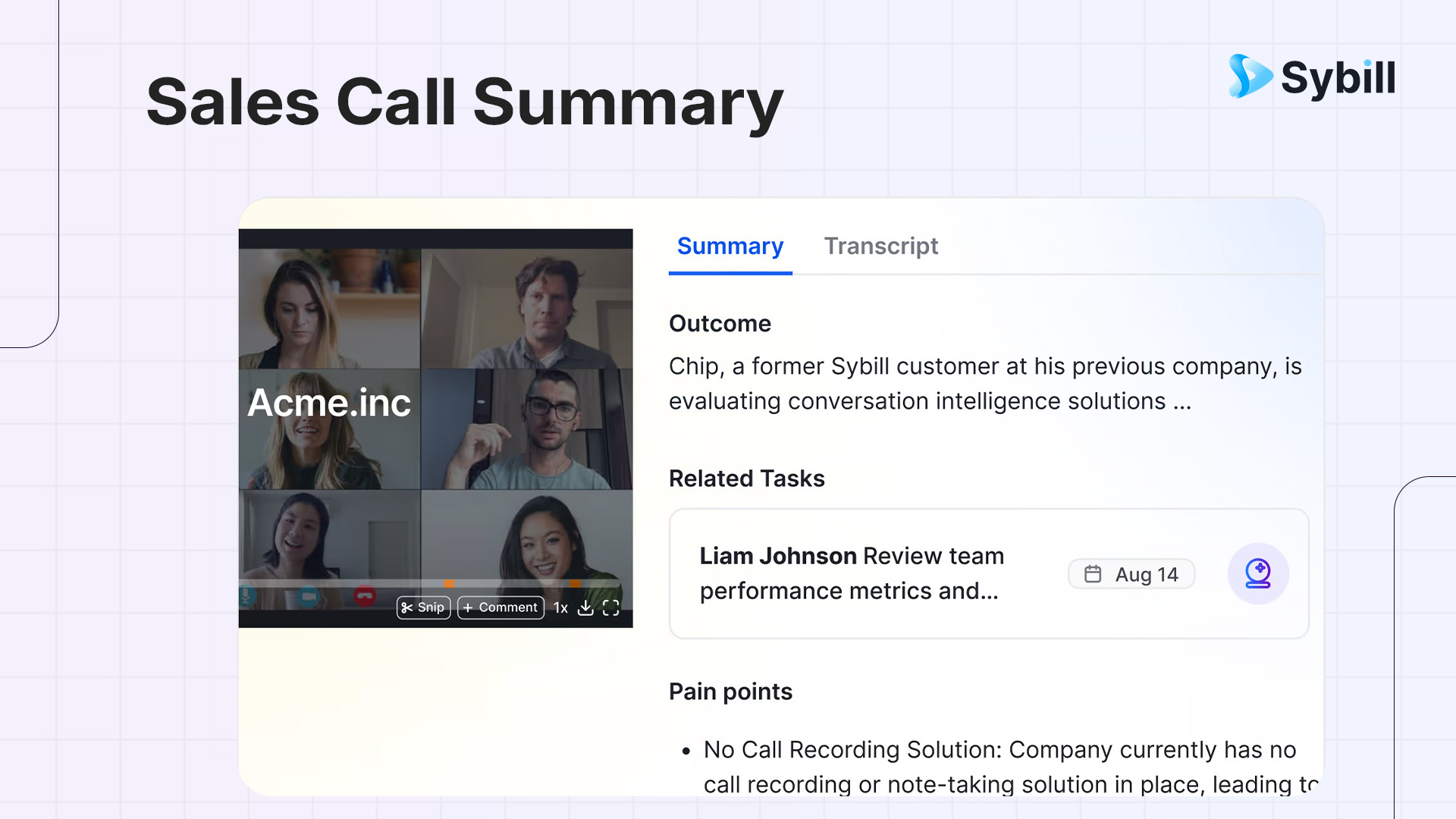
Sales reps spend an average of 6 hours per week writing call notes. And still, 60% of critical call insights never actually make it into the CRM.
Read that again. Six hours. Gone. And most of what was worth capturing went with it.
The call summary is supposed to be the solution to that problem. In practice, it is often another problem dressed up in a template. Rushed notes written 20 minutes after a call while the next meeting loads. Key objections softened by imperfect memory. Action items buried in a wall of text nobody reads before the follow-up. Buyer sentiment, the stuff that actually tells you where a deal is headed, gone entirely.
This blog is the complete guide to what a great sales call summary looks like, what every essential section should contain, and why AI is doing it better than any rep can manage on their own, consistently, at scale, and without the time tax.
In this guide, we will cover:
A sales call summary is a structured record of what happened during a sales conversation: who was on the call, what was discussed, what the buyer revealed about their needs, objections, and intent, and what both sides agreed to do next.
Its purpose is straightforward. Not everyone who needs context about a deal was on the call. The rep who runs the discovery might not be the same person who delivers the demo. The manager who coaches on the deal needs to know what was said without listening to a 45-minute recording. The CS team that inherits the account at close needs to know what was promised before the contract was signed.
A great call summary makes all of that possible. A bad one, or the absence of one entirely, creates information gaps that quietly become deal risks and churn risks downstream.
This is why CRM notes are not a nice-to-have. They are the connective tissue of your entire revenue operation. And a sales call summary is the single most important CRM input that happens repeatedly, for every deal, across every rep, every week.
Most call summaries either include too little (a three-sentence recap that tells you nothing useful) or too much (a verbatim transcript that tells you nothing quickly). A strong summary hits the sections that matter and nothing more.
Here is what every complete sales call summary needs to include:
.png)
Start with the headline. What happened on this call? Did the discovery uncover a strong fit? Did the demo land? Did the buyer raise a pricing concern that changed the deal trajectory? The person reading this summary should understand where the deal stands in 10 seconds without reading anything else.
This section should also include the basics: date and time, call participants with titles, company name, and deal stage at the time of the call. Context is everything. A note that says "discussed pricing" means nothing without knowing whether this was a first call with a cold prospect or a renewal conversation with a three-year customer.
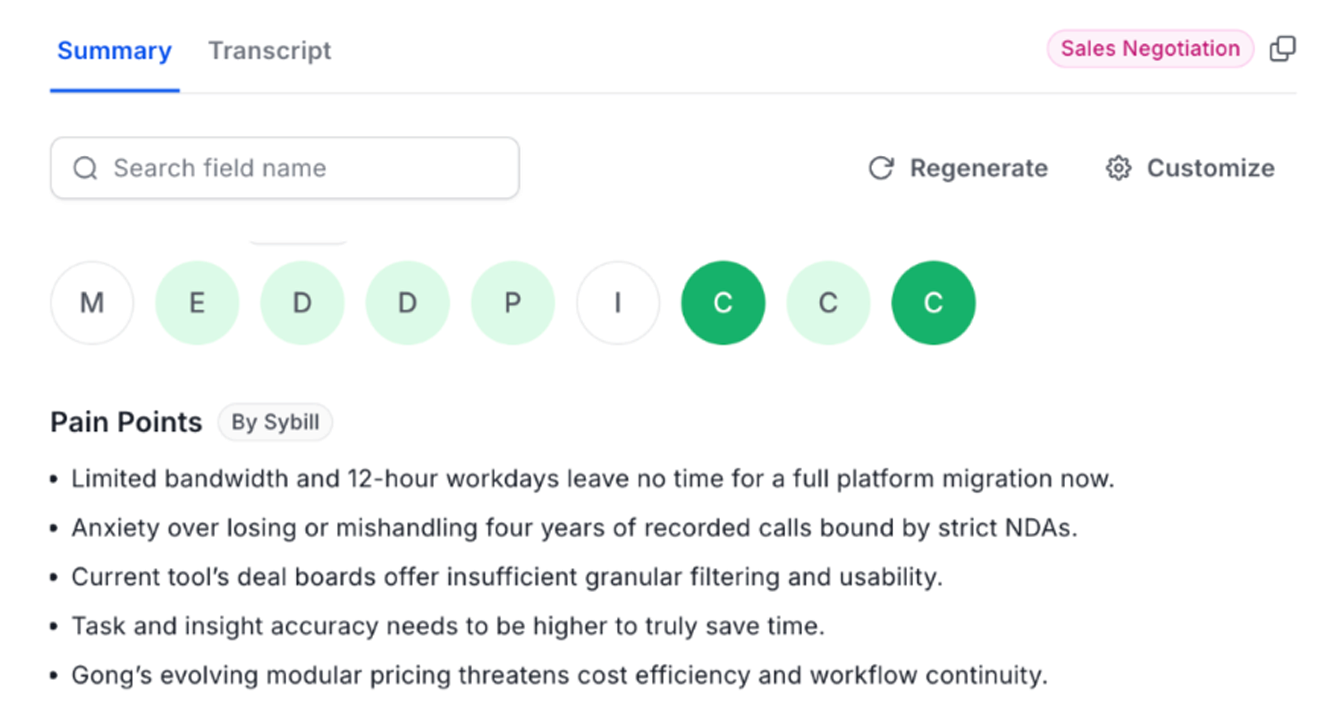
This is the section most manual summaries shortchange because it requires active listening during the call, not just recollection afterward.
What specific problems did the buyer describe? What language did they use? How urgent did they describe those problems? Which pain points came up repeatedly? Which ones produced the most engagement when you addressed them?
The answers to those questions are the foundation of every follow-up, every proposal, and every renewal conversation that comes after this call. If they are not in the summary, they do not exist for anyone who was not in the room.
AI call summaries that capture pain points from the transcript, including the buyer's exact language and the moments of highest engagement, consistently outperform human recall here. Not because reps are careless. Because memory degrades fast when you run five calls in a day.
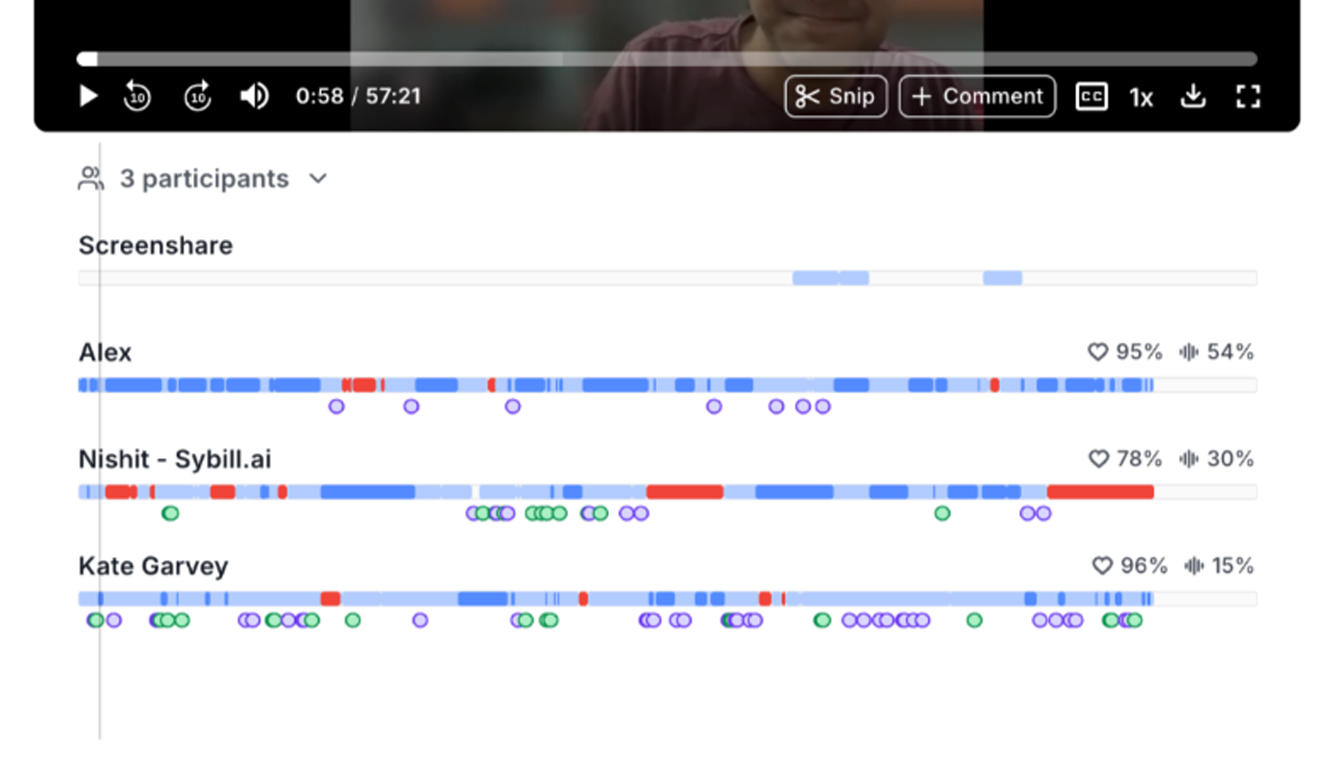
This is the section that separates a basic call log from genuine sales intelligence.
Beyond what the buyer said, how did they engage? Which topics made them lean in? Which parts of the demo drew follow-up questions? Was there a moment where energy shifted: a pricing question that signaled real interest, a hesitation that signaled a hidden objection, a mention of an internal deadline that changed the urgency of the deal?
Buyer intent is visible in sales calls. It shows up in tone, in follow-up questions, in what the buyer volunteers without being asked. Capturing it requires more than transcription. It requires interpretation, and that is where Sybill's Magic Summary separates from the field. Sybill reads non-verbal cues alongside the transcript, identifying moments of genuine engagement versus polite acknowledgment. A rep who watches a prospect's body language on a video call and a rep whose notes say "prospect seemed interested" are not capturing the same information.
Objections are intelligence. The prospect who raises a pricing concern on call two is telling you something critical about how this deal will be evaluated internally. The prospect who questions integration capabilities is signaling that there is a technical stakeholder you have not met yet.
A great call summary documents each objection clearly: what was raised, how the rep responded, and whether it was resolved, deferred, or left open. Open objections are live deal risks. They need to be tracked and addressed, not forgotten between calls.
For sales managers coaching their teams, objection documentation across multiple calls and multiple reps is where patterns emerge that can shape training, positioning, and messaging. That insight only exists if the objections are captured consistently.
Who else is involved in this deal that was not on this call? Did the buyer mention a CFO who needs to approve budget, a legal team that reviews contracts, an IT stakeholder who controls the tech stack? Did a champion emerge on the call who is clearly the internal advocate for the purchase?
Multi-threading is one of the most important practices in enterprise sales, and it starts with accurate stakeholder mapping from every conversation. The deal summaries that inform expansion and retention strategies depend on knowing who all the players are across the buying committee, not just the contact who shows up on the calendar invite.
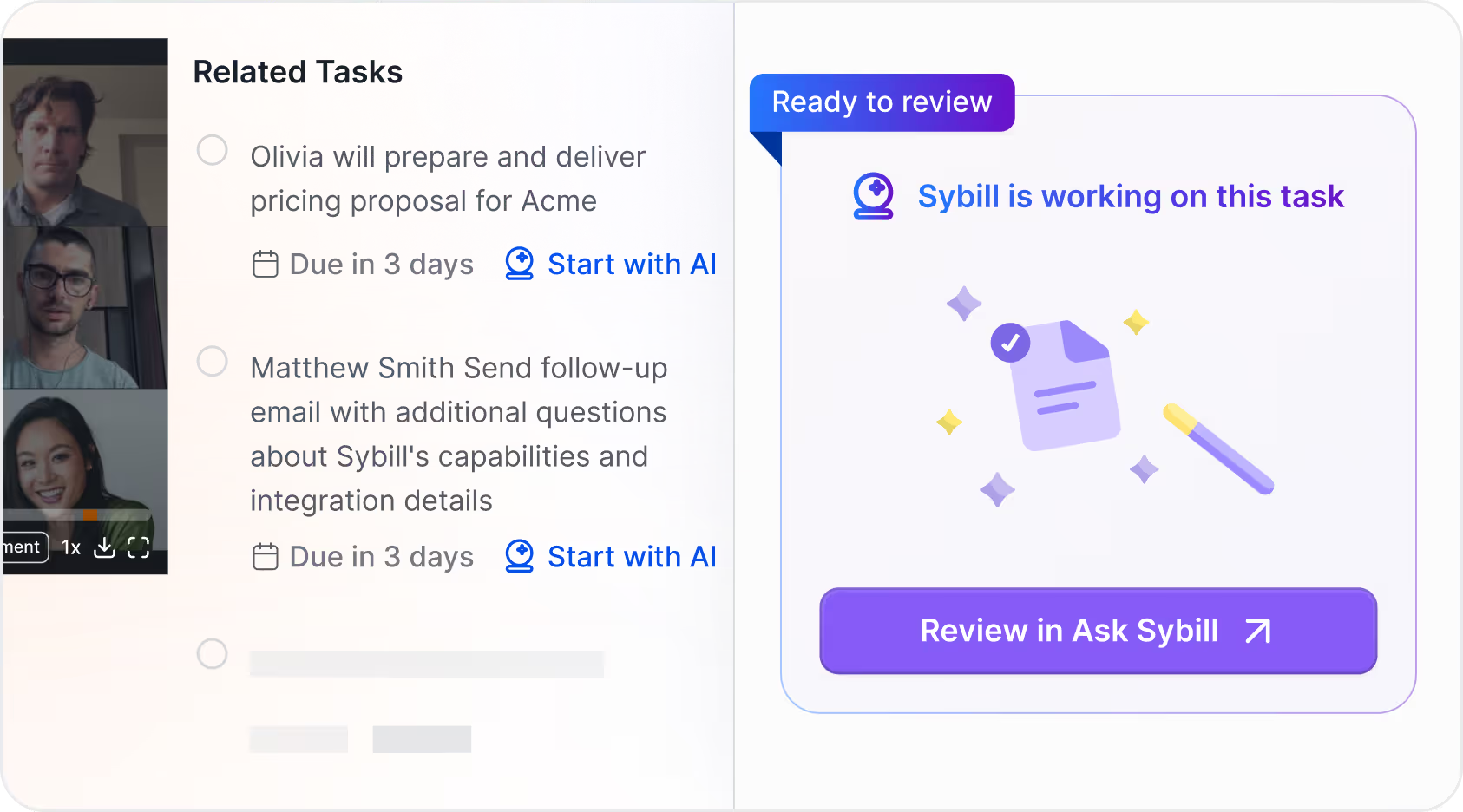
This section is the most action-oriented and the most consequential. Every call should end with agreed-upon next steps. Every summary should document them clearly: what your team will do, what the buyer committed to, who owns each item, and when it needs to happen.
Vague next steps in a call summary ("will follow up next week") are almost as bad as no next steps at all. A strong summary captures the specific commitment: "Rep to send pricing comparison by Thursday. Buyer to loop in IT lead before next call on the 15th."
When next steps are documented clearly, follow-up emails write themselves. When they are vague or missing, follow-ups are generic, late, or both, and deals stall for reasons that had nothing to do with product fit.
This one surprises most people when they see it included in a summary framework. It is also one of the things that makes Sybill genuinely different from every other conversation intelligence tool.
Did the buyer mention a vacation coming up? A recent company milestone? A personal connection to the problem they are trying to solve? These details are not noise. They are the raw material of authentic rapport in subsequent conversations.
A rep who opens the next call with "How was the offsite you mentioned?" is not being manipulative. They are demonstrating that they were actually present and that the buyer matters to them beyond the deal value. That is the kind of trust-building that differentiates AEs who win from AEs who get ghosted after a great demo.
Sybill captures this context automatically and surfaces it in the summary, so even if three weeks pass between calls, the rep walks in with the full picture, not just the deal mechanics.
Even the most diligent reps writing their own call summaries run into the same structural problems:
Memory bias. The last five minutes of a call get captured in detail. The first five minutes, where a buyer often drops the most revealing context about their situation, get glossed over.
Interpretation gaps. What a buyer said and what they meant are sometimes different things. A manual summary captures the words. An AI summary trained on sales signal data captures the meaning.
Inconsistency. Different reps document different things. One rep writes three paragraphs; another writes two sentences. Neither format serves a manager trying to coach consistently or a CS team trying to understand an account at handoff.
Time cost. Writing a thorough manual summary takes 15 to 20 minutes. For a rep running four calls a day, that is over an hour of non-selling time gone. Every day. That is before accounting for the fact that the notes still end up incomplete.
No emotion tracking. A buyer who says "that sounds interesting" with genuine curiosity and a buyer who says "that sounds interesting" as a polite off-ramp look identical in a transcript. They are not the same deal.
This is why AI summarization tools have moved from a nice-to-have to a standard part of high-performing sales stacks. The alternative is not "better manual notes." The alternative is structural information loss at scale.
There are a lot of AI note-taking tools. Transcription is table stakes now. The question is what happens after the transcript.
Most tools give you a cleaned-up version of what was said. Sybill gives you what it meant.
Sybill's Magic Summary is built on a foundation of multimodal analysis: it processes the transcript, but it also reads non-verbal signals from video calls. Eye contact patterns, micro-expressions, energy levels, the visual cues that experienced reps read in real time are captured and incorporated into the summary. When a buyer's engagement spikes during a specific part of the demo, Sybill flags it. When a buyer's energy drops on a pricing slide, that gets captured too.
The result is a summary that tells you not just what happened but how the call went, and what that means for where the deal is heading.
After every call, Sybill automatically pushes the structured summary to your CRM, matched to the right opportunity, contact, and company record. No manual entry. No end-of-day catch-up session. No information that existed in the call but never made it into the system.
Get started for free with Sybill and stop losing deal intelligence to manual note-taking. Get started for free with Sybill
Beyond the summary itself, Sybill uses the call context to write a personalized follow-up email in the rep's voice. Not a template with a name swapped in. A follow-up that references what was actually discussed, acknowledges the objections that were raised, confirms the next steps that were agreed to, and sounds like the rep wrote it during a moment of inspired productivity rather than slammed out between calls.
For sales managers, the deal summaries built from Sybill's call data give pipeline reviews a level of specificity that changes the quality of coaching conversations. Instead of "how do you feel about this deal," the question becomes "the buyer mentioned IT approval is a blocker; what is the plan to multi-thread?" That is a different kind of sales leadership.
And because Sybill captures across the full deal lifecycle, including calls and emails, the deal-level context available at renewal, upsell, or QBR time is not a partial reconstruction. It is the full history of the relationship, structured and searchable.
The impact of great call summaries is not limited to the rep who runs the call. It ripples through the entire revenue team:
AEs and SDRs get time back from note-writing and walk into every follow-up fully prepared. The sales cycle shortens when follow-ups are specific, timely, and relevant rather than generic and late.
Sales managers get visibility into what is actually happening in deals without listening to recordings or relying on rep self-reporting. Coaching becomes evidence-based. Forecast calls become honest.
RevOps and Sales Ops get clean, consistent CRM data flowing from every call without manual hygiene work. Pipeline management improves because the data underpinning it is accurate. Sales workflow automation works better when every trigger has reliable data to fire on.
Customer success teams inherit accounts with full context rather than a three-line handoff note. The transition from sales to CS that typically causes the earliest churn risk becomes a handoff where the CS rep knows the customer's goals, their concerns, and what was promised before the contract was signed.
A sales call summary is a structured record of what happened during a sales conversation. It captures the call outcome, buyer pain points, objections raised, stakeholder context, next steps, and engagement signals. Its purpose is to ensure that deal intelligence from the conversation is accessible to everyone who needs it: the rep, their manager, RevOps, and the customer success team that eventually inherits the account.
Every strong sales call summary should include: call outcome and deal context, buyer pain points in the buyer's own language, engagement and intent signals, objections raised and how they were handled, stakeholder mapping, clearly owned next steps with timelines, and any relationship context from the conversation. The goal is to capture both what was said and what it means for the deal.
Long enough to be useful, short enough to be read. For a typical 30 to 45-minute sales call, a strong summary runs to 300 to 500 words in structured sections. It should take a colleague two minutes to read and walk away fully oriented on the deal. If it takes longer than that, the summary is too long.
A transcript is a verbatim record of everything said on the call, speaker by speaker. A summary distills the transcript into the information that actually matters for moving the deal forward: key insights, buyer signals, objections, and next steps. Transcripts are useful for reference; summaries are useful for action.
Yes, and the best AI tools do significantly more than transcribe. Tools like Sybill analyze the transcript alongside non-verbal signals from video calls to identify buyer intent, engagement patterns, and objections that might not be explicitly stated. The resulting summary is then pushed automatically into the CRM and used to generate a personalized follow-up email, all without the rep lifting a finger after the call ends.
AI call summaries improve sales performance in several measurable ways: reps save 45 or more minutes per day that was previously spent on manual notes and CRM updates; follow-ups are more specific and timely because they are based on accurate call context rather than memory; managers have real deal visibility instead of relying on rep self-reporting; and CRM data stays clean and current, which improves forecasting accuracy and pipeline health.
Most AI call summary tools process the transcript and produce a cleaned-up recap of what was said. Sybill goes further by analyzing non-verbal engagement signals from video calls, including body language and expressions, to capture how buyers responded, not just what they said. It also captures small talk and relationship context, writes personalized follow-up emails in the rep's voice, and pushes everything automatically into the CRM. The result is summary that reflects the full picture of the conversation, not just its words.
The call summary is not a formality. It is the intelligence asset that determines whether your team learns from every conversation or loses that intelligence the moment the call ends.
The seven sections above are the standard every summary should hit: call outcome, pain points, buyer intent, objections, stakeholder context, next steps, and relationship detail. Get all seven right and your CRM becomes a genuine source of truth. Get two or three right and you are working with a partial picture that creates gaps in every conversation that follows.
The reason AI wins here is not because it is smarter than your reps. It is because it is consistent, complete, and does not get tired after the fourth call of the day. Sybill captures everything that matters, structures it the way your team needs it, and pushes it where it needs to go, so your reps can spend their time doing the one thing AI cannot do for them: building the relationships that close deals.
Get started for free with Sybill and make every sales call count long after it ends.
A sales call summary is a structured record of what happened during a sales conversation. It captures the call outcome, buyer pain points, objections raised, stakeholder context, next steps, and engagement signals. Its purpose is to ensure that deal intelligence from the conversation is accessible to everyone who needs it: the rep, their manager, RevOps, and the customer success team that eventually inherits the account.
Every strong sales call summary should include: call outcome and deal context, buyer pain points in the buyer's own language, engagement and intent signals, objections raised and how they were handled, stakeholder mapping, clearly owned next steps with timelines, and any relationship context from the conversation. The goal is to capture both what was said and what it means for the deal.
Long enough to be useful, short enough to be read. For a typical 30 to 45-minute sales call, a strong summary runs to 300 to 500 words in structured sections. It should take a colleague two minutes to read and walk away fully oriented on the deal. If it takes longer than that, the summary is too long.