Find us at booth #83, join us for a harbor side happy hour, or catch Gorish’s talk.

Sept, 16-18 > Learn more

%20(1).avif)
Mamta Tainwala

February 17, 2026
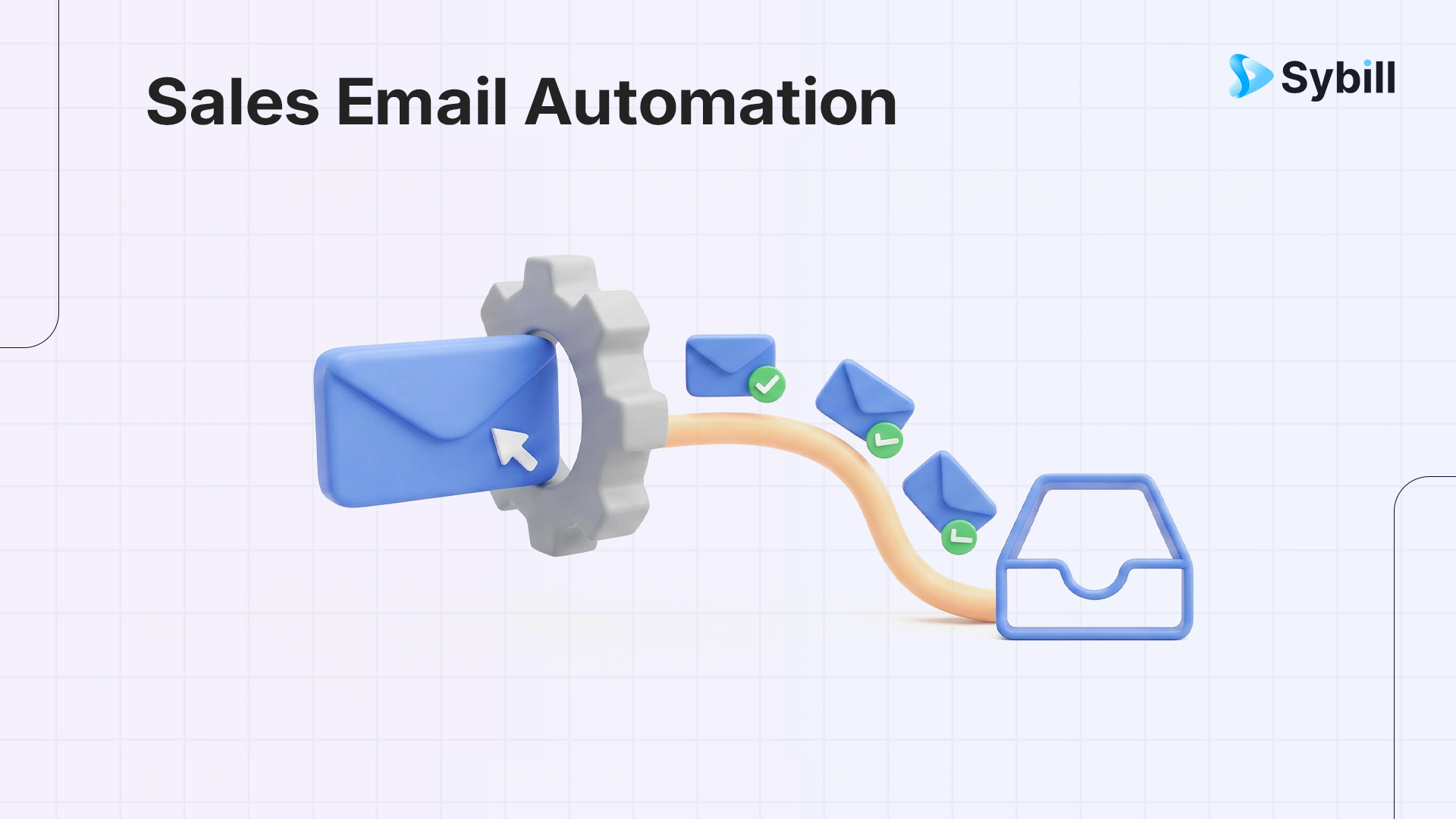
TL;DR: What sales email automation actually automates in 2026
The tools have changed, but the principle hasn't: automate the repetitive stuff so reps spend more time selling and less time typing.
You've got reps copying and pasting the same template into 40 different emails, swapping out first names like they're personalizing holiday cards, and then wondering why their reply rate looks so bad. Meanwhile, the follow-up from yesterday's demo call? It's sitting in someone's mental to-do list, slowly decaying alongside their New Year's resolution to update their CRM daily.
Email writing, scheduling and followup is one of the biggest culprits behind sales reps not being able to sell enough. Writing follow-ups, sequencing outreach, logging activity, personalizing templates. It all adds up.
Sales email automation exists to fix this. Not by turning your outreach into spam (we'll get to that), but by handling the repetitive mechanical work so your brain can focus on the parts that actually require a human: reading the room, building relationships, and closing deals.
This guide covers what sales email automation actually means in 2026, what you should automate (and what you absolutely should not), the workflows that matter most, and how to set it all up without losing the human touch that makes your emails worth opening.
Sales email automation is the use of software to handle repetitive email tasks that would otherwise eat into your selling time. At its most basic, that means scheduling emails to send at preset times. At its most advanced, it means AI that listens to your sales calls, understands what was discussed, and drafts a personalized follow-up in your writing style before you've even closed the Zoom window.
The spectrum looks something like this:
Basic automation includes scheduled sends, auto-replies, and simple drip sequences triggered by time intervals. If you've ever set up a "send this email 3 days after signup" workflow, that's basic automation.
Mid-level automation adds behavioral triggers. A prospect opens your email but doesn't reply? The system sends a different follow-up two days later. They click a pricing link? It alerts your rep to call within the hour. This is where most sales engagement platforms operate.
AI-powered automation is the 2026 tier. This is where the system doesn't just send emails on a schedule; it generates them. It pulls context from your CRM, your call transcripts, your previous emails, and even your prospect's recent activity to create something that reads like a human wrote it, because the AI was trained on how you actually write. Sybill's personalized email feature is a good example of this: it drafts follow-ups based on what was actually said on the call, in your voice, ready to send in one click.
The key distinction to understand: automation is not the same as mass emailing. Mass emailing is sending the same message to 10,000 people and hoping someone bites. Automation is building intelligent workflows that send the right message to the right person at the right moment, without requiring a rep to manually execute every step.
Not everything in your email workflow should be automated. The reps who get this wrong end up with outreach that feels like it was assembled by a committee of robots. The reps who get it right free up hours every week while actually improving their email quality.
Post-call follow-ups. This is the single highest-ROI automation for most sales teams. After every call, a follow-up needs to go out: recapping what was discussed, confirming next steps, and keeping deal momentum alive. The problem? Reps with back-to-back calls rarely have time to write them. Sybill's AI follow-up emails solve this by generating a draft immediately after the call ends, pulling in specific details from the conversation. You review, tweak if needed, and send.
Sequenced cold outreach. Your initial outreach sequence (typically 4 to 7 touches over 2 to 3 weeks) should run automatically. Each email in the sequence can be tailored to the prospect's behavior: different messaging for someone who opened but didn't reply versus someone who never opened at all.
CRM data entry. Every email interaction should automatically log to your CRM. Meeting happened? CRM updated. Follow-up sent? Logged. Next steps agreed? Captured. Sybill's CRM autofill takes this further by populating qualification fields (BANT, MEDDPICC, custom fields) directly from call and email data.
Meeting scheduling. Stop the "Does Tuesday work? How about Thursday?" ping-pong. Embed calendar links in your automated sequences so prospects can book time without three rounds of back-and-forth.
Internal notifications. When a prospect opens your email three times in an hour or clicks your pricing page, your rep should know immediately. Automated Slack or email alerts ensure hot signals don't go cold.
Highly strategic or sensitive emails. The email to your champion asking them to introduce you to the CFO? Write that yourself. Automation is for scale; relationship-defining moments need a human touch.
Responses to objections. When a prospect pushes back on pricing or raises a concern, your reply needs to be thoughtful, specific, and empathetic. Let AI draft a starting point if you want, but always review and personalize it.
The first email after a deep discovery call. This one might seem counterintuitive since we just said to automate follow-ups. The nuance: use AI to draft it, but always review before sending. The first follow-up after a meaningful conversation sets the tone for the entire deal. A misplaced detail or generic phrasing can undo the trust you built on the call.
Knowing what to automate is step one. Building the right workflows is where the revenue impact lives. Here are the five workflows that matter most for B2B sales teams in 2026.
Trigger: Sales call ends. Action: AI generates a follow-up email using call context (pain points discussed, next steps agreed, stakeholders mentioned). Rep reviews and sends. Why it matters: Studies show sending a follow-up within an hour of a call significantly outperforms waiting until the next day. With Sybill's Magic Summary powering the draft, reps send follow-ups 80% faster without sacrificing quality.
Trigger: New prospect added to sequence. Action: 5 to 7 emails over 2 to 3 weeks, with messaging that adapts based on engagement. Opens but no reply? Shift to a different angle. No opens? Try a new subject line. Click on a link? Alert the rep for a call. Why it matters: Most prospects won't reply to your first email. That's not rejection; it's just inbox reality. Automated sequences ensure persistence without requiring reps to manually track who needs a nudge.
Trigger: Deal goes dormant for 30+ days, or a churned prospect's company hits a trigger event (funding, new hire, product launch). Action: Automated email that references the previous conversation and introduces a new reason to reconnect. Sybill's Ask Sybill feature can surface old deals that stalled due to specific reasons, making it easy to identify which prospects to re-engage when something changes. Why it matters: Lost deals are not dead deals. They're future pipeline sitting in your CRM. But without automation to monitor trigger events and prompt re-engagement, most reps never circle back.
Trigger: Every call, email, or meeting. Action: AI extracts deal details (next steps, competitor mentions, budget signals, decision timeline) and writes them into your CRM fields automatically. Sybill's CRM automation handles this end to end, including frameworks like MEDDPICC and BANT. Why it matters: Clean CRM data is the foundation of accurate forecasting, reliable pipeline reviews, and sane RevOps. When your CRM updates itself, managers stop nagging, reps stop lying about deal status, and everyone makes better decisions.
Trigger: 30 minutes before a scheduled call. Action: Automated brief lands in the rep's inbox or Slack with a summary of the prospect's history, key details from previous calls, open action items, and relevant company news. Sybill's pre-meeting briefs pull this together automatically. Why it matters: Showing up prepared isn't optional in 2026. Buyers expect you to know their situation. But manually prepping for every call takes 10 to 15 minutes that most reps don't have between back-to-back meetings.
Want these workflows running on autopilot? Get started for free with Sybill and let AI handle your follow-ups, CRM updates, and meeting prep while you focus on closing.
The market is flooded with tools that promise to automate your email. Here's how to cut through the noise and pick the right one for your team.
If your reps are drowning in post-call admin, prioritize tools that automate follow-ups and CRM updates. If your cold outreach is inconsistent, look for strong sequencing capabilities. If your pipeline data is unreliable, focus on CRM automation. Don't try to solve everything at once.
Many platforms position themselves as the single tool you'll ever need: CRM, email automation, sequences, analytics, and more, all in one. That sounds great in a demo. In practice, these all-in-ones often do many things adequately but nothing exceptionally well. The strongest stacks in 2026 combine a solid CRM (Salesforce, HubSpot) with a specialized AI layer like Sybill that handles the conversation intelligence, follow-up automation, and CRM population that general platforms simply can't match. Sybill integrates natively with major CRMs and sales tools, so it fits into your existing workflow rather than replacing it.
Automation is powerful, but it's not foolproof. Here are the three mistakes we see most often, and how to avoid them.
The biggest sin of sales email automation is sending emails that sound automated. When you blast the same sequence to every prospect regardless of their role, industry, or stage in the buying process, you're not automating. You're spamming. The fix is context-aware automation: tools that pull from conversation data, CRM history, and behavioral signals to generate emails that feel relevant. Sybill's approach of drafting emails from actual call context is specifically designed to solve this problem.
Automation doesn't mean "never look at it again." Your sequences, templates, and triggers need regular review. Open rates dropping? Your subject lines might be stale. Reply rates tanking? Your messaging might be misaligned with what prospects care about right now. Treat your automations like a garden, not a vending machine.
There's a line between helpful automation and creepy omniscience. If a prospect gets a perfectly timed email referencing a blog post they read on your site, a case study about their exact industry, and a calendar link, all within 30 seconds of visiting your pricing page, it feels less like good sales and more like surveillance. Use automation to be timely and relevant, not to demonstrate how much data you have on someone.
Sales email automation is the use of software to handle repetitive email tasks in the sales process. This includes scheduling outreach sequences, auto-generating follow-up emails after calls, updating your CRM with email activity, and triggering emails based on prospect behavior. The goal is to save reps time on admin work so they can spend more time selling. In 2026, the most advanced form of this uses AI that generates personalized emails from actual conversation context rather than relying on generic templates.
Only if you do it wrong. Basic automation that blasts the same template to everyone will absolutely hurt your reply rates. But AI-powered automation that pulls from call transcripts, CRM history, and buyer signals actually improves personalization because it can reference details that a busy rep might forget to include. Sybill's personalized emails are designed specifically to maintain the human touch by learning your writing style and using real conversation context.
Start with post-call follow-ups. They're the highest-ROI automation because they directly impact deal momentum, and they're also the task most reps skip when they're busy. After that, focus on CRM updates (the second biggest time sink) and then build out your cold outreach sequences.
Research consistently shows that sequences of 4 to 7 emails outperform shorter ones. Each email should add new value or take a different angle rather than simply repeating "just checking in." Include a breakup email at the end to create a sense of closure, which often triggers responses from prospects who have been silently following along. For specific templates, Sybill's follow-up email template library has scenario-specific scripts you can adapt.
Yes. Most modern automation tools integrate with Salesforce, HubSpot, and other major CRMs. The key difference is in how deep the integration goes. Some tools just log that an email was sent. Others, like Sybill, actually populate deal fields with meaningful context, including qualification criteria, next steps, objections, and competitor mentions from your conversations.
Email marketing automation is typically used for broader campaigns like newsletters, product announcements, and nurture drips sent to large lists. Sales email automation is focused on one-to-one outreach from individual reps to specific prospects. The goals are different: marketing automation optimizes for opens and clicks across a list; sales automation optimizes for replies and meetings from targeted accounts.
Track reply rates (not just open rates, which are inflated by privacy features), meetings booked, and pipeline influenced. If your automation is working, you should see reps spending less time on admin, sending follow-ups faster, and maintaining cleaner CRM data. If your reply rates are dropping, it usually means your messaging needs refreshing or your personalization isn't specific enough.
Sales email automation is the use of software to handle repetitive email tasks in the sales process. This includes scheduling outreach sequences, auto-generating follow-up emails after calls, updating your CRM with email activity, and triggering emails based on prospect behavior. The goal is to save reps time on admin work so they can spend more time selling. In 2026, the most advanced form of this uses AI that generates personalized emails from actual conversation context rather than relying on generic templates.
Only if you do it wrong. Basic automation that blasts the same template to everyone will absolutely hurt your reply rates. But AI-powered automation that pulls from call transcripts, CRM history, and buyer signals actually improves personalization because it can reference details that a busy rep might forget to include. Sybill's personalized emails are designed specifically to maintain the human touch by learning your writing style and using real conversation context.
Start with post-call follow-ups. They're the highest-ROI automation because they directly impact deal momentum, and they're also the task most reps skip when they're busy. After that, focus on CRM updates (the second biggest time sink) and then build out your cold outreach sequences.