Tools, CRM & Integrations

Is Cold Calling Dead in 2026?

TL;DR

  • Cold calling is not dead, but outdated approaches are
  • Generic, high-volume dialing fails due to low pickup rates and poor relevance
  • Modern cold calling works when it’s targeted, contextual, and well-timed
  • Top performers achieve significantly higher success rates by focusing on quality over quantity
  • Calls remain critical for real-time conversations and faster qualification
  • Sybill’s Pre-Meeting Brief helps reps enter calls with context, improving relevance and outcomes

Cold Calling Has Been “Dead” for 15 Years. So Why Is It Still Driving Pipeline?

Cold calling has been declared dead more times than any sales tactic in history. Every few months, someone confidently announces that buyers don’t answer phones anymore, that email has taken over, or that outbound calling is a relic of the past.

And yet, pipeline tells a different story.

Deals are still getting sourced from calls. Meetings are still being booked. And the reps consistently hitting quota? They’re not avoiding the phone.

So what’s actually going on?

Cold calling didn’t stop working. It just stopped working for average execution.

Buyers today are:

  • more informed
  • more impatient
  • more selective

Which means one thing: you don’t get second chances on a call anymore.

Quick note before we go deeper. If your opener still sounds generic, fix that first. That’s the difference between getting hung up on and getting heard. Click here to learn how.

Is Cold Calling Dead? (Short Answer: No. But It Has Changed Completely)

Cold calling is not dead. But it’s also not what most teams think it is.

The real shift looks like this:

  • From volume → precision
  • From scripts → context
  • From pitching → diagnosing

Also read:

Buyers haven’t stopped engaging on calls. They’ve stopped rewarding irrelevant ones.

And the data supports this. Almost 70% of B2B buyers still accept meetings that originate from cold outreach.

So the better question isn’t “is cold calling dead?”

It’s: “Are you still doing it the old way?”

Why Cold Calling Is Dead (For Most Teams)

Let’s give the skeptics their due. For many teams, cold calling genuinely doesn’t work.

But the failure isn’t random. It’s predictable.

Here’s what’s actually killing cold calls:

  • Low pickup rates
    Most buyers ignore unknown numbers, which means you’re starting at a disadvantage 
  • Generic messaging
    If your call sounds like every other sales call, it ends like one
  • Over-reliance on volume
    More dials don’t fix weak targeting
  • Poor data quality
    Wrong contacts = wasted effort
  • Mistimed outreach
    Calling without context feels intrusive, not helpful

The deeper problem

Buyers are doing their homework before talking to sales.

Which means:

  • they don’t need basic information
  • they don’t want generic pitches
  • they expect relevance immediately

If your call doesn’t meet that bar, it fails. Cold calling is dead if it’s lazy, generic, and context-free.

Also read:

Why Cold Calling Is NOT Dead (And Still Works for the Right Teams)

Cold calling still works. Just not evenly.

Where cold calls still win:

  • Real-time conversations
    You get immediate feedback, not delayed replies
  • Faster qualification
    You can uncover:
    • budget
    • timing
    • intent
      within minutes
  • Access to decision-makers
    57% of executives still prefer phone contact 
  • Stronger multi-channel impact
    Calls increase visibility and improve email replies 

Performance gap is the real story

  • Average reps struggle at ~2–3%
  • Top reps exceed 10%+ 

That’s not a channel problem. That’s an execution gap.

What this means

Cold calling isn’t dead. It’s just no longer beginner-friendly.

What Actually Died: Old-School Cold Calling

Let’s separate myth from reality.

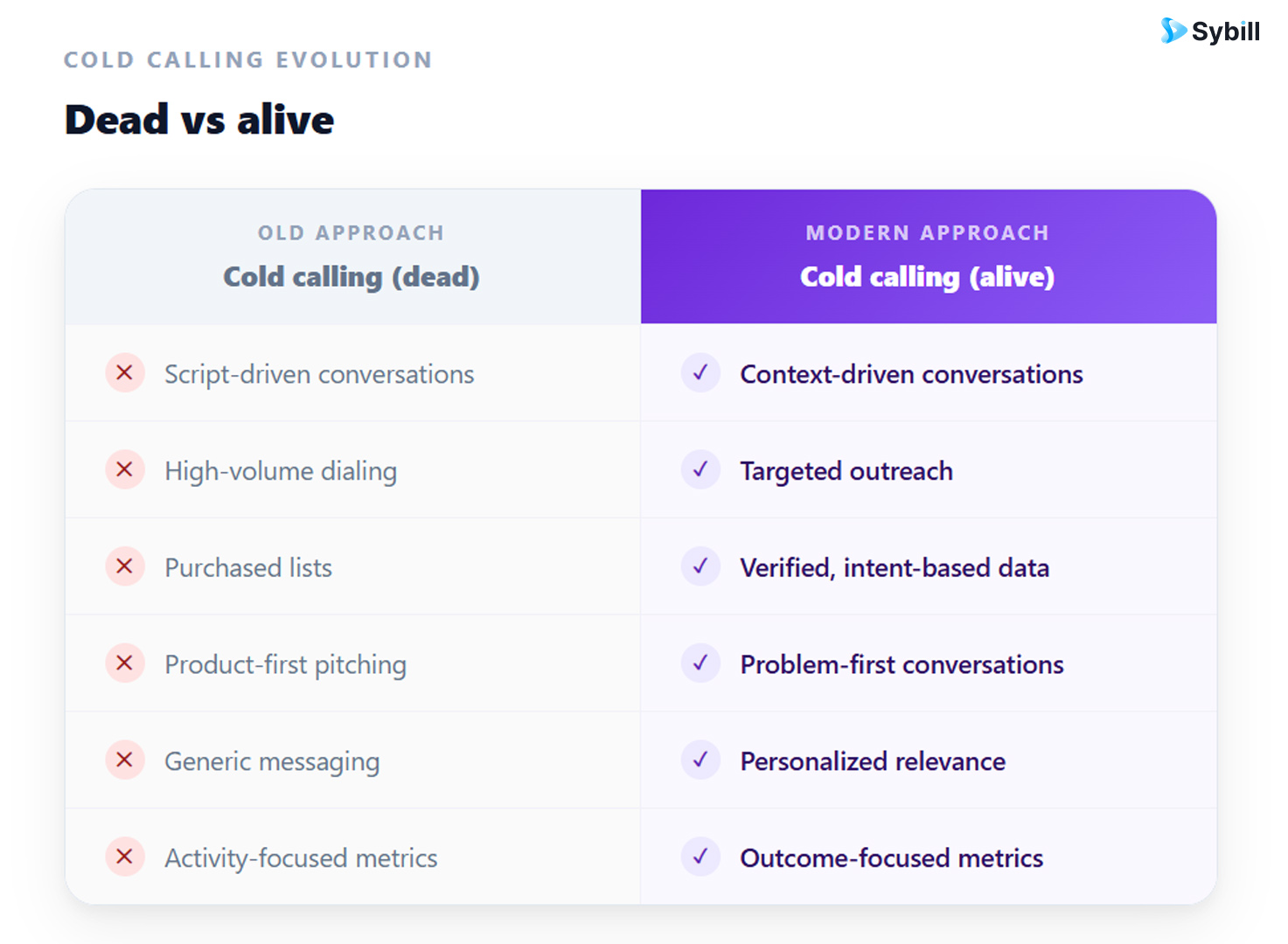
is cold calling dead? No, but old school cold calling no longer works

Most teams didn’t lose cold calling. But they’re still using the left column.

What Modern Cold Calling Looks Like in 2026

Cold calling today is not about picking up the phone and hoping for the best. It’s a structured, informed process.

1. Better targeting upfront

Reps focus on:

  • the right accounts
  • the right personas
  • the right timing

Not just “anyone in the ICP.”

2. Context before conversation

Calls start with:

Not “Hi, I’m calling from…”

3. Multi-channel orchestration

Winning sequence looks like:

  • Email → Call → LinkedIn
  • Or Call → Email → Follow-up

This approach drives higher conversions because it mirrors how buyers engage.

4. Fewer calls, better outcomes

Top reps don’t rely on brute force. They rely on:

  • better inputs
  • better timing
  • better messaging

5. Personalization at speed

Not manual research for every call. But also not generic scripts.

The middle ground:

  • fast insights
  • relevant hooks
  • tailored conversations

Also read:

Where Most Teams Still Get Cold Calling Wrong

This is where the gap shows up. Most teams:

  • measure activity instead of outcomes
  • rely too heavily on scripts
  • call without context
  • treat calls as meeting-booking tools

And then wonder why nothing converts.

The real issue

Cold calling is treated like a numbers game. But high-performing teams treat it like a thinking game.

How Sybill Makes Cold Calling Actually Work (Without Guesswork)

Here’s the real problem with cold calling today.

It’s not effort. It’s not even skill.

It’s lack of context.

Most reps go into calls knowing:

  • the company name
  • maybe the job title
  • and a vague idea of what they want to pitch

What they don’t know is:

  • what this specific buyer actually cares about
  • what similar buyers have pushed back on
  • what messaging has worked in conversations like this before

So every call starts from scratch.

Walk Into Every Call With Context Using Pre-Meeting Brief

This is where Sybill’s Pre-Meeting Brief changes the game.
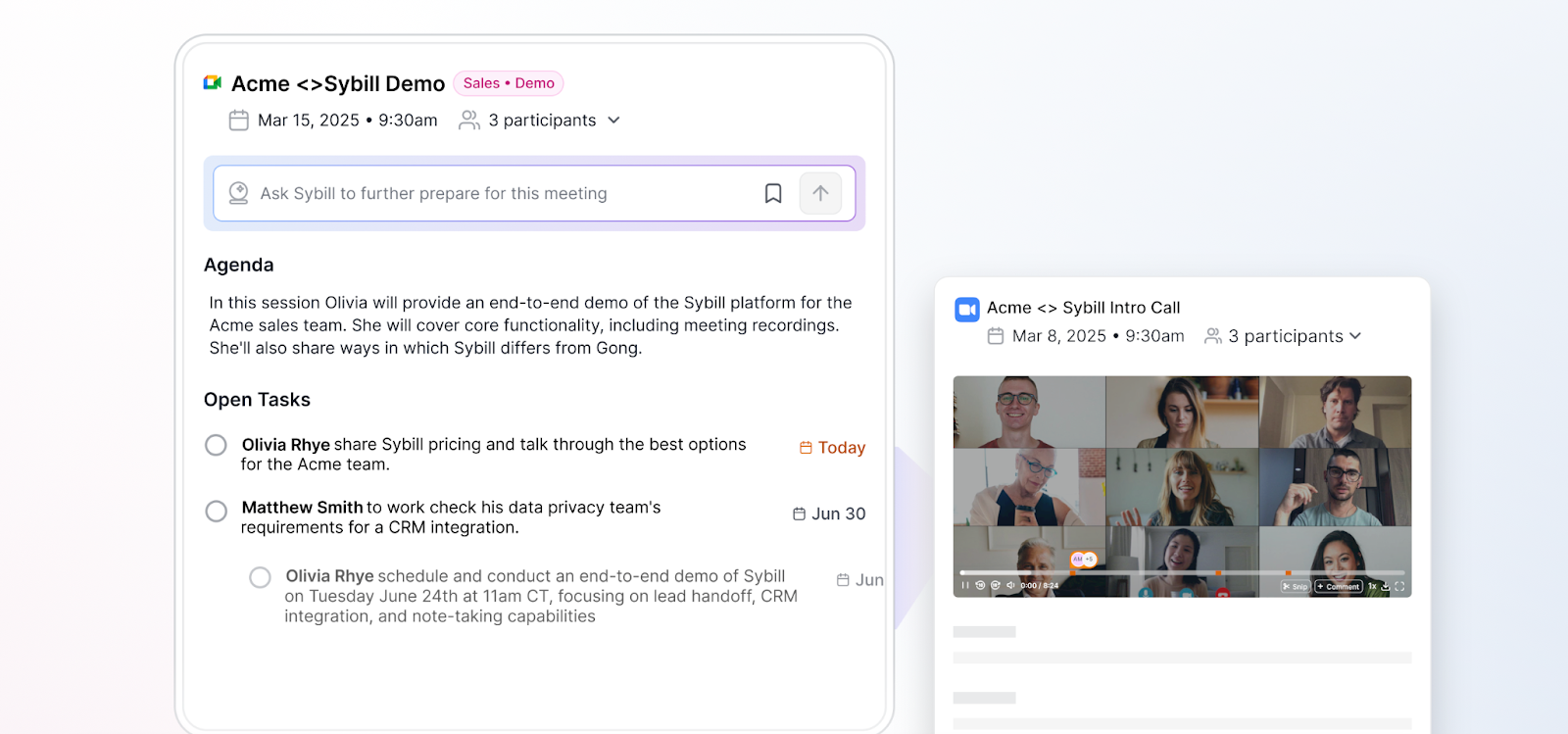
Is cold calling dead? Not with Sybill's Pre Meeting Brief

Before the call even begins, reps can ask for a clear snapshot of:

  • the prospect’s role, priorities, and likely pain points
  • key signals from online presence and company news
  • patterns from similar customer conversations
  • risks, objections, and opportunities to watch for

Instead of guessing how to start the conversation, you already know:

  • what matters
  • what to avoid
  • where to lean in

Why This Matters for Cold Calling

Cold calls fail in the first 30 seconds. Not because reps lack confidence, but because they lack relevance.

With the right context, your opener shifts from:

  • generic → specific
  • interruptive → insightful
  • forgettable → engaging

And that changes everything.

The Outcome: Smarter Calls, Better Conversations

When reps start calls with context:

  • conversations last longer
  • objections feel predictable, not surprising
  • buyers engage instead of deflect

Cold calls stop feeling cold. They start feeling like well-timed, well-informed conversations.

If your team is still going into calls blind, you’re not just losing deals. You’re losing them before the conversation even starts.

See how Sybill’s Pre-Meeting Brief gives your reps the context they need to turn cold calls into real conversations.

So, Is Cold Calling Dead? No, It’s Not Dead. But It’s Definitely Selective.

Cold calling still works. But only under the right conditions.

It works when:

  • targeting is sharp
  • messaging is relevant
  • timing is right

It fails when:

  • outreach is generic
  • data is weak
  • execution is rushed

Cold calling didn’t disappear. It just stopped rewarding:

  • lazy execution
  • generic messaging
  • high-volume noise

And started rewarding:

  • clarity
  • context
  • intent

FAQs

What is cold calling?

Cold calling is a sales outreach method where reps contact prospects with no prior interaction, usually via phone, to start a conversation, qualify interest, or generate pipeline.

Is cold calling dying out?

Cold calling isn’t dying out, but outdated approaches are. High-volume, script-based calling is declining, while targeted, personalized cold calling continues to perform in B2B environments.

Is cold calling still effective in 2026?

Yes. While average success rates remain low, top-performing teams consistently outperform by using better data, timing, and personalization .

What is the 80/20 rule in cold calling?

The 80/20 rule suggests that a small percentage of calls generate the majority of results. High-performing reps focus on high-quality conversations instead of maximizing dial volume.

What are the 3 C’s of cold calling?

The 3 C’s are:

  • Clarity: why you’re calling
  • Context: why it matters to the prospect
  • Control: guiding the conversation forward

‍

Get started with Sybill

Accelerate your sales with your personal assistant

Get Started Free

Frequently Asked Questions

What is cold calling?

Cold calling is a sales outreach method where reps contact prospects with no prior interaction, usually via phone, to start a conversation, qualify interest, or generate pipeline.

Is cold calling dying out?

Cold calling isn’t dying out, but outdated approaches are. High-volume, script-based calling is declining, while targeted, personalized cold calling continues to perform in B2B environments.

Is cold calling still effective in 2026?

Yes. While average success rates remain low, top-performing teams consistently outperform by using better data, timing, and personalization.

Get started with Sybill

Once you try it, you’ll never go back.