Find us at booth #83, join us for a harbor side happy hour, or catch Gorish’s talk.

Sept, 16-18 > Learn more

%20(1).avif)
Mamta Tainwala

August 20, 2026
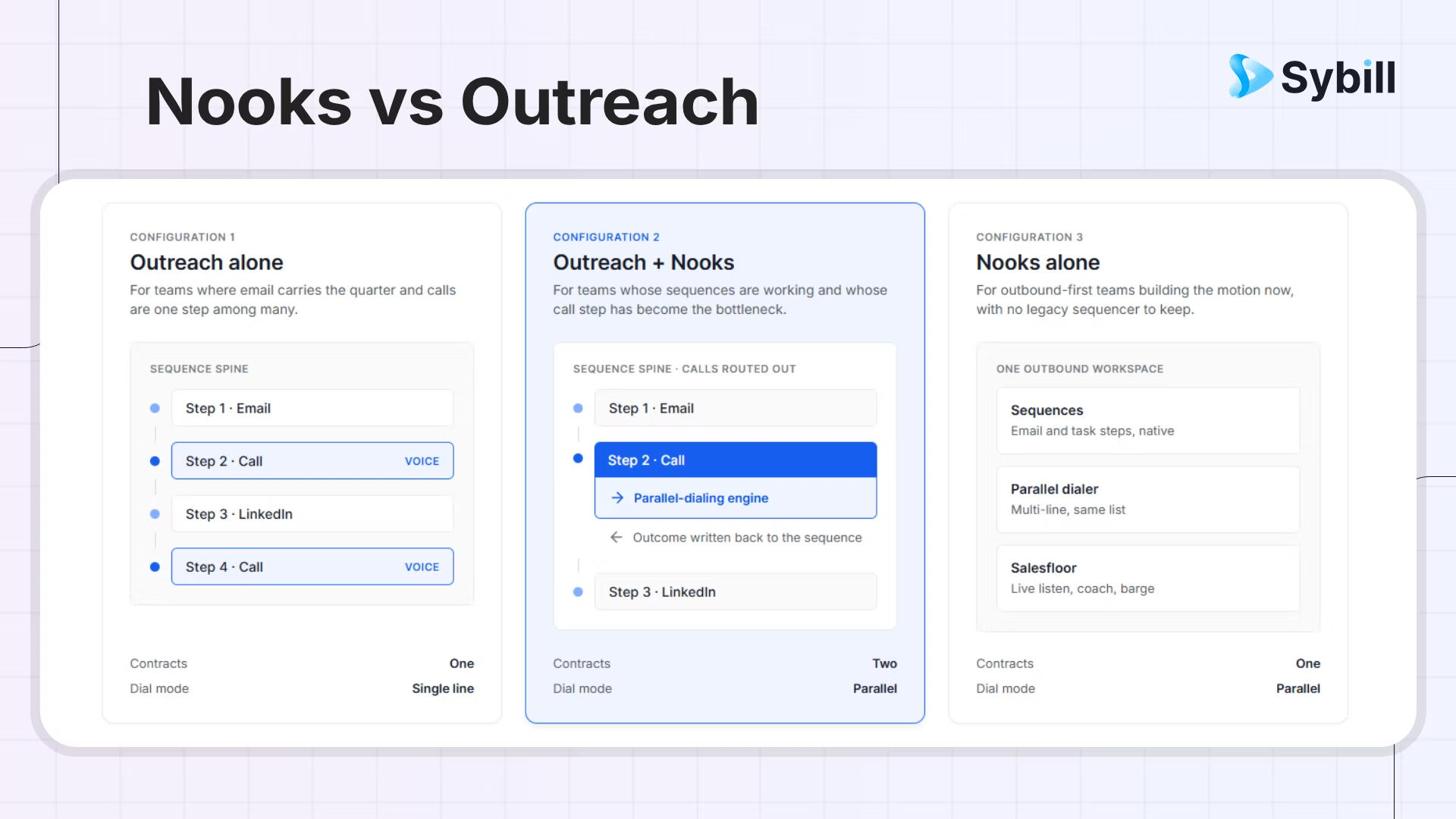
Nooks and Outreach used to be a complement, and are now also a competition, which makes this the trickiest matchup in our series. Outreach is the incumbent sales engagement platform: sequences across email, calls, and social, with dialing (Voice) as a step inside them. Nooks built the category-defining parallel dialer and virtual salesfloor for SDR volume, and has since expanded into AI sequencing, signals, and enrichment, selling itself as a consolidation play. The honest comparison therefore has three answers, not two: Outreach alone, Nooks alone, or the configuration a lot of real teams still run, Outreach for orchestration with Nooks as the dialing engine.
We will treat all three fairly, with every vendor-versus-vendor claim attributed to whoever is making it, because both companies are currently making them loudly. Usual seat, stated plainly: Sybill integrates with both, sees both platforms' calls daily, and profits from neither winning.
Historically no, increasingly yes, and the shift explains the noise. Outreach is a sales engagement platform first: its center of gravity is the sequence, the multichannel cadence orchestrating who gets touched, when, on which channel, with calling as one step type. Nooks was a dialing specialist first: its center of gravity is the calling block, parallel lines, the virtual salesfloor, live coaching, and it has recently extended sequencing and prospecting capabilities outward from that core. Two products expanding toward each other's territory from opposite origins.
For buyers, the origin still matters more than the roadmap: each product remains strongest at its center. Outreach's sequencing, admin, and ecosystem depth reflect years as the category's reference platform, a role we unpack in our sales engagement platform guide; Nooks' dialing experience, salesfloor energy, and call-coaching environment reflect years of doing nothing but the phone. The evaluation error on both sides is buying the roadmap: choosing Nooks for sequencing maturity it is still building, or choosing Outreach Voice expecting parallel-dialing machinery it does not have. [VERIFY-FEATURES]
Nooks, at volume, structurally: parallel dialing works multiple lines at once, the virtual salesfloor recreates the bullpen for remote teams (reps dialing together, managers live-listening, wins audible), and the coaching layer (live listen, transcription, call analytics) is built for exactly this work. Outreach Voice is a competent power-dialing step inside sequences: calls fire from the cadence with full context and logging, which is genuinely valuable, and it is not a parallel dialer. For a phone-first SDR floor measured in conversations per hour, the specialist is the specialist. [VERIFY-FEATURES]
And now the honesty that makes this section worth reading, because parallel dialing's costs are real and currently well documented. Independent reviews and SDR communities this year report the pattern our own dialer guide [LINK-WHEN-LIVE: /blogs/what-is-a-sales-dialer] calls the parallel taxes: the pickup lag that experienced prospects read as a cold-call tell (the "don't know who answers" complaint), connection-rate pressure as carriers and AI gatekeepers adapt, and spam-flag and number-burn worries that make reputation management a daily discipline rather than a feature checkbox. None of this kills the mode; teams whose primary channel is the phone still typically net more total conversations from the volume, which is exactly what current reviews conclude. It means the specialist purchase comes with operating obligations: number pools monitored, lists segmented so senior contacts get single-line treatment, and the mode matched to the list rather than run indiscriminately.
The corollary for Outreach-first teams: if your motion is genuinely multichannel with calling as one touch among several, Voice inside the sequence may be all the dialer you need, and the neutral buying guides say exactly that. The question is your motion's shape, not the brands.
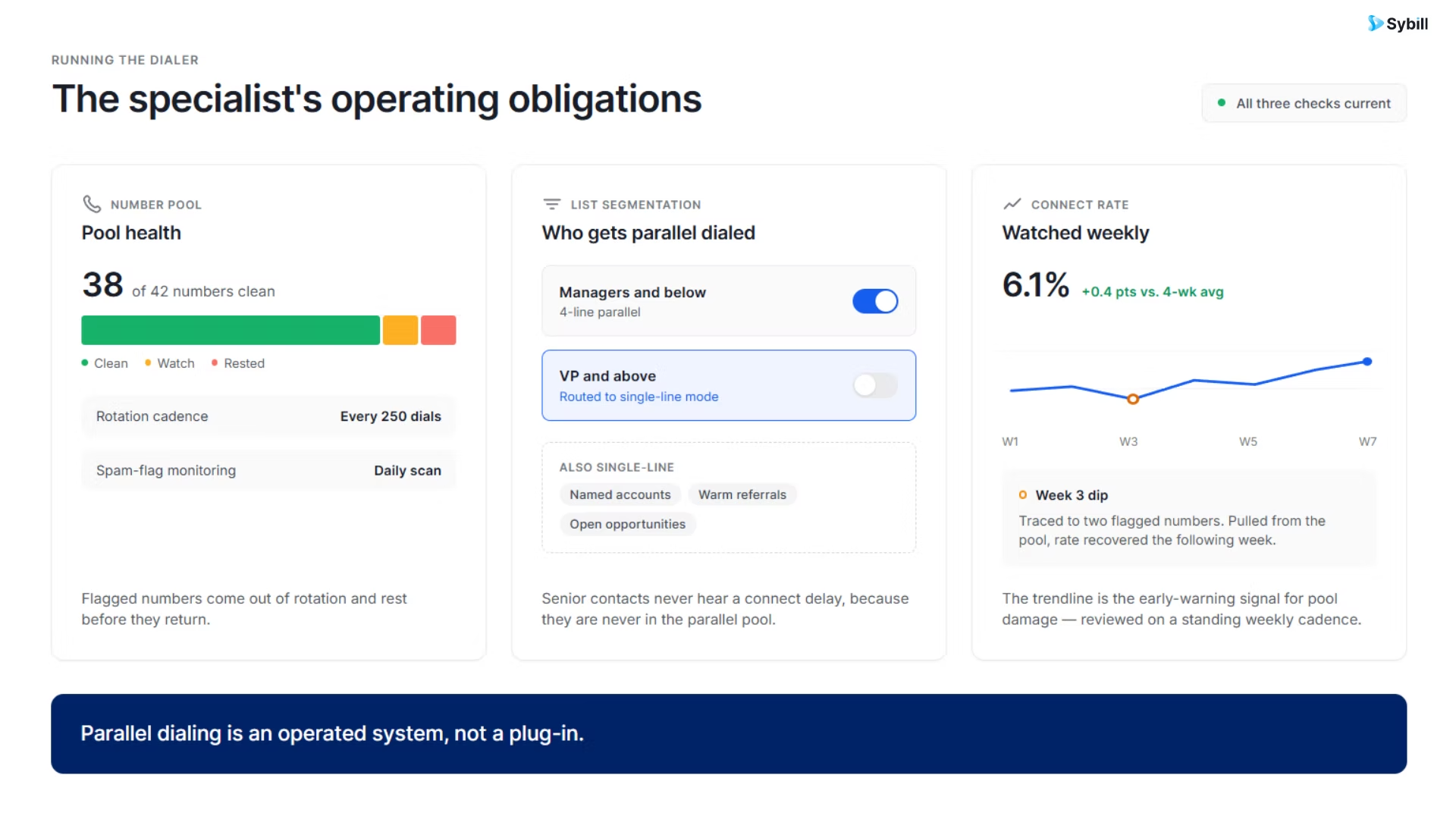
Outreach, at maturity: sequence design and A/B discipline across email, calls, and social, the admin and governance layer of a platform run by thousands-seat orgs, reporting that revenue leadership builds rhythms on, and an integration ecosystem accumulated over a decade as the category reference. Nooks' sequencing is newer and improving, designed around its thesis that dialing signals should drive the cadence, and buyers should evaluate it as what it is: a young sequencing layer attached to a mature dialing engine. [VERIFY-FEATURES]
The consolidation pitch deserves attribution and a fair hearing, because it is the loudest thing in this matchup: Nooks' marketing argues that teams run too many contracts (sequencer, dialer, data, recorder) and that its platform collapses the stack; Outreach's counter, implicit in its position, is that orchestration depth, governance, and ecosystem are what a revenue organization actually standardizes on. Both arguments are true for somebody. Consolidation genuinely pays for phone-first SDR teams whose "stack" was mostly dialing plus a thin cadence anyway; platform depth genuinely pays for multichannel orgs where sequences, not calls, are the system of record for outbound. Attribute both pitches to their vendors, then audit your own motion: count last quarter's touches by channel, and the ratio does most of the deciding.
One more structural note buyers miss: these products' data architectures differ (Outreach maintains its own engagement layer synced to the CRM; Nooks pitches a CRM-first design), and whichever claim you weight, the CRM hygiene question is yours to own on either platform, because outbound data quality is what makes lead scoring and signal-based prioritization real.
This is the configuration the comparison pages skip and plenty of high-performing teams quietly run: Outreach as the orchestration layer (sequences, multichannel cadence, reporting) with Nooks as the dialing engine executing the call blocks, connected so activity flows back. It preserves each product at its center of gravity, and it costs two contracts, which is precisely the trade: maximum capability, maximum stack. Teams choose it when the phone motion is too big for Voice and the multichannel motion is too big for a young sequencer. [VERIFY-FEATURES]
The pairing's logic maps onto our three-lane framing from the prospecting playbook: the engagement platform owns the cadence, the specialist owns the call block, and neither pretends at the other's job. Its economics are honest, too: two premium contracts only amortize at real volume, which is why this configuration lives mostly in teams with dedicated SDR floors and a manager running the calling operation as a system. Smaller teams should usually pick one center of gravity and live with its edges, per the SDR playbook principle that focus beats tooling below a certain scale, and the wider AI SDR tooling landscape offers lighter combinations besides.
Choose Nooks if... Choose Outreach if... Run both if...
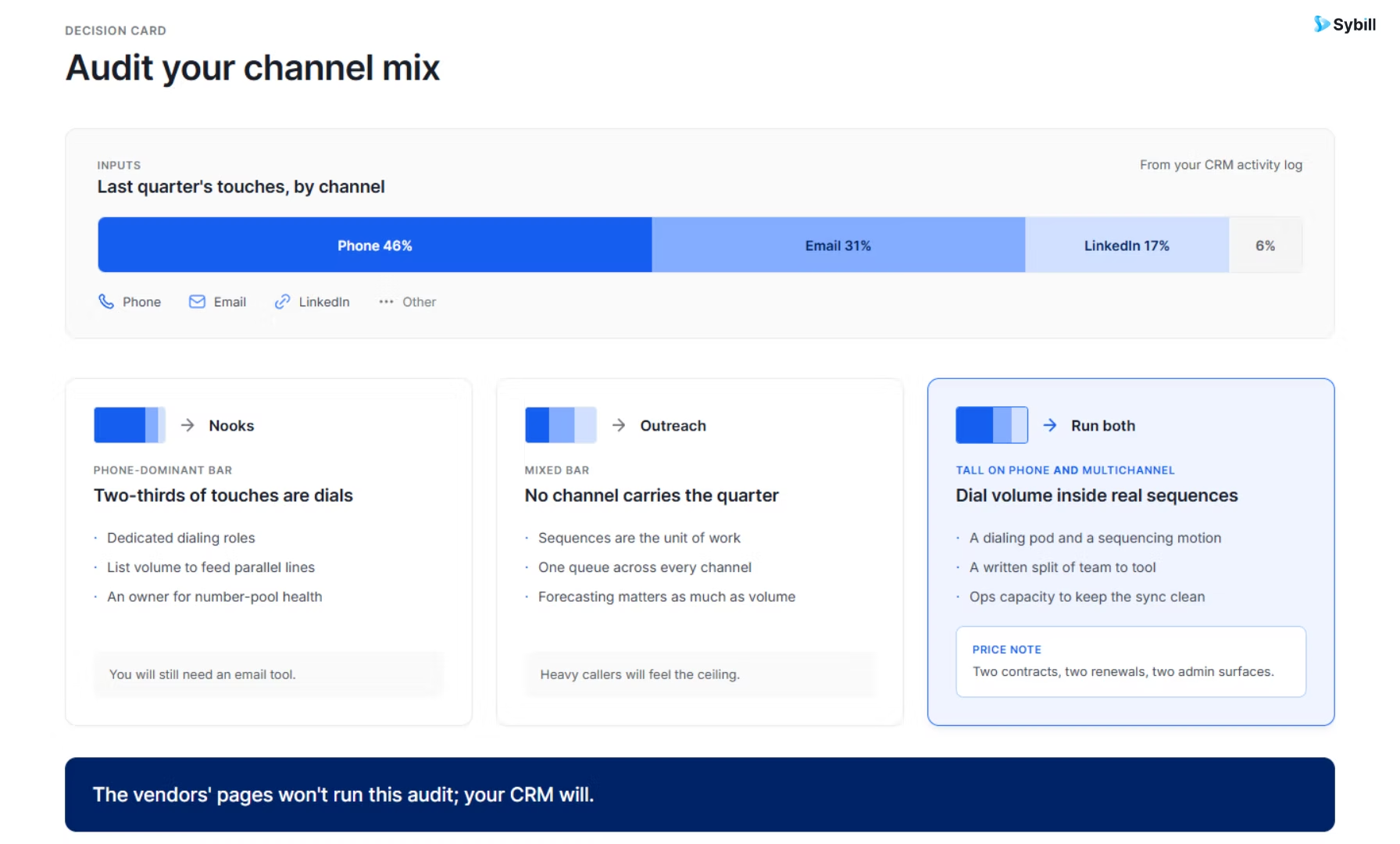
Choose Nooks if: the phone is your primary channel and conversations per hour is the metric; the salesfloor and live-coaching environment matches how you ramp reps; you accept the operating obligations (number health, list segmentation) that come with parallel dialing; and your sequencing needs are light enough for a younger layer. The shape: a cold-calling-first SDR team buying its core competency.
Choose Outreach if: your motion is genuinely multichannel and the sequence is your system of record; you need platform-grade admin, governance, and reporting; calling is one touch among several, at volumes Voice covers; and ecosystem depth matters to your stack. The shape: an outbound organization standardizing on orchestration.
Run both if: your SDR floor's call volume outgrows Voice while your multichannel motion outgrows a young sequencer, and the volume justifies two premium contracts operated deliberately. The shape: a scaled outbound operation, eyes open about cost.
The tiebreaker is empirical, series-style: pull last quarter's outbound touches and split them by channel. A motion that is mostly phone points at the specialist; mostly mixed points at the platform; big on both dimensions points at the pairing. Vendors' comparison pages will not run that audit for you, ours included.
Whichever configuration wins, the conversations are the asset. Sybill captures every Nooks and Outreach call and turns it into summaries, CRM updates, follow-ups, and deal intelligence, automatically, across any of the three setups. Get started for free with Sybill.
Here is the pattern from watching these platforms' calls at scale, and it holds regardless of which configuration you run: the dialing layer determines how many conversations happen, the orchestration layer determines who they happen with, and neither determines what your team learns from them. The objection trend across this month's cold calls, the opener that survives contact with your actual market, the competitor suddenly appearing in every enterprise conversation: all of it is spoken, none of it lives in a dial count or a sequence report.
Sybill has analyzed around 33 million sales conversations across the dialer and meeting platforms it connects to, and the capture layer is identical across every configuration on this page: each call becomes a summary, CRM fields that fill themselves, a follow-up in the rep's voice, captured commitments, and the pattern layer (queryable history, coaching signals) that feeds openers, objection handling, and list prioritization back into whichever engine dials tomorrow. The full integration list covers both vendors, which is exactly why this post can afford its neutrality.
Practical consequence, series-standard: settle the conversation layer independently; it travels intact across all three configurations, including the migrations between them that this fast-moving matchup keeps producing.
For phone-first SDR floors, Nooks is the sharper buy and the honest premium: parallel volume, the salesfloor, and the coaching environment are its actual craft, purchased alongside real operating obligations. For multichannel outbound organizations, Outreach remains the platform answer, and Voice covers more calling needs than the specialist marketing admits. The pairing is the scale answer, priced accordingly. What this matchup punishes is buying the noise: switching platforms because a comparison page shouted, instead of auditing your own channel mix and matching the tool to the motion.
Count your touches. The configuration names itself.
Get started for free with Sybill or book a demo and make every conversation count, in any configuration.
For the calling motion itself, yes: parallel dialing, the virtual salesfloor, and live coaching are Nooks' core craft, built for conversations-per-hour SDR floors. Outreach Voice is a competent power-dialing step inside sequences, not a parallel dialer. Teams whose primary channel is the phone typically net more conversations with the specialist, alongside real number-reputation obligations.
Yes, and many scaled SDR operations do: Outreach orchestrates the multichannel sequences while Nooks executes the call blocks, with activity flowing back. The pairing preserves each product at its strength and costs two contracts, so it makes sense at volumes where both the phone motion and the multichannel motion are too big for either tool alone.
Nooks now markets itself that way, having added AI sequencing, signals, and enrichment to its dialing core, and the consolidation case is real for phone-first teams with light sequencing needs. For organizations whose system of record is the multichannel sequence, Outreach's orchestration maturity, governance, and ecosystem remain the platform answer. Audit your channel mix before believing either vendor's page.
Current independent reviews report the structural trade-offs: a pickup lag that experienced prospects can read as a cold-call tell, connection-rate pressure as AI gatekeepers spread, and spam-flag and number-burn risks that make reputation management a daily discipline. Teams manage these by segmenting lists, routing senior contacts to single-line dialing, and monitoring number health.
Yes, Sybill integrates natively with both, capturing every call in any configuration (either platform alone, or both together) and turning it into summaries, CRM updates, follow-ups, and cross-deal intelligence automatically. The conversation layer travels intact across configuration changes, which this fast-moving matchup keeps producing.
For the calling motion itself, yes: parallel dialing, the virtual salesfloor, and live coaching are Nooks' core craft, built for conversations-per-hour SDR floors. Outreach Voice is a competent power-dialing step inside sequences, not a parallel dialer. Teams whose primary channel is the phone typically net more conversations with the specialist, alongside real number-reputation obligations.
Yes, and many scaled SDR operations do: Outreach orchestrates the multichannel sequences while Nooks executes the call blocks, with activity flowing back. The pairing preserves each product at its strength and costs two contracts, so it makes sense at volumes where both the phone motion and the multichannel motion are too big for either tool alone.
Nooks now markets itself that way, having added AI sequencing, signals, and enrichment to its dialing core, and the consolidation case is real for phone-first teams with light sequencing needs. For organizations whose system of record is the multichannel sequence, Outreach's orchestration maturity, governance, and ecosystem remain the platform answer. Audit your channel mix before believing either vendor's page.