Find us at booth #83, join us for a harbor side happy hour, or catch Gorish’s talk.

Sept, 16-18 > Learn more


Tamanna Mishra

February 11, 2026
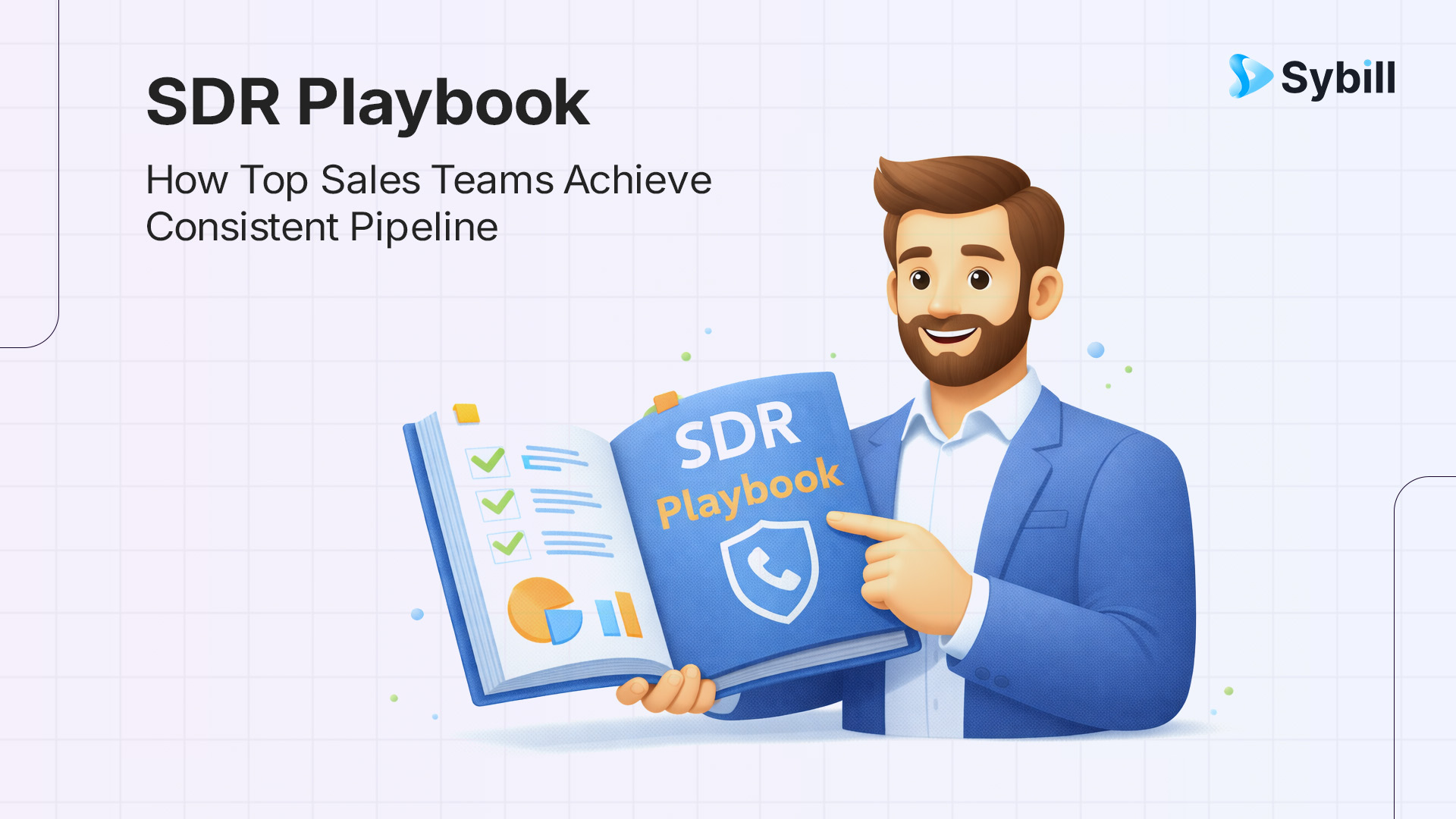
Being an SDR without a playbook is like being dropped into a video game with no tutorial, no map, and a boss fight in the first five minutes. You can button-mash for a while. Then quota hits.
Here is the reality most sales teams already live with. Nearly 68 percent of B2B companies rely on SDRs as their primary pipeline engine. Teams with structured sales playbooks, assisted by AI, outperform peers by 30 percent or more on quota attainment. And yet, almost half of SDRs still admit they mostly figure things out on their own after onboarding.
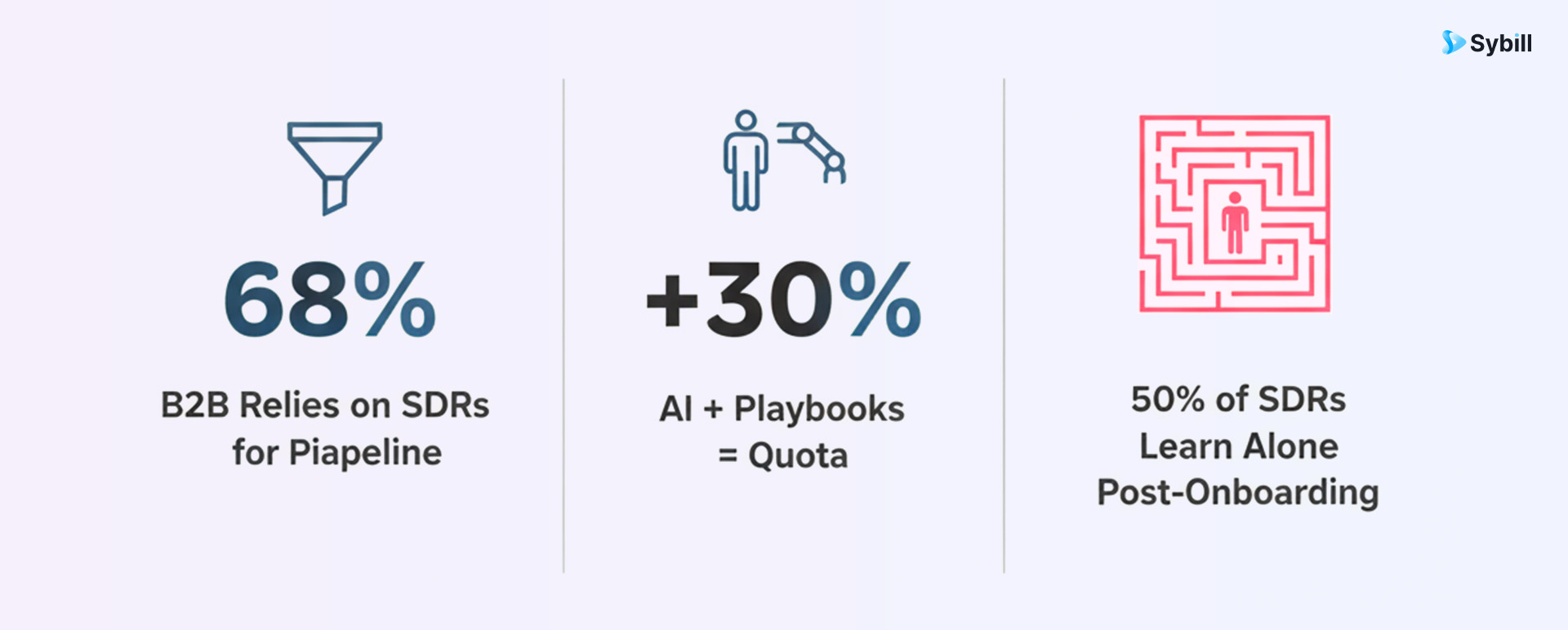
That gap is a systemic problem.
Most SDRs start with good intent and weak guidance. Messaging varies rep to rep. Ramp time quietly stretches from weeks into months. Managers spend their days fixing avoidable mistakes instead of coaching real selling skills. What should be repeatable becomes chaotic.
When there is no clear SDR playbook, every rep invents their own approach. Outreach sounds different across the same accounts. Objections get handled inconsistently. Good conversations do not translate into qualified pipeline because no one agreed on what “qualified” actually means.
This is where a real sales development playbook earns its keep.
This SDR playbook guide is built for teams that want predictability without turning reps into robots. It shows how modern sales teams design playbooks that actually get used. Not dusty documents. Not theory decks. Practical frameworks, SDR playbook templates, and real SDR playbook examples that help teams generate pipeline on purpose instead of hoping it shows up.
Most sales development playbooks do not fail because they are wrong. They fail because they are unreadable in real life.
Here is what usually breaks them.
This is why many SDR playbook examples look impressive and perform poorly.
A sales development playbook fails when it explains what to do but not how to survive real conversations.
An SDR playbook is a repeatable, execution-first system that defines how sales development reps identify, engage, qualify, and convert prospects into qualified pipeline.
That is the definition. Not onboarding slides. Not a list of tools. A system designed for daily execution.
Most training material explains concepts. A real SDR playbook is built for pressure.
A strong SDR playbook does not script SDRs line by line. It removes uncertainty. Reps know who to target, what to say, how to respond, and when to move on. That clarity frees them to focus on conversations that convert instead of guessing their next move.
SDRs who follow defined cadences see up to 28 percent higher reply rates than those who improvise outreach. That gap has nothing to do with talent. It has everything to do with structure.
A modern sales development playbook is not a wall of text. It is a set of clear defaults that remove guesswork from the job. The best SDR playbook templates focus on execution, not explanation.
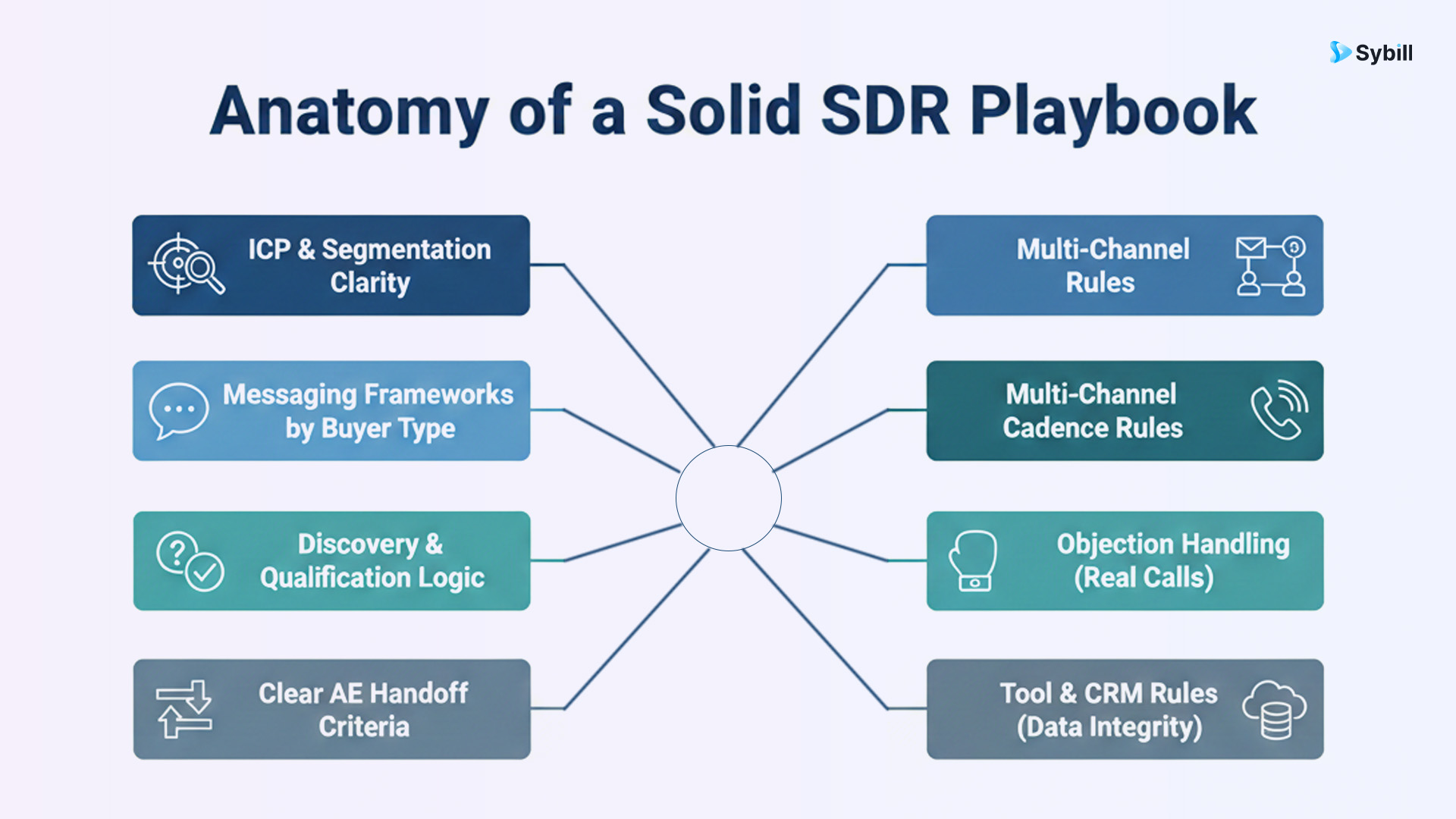
Reps need to know exactly who to go after and who to ignore. Clear ICP definitions, account tiers, and buying committee roles prevent wasted activity and misaligned pipeline.
One message does not fit all. Modern playbooks define value narratives by role, industry, and maturity so SDRs personalize with intent, not guesswork.
Strong playbooks define what qualifies a meeting and what disqualifies it. This keeps SDRs and AEs aligned and protects downstream conversion rates.
Instead of generic rebuttals, effective playbooks map objections to what buyers actually say and how successful reps respond.
Email, calls, and social outreach are sequenced intentionally. Reps know when to persist, when to switch channels, and when to walk away.
A meeting is not a win if context is missing. Modern playbooks define what information must be captured before handoff.
The playbook specifies how tools are used and how data stays clean, so insights do not disappear between conversations.
A modern SDR playbook works because it makes the right behavior the easiest behavior.
If you study winning SDR playbook examples, one pattern shows up fast. Top teams do not improvise their workflow as they go. They don’t wing it. They standardize it.
Pipeline consistency comes from removing “what should I do next?” moments.
Top SDR teams do not leave “what happens next” to chance. Every step has a default path. That structure reduces hesitation, speeds execution, and turns individual effort into a predictable pipeline.
A high-performing SDR playbook does not follow internal sales stages. It follows how buyers actually decide. That is why this framework works under real pressure, not just in theory.
Below is a scannable, execution-first framework used by teams that generate consistent pipeline.
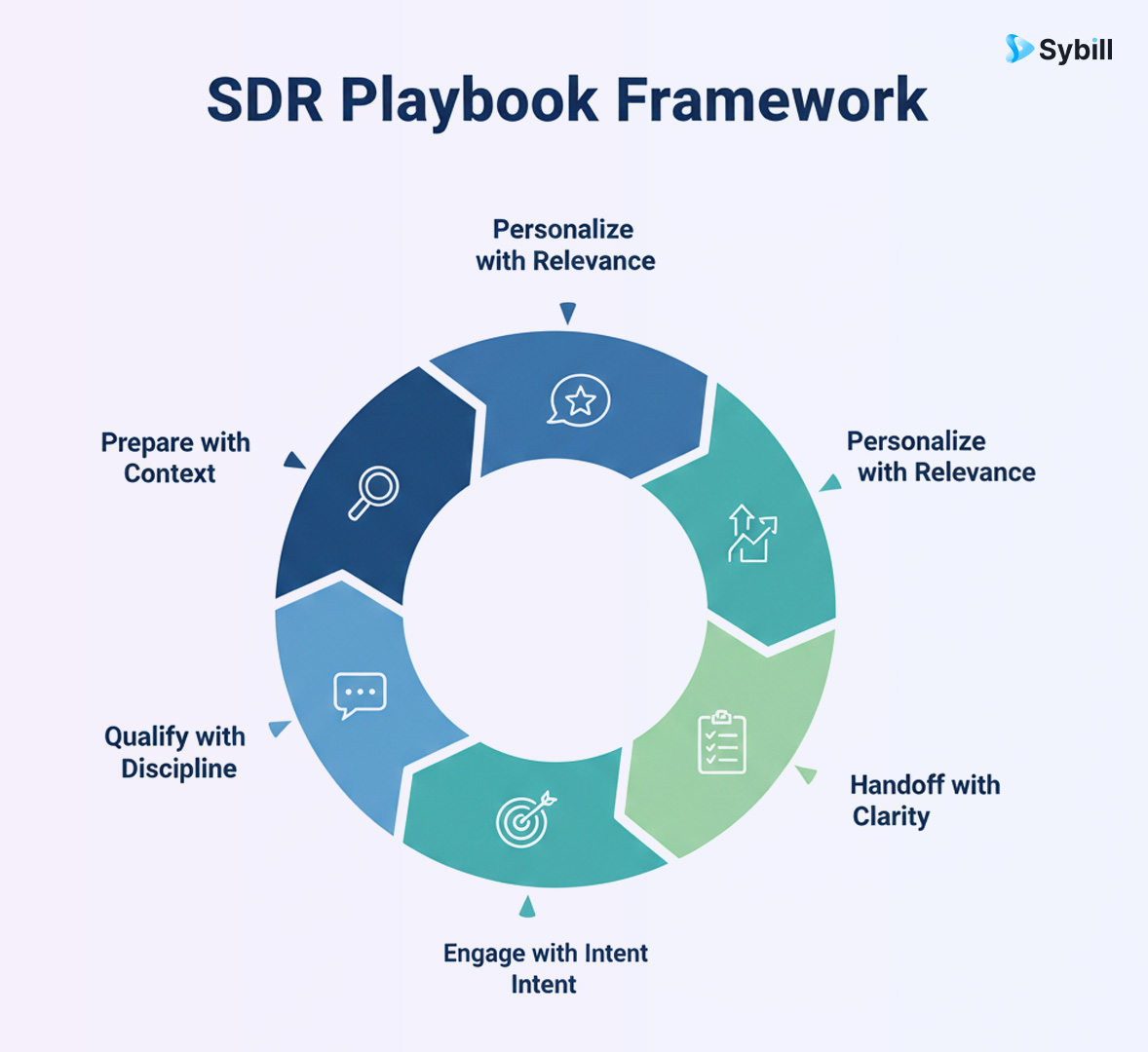
Before an SDR sends a single message, they should know who the buyer is, why this account matters, and what context already exists.
How this shows up in practice:
How AI tools like Sybill help:
Pre-meeting briefs surface account context automatically so SDRs start informed, not blind.
Ask Sybill prompt:
“What context should I know before reaching out to X account?”
Personalization is not adding a company name to an email. It is connecting to something the buyer actually cares about.
What the playbook enforces:
How Sybill helps:
Conversation insights from similar accounts reveal what messaging resonates by role and industry.
Ask Sybill prompt:
“What value angle works best for buyers similar to X account and Y persona?”
Engagement without intent is just activity. Strong SDR playbooks define why each touch exists.
What changes at this stage:
How Sybill helps:
Conversation patterns highlight whether engagement is progressing or stalling through real-world buyer intelligence.
Ask Sybill prompt:
“What signals show X prospect is genuinely engaged?”
Qualification protects downstream pipeline. This is where many SDR teams leak trust.
What the playbook standardizes:
How Sybill helps:
Real buyer language from calls and emails surfaces intent, hesitation, objections and deal readiness beyond yes-or-no answers.
Ask Sybill prompt:
“Based on conversations, is this account truly qualified?”
A meeting is only valuable if context survives the handoff.
What the playbook enforces:
How Sybill helps:
CRM context is captured automatically and available conversationally, so AEs walk in prepared.
Ask Sybill prompt:
“What should the AE know before this meeting?”
This SDR playbook framework mirrors how buyers make decisions. It prioritizes relevance over volume, signals over scripts, and clarity over activity. When SDRs follow buyer logic instead of seller hope, pipeline quality and velocity improve naturally.
Most SDR playbook templates fail because they ask reps to read more when what they really need is to think less. The templates that work do the opposite. They compress judgment, remove ambiguity, and make the next best action obvious.
Below are the templates high-performing teams actually rely on in live selling situations.
What this template does:
Eliminates wasted effort by defining who is worth an SDR’s time before outreach begins.
What to include:
Why it works:
It stops SDRs from chasing accounts that look interesting but will never convert.
What this template does:
Gives SDRs a structure for relevance without turning messages into scripts.
What to include:
Why it works:
It standardizes intent while leaving room for individual voices.
What this template does:
Prepares SDRs for resistance without encouraging reflexive rebuttals.
What to include:
Why it works:
It replaces panic responses with curiosity and control.
What this template does:
Ensures meetings are earned, not just booked.
What to include:
Why it works:
It protects trust between SDRs and AEs and improves close rates.
What this template does:
Removes randomness from follow-up strategy.
What to include:
Why it works:
It turns effort into momentum instead of repetition.
What this template does:
Preserves context so AEs do not start cold.
What to include:
Why it works:
It makes meetings productive from minute one.
Templates only work when they reduce thinking, not increase reading. When the right behavior is the easiest behavior, adoption takes care of itself.
If you look closely at high-performing SDR playbook examples, the difference is not effort or talent. It is what teams choose to listen to.
Strong SDR playbooks are living systems. The best teams treat every conversation as input, not noise. That is how SDR playbooks stay relevant and continue to generate pipeline instead of becoming shelfware.
Most SDR playbooks fail because no one uses them.
If your SDRs only open the playbook during onboarding, you do not have a playbook. You have a PDF.
A sales development playbook only works if it shows up where SDRs already work. Scale does not come from better documentation. It comes from better defaults.
Here is how high-performing teams operationalize their SDR playbook so it drives behavior every day.
Do not ask SDRs to reference a document mid-call. Build the playbook into how they prospect, message, qualify, and hand off. Defaults should guide actions automatically, from who to contact to what happens after a reply.
Action: Turn playbook steps into checklists, prompts, and required fields inside existing tools.
Coaching should not be abstract. Review real calls and messages and evaluate them against the playbook. Did the rep follow the qualification logic? Did they use the right value narrative for the persona?
Action: Replace generic feedback with playbook-based scorecards during reviews.
When reply rates drop or conversations stall, adjust the playbook. When something works repeatedly, codify it. The playbook should evolve with buyer behavior, not leadership preference.
Action: Set a monthly cadence to retire underperforming plays and promote winning ones.
The fastest way to improve SDR performance is to coach with proof. Use real conversations, not hypotheticals. Show reps what works and why.
Action: Anchor coaching sessions in call snippets, message threads, and conversion data.
AI-driven workflow tools like Sybill help teams operationalize playbooks without adding overhead.
Conversation insights surface what works.
CRM context stays current automatically.
Leaders get evidence to coach consistently.
When the playbook lives inside workflows, SDR execution scales naturally.
An SDR playbook is all about clarity.
The best SDR playbooks do not try to script every move. They make great behavior repeatable and bad habits expensive. They remove hesitation, reduce guesswork, and give reps confidence in what to do next, even under pressure.
If your pipeline depends on SDRs, your growth depends on giving them a system that works in the real world. One that reflects how buyers actually respond. One that evolves with real conversations. One that preserves context from first touch through handoff.
That is where modern teams are headed.
The best SDR playbooks today are AI-led, context-rich, and execution-first. They preserve buyer intent, surface what works, and ensure clean, seamless SDR to AE handoffs without losing momentum.
Sybill helps teams do exactly that by keeping conversation context alive, automating CRM hygiene, and turning real buyer interactions into actionable playbook intelligence. Click here to try for free.
Because playbooks do not create pipeline.
Execution does.
SDR stands for Sales Development Representative. SDRs focus on outbound and inbound prospecting, early-stage conversations, and qualification. Their job is to identify the right prospects, start relevant conversations, and convert interest into qualified meetings.
For most teams, yes. SDR roles combine high activity volume, frequent rejection, and tight feedback loops. Reps are expected to learn fast, adapt messaging constantly, and perform under pressure with limited control over outcomes. That is why strong SDR playbooks matter. They reduce uncertainty and help reps execute consistently in one of the most demanding roles in sales.
A sales playbook should include clear ICP definitions, messaging frameworks, objection handling guidance, cadence rules, qualification criteria, and clean handoff standards. Nothing more. Nothing less. If it does not help a rep decide what to do next in a real conversation, it does not belong in the playbook.