Find us at booth #83, join us for a harbor side happy hour, or catch Gorish’s talk.

Sept, 16-18 > Learn more

%20(1).avif)
Mamta Tainwala

August 26, 2026
ANI, Automatic Number Identification, is the carrier-level service that identifies the phone number a call originates from. It was built for billing (so toll-free recipients could be charged for the calls they received), and it travels in the network's signaling layer, which is why it generally cannot be blocked the way caller ID can. Businesses use it to recognize inbound callers instantly, route them, and fight fraud, and sales teams should understand it for a second reason the textbook definitions skip: the same identification machinery is what carriers use to judge, label, and sometimes bury your outbound calls.
Both halves below: what ANI is and how it differs from its lookalikes, then the outbound story, where number identity decides whether your prospect's phone says your city or says "Spam Likely."
When a call is placed, the originating carrier attaches the caller's billing number to the call's signaling data, the machinery that sets the call up before anyone's phone rings, and delivers it alongside the call. Toll-free subscribers and contact centers receive that ANI in real time, which is how an 800 line knows who is calling even when the caller has withheld their caller ID.
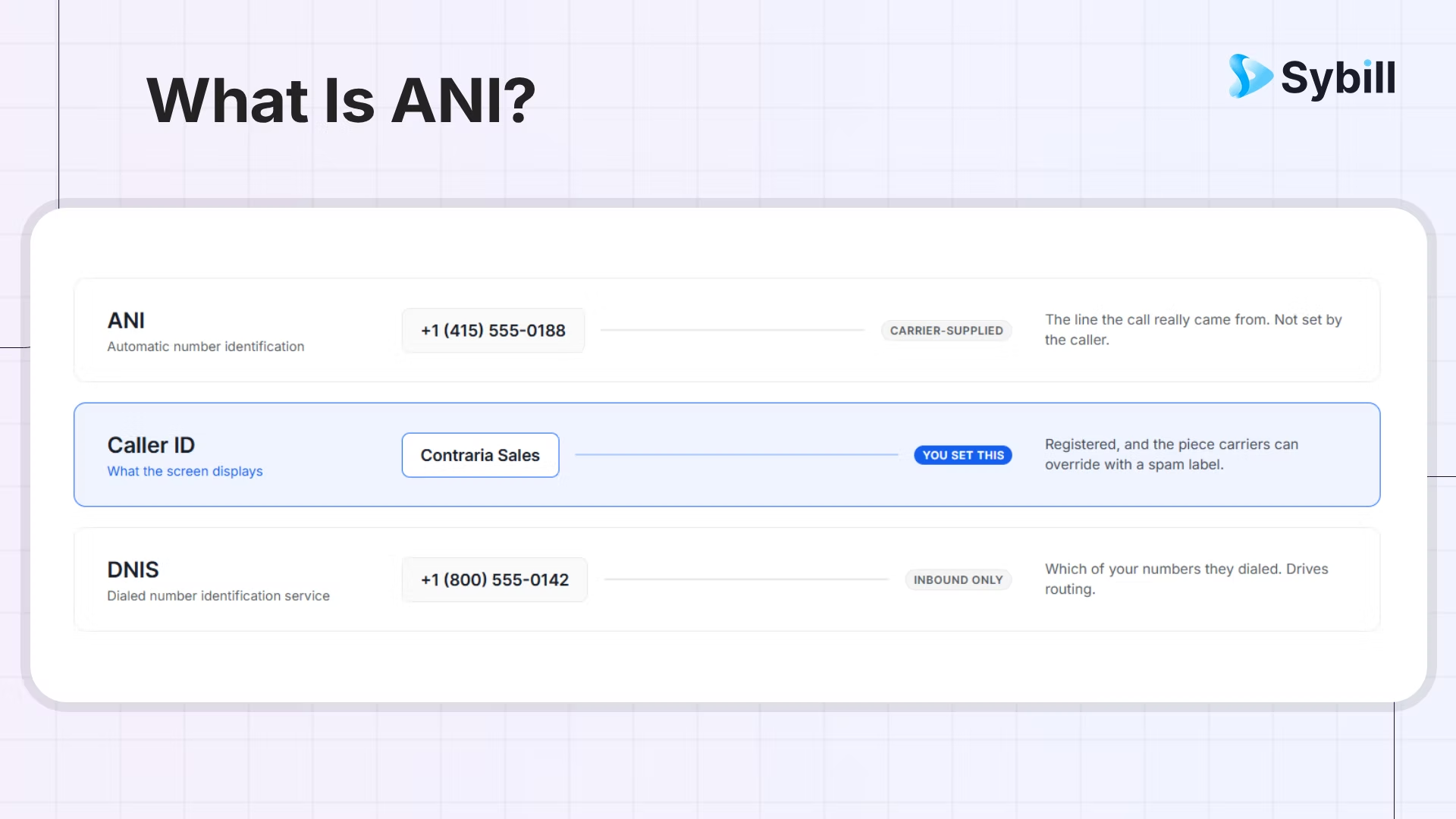
The layer difference is the concept that unlocks everything else on this page:
Three identifiers, three questions:
For a revenue team, each maps to a workflow. ANI powers the inbound recognition below. Caller ID is the face of your outbound calling, the thing local presence and reputation management exist to protect. DNIS is attribution: give each campaign or region its own inbound number, and the dialed number itself reports which effort produced the call, a cousin of the lead-source discipline your scoring already depends on.
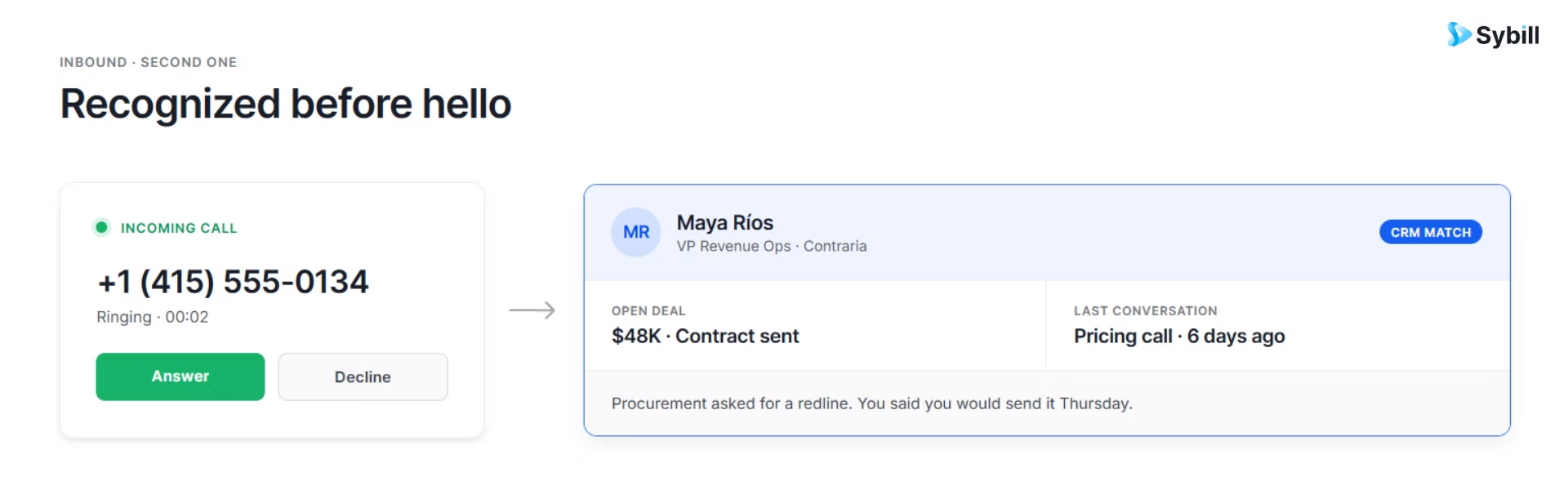
Recognition before the greeting. When a known number rings in, ANI lets the phone system match it against the CRM and act on the match:
The dependency is the same one every screen-pop feature carries: recognition is only as good as the records behind it. An ANI match against a CRM full of stale numbers pops the wrong context confidently, which is a data hygiene problem no telephony feature fixes, and a reason CRM automation that maintains records at the source pays off the moment the phone rings.
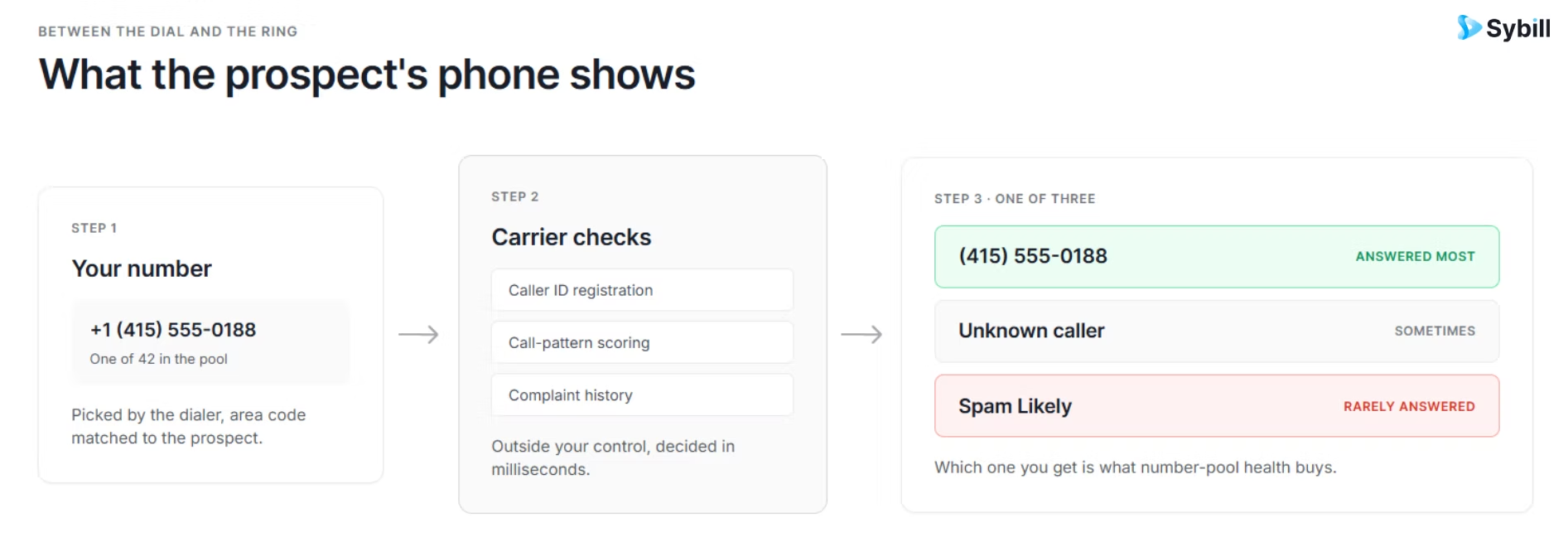
Because on the outbound side, the identification machinery works on you. Every call your team places carries its originating identity through the carrier network, and that identity accumulates a reputation:
The trust layer on top is STIR/SHAKEN, the caller-ID authentication framework US carriers are required to run: the originating carrier cryptographically attests to how confident it is that the caller is entitled to the number being displayed, and downstream carriers use that attestation when deciding what to show and what to flag. The practical translation is unglamorous and decisive: own your numbers properly, register your business identity with the carrier ecosystem, and keep calling patterns inside human-looking bounds.
And the legal line, orientation rather than legal advice: displaying a number is regulated. The Truth in Caller ID Act prohibits transmitting misleading caller ID with intent to defraud or harm, which is the boundary that makes local presence a legitimate technique only when implemented with real numbers your team controls in each area code. Legitimate local presence is a connect-rate lever; illegitimate is a legal exposure, and the difference is whether the displayed number is genuinely yours. The recording half of calling compliance lives in our phone recording laws guide, and the full checklist belongs with counsel.
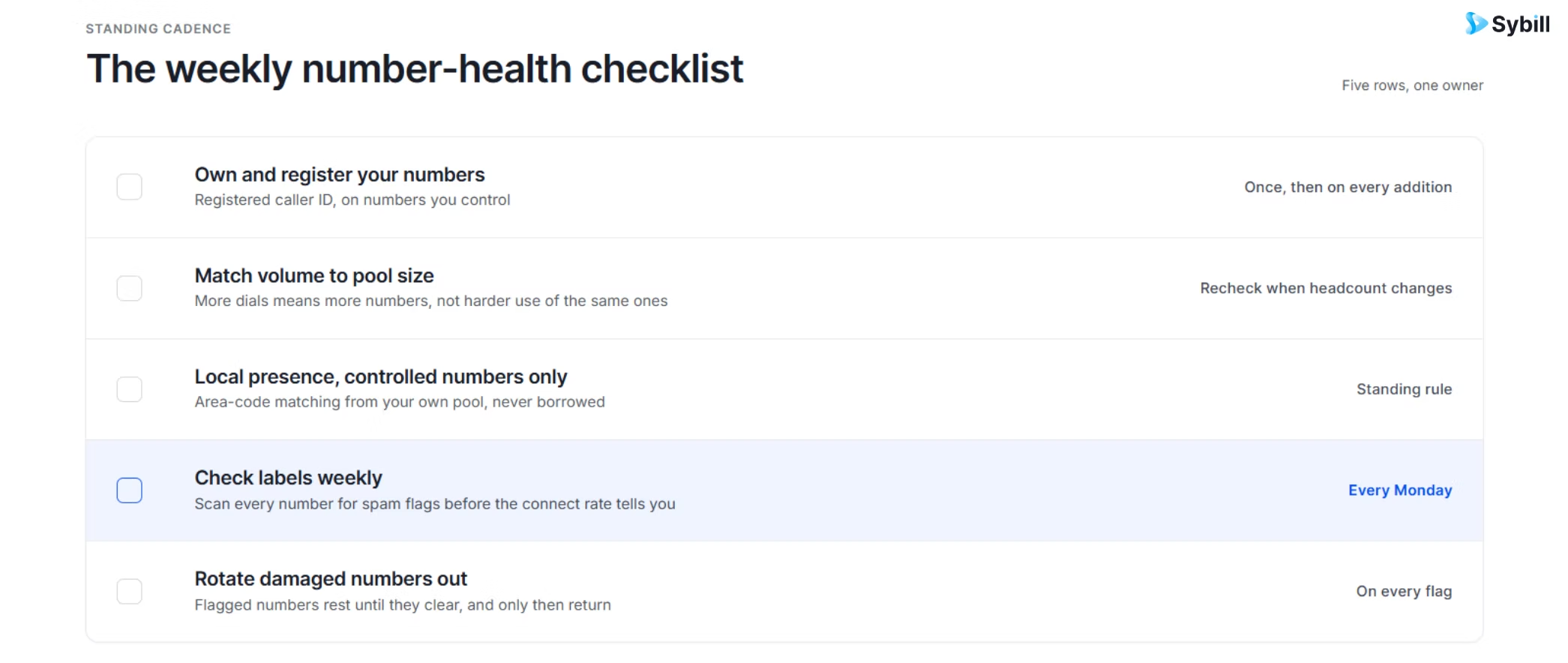
Five unglamorous practices cover ninety percent of it:
Then remember which side of the machinery pays your quota: identification gets the call answered; the conversation does everything after. Sybill has analyzed around 33 million sales conversations across the dialers and meeting platforms it connects to, and the pattern relevant here is blunt: teams obsess over connect rates and then let the connected conversations evaporate, unlogged and unlearned-from. Every answered call your number reputation earns should end as a summary, a CRM record that wrote itself, a follow-up in the rep's voice, and a signal your coaching and outbound playbook get smarter from, across every dialer on our integration list.
Your number gets the call answered. Sybill makes the answer count. Every connected call becomes a summary, a CRM update, and a follow-up, automatically. Get started for free with Sybill.
ANI is forty-year-old billing infrastructure, and it quietly frames the modern outbound problem: identity travels with every call, on layers the caller does not control, judged by machines before a human ever hears the pitch. Teams that treat number identity as plumbing (owned, registered, rotated, watched) keep their connect rates; teams that treat it as an afterthought spend quarters wondering why nobody picks up. Learn the three identifiers, run the five practices, and then get back to the part of the call that was always the actual job.
Get started for free with Sybill or book a demo and turn every answered call into pipeline.
ANI stands for Automatic Number Identification, a carrier-level service that identifies the phone number a call originates from. Built originally for toll-free billing, it travels in the network's signaling layer alongside the call, which is why toll-free lines and contact centers can identify callers even when caller ID is withheld.
They travel on different layers. Caller ID is a subscriber-level display service: it can be blocked per call, and its name display comes from database lookups. ANI is carrier-level billing infrastructure delivered to services that pay for it, and it generally cannot be blocked, which is why *67 hides your number from a person but not from an 800 line.
DNIS, Dialed Number Identification Service, answers the opposite question: not who is calling, but which of your numbers they dialed. Businesses running many inbound numbers use DNIS to route calls and attribute them, so one queue can serve fifty campaign lines and still know which campaign produced each call. ANI identifies the caller; DNIS identifies the target.
ANI is far harder to manipulate than caller ID because it originates in carrier signaling rather than subscriber settings; ordinary blocking does not touch it. Caller ID, by contrast, can be technically altered, which is exactly what regulation addresses: the Truth in Caller ID Act prohibits transmitting misleading caller ID with intent to defraud or harm.
Carrier analytics score outbound numbers on behavior: dial volume, answer rates, call durations, and complaint reports. Numbers whose patterns resemble machine dialing collect spam labels, which collapse connect rates. The fixes are operational: registered numbers, volume spread across a rotated pool, and weekly label monitoring.
STIR/SHAKEN is the caller-ID authentication framework US carriers are required to implement: the originating carrier cryptographically attests to its confidence that the caller is entitled to the displayed number, and downstream carriers use that attestation when deciding what to display or flag. For sales teams, it is the reason properly owned and registered numbers connect better than improvised ones.
Implemented legitimately, yes: displaying a real number your team controls in the prospect's area code is a lawful connect-rate technique. Displaying a number you have no right to use crosses into caller-ID spoofing territory that the Truth in Caller ID Act regulates. The dividing line is ownership of the displayed number; have counsel review your specific setup.
ANI stands for Automatic Number Identification, a carrier-level service that identifies the phone number a call originates from. Built originally for toll-free billing, it travels in the network's signaling layer alongside the call, which is why toll-free lines and contact centers can identify callers even when caller ID is withheld.
They travel on different layers. Caller ID is a subscriber-level display service: it can be blocked per call, and its name display comes from database lookups. ANI is carrier-level billing infrastructure delivered to services that pay for it, and it generally cannot be blocked, which is why *67 hides your number from a person but not from an 800 line.
DNIS, Dialed Number Identification Service, answers the opposite question: not who is calling, but which of your numbers they dialed. Businesses running many inbound numbers use DNIS to route calls and attribute them, so one queue can serve fifty campaign lines and still know which campaign produced each call. ANI identifies the caller; DNIS identifies the target.