Find us at booth #83, join us for a harbor side happy hour, or catch Gorish’s talk.

Sept, 16-18 > Learn more


Tamanna Mishra

May 19, 2026
Every sales team has lived this movie.
The call goes well. The buyer sounds ready. Pricing is aligned. Everyone nods like this is headed for a clean, satisfying close. Then the contract enters the chat and suddenly your deal moves with all the elegance of a shopping cart with one broken wheel.
It is never just one thing, either.
Sometimes it is the wrong template. Sometimes legal is buried. Sometimes finance needs approval because someone got “creative” with discounting. Sometimes three versions of the same contract are floating around email like cursed little ghosts. Sometimes the buyer is ready, but your internal process clearly is not.
Not because sales reps dream of better document storage. They do not. It matters because contracts sit at the point where revenue should become real. And when that stage is messy, slow, or invisible, the whole sales org pays for it.
Modern contract software is not just about signatures. The real value is in faster drafting, cleaner approvals, version control, centralized visibility, CRM integration, and fewer errors at the exact moment a deal should be wrapping up.
So no, this is not a legal ops problem alone. This is a sales efficiency problem. A forecast accuracy problem. A rep productivity problem. A manager visibility problem.
And if you choose the wrong tool, you do not just get clunky software. You get a shinier bottleneck.
Contract management software for sales is software that helps sales teams create, send, negotiate, approve, sign, store, and track contracts without derailing the deal.
That sounds broad because it is broad. Good tools cover a lot of ground.
Most strong platforms include some mix of:
But let’s clear up a common confusion. E-signature software is not the same thing as full contract management software.
Signing is the final click. Contract management is everything before and after that click. If your reps still copy customer data manually, chase internal approvals on Slack, lose track of clause edits, or have no idea where a contract is stuck, then a signature tool alone will not save you.
That is why the best contract management software for sales teams usually plugs directly into the CRM or revenue workflow. The contract should not become some weird detached object living in a separate system with zero pipeline context. It should stay tied to the deal, the buyer, the approval path, and the next step.
Some teams believe more features automatically means better software. That is adorable. In reality, the best tool is the one that removes friction from your actual sales motion.
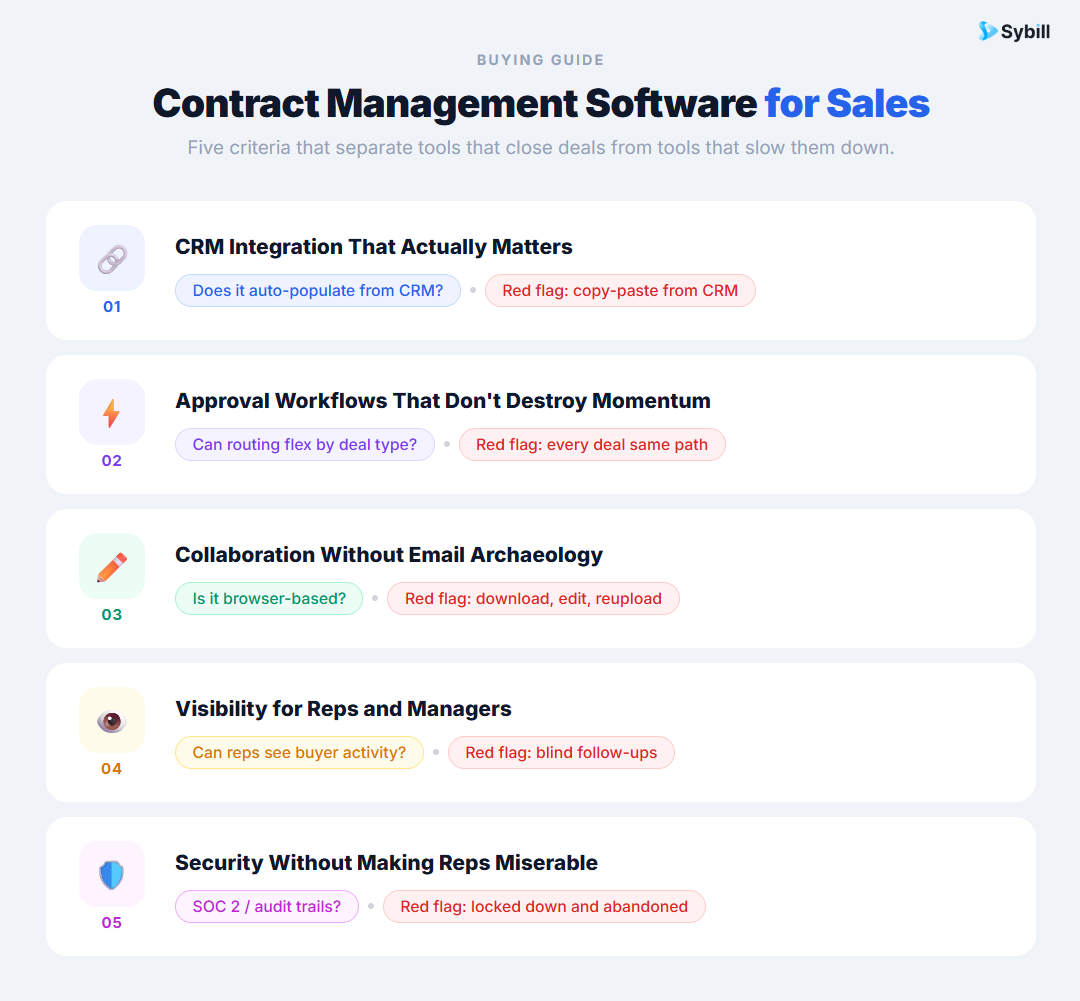
If your reps are still copying names, SKUs, pricing, or company details into a contract by hand, congratulations, your contract process is still doing cosplay as 2014.
CRM integration is one of the most important buying criteria because it reduces manual entry, speeds up document generation, and keeps contract status tied to deal data.
Approvals are necessary. Approval chaos is not.
A good sales contract tool routes the right contract to the right stakeholders based on deal size, discount threshold, territory, or non-standard terms. A bad one turns every contract into a scavenger hunt.
If you are a lean team, you need something lightweight and easy. If you are an enterprise team with finance, legal, security, and procurement all touching deals, you need something more structured. The key is fit, not feature theater.
If your team still downloads a Word doc, edits it, reuploads it, re-emails it, and then asks “final_final_v8 which one is that?” you do not have a process. You have a cry for help.
Browser-based editing, commenting, redlining, and version control matter a lot for multi-stakeholder deals. Especially when legal and sales both need to work in the same document. Juro, Ironclad, and Oneflow lean heavily into this.
Managers need to know which contracts are pending, which are stuck, how long deals spend in legal review, and where approvals keep breaking down. Reps need to know whether the buyer opened the contract, whether a signer is waiting, and what step is next.
Without visibility, every follow-up becomes a guess. And sales teams already have enough guesswork.
Permissions, audit trails, compliance, and secure storage all matter. Especially in regulated industries or enterprise environments. But the best contract management software for sales managers does not just lock everything down. It balances control with usability.
Because if the software is secure but nobody wants to use it, that is not governance. That is shelfware with extra steps.
Before we get into the details, here is a quick summary.

Before we get into the tools, one important point.
Contracts do not usually stall because of the contract alone. They stall because the deal was not as aligned as the CRM made it look.
The objection was there, but not captured properly.
The buying committee concern came up, but got buried in notes.
The pricing pushback was obvious, but never made it into the handoff.
The next steps were vague, and now legal is somehow expected to decode the situation.
This is where Sybill matters.
Contract software handles the document workflow. Sybill handles the context that shapes whether the document moves smoothly in the first place.
With Ask Sybill, teams can surface buyer concerns, objections, and deal risks from previous calls.
With Magic Summary, important call context does not disappear into note chaos.
With CRM Autofill, critical deal details actually make it into the system instead of living in someone’s memory.
With Email Follow-ups, reps can follow up with sharper messaging after pricing and legal conversations.
With AI Tasks, follow-through does not die in browser tabs.
And with Pre-Meeting Brief, reps walk into negotiation or contract review calls with the backstory already in hand.
In other words, the contract tool gets the paper moving. Sybill helps make sure the deal deserves to move.
That is a very different kind of leverage.

PandaDoc is one of the best contract management software options for sales teams that want proposals, quotes, contracts, and e-signatures wrapped into one accessible workflow.
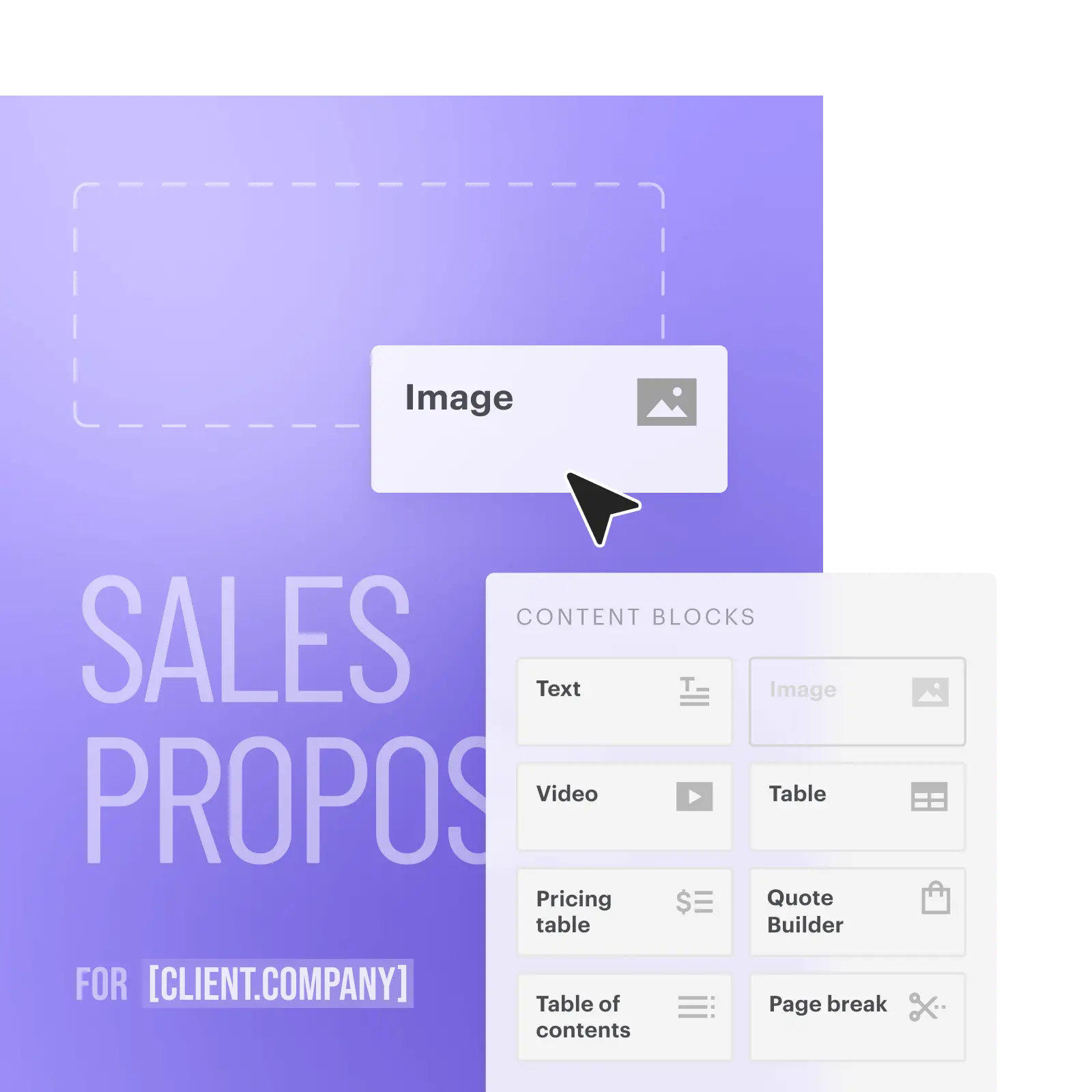
Its biggest strength is usability. The drag-and-drop builder is easy to adopt, the content library helps standardize assets and language, and the CRM integrations make it useful for day-to-day sales work. It is also strong for teams that want document analytics, so reps can see when a buyer opens or views a document.
Why it works:
What to watch:
Best for: SMB and mid-market sales teams that want speed, decent automation, and a low-friction user experience.
Juro feels like it was built by people who were personally offended by the traditional Word-to-PDF-to-redline circus.
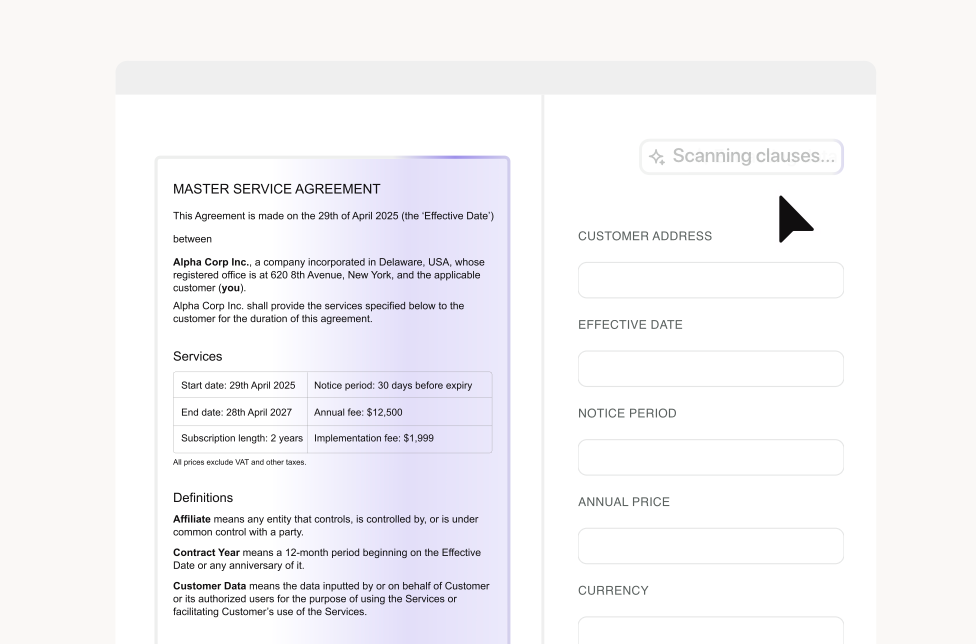
It is browser-native, collaborative, and fast. Sales and legal teams can work inside the same document, use conditional logic, create contracts from templates, and keep everything moving without endless attachment chaos. Users consistently position Juro as strong for high-growth commercial teams and fast-moving businesses.
Why it works:
What to watch:
Best for: Fast-growing tech and commercial teams that want contract speed, collaboration, and less nonsense.
DocuSign CLM is the obvious choice for organizations already deep in the DocuSign ecosystem, especially where security, compliance, and enterprise control matter more than elegance.
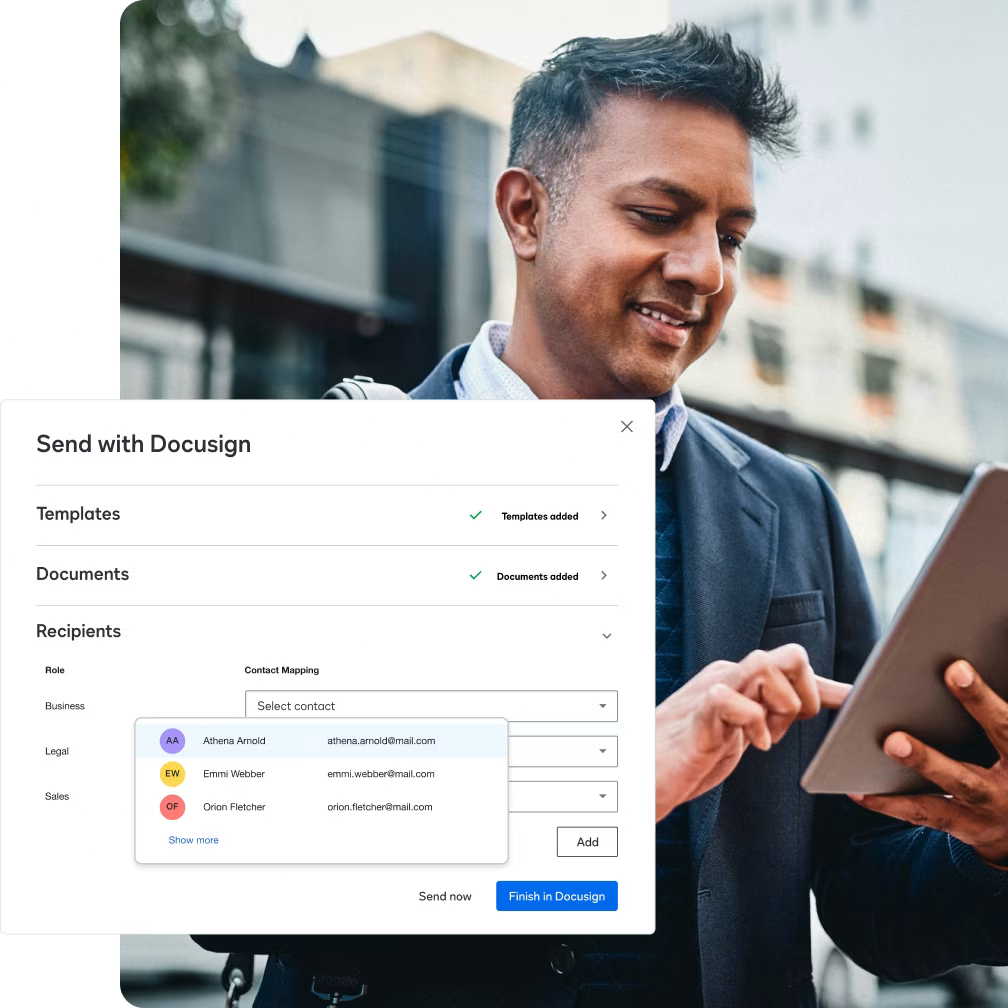
Its strengths are clear: workflow automation, auditability, AI-driven insights, clause control, and broad enterprise integrations. It is especially relevant for teams already standardized on DocuSign signatures and looking to extend into pre-signature workflow and contract lifecycle management.
Why it works:
What to watch:
Best for: Compliance-heavy enterprise teams and DocuSign-first environments.
Ironclad is what happens when contract management grows up in a large enterprise with strong legal ops involvement.
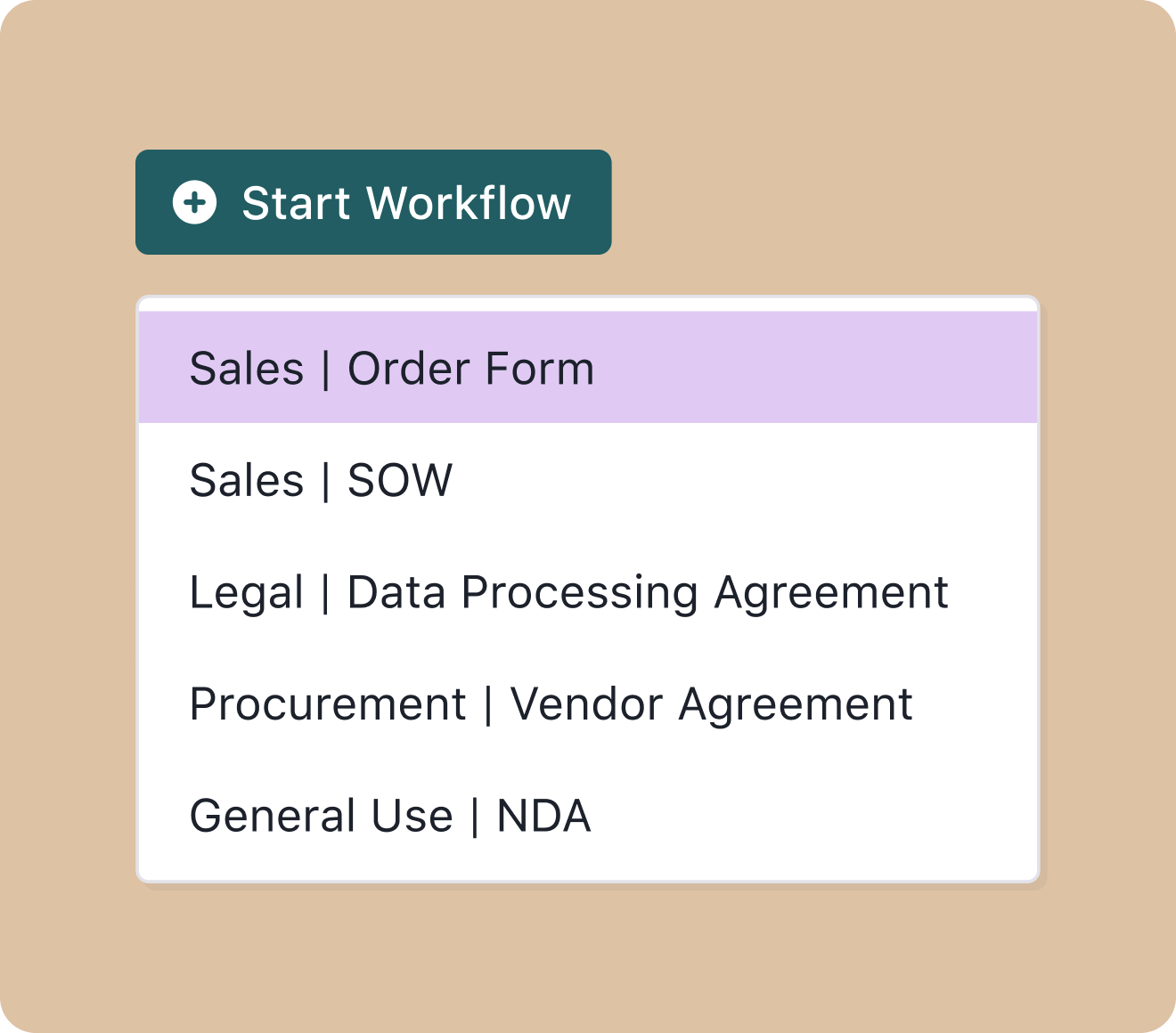
It is powerful, structured, and built for complex workflows. You get AI-powered contract analysis, workflow automation, repository management, and strong control over approvals and collaboration. Users repeatedly position Ironclad as a top pick for enterprise legal teams and high-volume contract environments.
Why it works:
What to watch:
Best for: Large enterprise sales orgs with legal-heavy workflows and process complexity.
If your revenue team lives and breathes Salesforce, Conga gets very interesting very quickly.
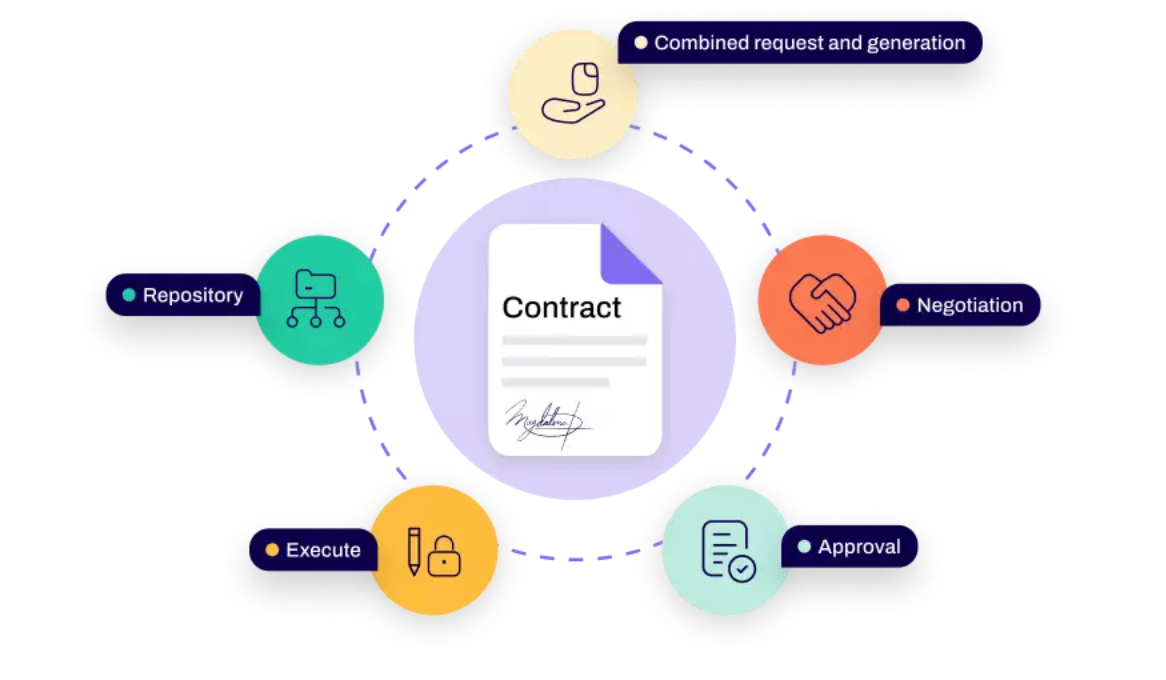
Its biggest strength is native alignment with CRM and revenue workflows. It can generate contracts from CRM data, support clause libraries, and keep contract activity close to the rest of the quote-to-revenue motion. Users consistently frame Conga as strong for Salesforce-centric organizations that want contracts tightly tied to customer and revenue management.
Why it works:
What to watch:
Best for: Salesforce-heavy revenue teams that want contract workflow embedded into the CRM universe they already live in.
Oneflow is one of the more modern-feeling platforms in this category. It leans into digital-first, interactive contracting rather than static, clunky document behavior.
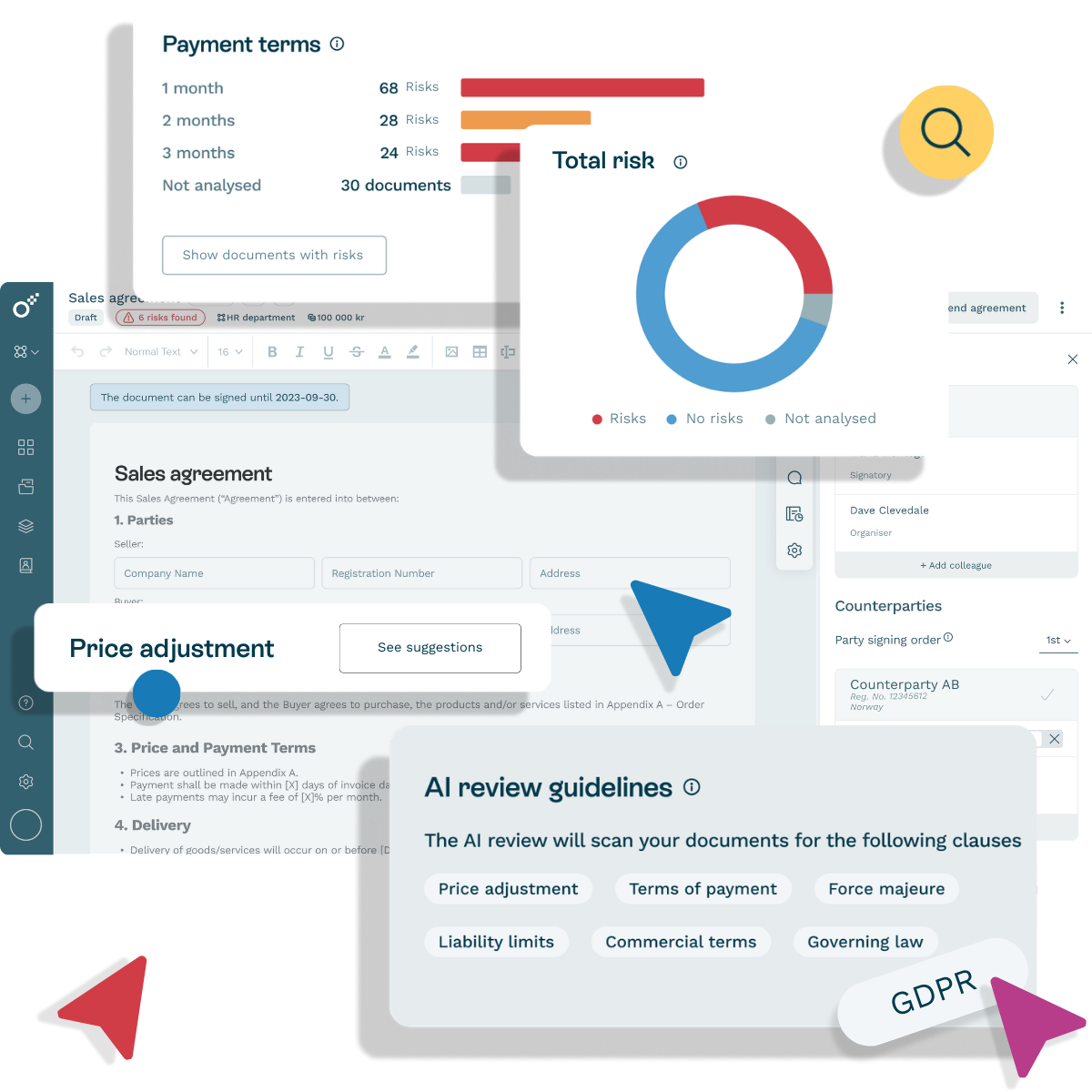
It supports live collaboration, AI review, approval workflows, and integrations with CRM and financial systems. For teams that want contracts to feel like an active digital workspace instead of a PDF tomb, Oneflow makes a strong case.
Why it works:
What to watch:
Best for: Digital-first sales teams that care about a cleaner buyer experience and collaborative deal execution.
Contractbook is especially useful when your concern is not just getting the contract signed, but everything that comes after.
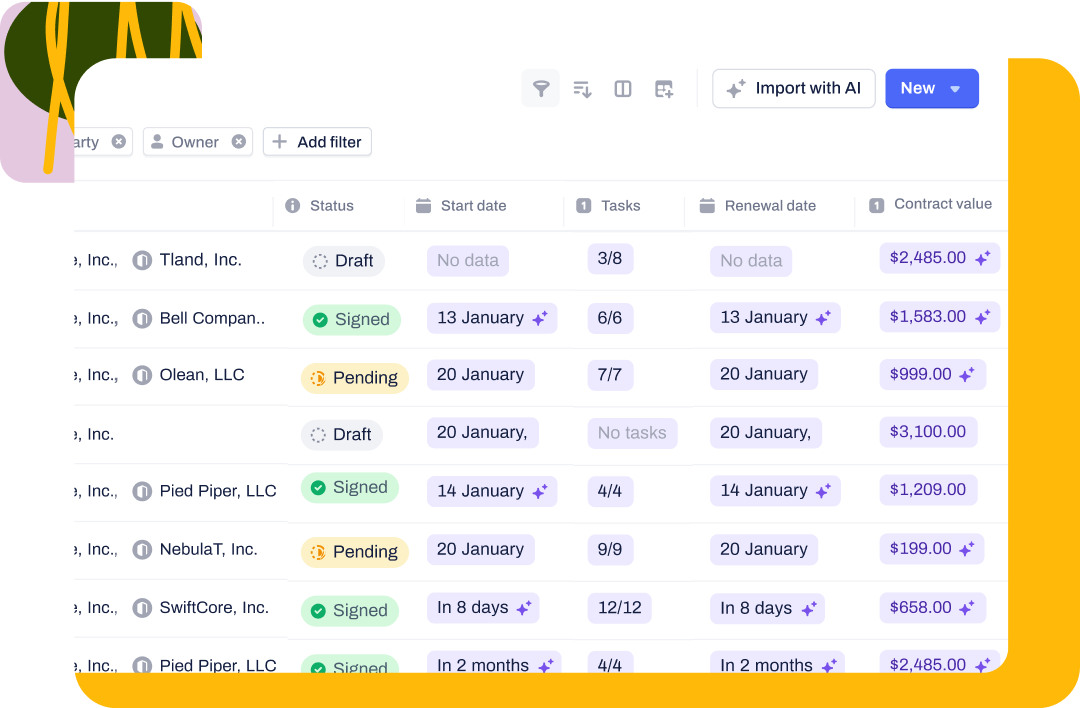
That is a different problem, and plenty of teams ignore it until renewals, obligations, or post-signature tasks start biting them.
User reviews highlight Contractbook for automated reminders, structured contract data, post-signature workflow, and centralized visibility. It is strong when operations, finance, or customer success need more from the contract than just a PDF in a folder.
Why it works:
What to watch:
Best for: Teams that need post-signature control, visibility, and follow-through.
Proposify sits a little closer to the proposal side of the spectrum, but for certain sales motions that is exactly the point.
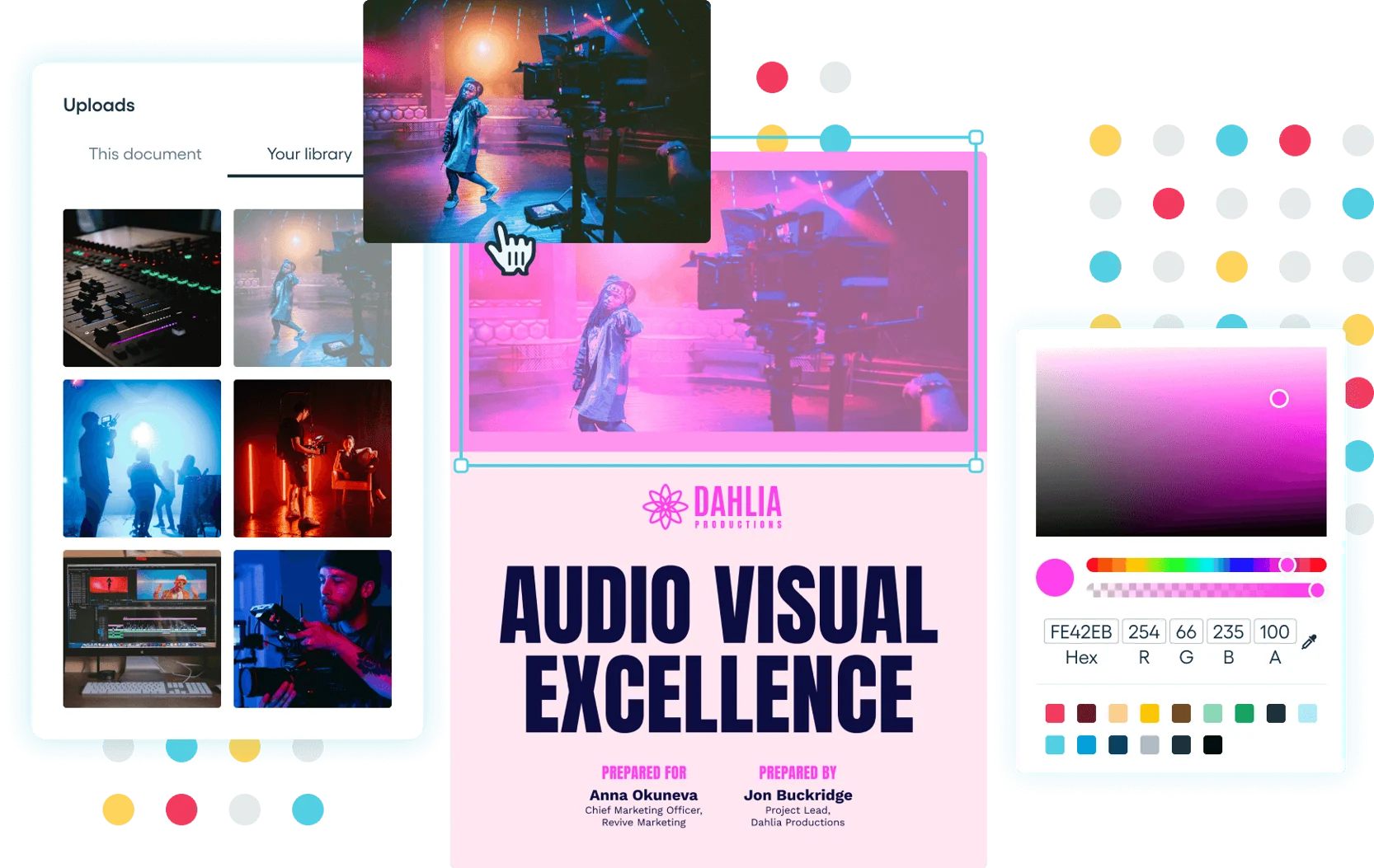
It is strong for teams that care about presentation, brand control, engagement analytics, permissions, and a polished buyer-facing experience. It is less of a deep CLM beast and more of a proposal-to-signature machine that helps sales teams look sharp and move faster.
Why it works:
What to watch:
Best for: Proposal-led sales teams that want contracts to feel polished, branded, and buyer-friendly.
There is no universal winner here. There is only the best fit for the kind of mess you are trying to fix.
If your biggest pain is speed and usability, PandaDoc is a strong bet.
If your biggest pain is editing, collaboration, and redline chaos, Juro is hard to ignore.
If your biggest pain is enterprise control, legal workflow, and compliance, Ironclad and DocuSign CLM make more sense.
If your biggest pain is Salesforce alignment, Conga deserves serious attention.
If your biggest pain is post-signature visibility and renewals, Contractbook earns its place.
If your team sells with highly visual, polished documents and wants a stronger buyer-facing experience, Proposify is probably more your lane.
And if your problem starts even earlier, before the contract is generated, then contract software alone is not enough. That is where Sybill becomes part of the answer. Because the cleanest contract workflow in the world cannot fix a rep who walked into negotiation without the right context.
A lot of teams buy this category emotionally.
They see “AI”. They see “enterprise-grade”. They see “full lifecycle visibility”. Suddenly they are in a six-month implementation for a process that really needed better templates, decent approvals, and actual CRM sync.
Do not do that.
Start with the bottleneck.
If contracts are getting stuck because reps cannot generate accurate docs fast enough, prioritize speed and templates.
If they are getting stuck because legal and sales fight over versions, prioritize collaboration and redlining.
If they are getting stuck because every non-standard term triggers a compliance avalanche, prioritize control, permissions, and workflow logic.
If managers keep getting surprised by “stalled deals” that are actually “stalled contracts,” prioritize visibility and reporting.
And if the deal keeps falling apart before the contract even lands, prioritize context too. Not just documents.

Ask these questions before you buy:
Because “best contract management software for sales” is not really a feature question. It is a workflow question.
Most sales teams do not have a contract problem. They have a momentum problem wearing a contract costume.
The best contract management software for sales helps remove the drag right at the finish line. It reduces approval lag, cleans up version chaos, keeps contract status visible, and gets buyers to sign without making your reps babysit admin all day.
But do not miss the bigger point.
A contract only moves fast when the deal behind it is clear, aligned, and well understood. That is why the smartest sales teams do not just invest in document workflow. They invest in deal intelligence too.
Use the right contract platform to get the paperwork moving. Use Sybill to make sure the deal is strong enough to move in the first place.
That is how you close faster without just automating confusion.
The best contract management software for sales teams depends on your workflow. PandaDoc is a strong fit for SMB and mid-market teams that want proposals, quotes, contracts, and e-signatures in one place. Juro is excellent for fast-moving teams that need browser-based collaboration and faster negotiation cycles. Ironclad and DocuSign CLM are better suited to enterprise environments with heavier legal, compliance, and approval requirements. Conga stands out if your sales motion revolves around Salesforce.
Sales managers should look for visibility first. That means contract status dashboards, cycle time reporting, approval workflows, audit trails, renewal alerts, and CRM integration. A tool should help managers identify where deals are stuck, which approvals are slowing things down, and how contract delays affect pipeline movement. If the tool cannot show where momentum is dying, it is not helping management nearly enough.
Usually, no. E-signature software solves the last step, not the entire workflow. Sales teams often need template management, CRM data syncing, approval routing, collaboration, redlining, version control, secure storage, and reporting before and after signature. If your only pain is collecting signatures, then a simple signing tool may be enough. If your pain starts earlier, which it usually does, you need more than that.
Yes. Many leading tools integrate with CRMs like Salesforce, HubSpot, and Pipedrive. This matters because it reduces manual entry, keeps customer and pricing data accurate, and lets teams track contract activity inside the same system where the deal already lives. Conga is especially strong for Salesforce-centric teams, while PandaDoc and several others offer broad CRM integrations too.
AI helps in a few practical ways. It can review clauses, flag non-standard terms, extract key contract data, surface risks, automate workflows, and make repositories more searchable. For sales teams, the real benefit is less manual review and faster movement through approval and negotiation stages. AI is useful when it cuts cycle time and reduces friction. It is much less impressive when it is just a shiny label slapped on document storage.
The best contract management software for sales teams depends on your workflow. PandaDoc is a strong fit for SMB and mid-market teams that want proposals, quotes, contracts, and e-signatures in one place. Juro is excellent for fast-moving teams that need browser-based collaboration and faster negotiation cycles. Ironclad and DocuSign CLM are better suited to enterprise environments with heavier legal, compliance, and approval requirements. Conga stands out if your sales motion revolves around Salesforce.
Sales managers should look for visibility first. That means contract status dashboards, cycle time reporting, approval workflows, audit trails, renewal alerts, and CRM integration. A tool should help managers identify where deals are stuck, which approvals are slowing things down, and how contract delays affect pipeline movement. If the tool cannot show where momentum is dying, it is not helping management nearly enough.
Usually, no. E-signature software solves the last step, not the entire workflow. Sales teams often need template management, CRM data syncing, approval routing, collaboration, redlining, version control, secure storage, and reporting before and after signature. If your only pain is collecting signatures, then a simple signing tool may be enough. If your pain starts earlier, which it usually does, you need more than that.