Find us at booth #83, join us for a harbor side happy hour, or catch Gorish’s talk.

Sept, 16-18 > Learn more


Tamanna Mishra

May 19, 2026
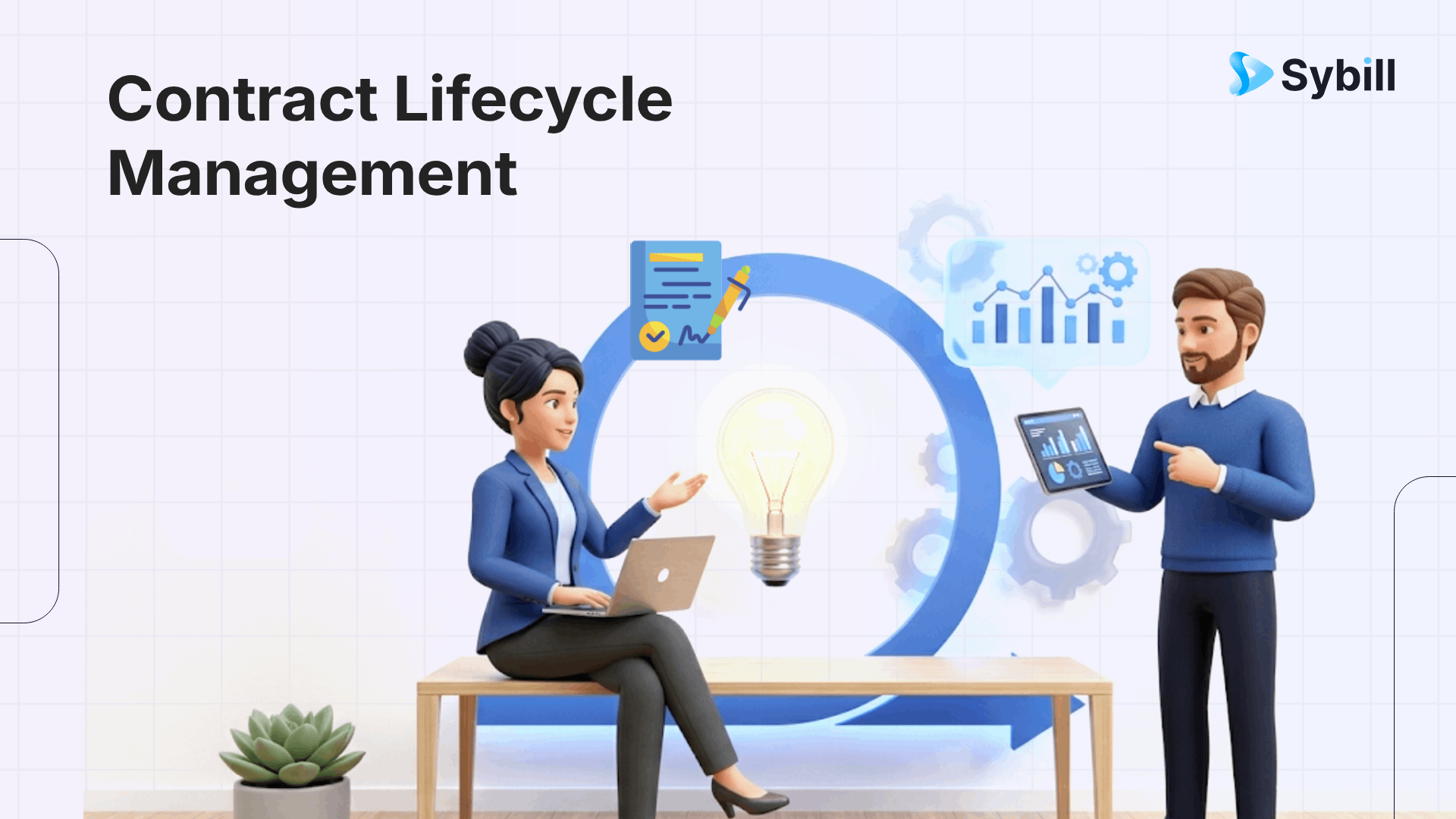
Every company says contracts are “critical.” Very few treat them like a system that needs to work.
Instead, what you usually get is:
And the result is predictable.
Deals stall. Renewals get missed. Compliance risks creep in. Sales teams lose momentum at the exact moment they should be closing.
This is exactly why contract lifecycle management exists.
But before we get into tools and workflows, one quick thing.
Contract lifecycle management (CLM) is the process of managing a contract from initial creation through execution, storage, tracking, and eventual renewal or termination.
It covers every stage a contract goes through, including:
At its core, CLM is about one thing: making sure contracts move forward without friction while staying accurate, compliant, and aligned with business goals.
Define contract management
If you had to define contract management in one line: Contract management is the process of creating, executing, and managing agreements to maximize operational and financial performance while minimizing risk.
CLM is just the expanded, end-to-end version of that process.
Most teams assume contracts are a legal responsibility. That is technically correct. It is also incomplete.
CLM sits at the intersection of:
Which means when it breaks, everyone feels it.
Contracts are often the final step before revenue is recognized.
If approvals are slow, negotiations drag, or documents are inaccurate, deals do not close when they should. Pipeline slips. Forecasts become unreliable.
Without structured contract management:
CLM creates consistency, traceability, and accountability.
Manual contract processes are full of repetitive tasks:
A strong CLM process removes that friction and frees teams to focus on actual decision-making.
One of the biggest hidden problems is not delay. It is lack of visibility.
Most teams cannot answer:
CLM turns contracts into a source of insight, not just documentation.
Let’s break CLM into how it actually works.
.png)
This is where the contract is drafted.
It usually involves:
The goal is speed and accuracy. Without structure, reps and teams start reinventing contracts every time, which creates inconsistency and risk.
This is where things get interesting.
Stakeholders review the contract and propose changes. This can include:
Without a proper system, this stage becomes messy very quickly, with multiple versions floating around and no clear source of truth.
Before a contract can be finalized, it often needs sign-off from:
Approval workflows ensure the right people review the contract based on deal size, risk level, or custom terms.
Poor approval processes are one of the biggest causes of contract delays.
Once approved, the contract is signed.
Modern systems use e-signatures to:
This is the shortest stage in theory. But only if everything before it is clean.
After signing, contracts need to be stored securely and remain accessible.
A centralized repository ensures:
Without this, contracts get lost across drives, inboxes, and systems.
This is the most ignored stage.
Contracts are not just documents. They include:
Tracking ensures commitments are met and risks are managed.
Every contract eventually reaches an endpoint.
CLM ensures:
Missed renewals are one of the most common and costly failures in contract management.
Contract lifecycle management software is a digital solution that automates and manages the entire contract lifecycle from creation to renewal.
Instead of handling contracts manually across email, spreadsheets, and shared drives, CLM software centralizes everything into one system.
Most modern CLM platforms include:
The goal is not just automation. It is control and visibility across the entire lifecycle.
A contract lifecycle management system is the broader framework that includes:
CLM software is one part of that system.
For example:
The software simply enables and enforces that structure.
Teams that succeed with CLM do not just buy tools. They define how contracts should move across the business.
On paper, CLM looks clean. In reality, it depends on how well teams align.
Here is how it typically works in a well-functioning setup:
Most companies are not operating at this level.
Instead, they deal with:
This is why CLM is not just a tooling problem. It is a coordination problem.
Even with the best contract lifecycle management software, one problem remains.
Contracts only move smoothly when the deal behind them is clear.
If:
then contracts become a bottleneck, not a formality.
This is where combining CLM with better deal intelligence matters.
Tools like Sybill help teams:
CLM manages the contract. Sybill helps make sure the contract is ready to happen.
That combination is what actually accelerates deals.
Contracts impact revenue, not just compliance. Sales, finance, and operations all need visibility.
Some teams jump straight into enterprise-grade CLM tools without fixing basic workflows.
Start with clarity. Then scale.
Tracking obligations, renewals, and performance is just as important as getting signatures.
Software cannot fix a broken workflow. It can only automate it faster.
If you zoom out, contract lifecycle management is not really about documents.
It is about:
The best teams treat CLM as a core business process, not an administrative afterthought.
They define how contracts should move. They align stakeholders. And then they use tools to enforce that structure.
And most importantly, they understand this:
A contract is only as fast as the clarity behind it.
Fix the lifecycle. Fix the context. And contracts stop being a bottleneck.
They become the easiest part of closing a deal.
Contract lifecycle management is the process of managing a contract from creation to execution, storage, tracking, and renewal. It ensures contracts move efficiently, remain compliant, and align with business objectives across departments like sales, legal, and finance.
Contract lifecycle management software is a tool that automates and manages the entire contract process. It helps teams create contracts faster, route approvals, collaborate on edits, track obligations, and store agreements in a centralized system for easy access and compliance.
A contract lifecycle management system includes the processes, workflows, people, and tools used to manage contracts. The software is only one part. The system also includes approval structures, templates, governance rules, and tracking mechanisms.
Contract lifecycle management works by guiding contracts through structured stages, including creation, negotiation, approval, execution, storage, tracking, and renewal. Modern systems automate these stages using templates, workflows, and integrations to reduce manual effort and improve visibility.
CLM is critical for sales teams because contracts are the final step before closing deals. A strong CLM process reduces delays, speeds up approvals, improves accuracy, and ensures contracts do not become a bottleneck in the sales pipeline.
Contract lifecycle management is the process of managing a contract from creation to execution, storage, tracking, and renewal. It ensures contracts move efficiently, remain compliant, and align with business objectives across departments like sales, legal, and finance.
Contract lifecycle management software is a tool that automates and manages the entire contract process. It helps teams create contracts faster, route approvals, collaborate on edits, track obligations, and store agreements in a centralized system for easy access and compliance.
A contract lifecycle management system includes the processes, workflows, people, and tools used to manage contracts. The software is only one part. The system also includes approval structures, templates, governance rules, and tracking mechanisms.





.avif)