Find us at booth #83, join us for a harbor side happy hour, or catch Gorish’s talk.

Sept, 16-18 > Learn more


Tamanna Mishra

July 25, 2026
TL;DR: The best sales closing questions help the buyer clarify what still needs to happen before a decision can be made. Strong examples include: “What could still prevent us from moving forward?”, “Who else needs to approve this decision?”, “What needs to happen between today and signature?”, and “Does it make sense to agree on the next step now?” The right question depends on the deal’s unresolved objections, stakeholders, timeline, budget, and approval process.
“Always Be Closing” made for great cinema. It also inspired sales advice that treats closing like a verbal trapdoor: say the magic phrase and watch the contract fall into your lap.
Complex B2B deals do not work that way. Buyers move forward when the business case is credible, the right people are aligned, the risk is manageable, and the path to implementation is clear.
The best closing questions in sales do not corner buyers. They reveal whether the conditions for a real decision exist. Sometimes you are closing for signature. Sometimes you are closing for stakeholder access, agreement on success criteria, security review, or an honest answer about a stalled deal.
The question matters. The deal context behind it matters more.

Salesforce’s guide to sales closing techniques makes an important point: there is no universal way to close. The approach has to fit the prospect and the situation. A closing question should feel like the natural next sentence. If it arrives from nowhere, it probably is pushy.

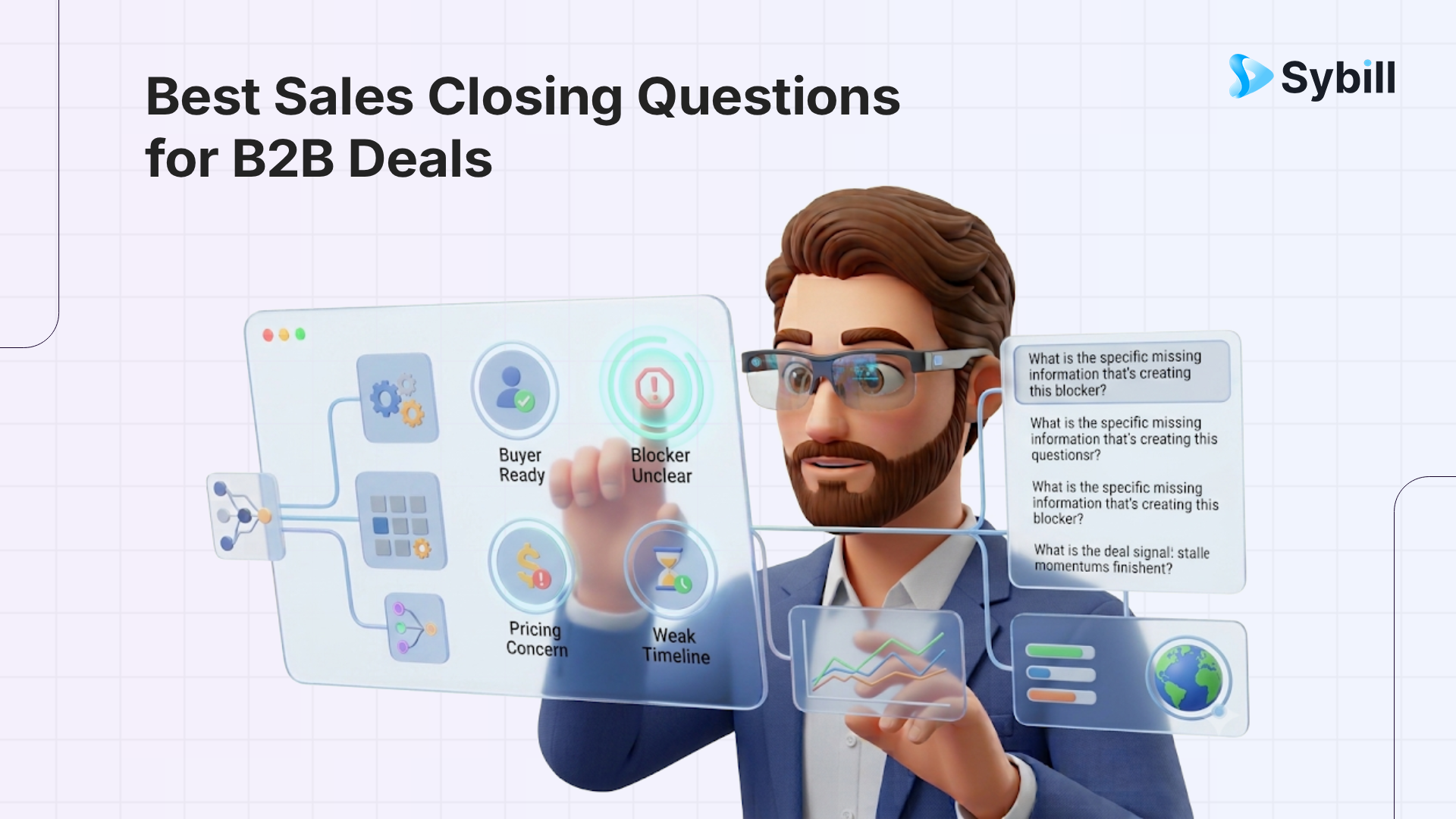
Before choosing a closing question, a rep should know:
Ask Sybill connects context across calls, emails, CRM data, calendars, and Slack so reps can ask:
A memorized question gives you a line. Deal intelligence gives you a reason to ask it.
Read how to spot deal risk before forecast review for a framework covering weak next steps, missing stakeholders, pricing concerns, procurement risk, and slipping timelines.

Do not manufacture a new objection because you are nervous. Confirm readiness clearly.
1. “Are you comfortable moving forward with the option we discussed?”
Direct, calm, and easy to answer honestly.
2. “Does this solve the problem you originally brought us in to address?”
This reconnects the decision to the buyer’s stated need, not your quarter-end target.
3. “Is there anything important we have not covered before we move ahead?”
Use this when the buyer appears positive but you want to create room for a final concern.
4. “Does it make sense to begin the agreement and implementation process?”
Use this to attach your question to a concrete action.
A buyer who says “Everything looks good” but avoids the next step has given you manners, not clarity.
5. “What could still prevent us from moving forward?”
It assumes neither a yes nor a no.
6. “What concerns might come up when you discuss this internally?”
7. “Which part of the proposal feels least certain right now?”
8. “What would need to be true for this to become an easy yes?”
Pause, clarify, and isolate the real objection. Do not answer “It is expensive” with a seven-minute value monologue before learning what “expensive” means to the buyer.
Forrester’s 2026 research found that a typical buying decision includes 13 internal stakeholders and nine external influencers, with larger networks for complex purchases. One enthusiastic champion is not a buying committee.
9. “Who else needs to be confident in this decision?”
Less confrontational than demanding access to “the decision-maker.”
10. “Who can approve this, and who could quietly stop it?”
Use when the formal process does not match the political reality.
11. “What will each stakeholder care about most?”
This helps you equip the champion with a stakeholder-specific case.
12. “Would it help if we joined the internal decision meeting?”
Offer support without making the champion feel bypassed.
13. “What does your executive sponsor need to see before approving this?”
Before a late-stage meeting, research each stakeholder’s priorities. Do not give the CFO a workflow tour and the technical evaluator a transformation speech.
“Too expensive” can mean no budget, weak value, competitive pressure, procurement negotiation, or delay. Diagnose before discounting.
14. “Is the concern the price itself, or the value you need to justify internally?”
15. “What does finance need to approve the investment?”
16. “How will procurement evaluate this agreement?”
17. “Are there commercial terms that could delay approval?”
18. “If we resolve the pricing concern, is anything else preventing a decision?”
Discounts do not fix missing authority, weak urgency, security risk, or executive indifference. They make the same troubled deal cheaper.
A close date entered by a rep is not buyer urgency. It is data entry.
19. “What business event makes this timeline important?”
Look for a launch, renewal, board commitment, compliance deadline, or cost of delay.
20. “What happens if this is not implemented by that date?”
No consequence often means no real urgency.
21. “What needs to happen between today and signature?”
Turn the answer into a mutual action plan with owners and dates.
22. “What could cause the decision date to move?”
Invite risk into the open before it becomes a surprise.
23. “Is the close date based on your internal plan or ours?”
An uncomfortable question that can save an uglier forecast call.
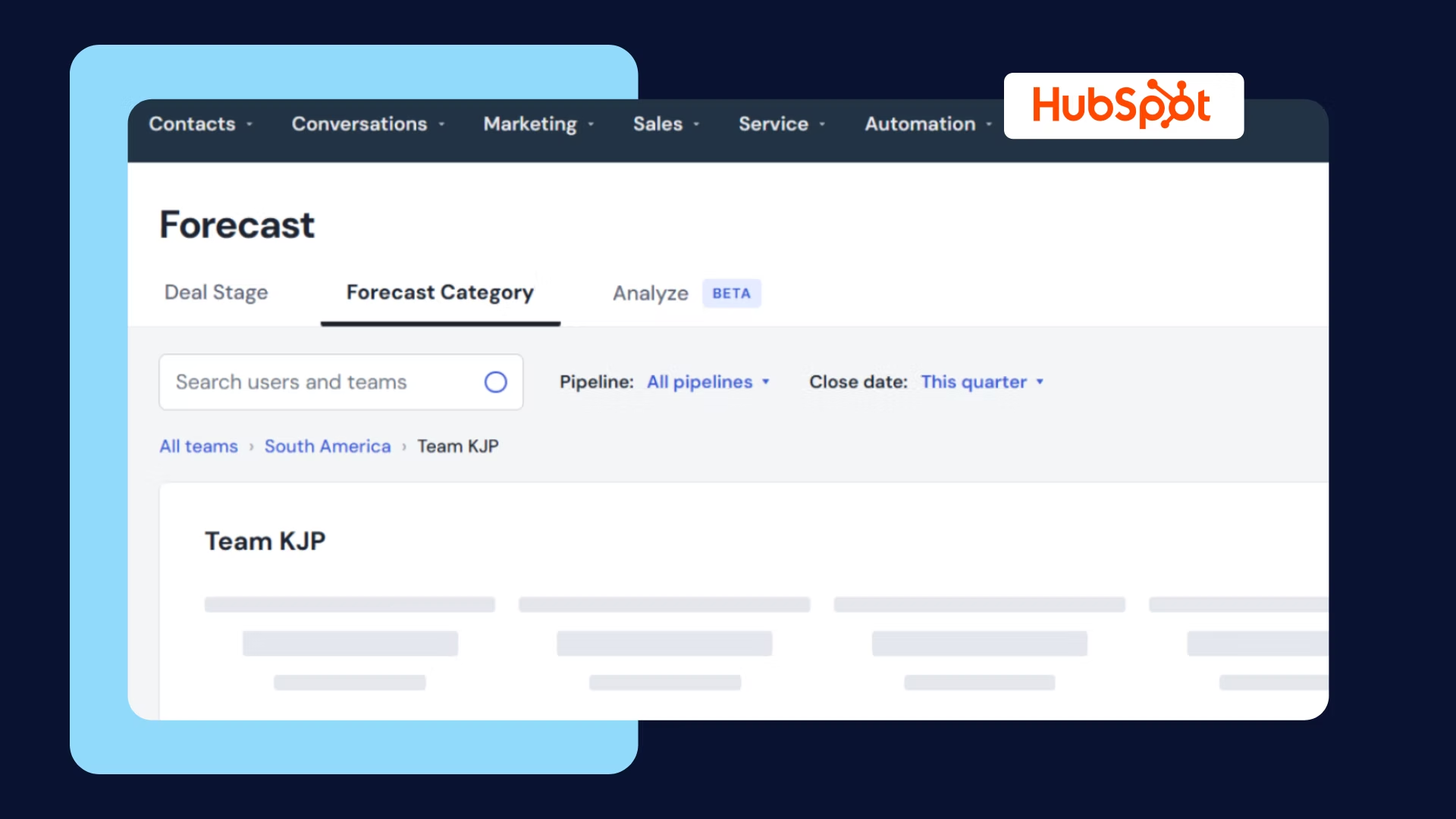
Use AI-assisted forecast preparation to compare the stated close date with actual buyer evidence, stakeholder activity, next steps, and unresolved risk.
Do not send “Just checking in” for the fourth time. The buyer is not trapped under furniture.
24. “Has anything changed since we agreed on the next step?”
Neutral language makes it easier to disclose a lost priority, internal change, competitor, or budget issue.
25. “Would it be more useful to pause and revisit this at a specific time?”
A confident pause is better than an imaginary pipeline. It can also produce a more honest answer than another forced meeting.
When the reason is buried across old interactions, AI call transcript analysis can reconstruct what changed and whether the champion’s language weakened.

It makes the seller’s need the main character and often invites unnecessary discounting.
This can sound like an interrogation. Buyers may give a polite answer rather than a useful one.
Fine when Friday reflects the buyer’s implementation plan. Weak when Friday is simply the last day of your quarter.
The buyer can say yes to end the conversation. Ask a question that tests the objection properly: “How are you thinking about that concern now?” or “What part still feels unresolved?”
Notice when a question is vague, seller-centric, manipulative, or disconnected from deal reality.
First, stop talking. Many reps ask a strong question, panic during the silence, and answer it themselves. Wait.
Second, do not treat every hesitation as resistance. Concerns about implementation, security, alignment, or budget may be rational. Understand them.
Third, translate the answer into a concrete commitment. Confirm:
Then document it. A strong sales call recap email confirms priorities, decisions, open questions, owners, and dates. “Great speaking today” is pleasant. It is not deal management.
The best sales closing questions make the decision process visible.
A strong rep knows when to ask directly. A great rep also knows what happened across the deal, which stakeholder is missing, what concern remains unresolved, and whether the buyer’s timeline is real.
That is where context beats charisma.
With Ask Sybill, reps and managers can inspect deal context, surface blockers, review buyer language, identify stakeholder gaps, and prepare the question most likely to move the deal forward.
Start using Sybill for free and stop guessing what to ask next.
“What could still prevent us from moving forward?” is one of the strongest options because it surfaces unresolved risk without assuming the buyer is ready. The best question, however, depends on whether the real issue is stakeholder approval, value, budget, procurement, timing, or implementation risk.
Ask closing questions throughout the sales process whenever you need agreement on a meaningful next commitment. That could be access to another stakeholder, agreement on success criteria, completion of a security review, a commercial decision, or signature.
Use the buyer’s own priorities and timeline, ask a specific question, and make it safe to answer honestly. Pressure usually appears when a rep asks for commitment without enough buyer evidence or ignores a legitimate concern.
A trial close tests readiness without directly asking for the final purchase. Examples include “How does this compare with what you expected?” and “What would your team need to feel ready for the next step?” It helps identify concerns before the formal close.
Confirm the approving stakeholders, budget, procurement process, legal and security requirements, commercial terms, implementation timing, success criteria, and any unresolved objection. Sending a contract before these are clear creates a document-shaped follow-up problem.
“What could still prevent us from moving forward?” is one of the strongest options because it surfaces unresolved risk without assuming the buyer is ready. The best question, however, depends on whether the real issue is stakeholder approval, value, budget, procurement, timing, or implementation risk.
Ask closing questions throughout the sales process whenever you need agreement on a meaningful next commitment. That could be access to another stakeholder, agreement on success criteria, completion of a security review, a commercial decision, or signature.
Use the buyer’s own priorities and timeline, ask a specific question, and make it safe to answer honestly. Pressure usually appears when a rep asks for commitment without enough buyer evidence or ignores a legitimate concern.