Find us at booth #83, join us for a harbor side happy hour, or catch Gorish’s talk.

Sept, 16-18 > Learn more

%20(1).avif)
Mamta Tainwala

August 19, 2026
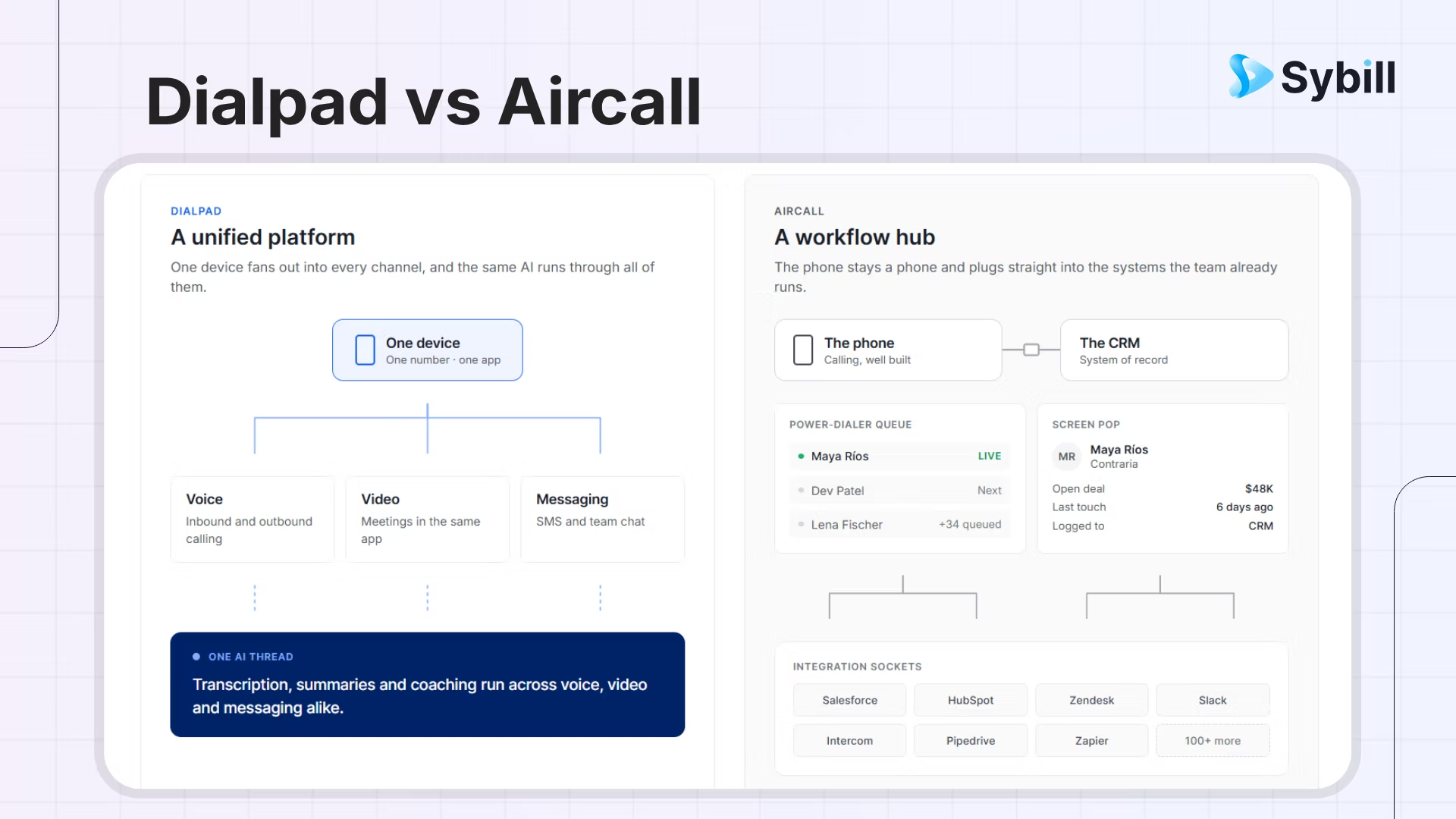
Dialpad and Aircall both replace the desk phone with a cloud system built for revenue teams, and they solve the problem from opposite ends. Dialpad is the platform play: voice, video, and messaging unified, with AI-native transcription and in-call intelligence woven through it. Aircall is the workflow play: the phone as a dedicated revenue channel, with a power dialer, CRM screen pops, queues, and a very large catalog of one-click integrations that make it the callbox inside whatever stack you already run. The shorthand that survives every evaluation: product depth versus integration breadth.
Unlike the enterprise-versus-SMB split in our Dialpad vs RingCentral comparison, these two chase overlapping teams, which makes the choice subtler and the marketing on both sides blurrier. Here is the honest version, from the seat that sees both platforms' calls daily: Sybill integrates with both, and wins nothing by tilting this.
Mostly, with one structural difference that explains everything else: both are cloud phone systems for sales and support teams, but Dialpad is a unified communications platform (calls, video meetings, and messaging in one product), while Aircall is deliberately a calling product that connects outward, betting that your meetings, docs, and chat already live elsewhere and the phone should slot into that stack rather than replace it.
That difference is philosophical, not cosmetic, and it predicts the rest of the comparison. Dialpad invests in the product surface: the AI, the UX, the everything-in-one-window experience. Aircall invests in the edges: the integrations, the CRM context, the call-center workflow mechanics. Neither bet is wrong; they assume different companies. A team that wants one communications app leans Dialpad by default; a team whose reps live inside HubSpot or Salesforce all day and just need the phone to appear there leans Aircall before the demo starts.
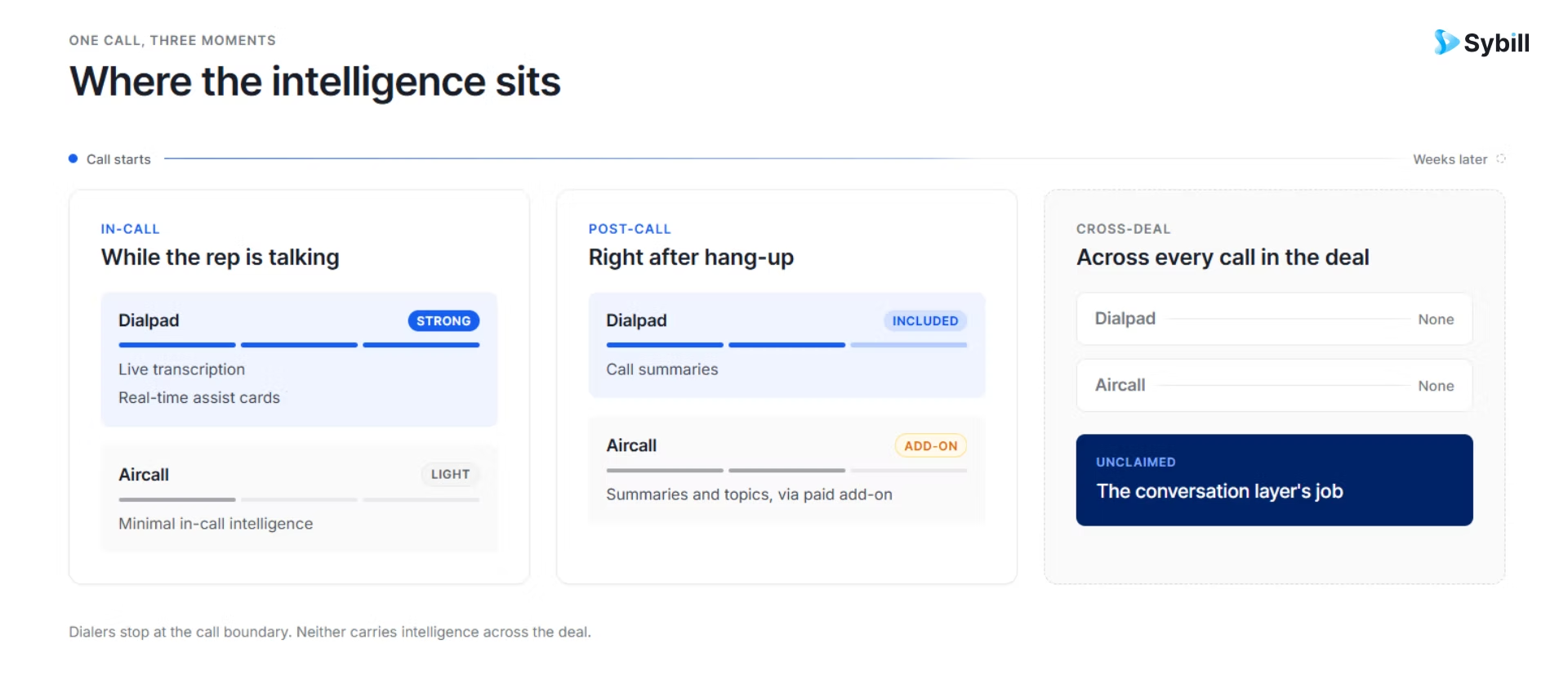
Dialpad leads, and it is not close: AI is its founding architecture, with real-time transcription, live assist during calls, and automatic summaries built into the product rather than layered on. Aircall has added AI capabilities (summaries, transcription, key-topic extraction), typically packaged as an add-on to its plans, and they are serviceable rather than central. Teams buying primarily for voice intelligence should shortlist Dialpad first; teams buying for workflow can treat Aircall's AI as a useful extra, not the reason to buy.
The nuance worth adding, because "has AI" now appears on every pricing page in the category: the question is where the intelligence sits. Dialpad's shows up during the conversation (live transcription, assist cards mid-call), which changes rep behavior in the moment and is genuinely hard to retrofit. Aircall's shows up after (summaries, topics), which helps record-keeping. Both are call-level intelligence, and the same boundary we drew in the RingCentral comparison applies here: neither platform's AI does the cross-deal revenue workflow, connecting what was said across every conversation to CRM fields, follow-ups, and pipeline risk. That layer is a separate purchase either way, which mostly neutralizes AI as a deciding factor if you are running a conversation layer anyway, and sharpens it if you are not.
Aircall's design center is exactly this: a power dialer that works lists automatically, click-to-call everywhere, screen pops that surface CRM context the moment a call connects, and the queue, routing, and monitoring mechanics of a proper call workflow. Dialpad covers the outbound fundamentals well and adds live AI guidance during calls, but the deep list-working machinery is less its center of gravity. For teams whose day is structured around working call lists inside a CRM, Aircall's workflow focus is the honest pick.
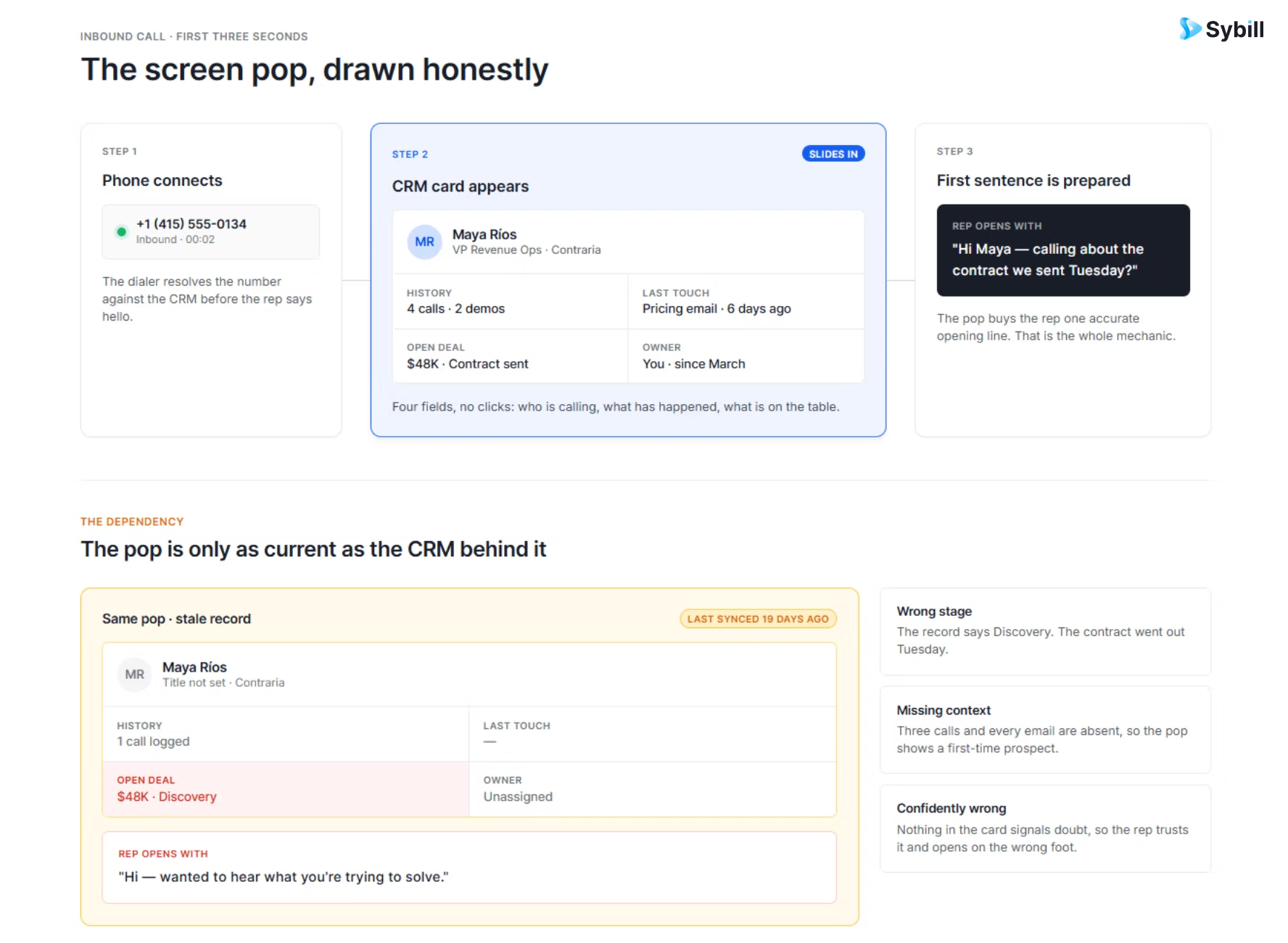
The screen-pop point deserves a concrete sentence, because it is Aircall's quiet killer feature for revenue teams: when the phone rings or a dial connects, the prospect's record, history, and context appear without anyone searching, which is the difference between "who is this again?" and a prepared first sentence. It is a small mechanic with outsized effect on call quality, and it only works as well as the CRM data feeding it, which is a hygiene problem worth solving before either platform arrives.
Two honest limits, one per side. Aircall: a power dialer is not a parallel dialer, so genuinely volume-shaped SDR motions (hundreds of dials daily per rep) should look at the specialists in our dialer roundup before assuming either of these platforms is the answer; the mode taxonomy lives in our full dialer guide. Dialpad: in-call AI helps the rep who connected, but it does not build
the list, prioritize it, or time the dials, and no platform feature substitutes for openers that survive the first ten seconds.
Aircall wins on breadth and shallowness in the good sense: a marketplace of one-click integrations spanning CRMs well beyond the big two, help desks, and revenue tools, built on the thesis that the phone should snap into your existing stack in minutes. Dialpad integrates deeply with the major CRMs (Salesforce, HubSpot) and covers the core, but teams running less common CRMs or niche stacks consistently find Aircall's catalog reaches further. Run the same test as always: your five daily tools against both catalogs, before believing anyone's integration page.
The pattern in practitioner reviews is remarkably consistent on this: teams on mainstream stacks report both platforms integrate fine, and teams on anything unusual (regional CRMs, vertical tools, custom setups) report Aircall reached where Dialpad did not. The inverse trade is UX: the same reviews that credit Aircall's integration reach ding its app polish, while Dialpad's product experience draws the compliments. Product versus integration, again; the theme of this comparison refuses to leave.
One stack note for revenue teams specifically: whichever platform you pick becomes a call-activity feed into your CRM, and the value of that feed depends on the broader CRM automation around it. Activity logging tells you a call happened; it takes the conversation layer to write what the call meant. And if your outbound runs through an engagement platform's sequences, check how each phone system coexists with it, because the engagement layer owns the cadence and the phone should slot into it, not fight it.
Both are fast to deploy by phone-system standards, with Aircall's setup speed a signature strength (numbers, routing, and CRM connections live in an afternoon) and Dialpad close behind with a slicker ongoing experience. Scale postures differ: Dialpad's unified platform and proprietary global backbone stretch further toward mid-market and international teams, while Aircall's sweet spot is SMB and mid-market teams organized around call workflows. Pricing: both per-seat and tiered; Aircall's plans have historically carried seat minimums, and Dialpad's entry tiers include more AI. Model your seat count against current plan pages.
The two-year cost note, same as every platform comparison: sticker price is the down payment. Add-ons (Aircall's AI package, Dialpad's higher tiers for advanced features), seat growth, and the admin time of whichever platform your team adopts less willingly are where the budget actually lands. The cheapest platform is the one your reps use without being chased, which is a pilot question, not a pricing-page question.
And one shared checkbox before either rollout: both platforms record calls, and recording is where the value starts and the obligations begin. Both offer the recording controls and consent tooling a US team needs, but the configuration is yours: one-party versus all-party consent varies by state, and the safe posture in mixed-state calling is disclosure. Our phone recording laws guide covers the map; set it up during the pilot, not after the first awkward question.
Choose Dialpad if: you want one communications platform instead of a stack of point tools; AI in the call itself matters to how you coach and sell; your CRM is Salesforce or HubSpot; and product experience drives adoption on your team. The shape: a team consolidating communications and buying voice intelligence as a feature of the phone itself.
Choose Aircall if: your reps live inside the CRM and the phone should appear there, not the other way around; your motion runs on worked call lists, screen-pop context, and queue mechanics; your stack includes tools beyond the mainstream that need one-click connections; and setup speed matters more than platform breadth. The shape: a team for whom the phone is a revenue channel with a workflow around it.
And for teams genuinely torn: the tiebreaker is the philosophical question from the top. If you asked "which app will we live in?", you are Dialpad's buyer. If you asked "which tool disappears into our stack?", you are Aircall's. Two-week pilots on live call lists settle whatever the question does not.
Both platforms ring the phone. Sybill makes the calls count on either. Every Dialpad and Aircall conversation captured, summarized, written to the CRM, and turned into follow-ups and deal intelligence, automatically. Get started for free with Sybill.
Here is the reframe that lowers the stakes of this whole comparison, drawn from the millions of calls we watch flow through both platforms: the phone system determines how smoothly conversations happen; it does not determine what your team learns from them. The objection in minute nine, the competitor mention, the budget hint, the promised next step: on both platforms, that value evaporates at hang-up unless something captures it into the systems where deals are managed.
That capture is the conversation layer, and it is identical on either side of this decision: Sybill has analyzed around 33 million sales conversations across the platforms it connects to, turning every call into a summary, CRM fields that fill themselves, follow-ups in the rep's voice, captured commitments, and the cross-deal layer (deal risk, queryable history) that neither phone platform is built to do. Pre-meeting briefs even close Aircall's screen-pop logic at deal depth: context assembled before the call, from everything ever said on the account. The full integration list covers both sides.
Which means the practical buying order: settle the conversation layer independently, then pick the phone by team shape with the dimensions above, knowing the intelligence travels with you if you ever switch.
For sales teams that live in their CRM and run structured call workflows, Aircall is the sharper tool: the power dialer, screen pops, and integration reach are exactly its job, and it does that job with less product around it. For teams consolidating communications or buying voice intelligence as a core capability, Dialpad's AI-native platform is the stronger product, full stop. The mismatches are the failures: buying Dialpad's platform breadth to run call lists all day, or wedging Aircall into a team that wanted one app for everything.
Decide what the phone is to your team: the channel, or the platform. The answer picks the vendor.
Get started for free with Sybill or book a demo and make every call count on either one.
It depends on how your team sells. Aircall is better for CRM-centric teams running structured call workflows: power dialer, screen pops, and broad one-click integrations. Dialpad is better for teams wanting AI in the call itself (live transcription and assist) and one unified platform for voice, video, and messaging.
Product versus integration. Dialpad is a unified, AI-native communications platform designed to be the app your team lives in. Aircall is deliberately a calling product designed to disappear into your existing stack, connecting to your CRM and tools through a very large one-click integration catalog.
Yes: call summaries, transcription, and topic extraction, typically packaged as an add-on to its plans rather than built into the base product. Its AI is serviceable for record-keeping; teams buying primarily for voice intelligence and in-call assistance will find Dialpad's AI-native approach deeper. Verify current packaging on both before purchase.
Yes, Sybill integrates natively with both, capturing every call from either platform and turning it into summaries, CRM updates, follow-up drafts, and deal intelligence automatically. The conversation layer works identically on both sides, so the phone-platform choice can be made purely on team fit.
Both handle standard outbound well, and Aircall's power dialer works lists efficiently, but neither is a parallel-dialing volume specialist. SDR motions built on hundreds of daily dials per rep should evaluate dedicated volume dialers alongside either platform, then match the dialing mode to the list rather than the brand.
It depends on how your team sells. Aircall is better for CRM-centric teams running structured call workflows: power dialer, screen pops, and broad one-click integrations. Dialpad is better for teams wanting AI in the call itself (live transcription and assist) and one unified platform for voice, video, and messaging.
Product versus integration. Dialpad is a unified, AI-native communications platform designed to be the app your team lives in. Aircall is deliberately a calling product designed to disappear into your existing stack, connecting to your CRM and tools through a very large one-click integration catalog.
Yes: call summaries, transcription, and topic extraction, typically packaged as an add-on to its plans rather than built into the base product. Its AI is serviceable for record-keeping; teams buying primarily for voice intelligence and in-call assistance will find Dialpad's AI-native approach deeper. Verify current packaging on both before purchase.