Find us at booth #83, join us for a harbor side happy hour, or catch Gorish’s talk.

Sept, 16-18 > Learn more

%20(1).avif)
Mamta Tainwala

August 19, 2026
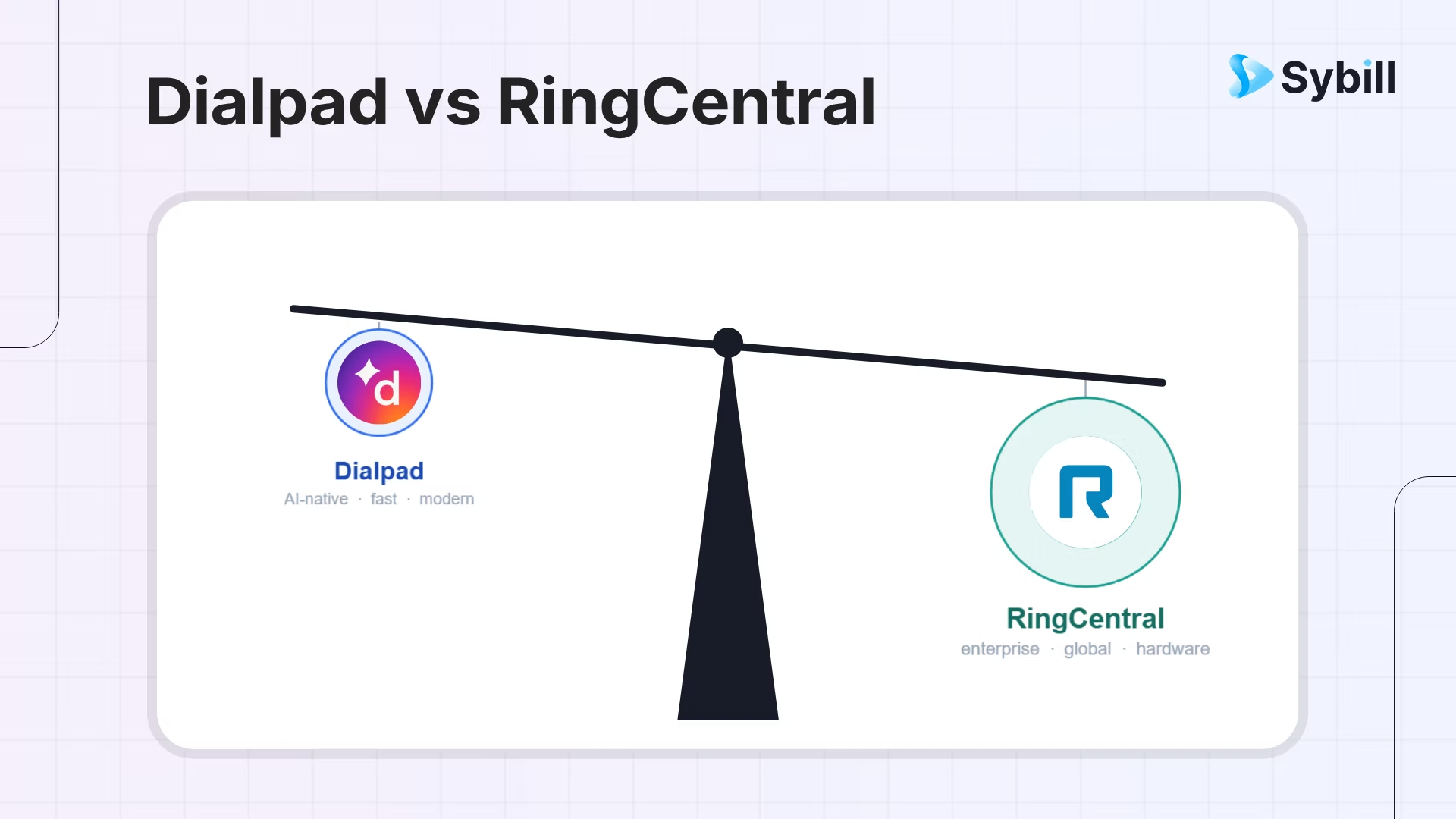
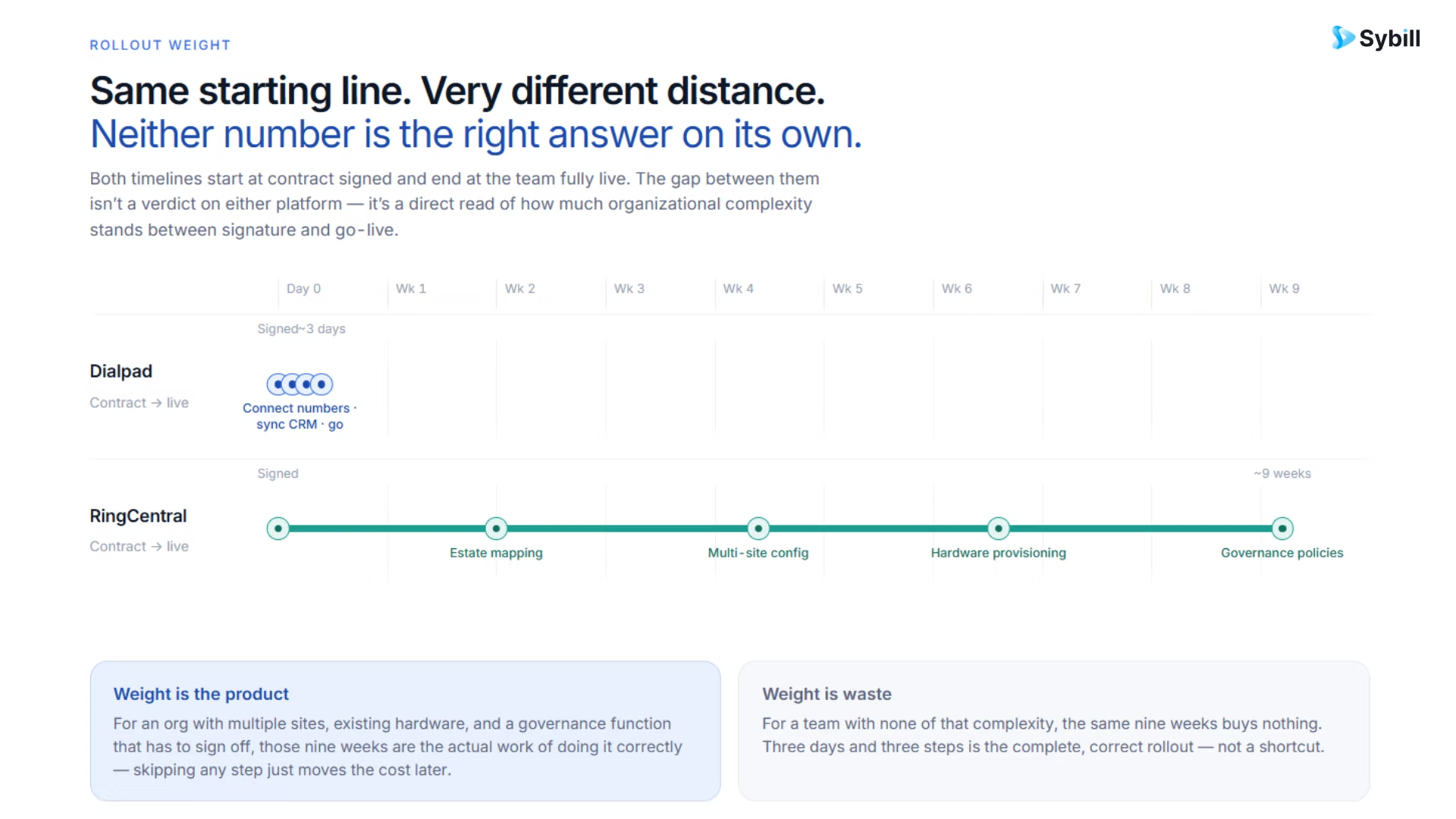
Dialpad and RingCentral are the closest matchup in business telephony: both are cloud phone platforms a sales team can dial, text, and meet from. The 2026 difference is center of gravity: Dialpad is AI-native, with transcription and call intelligence woven through the product from its lower tiers, a modern interface, and a rollout measured in days; RingCentral is the enterprise anchor, with deeper telephony administration, a far larger integration marketplace, broad desk-phone hardware support, and the governance large organizations require, at the cost of weight and add-on sprawl.
Neither is the wrong answer; they are answers to differently shaped organizations. Here is the honest dimension-by-dimension version, written from an unusual seat: Sybill integrates with both, so we see both platforms' calls every day and win nothing by tilting the scale.
Yes, more than any other pair in the dialer category: both are full cloud communications platforms (phone, messaging, video) with sales calling capabilities on top, competing for the same seat in your stack. That makes this a genuine either/or decision, unlike specialist-versus-platform matchups where the answer is "different jobs." The choice comes down to five dimensions: AI approach, sales calling depth, scale and administration, integrations and hardware, and rollout weight.
Worth establishing before the dimensions, because it frames everything: both platforms will ring phones reliably, route calls competently, and log activity to your CRM. The floor is high on both sides. What you are actually choosing is what the platform is best at, and the two products are best at nearly opposite things, which is what makes this comparison unusually clean.
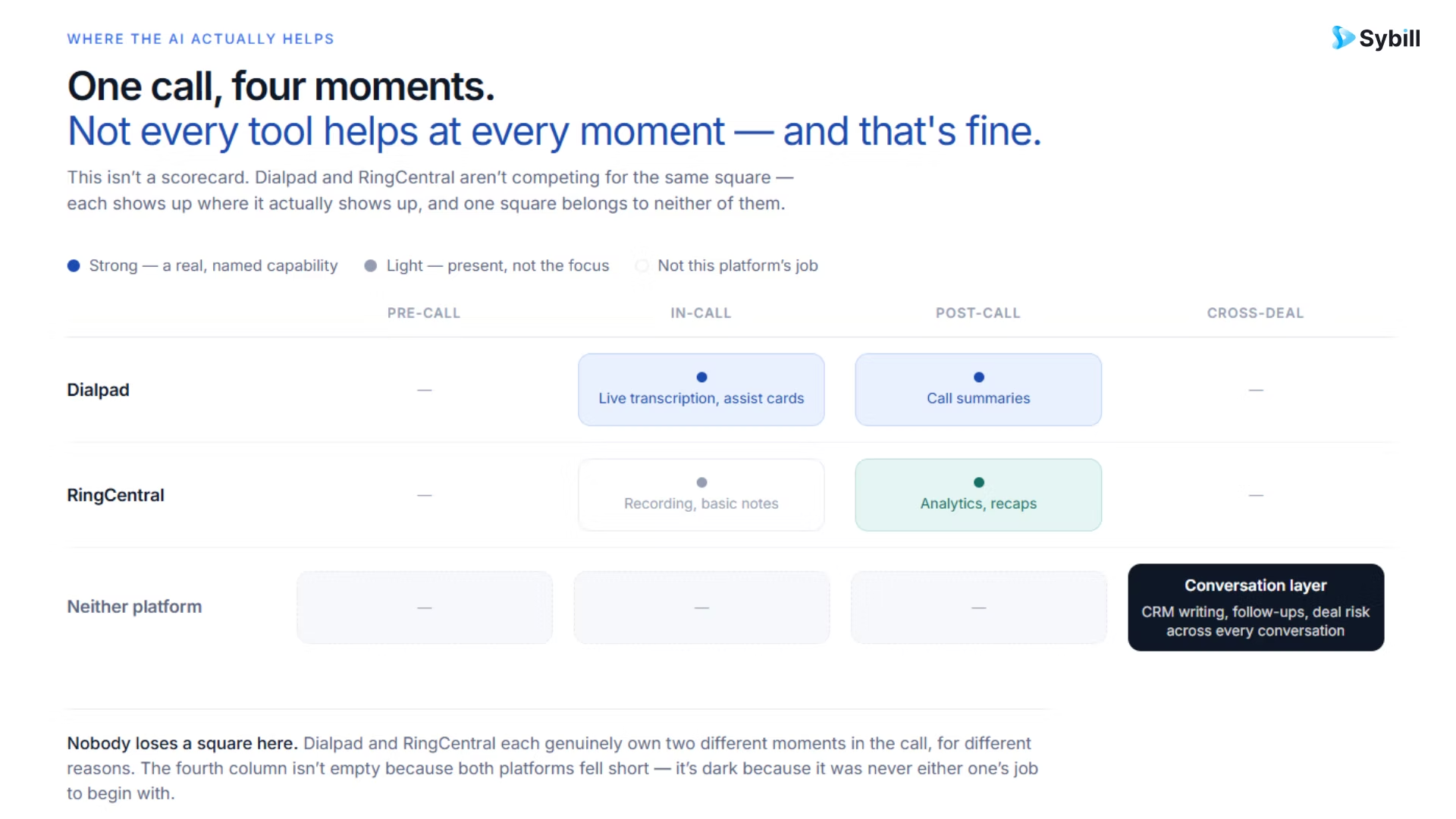
Dialpad's defining trait is that AI is the product's native layer, not an add-on: real-time transcription during calls, live assist cards that surface answers mid-conversation, and automatic post-call summaries, available without climbing to top tiers. RingCentral has invested seriously in AI, but its capabilities arrived onto an established platform and skew toward post-call analysis and meeting intelligence, with more of the value gated to higher plans. For AI-in-the-call-itself, Dialpad leads; verify tier placement on both at purchase.
The distinction that matters for a sales team is when the AI helps. In-call assistance (a card surfacing the battle-card answer while the prospect is still talking) changes rep behavior in the moment; post-call analytics change coaching next week. Both are valuable, and they are different products wearing one "AI" label. Dialpad's heritage is genuinely AI-first (its transcription engine predates the industry's AI rush), and it shows in how integrated the intelligence feels. RingCentral's AI is real but reads as a capable layer added to a telephony giant, because that is what it is.
Two honest caveats that vendor pages on both sides skip. First, tier gating moves: where each capability sits on each plan changes often enough that the comparison you read in January can mislead you in June, so confirm against current plan pages, not blog posts, ours included. Second, platform AI is call-level intelligence: transcripts, summaries, in-call prompts. What neither platform's AI does is the revenue-workflow layer, connecting what was said across every call on a deal to your CRM fields, your follow-ups, and your pipeline risk, which is a different job we will come back to.
For the outbound motion itself, the platforms are closer than their marketing suggests: both handle click-to-dial, CRM logging, local numbers, and the calling fundamentals a sales team needs day to day. Dialpad's sales-specific tooling benefits from its in-call AI (live guidance during cold calls is genuinely useful for newer reps), while RingCentral's outbound depth lives in its broader contact-center capabilities, which are powerful and priced and implemented accordingly. Neither is a volume-dialing specialist; teams whose entire motion is high-volume cold lists should read our note below on specialists.
The practical read for a revenue team: if your calling mix is meetings-heavy with moderate outbound (the classic AE pattern), both platforms cover you, and the AI and rollout dimensions should decide. If your motion is SDR volume (hundreds of dials a day per rep), be honest that neither of these is the specialist tool: that is parallel-dialer territory, covered in our dialer roundup and the wider AI SDR tooling landscape, with the full taxonomy of modes in our dialer guide.
Buying an enterprise phone platform to solve an SDR throughput problem is a category error we see teams make in both directions, and the reverse error (running enterprise calling on a volume dialer) ends just as badly. Whichever platform carries your outbound, the craft layer still decides outcomes: when you call and how you open move connect-to-meeting rates more than any platform choice.
One shared strength worth naming: both platforms take number reputation and compliance tooling seriously (calling windows, recording controls), and whichever you choose, pair the rollout with the recording consent rules for your states, since capturing calls is where the real value starts.
This is RingCentral's home turf: global calling infrastructure across a very large country footprint, mature admin and governance tooling, the reliability posture enterprise IT demands, and broad support for desk-phone hardware fleets, which matters more than remote-first commentators admit if your org owns hundreds of physical phones. Dialpad administers beautifully at SMB and mid-market scale and rolls out fast, but organizations with complex telephony estates, international entities, and hardware investments will find RingCentral's depth is the point.
The hardware point deserves its own sentence because it quietly decides real evaluations: if your offices run fleets of existing desk phones, RingCentral is the safer migration path, while Dialpad's world is softphone-first, built for teams whose "phone" is a laptop and a headset. Neither posture is wrong; they describe different companies.
Administration follows the same split. RingCentral's admin depth (multi-site management, granular policies, enterprise SSO and compliance controls) is what a 2,000-seat rollout requires and what a 30-seat team will never open. Dialpad's admin experience is repeatedly praised for the opposite virtue: an ops lead can run it without a telephony background, which at SMB scale is not a nice-to-have, it is the difference between owning your phone system and hiring for it.
RingCentral wins on breadth: an integration marketplace in the hundreds covering niche and vertical software, which matters if your stack includes industry-specific tools. Dialpad covers the core revenue stack (major CRMs, help desks, collaboration tools) cleanly, and for most sales teams the core is what gets used. The evaluation move: list the five integrations your team actually touches daily and test those, rather than comparing catalog sizes.
Catalog size is the most misleading number in this comparison, in both directions. A 300-app marketplace means nothing if your five daily tools are covered equally well by both platforms, and it means everything if tool number six is the vertical ERP your industry runs on. This is a thirty-minute homework assignment (your stack, their catalogs, side by side) that settles the dimension more reliably than any review, and our broader guidance on wiring the engagement and phone layers into the stack applies to whichever you pick.
Pricing posture only, because figures in blog posts rot: both are per-seat, tiered platforms. Dialpad's posture is aggressive at entry, with meaningful AI included on lower tiers, which is a real advantage for smaller teams wanting intelligence without premium plans. RingCentral's posture reflects its enterprise positioning: competitive headline tiers with capabilities and add-ons that accumulate toward a higher effective cost as requirements grow. Model your actual seat count, required features, and growth against current plan pages, and negotiate at volume.
The honest cost note that applies to both: the sticker is the visible fraction. Implementation effort, admin time, hardware decisions, and tier upgrades as needs surface are where phone-platform budgets actually land, and RingCentral's total cost story scales with its ambition while Dialpad's stays closer to its sticker at small scale. Run the two-year math, not the month-one math.
Choose Dialpad if: your team is SMB or mid-market, softphone-first, and distributed; you want AI in the call itself (live transcription, in-call assistance) without premium tiers; your integration needs are the core revenue stack; and you want a phone system your ops lead can run without a telephony background. The shape: a modern sales org that values speed and intelligence over infrastructure depth.
Choose RingCentral if: you are consolidating communications across a large or multi-site organization; you have desk-phone hardware fleets or international telephony requirements; your stack includes niche tools that live in its marketplace; and procurement requires enterprise governance, admin depth, and a reliability posture with a long track record. The shape: an organization buying communications infrastructure, of which sales calling is one workload.
And the tiebreaker for teams genuinely in the middle: pilot both against your five daily integrations and your reps' actual call mix for two weeks, then let adoption decide. A phone platform your team routes around, in either direction, loses to the one they actually live in.
Whichever platform wins your evaluation, Sybill works with both. Every Dialpad and RingCentral call gets captured, summarized, written to the CRM, and turned into follow-ups and deal intelligence, automatically. Get started for free with Sybill.
Here is the pattern across the millions of calls we see flowing through both platforms: the phone system decides how well the call happens; it does not decide what the call becomes. The objection raised in minute twelve, the timing hint, the competitor mention, the commitment to a next step: on both platforms, that value walks out of the call in the rep's memory unless something captures it into the systems where deals are actually managed.
That is the conversation layer, and it is deliberately platform-agnostic: Sybill has analyzed around 33 million sales conversations across every dialer and meeting platform it connects to, turning each call into a summary, CRM fields that fill themselves, follow-ups drafted in the rep's voice, and the cross-deal intelligence (deal risk, queryable history, coaching signals) that no phone platform's call-level AI is built to do. It works in the other direction too: pre-meeting briefs assemble everything known before the rep dials, on either platform. (And if you are still building the case for outbound tooling at all, the business case lives here.) The full integration surface covers both sides of this comparison, which is exactly why we can afford to be honest about them.
So sequence the decision correctly: pick the phone platform by organizational shape using the dimensions above, and pick the conversation layer by revenue workflow. They are different purchases, and the second one is the same regardless of how the first one goes.
For most sales-led SMB and mid-market teams evaluating purely on the selling experience, Dialpad's in-call AI and rollout speed make it the sharper tool. For organizations buying communications infrastructure at scale, with hardware, governance, and integration-breadth requirements, RingCentral's depth is not incumbent inertia, it is the actual product. The evaluations that go wrong are the mismatches: the 25-rep team implementing enterprise telephony it will never administer, and the 2,000-seat org discovering its modern phone app cannot manage its estate.
Know which company you are. The right answer follows in about a paragraph.
Get started for free with Sybill or book a demo and make every call count on either platform.
For AI-forward sales teams at SMB and mid-market scale, usually yes: in-call transcription and live assistance on lower tiers, faster rollout, and a modern experience. For large organizations with hardware fleets, multi-site administration, or niche integration needs, RingCentral's enterprise depth wins. The right answer follows your organizational shape, not a universal ranking.
Yes, both cover outbound fundamentals: click-to-dial, CRM logging, local numbers, and compliance controls. Neither is a high-volume parallel-dialing specialist, so SDR teams running hundreds of daily dials per rep should evaluate dedicated volume dialers alongside either platform rather than expecting an enterprise phone system to be an outbound engine.
Dialpad leads on AI in the call itself: real-time transcription and live assist, included without top-tier plans, reflecting its AI-native heritage. RingCentral's AI is capable but skews toward post-call analytics and meeting intelligence, with more capability gated to higher tiers. Confirm current tier placement on both before buying; it moves.
Yes, Sybill integrates natively with both, capturing calls from either platform and turning them into summaries, CRM updates, follow-up drafts, and deal intelligence automatically. The conversation layer is platform-agnostic by design, so the phone-platform decision and the conversation-intelligence decision can be made independently.
Posture rather than figures, since pricing changes: Dialpad's entry posture is more aggressive, with meaningful AI included on lower tiers, favoring smaller teams. RingCentral's costs reflect enterprise positioning and accumulate with add-ons and advanced capabilities. Model your seat count and required features against both vendors' current plan pages before deciding.
For AI-forward sales teams at SMB and mid-market scale, usually yes: in-call transcription and live assistance on lower tiers, faster rollout, and a modern experience. For large organizations with hardware fleets, multi-site administration, or niche integration needs, RingCentral's enterprise depth wins. The right answer follows your organizational shape, not a universal ranking.
Yes, both cover outbound fundamentals: click-to-dial, CRM logging, local numbers, and compliance controls. Neither is a high-volume parallel-dialing specialist, so SDR teams running hundreds of daily dials per rep should evaluate dedicated volume dialers alongside either platform rather than expecting an enterprise phone system to be an outbound engine.
Dialpad leads on AI in the call itself: real-time transcription and live assist, included without top-tier plans, reflecting its AI-native heritage. RingCentral's AI is capable but skews toward post-call analytics and meeting intelligence, with more capability gated to higher tiers. Confirm current tier placement on both before buying; it moves.