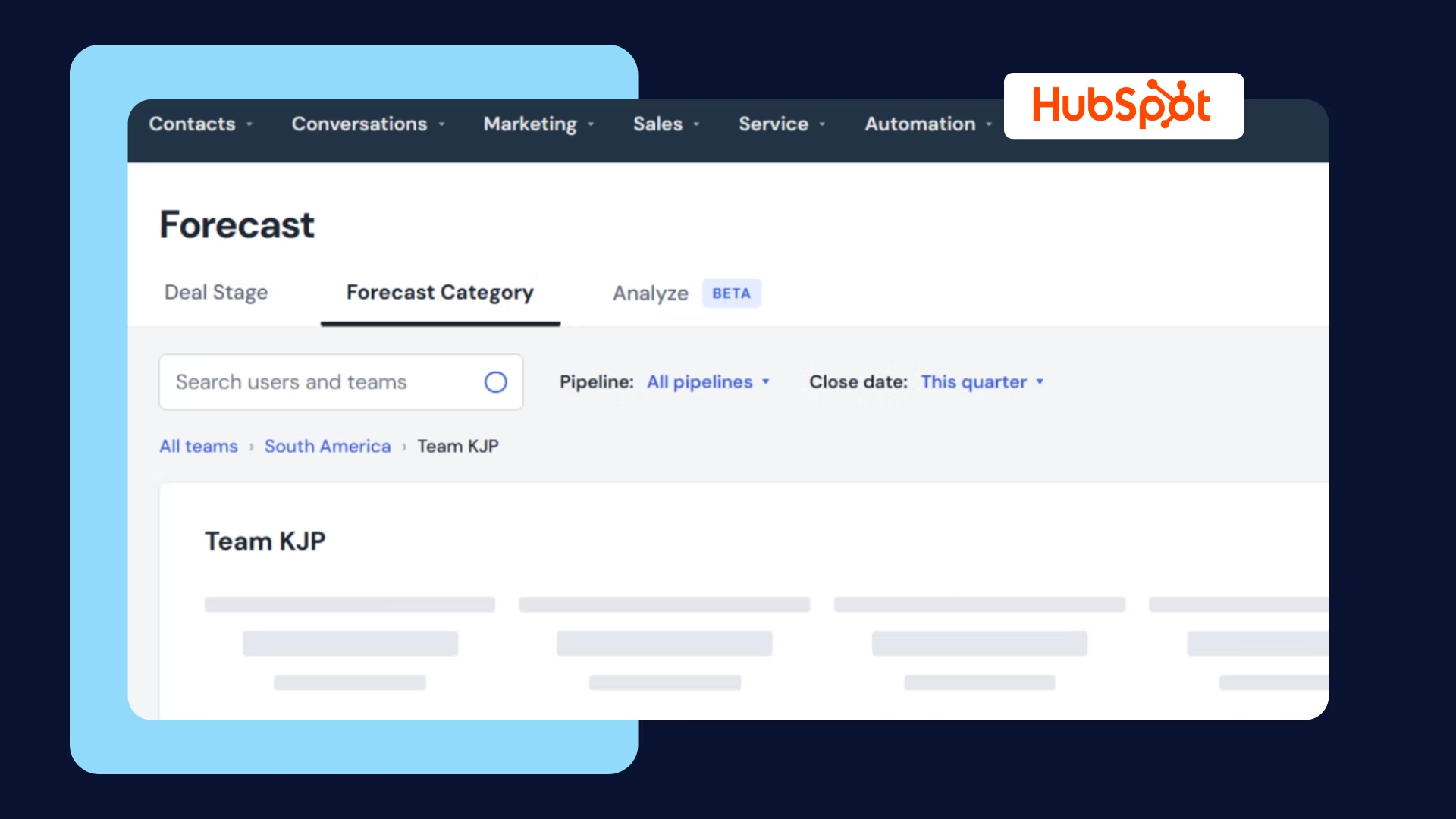
Find us at booth #83, join us for a harbor side happy hour, or catch Gorish’s talk.

Sept, 16-18 > Learn more


Mamta Tainwala

June 5, 2026
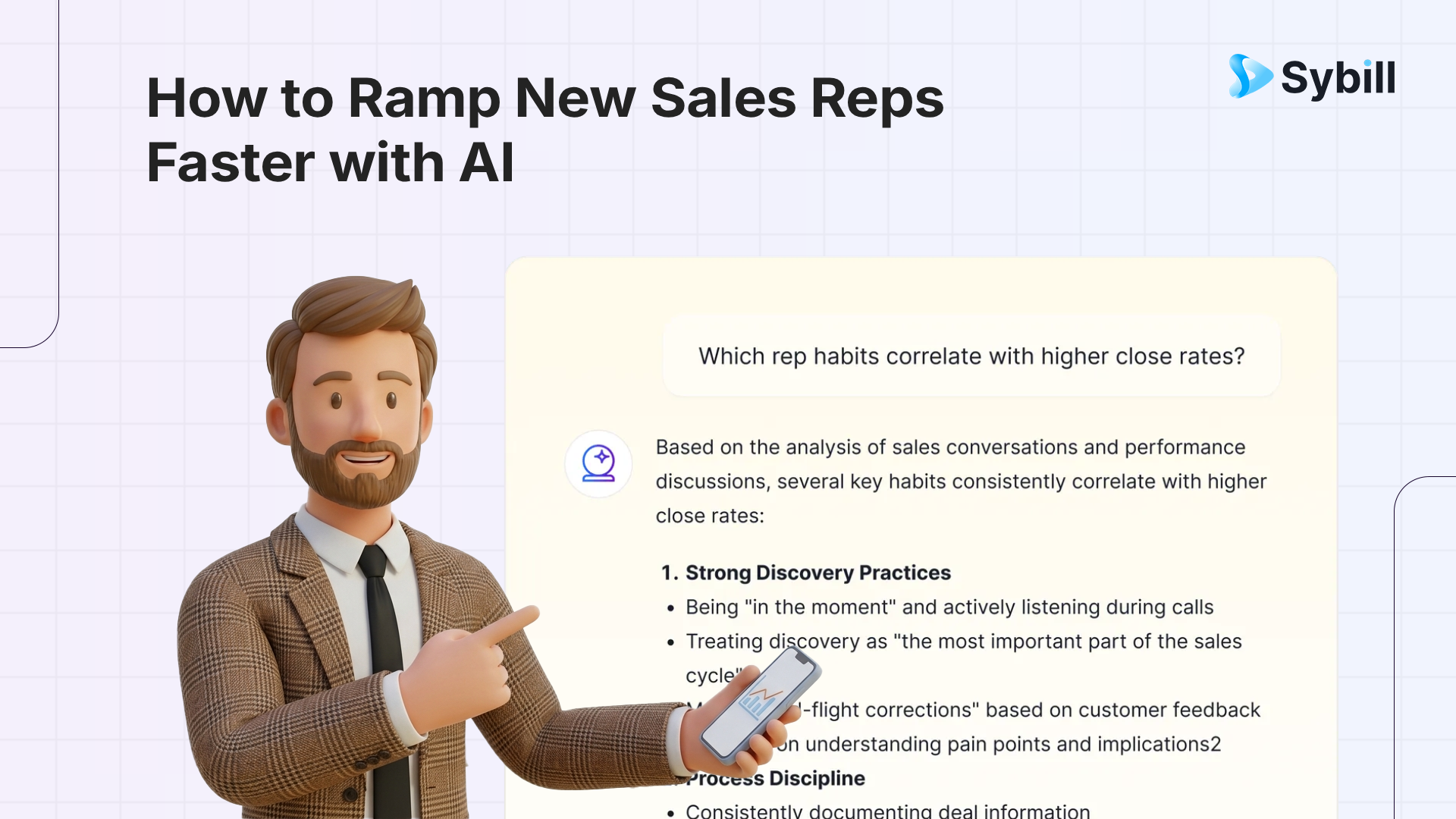
The average new sales rep takes three to nine months to hit full productivity. During that window, they are costing you a salary, a manager's attention, and a territory's worth of pipeline opportunity. The math is brutal. Most sales leaders just accept it as a fixed cost of growth.
It is not. It is a systems problem. And AI is finally giving teams the tools to solve it.
This guide walks through exactly what slows reps down during ramp, how AI changes each bottleneck, and how Sybill specifically compresses the path from hired to quota-ready.
Before fixing the problem, it helps to understand where the time actually goes. Ramp time is slow for three interconnected reasons.
Knowledge gaps take weeks to close. New reps need to learn the product, the buyer personas, the competitive landscape, the objection playbook, and the CRM workflow. Traditionally, this means sitting through training sessions, reading documentation, and shadowing senior reps. All of this is passive absorption with a slow feedback loop.
Confidence builds only through repetition. You cannot shortcut the number of discovery calls a rep needs to run before they stop sounding like they are reading from a script. Historically, the only way to accumulate reps is to wait for them. Deal cycles are long. Calendar slots are limited.
Feedback is delayed and incomplete. A new rep runs ten calls in their first month. A manager might listen to one of them. The rep gets feedback on roughly 10% of their actual work, weeks after the behavior was formed. The other 90% of their calls either reinforce good habits or bad ones, and no one knows which.
AI addresses all three of these. Not by replacing the human parts of selling, but by dramatically accelerating the infrastructure around them.
Most onboarding programs are built on documentation. PDFs about the product. Slide decks about personas. Recorded training sessions from three quarters ago that are already partially outdated.
New reps can pass all the quizzes and still walk into their first discovery call without any feel for how real buyers actually talk, what objections actually land, or what a top-performing response actually sounds like.
AI-powered conversation intelligence solves this by turning your existing call library into a living training asset. Every recorded call your team has run is searchable, summarized, and sortable by topic, outcome, objection type, or deal stage.
Instead of watching a generic training video on handling pricing objections, a new rep can pull up five real calls where your best AE navigated a pricing pushback and closed the deal. That is contextual learning that no LMS can replicate.

One of the fastest ways to tell the difference between an experienced rep and a new one is how they walk into a call. Veterans know the account history, have reviewed the prior meeting notes, and arrive with hypotheses about what the buyer cares about. New reps arrive with a LinkedIn tab open and a prayer.
Sybill's pre-meeting briefs flatten this gap immediately. Before every call, Sybill automatically generates a brief that pulls together attendee profiles, company context, prior call history and summaries, email thread context, CRM deal data, outstanding action items, and a suggested agenda.
A two-minute read replaces twenty minutes of tab-switching. And critically, it gives new reps the deal context that experienced reps have built up over months of working the account. A rep who has been on the team for three weeks can walk into a second call prepared like someone who has been working the account for three months.
This is not a small thing. Buyers consistently say the number one differentiator of a great salesperson is understanding their business. Sybill makes that level of preparation accessible to reps who do not yet have the institutional knowledge to pull it off manually.
Here is the ramp bottleneck nobody talks about enough. A new rep runs their first twenty calls over roughly four to six weeks. In a traditional setup, a manager listens to maybe two or three of them, gives feedback in a weekly 1:1, and the rep continues developing in whatever direction their instincts take them.
That feedback loop is too slow. By the time the rep gets corrective feedback, they have rehearsed the wrong behavior dozens of times.
Sybill's Magic Summary generates a structured breakdown of every single call within minutes of it ending. It captures pain points raised, objections surfaced, buyer signals, next steps, and gaps in discovery. A new rep can read their own call summary immediately after hanging up, see exactly what they captured and what they missed, and self-correct before their next call that afternoon.
The structure itself is coaching. If the Next Steps section is vague, the rep learns they did not nail the close. If Pain Points is thin, they know discovery was shallow. Implicit, immediate feedback on 100% of calls, not 10% of calls weeks later.

New reps have an enormous number of questions. What did we promise this prospect in the last call? What objections have come up in similar deals? What does a good discovery call for this persona sound like?
In a traditional setup, answering these questions means pinging a manager on Slack, interrupting a senior rep, or hunting through a disorganized shared drive. All of that creates friction and delays. Experienced reps know where to find things. New reps do not.
Ask Sybill changes this completely. New reps can ask plain-English questions about any deal, any call, or any team pattern and get answers drawn from actual conversation data.
"What objections has this prospect raised in prior calls?" "What discovery questions does our top rep use in the first meeting?" "What does a typical demo call look like for an enterprise deal?"
These questions get answered instantly, from real data, without taking up anyone's time. It is like giving every new rep a senior colleague available around the clock, one who has listened to every call the team has ever run.
This also meaningfully reduces the cognitive load that comes with being new. Reps can focus on the conversation in front of them rather than trying to hold an entire deal history in their head.
New reps are slow at everything, not just selling. They are slow at updating CRM fields because they do not know what the fields mean or which ones matter. They are slow at writing follow-up emails because they are still figuring out tone and format. They are slow at building pre-call prep because they do not yet have a research rhythm.
This admin overhead is a real productivity tax on ramp. A rep spending an hour per day on CRM hygiene and follow-up emails is a rep spending an hour per day not practicing the skills that actually shorten ramp time.
Sybill removes most of this automatically. CRM Autofill populates deal fields after every call with no manual input. AI-drafted follow-up emails go out in the rep's voice, referencing specific call details, reviewed and sent in under two minutes. Pre-meeting briefs arrive automatically before each call.
The result is that new reps spend their time on what actually matters: running calls, absorbing feedback, and developing the judgment that makes a great salesperson. The infrastructure takes care of itself.
Want to cut your ramp time in half? Get started for free with Sybill and give new reps the deal context, call coaching, and admin automation they need to get to quota faster.
Here is what the first 90 days look like for a new rep on a team using Sybill well.
The new rep is not expected to close deals yet. They are expected to build understanding fast.
With Sybill, this means spending meaningful time in the call library. Not just shadowing live calls, which are rare and hard to schedule, but reviewing curated recordings organized by deal stage and customer type. Sales coaching templates give managers a consistent framework for weekly check-ins that focus on specific skill development rather than general impressions.
By the end of week four, the rep has absorbed dozens of real buyer conversations. They know what objections sound like. They have heard how the best performers handle discovery. They arrive at their first solo calls with genuine context rather than theoretical preparation.
The rep is now running calls independently, but every call has a structured debrief built in. Magic Summaries surface immediately after each call. The manager reviews a handful of them each week, pulls flagged moments, and uses them as coaching artifacts in 1:1s.
Conversation intelligence vs. call recording makes a real difference at this stage. The rep is not just being told what happened. They can see talk-to-listen ratios, review their own discovery questions, and compare their pattern against team benchmarks. Self-awareness accelerates faster when it is backed by data.
Ask Sybill handles questions that would otherwise slow the rep down. Account context, prior call history, deal stage guidance, all available instantly without interrupting anyone.
By this stage, the rep has a meaningful call library of their own. Sybill's AI sales coaching functions start surfacing patterns across their calls. Where do their deals consistently stall? Which discovery questions do they skip? How does their talk-to-listen ratio compare to closed-won deals?
This is the inflection point where ramp stops being about learning the job and starts being about optimizing at it. Teams with this level of data-driven coaching infrastructure reach quota contribution significantly faster than those running traditional ramp programs.
AI tools accelerate ramp. But they do not replace the need for good coaching infrastructure. Here is what has to exist alongside the tooling for a ramp program to work well.
A curated call library from day one. Someone needs to tag and organize calls by topic, persona, and outcome before the new rep joins. Sybill makes the tagging fast, but the curation is a human decision. Call review in sales is the practice that makes this library grow and stay useful over time.
A consistent 1:1 structure. Use sales coaching templates to standardize what managers review and discuss each week. Without structure, 1:1s drift toward deal status rather than skill development.
Clear benchmarks. New reps need to know what good looks like. That means sharing team-level data on talk ratios, discovery question frequency, and close rates by call quality. Sybill surfaces this data automatically; the manager's job is to make it meaningful.
A culture of self-coaching. The most important behavior to develop in a new rep is the habit of reviewing their own calls. Managers who make this normal from week one build reps who self-correct without being told to.
Onboarding built entirely on documentation. PDFs do not build feel. Real call recordings do. If your onboarding program has not been updated to include a curated call library, you are already behind.
Delayed feedback loops. Waiting for a weekly 1:1 to give feedback on a call that happened five days ago means the behavior has already been reinforced. Sybill's immediate post-call summaries close this gap without requiring manager time.
Treating admin as an acceptable time cost. Every hour a new rep spends manually updating CRM fields is an hour they are not developing selling skills. Automate the admin. Protect the practice time. AI sales tools that handle post-call execution exist precisely to solve this problem.
Inconsistent manager coaching. Different managers with different coaching styles create uneven ramp outcomes across the team. Standardize the framework. Let the data be the common language.
Confusing activity with progress. Call volume matters, but uncoached call volume just reinforces existing habits. The goal is quality repetitions with tight feedback, not maximum calls.
How long should sales rep ramp time be?
Industry benchmarks suggest three to six months for inside sales roles and six to nine months for enterprise AEs, but these are averages based on traditional programs. Teams using AI-assisted coaching and onboarding infrastructure report meaningfully shorter ramp times, with some organizations reducing time-to-quota by 30 to 50%.
How does AI help new sales reps ramp faster?
AI accelerates ramp by providing instant access to real call libraries, automating post-call feedback through structured summaries, handling CRM and follow-up admin automatically, and giving new reps on-demand answers to deal questions via tools like Ask Sybill. The combined effect is tighter feedback loops, less time on admin, and more context going into every call.
What is the biggest bottleneck in sales rep ramp?
For most teams, the bottleneck is the feedback loop. Reps can only improve as fast as they receive specific, evidence-based feedback. Traditional programs provide feedback on a small fraction of calls, weeks after the behavior occurred. AI closes this gap by analyzing every call and surfacing coaching insights immediately.
Does Sybill work for new reps specifically?
Yes, and arguably Sybill delivers more value to new reps than to experienced ones. Pre-meeting briefs, instant Magic Summaries, Ask Sybill for deal context, and automated CRM fill all directly address the knowledge and efficiency gaps that make ramp slow. A new rep with Sybill has access to institutional context that would otherwise take months to accumulate.
How do you build a call library for sales rep onboarding?
Start by identifying five to ten exemplary calls in each key category: strong discovery, effective objection handling, successful demo, and clean close. Tag them in Sybill with context notes and make them accessible to new reps from day one. Add to the library as new standout calls surface. Sales enablement software can help organize and surface these recordings systematically.
What metrics should you track to measure ramp progress?
The core metrics are time to first closed deal, time to quota attainment, talk-to-listen ratio trajectory, CRM completion rate, and discovery quality scores. Sybill surfaces most of these automatically, giving managers a data-driven view of where each rep is developing and where they are still struggling.
Ramp time is not a talent problem. It is a feedback infrastructure problem. The new rep sitting across from you is probably capable. The question is whether your system gives them the context, the coaching, and the practice environment to find out quickly.
AI does not make a mediocre rep great. But it dramatically accelerates the path for a capable rep to reach their potential. Tighter feedback loops, better preparation, less time on admin, and access to institutional knowledge that used to take a year to accumulate.
The teams winning the ramp battle are not necessarily hiring better. They are building smarter systems around the people they hire. That is a choice available to any sales leader willing to make it.
Get started for free with Sybill and build the onboarding infrastructure that gets new reps to quota faster.
Industry benchmarks suggest three to six months for inside sales roles and six to nine months for enterprise AEs, but these are averages based on traditional programs. Teams using AI-assisted coaching and onboarding infrastructure report meaningfully shorter ramp times, with some organizations reducing time-to-quota by 30 to 50%.
AI accelerates ramp by providing instant access to real call libraries, automating post-call feedback through structured summaries, handling CRM and follow-up admin automatically, and giving new reps on-demand answers to deal questions via tools like Ask Sybill. The combined effect is tighter feedback loops, less time on admin, and more context going into every call.
For most teams, the bottleneck is the feedback loop. Reps can only improve as fast as they receive specific, evidence-based feedback. Traditional programs provide feedback on a small fraction of calls, weeks after the behavior occurred. AI closes this gap by analyzing every call and surfacing coaching insights immediately.