Find us at booth #83, join us for a harbor side happy hour, or catch Gorish’s talk.

Sept, 16-18 > Learn more

%20(1).avif)
Mamta Tainwala

August 20, 2026
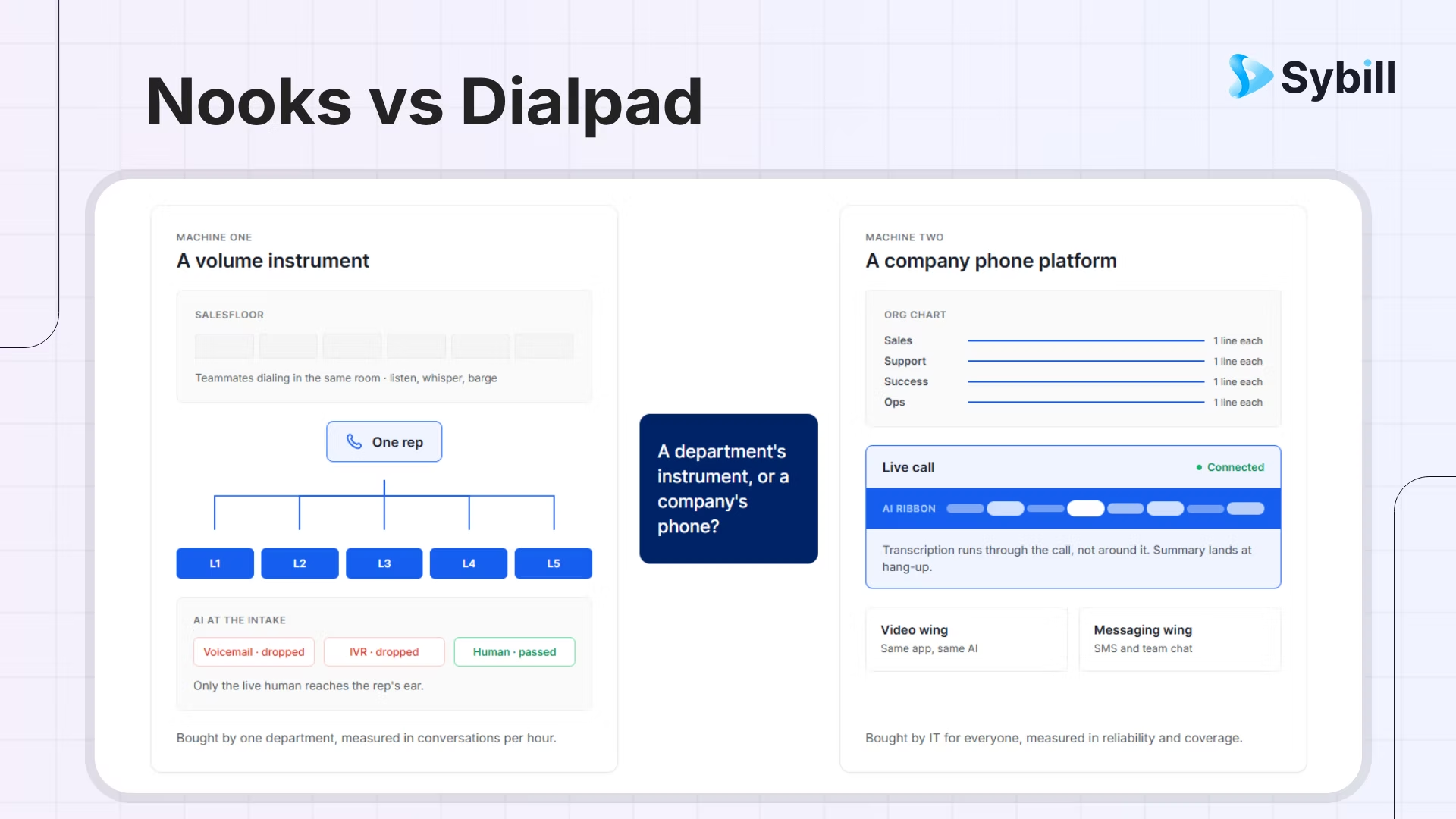
Nooks and Dialpad both market AI-powered calling, and they are different purchases wearing the same adjective. Nooks is a volume instrument for SDR floors: parallel dialing across multiple lines, AI that screens out voicemails and dead numbers, and a virtual salesfloor that recreates the bullpen for remote teams, priced as the premium specialist it is. Dialpad is a company phone platform: voice, video, and messaging for the whole organization, with AI-native transcription and live coaching in every call, and its dialer is power-mode, one line at a time. One is a department's tool; the other is a company's infrastructure.
Even the AI label means different things here, which is the comparison's real lesson: Nooks' AI serves volume mechanics, Dialpad's serves conversation quality. From the usual seat: Sybill integrates with both, sees both platforms' calls daily, and tilts for neither.
No, and the category difference is the cleanest in this half of our series: Nooks is an outbound sales specialist (a dialing engine plus salesfloor, recently extending into sequencing), bought by SDR leaders to maximize conversations per hour. Dialpad is unified business communications (a phone system first), bought by companies to be everyone's phone, with sales intelligence as one strength among several. The overlap zone is a sales team's outbound calling, and even there the two solve it differently: multiple lines versus one intelligent one.
Getting the frame right saves the usual weeks: evaluating Dialpad as an SDR volume machine finds it "slow," because one line at a time is the design, and evaluating Nooks as a company phone finds it absurd, because it is not one and does not price like one. Readers of our [Nooks vs Outreach comparison] [LINK-WHEN-LIVE: /blogs/nooks-vs-outreach] will recognize the pattern: Nooks keeps being compared against platforms whose center of gravity is elsewhere, and the honest answer keeps being "different jobs," with a genuinely contested zone in the middle that this post maps.
Nooks, structurally and by design: parallel dialing works multiple lines simultaneously and connects the rep to the first human who answers, the AI filters voicemails and bad numbers before they cost time, and the salesfloor turns a distributed SDR team back into a room, with live listening and coaching built for exactly this work. Current reviews consistently call that bullpen energy unmatched. Dialpad's power dialer is a competent one-line-at-a-time list worker; it is not built for aggressive outbound volume, and reviews say so plainly. [VERIFY-FEATURES]
The specialist's costs come with the specialist's powers, series-standard and currently well documented: the connection lag on parallel pickups that experienced prospects can read, the limited prospect context in the moment of connect (the rep learns who answered as the conversation starts), and the spam-flag and number-reputation obligations that make parallel dialing an operated system rather than a plug-in, all mapped in our dialer guide. Phone-first teams typically net more total conversations despite those taxes, which is the honest math that keeps the category alive; the discipline is segmenting lists so senior, high-value contacts get single-line treatment while the long tail gets volume.
The corollary cuts the other way too: a mixed AE-and-SDR team whose calls are mostly scheduled or warm gets nothing from parallel machinery, and Dialpad's one intelligent line, with transcription running and openers and timing doing the real work, covers that motion at a fraction of the specialist's posture.
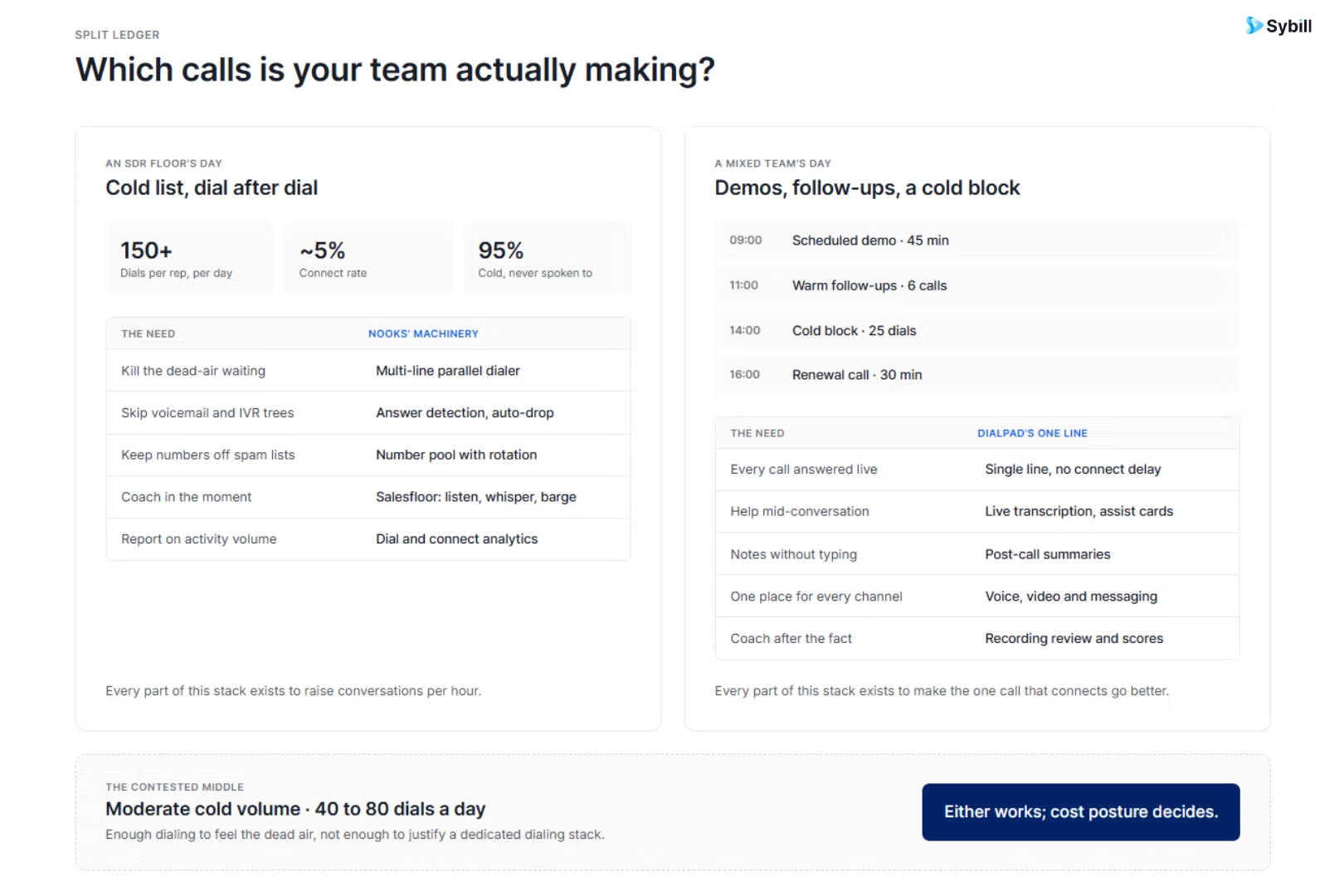
Same adjective, different species. Nooks' AI is throughput intelligence: detecting answering machines and skipping them, screening dead numbers, routing the first live human to the rep, and instrumenting the salesfloor's coaching (listening, transcripts, call scoring). Dialpad's AI is conversation intelligence in the call: real-time transcription rendering on screen, live assist cards surfacing when trigger topics come up, and summaries after, included by default across its tiers. One AI gets you more conversations; the other helps during each one. [VERIFY-FEATURES]
That distinction should drive the evaluation more than any demo, because it maps to two different problems. If your bottleneck is reach (not enough conversations happening), throughput AI attacks it directly and conversation AI is a nice-to-have. If your bottleneck is conversion (conversations happening but not landing), live assistance and coaching attack it while more volume just scales the miss. Most teams have one bottleneck screaming and buy for the other one, usually because the demo was impressive, which is the whole series' recurring failure mode wearing new logos.
A concrete way to run that diagnosis before any vendor call: take last month's numbers and compute conversations per rep per day and meetings per hundred conversations. If the first number is the embarrassing one, you have a reach problem and the throughput conversation starts with Nooks. If the second is, you have a conversion problem, and before buying any tool, listen to ten recorded calls, because the fix might be a talk track, a list, or a coaching motion rather than software. Teams that run this half-hour exercise walk into demos immune to the adjective, and the demos get noticeably shorter.
And the boundary that follows this series everywhere applies doubly here, since both vendors lead with AI: throughput AI and in-call AI are both call-level. Neither builds the cross-deal layer, what was said across every conversation on an account, written into CRM fields, follow-ups, and risk flags, and neither claims to. That layer is a separate decision on either side of this page.
Scope is the quiet decider: Dialpad replaces a phone system (and can carry video and messaging with it), so its purchase often involves IT and serves departments beyond sales; Nooks joins a stack (alongside your engagement platform and CRM) and serves the SDR floor specifically. Cost postures mirror the scopes: Dialpad enters light, per seat, AI included; Nooks prices as a premium specialist whose ROI case is conversations per hour at real volume. Run the math on your actual dial counts, not the vendor's. [VERIFY-PRICING]
The coexistence configuration is real and worth naming, because the scopes barely overlap: plenty of organizations run Dialpad (or a peer) as the company phone while the SDR floor runs Nooks for call blitzes, the same layered logic as the [Nooks-plus-Outreach pairing] [LINK-WHEN-LIVE: /blogs/nooks-vs-outreach], with the same economics: the second contract must be amortized by genuine volume. Smaller teams should pick the tool matching their dominant call pattern and live with its edges, and teams whose cold motion is occasional can run it through the company phone with signal-based prioritization doing the heavy lifting, because targeting beats throughput at low volume, every time, a principle the SDR playbook formalizes.
Whichever side wins, two pilot-week obligations travel with it: the recording consent configuration that comes with capturing calls, and the CRM logging floor-versus-ceiling check, since activity logs tell you a call happened and it takes more to record what it meant.
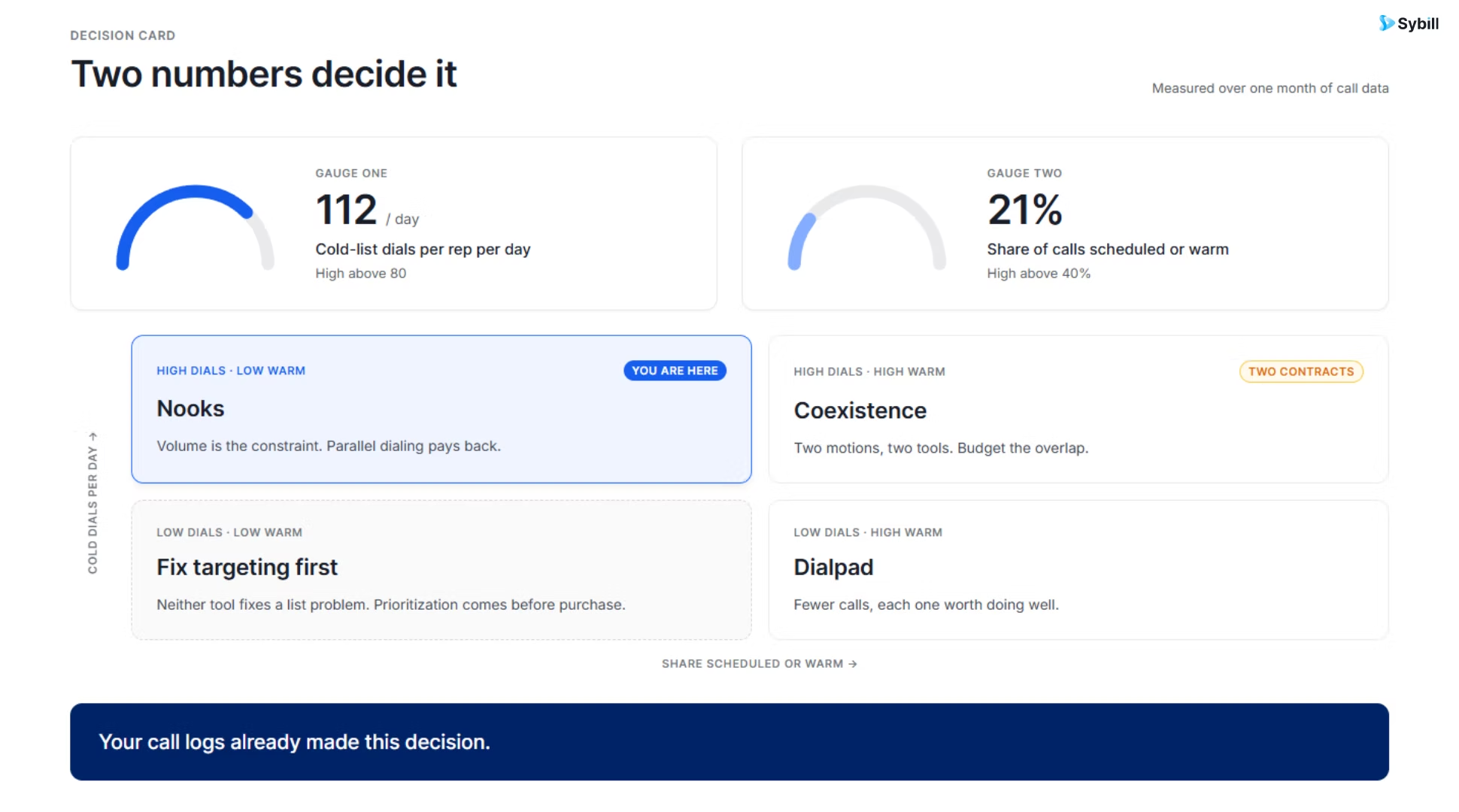
Choose Nooks if: the phone is your SDR team's primary channel and conversations per hour is the metric that pays; the salesfloor matches how you run and ramp the floor; you accept the parallel operating obligations; and your dial volume genuinely amortizes a premium specialist. The shape: a cold-calling-first department buying its core instrument.
Choose Dialpad if: you are buying a phone for the company, not an instrument for a floor; your sales calls are mostly scheduled, warm, or moderate-volume cold; in-call intelligence (live transcription, assist) matches your coaching motion; and one light per-seat contract beats a premium specialist your volume would not feed. The shape: an organization wanting an intelligent phone everywhere.
The tiebreaker, empirical as always: pull a month of call data and look at two numbers, cold-list dials per rep per day and the share of calls that are scheduled or warm. High first number, low second: the specialist. The reverse: the platform. High on both: that is the coexistence configuration, priced as two contracts and justified only by the volume.
Volume machine or intelligent line, the conversations are the asset. Sybill captures every Nooks and Dialpad call and turns it into summaries, CRM updates, follow-ups, and deal intelligence, automatically, on either side or both. Get started for free with Sybill.
Series refrain, sharpened by the two-AIs frame: Nooks' AI gets you more conversations, Dialpad's AI helps during each one, and neither tells you what is happening to the account. The objection pattern hardening across this month's cold calls, the competitor surfacing in every enterprise conversation, the champion whose tone shifted between Tuesday's call and Thursday's: these are cross-conversation signals, invisible to throughput AI and in-call AI alike, and they are where deals are actually decided.
Sybill has analyzed around 33 million sales conversations across the dialer and meeting platforms it connects to, and that cross-conversation layer is identical on both sides of this page: every call becomes a summary, CRM fields that fill themselves, a follow-up in the rep's voice, captured commitments, and account-level intelligence (risk flags, queryable history, coaching signals) that feeds the next list, the next opener, and the next prioritization pass. The full integration list covers both vendors, which is what buys this post its neutrality.
Same practical consequence as the whole series: settle the conversation layer independently, pick the calling machinery by motion, and the intelligence travels with you across every configuration change.
For cold-calling-first SDR floors at real volume, Nooks is the sharper buy: parallel throughput, the salesfloor, and the coaching environment are its actual craft, purchased with eyes open about the operating obligations and the premium. For everyone else, which is most sales teams, Dialpad's one intelligent line covers the motion at a fraction of the posture, and buying parallel machinery for a calendar-driven or moderate-volume team is the most expensive way to feel outbound-serious. Two AI phones, two jobs; the mistake is buying the adjective instead of the job.
Name your bottleneck, reach or conversion. The vendor follows.
Get started for free with Sybill or book a demo and make every call count on either one.
For high-volume, cold-calling-first SDR teams, Nooks: parallel dialing, AI voicemail screening, and the virtual salesfloor are built precisely for conversations per hour. For teams with moderate cold volume mixed into scheduled and warm calls, Dialpad's power dialer and in-call AI cover the motion at a much lighter cost posture.
They do different jobs. Nooks' AI is throughput intelligence: screening voicemails and dead numbers, routing the first live human to the rep, and instrumenting salesfloor coaching. Dialpad's AI is conversation intelligence: real-time transcription and live assist during each call, plus summaries after. One creates more conversations; the other helps during each one.
No, Dialpad's sales dialing is power-mode: one line at a time, worked from a list. Parallel dialing (multiple simultaneous lines with the rep connected to whoever answers first) is specialist territory, where Nooks is a category leader. Teams should match the mode to their list and volume rather than assume every "AI dialer" is parallel.
Yes, and the scopes barely overlap: organizations run Dialpad as the company-wide phone system while the SDR floor runs Nooks for high-volume call blitzes. The configuration costs two contracts, so it makes sense when genuine dial volume amortizes the specialist alongside the platform.
Yes, Sybill integrates natively with both, capturing every call on either platform (or both together) and turning it into summaries, CRM updates, follow-ups, and cross-deal intelligence automatically. The conversation layer works identically across configurations, so the calling-machinery decision can be made purely on motion fit.
For high-volume, cold-calling-first SDR teams, Nooks: parallel dialing, AI voicemail screening, and the virtual salesfloor are built precisely for conversations per hour. For teams with moderate cold volume mixed into scheduled and warm calls, Dialpad's power dialer and in-call AI cover the motion at a much lighter cost posture.
They do different jobs. Nooks' AI is throughput intelligence: screening voicemails and dead numbers, routing the first live human to the rep, and instrumenting salesfloor coaching. Dialpad's AI is conversation intelligence: real-time transcription and live assist during each call, plus summaries after. One creates more conversations; the other helps during each one.
No, Dialpad's sales dialing is power-mode: one line at a time, worked from a list. Parallel dialing (multiple simultaneous lines with the rep connected to whoever answers first) is specialist territory, where Nooks is a category leader. Teams should match the mode to their list and volume rather than assume every "AI dialer" is parallel.