Find us at booth #83, join us for a harbor side happy hour, or catch Gorish’s talk.

Sept, 16-18 > Learn more

%20(1).avif)
Mamta Tainwala

February 1, 2026
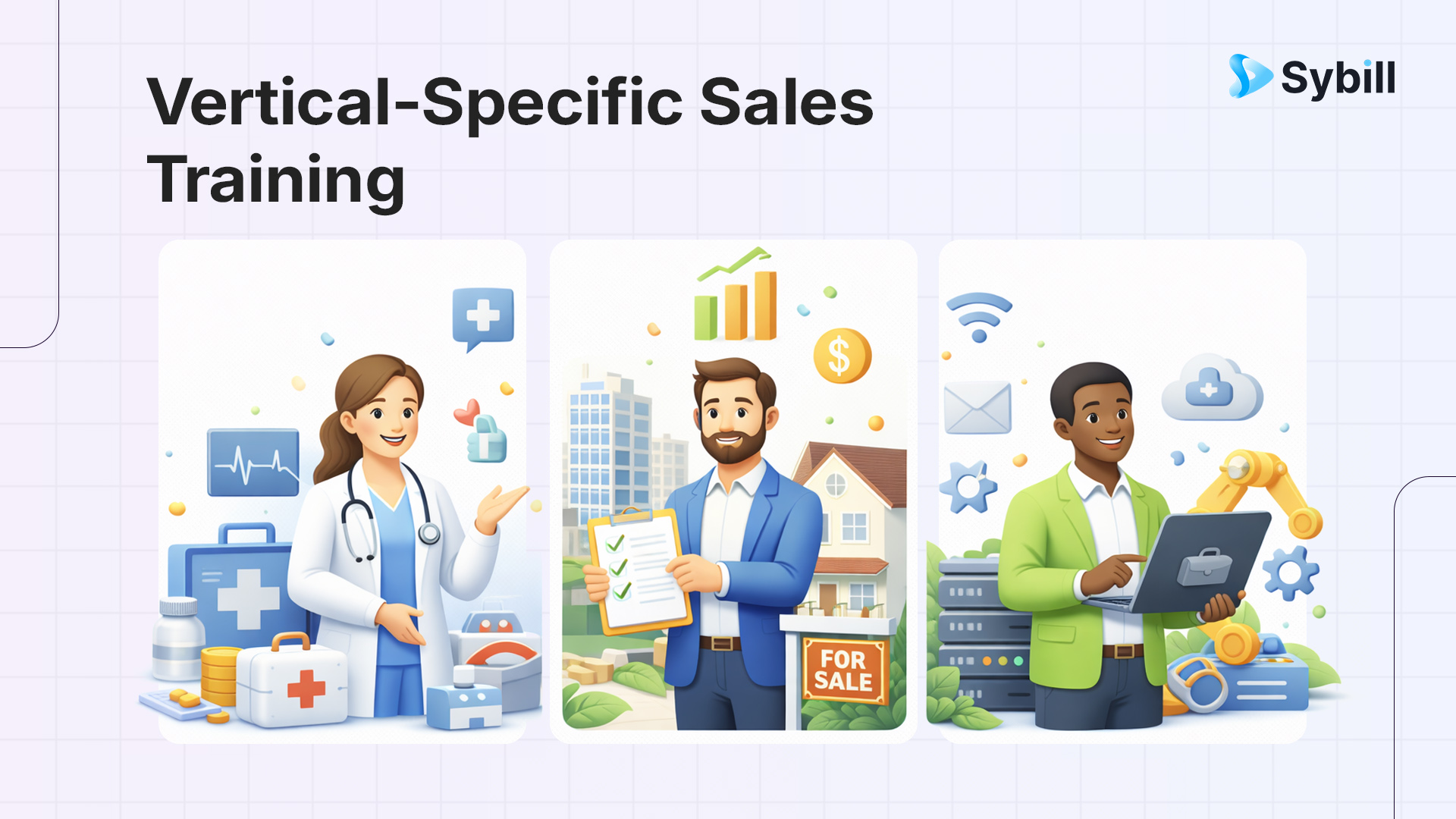
The brutal truth: That $50K sales training program teaching generic SPIN questioning won't help your rep sell cybersecurity to healthcare CIOs. They need to speak HIPAA, understand EMR workflows, and know why a breach costs $10M on average.
The fix: Build training around vertical knowledge (industry regulations, buyer personas, competitive landscape), sales methodology (MEDDPICC for enterprise, SPICED for product-led), and deal patterns from your actual won/lost data.
The shortcut: Use AI to analyze which approaches work in each vertical, then codify those patterns into playbooks. Reps selling to fintech learn from fintech wins. Reps selling to manufacturing learn from manufacturing wins. Result: 40% shorter ramp time and 25% higher win rates in target verticals.
Remember when Microsoft tried to sell Windows Phone by copying Apple's playbook? Or when every enterprise software company tried to "be like Salesforce"? Yeah, those strategies worked about as well as bringing a knife to a gunfight.
Here's the uncomfortable reality about most sales training programs: they're designed for the mythical "average salesperson" selling to the imaginary "typical B2B buyer." Spoiler alert: neither exists.
A rep selling marketing automation to CMOs needs completely different skills than someone selling industrial IoT sensors to manufacturing plant managers. Different vocabulary. Different pain points. Different decision-making processes. Different everything.
Yet companies continue to invest in generic sales training programs that teach universal techniques while ignoring the industry-specific knowledge that actually moves deals forward. It's like teaching someone to cook by explaining knife skills without ever mentioning what dish they're making.
The best sales training isn't one-size-fits-all. It's laser-focused on the specific verticals your team targets, built around real buyer behaviors in those industries, and continuously updated based on what's actually working in the field. This is vertical-specific sales training, and it's the difference between reps who fumble industry terminology on calls and reps who sound like trusted advisors from minute one.
Let's break down why generic training fails, what vertical-specific training actually looks like, and how to build programs that create industry experts, not just product experts.
Walk into any sales training seminar and you'll hear the same recycled wisdom: "Ask discovery questions!" "Build rapport!" "Handle objections!" "Always be closing!"
None of this is wrong. It's just woefully incomplete.
Here's what actually happens when you send a rep through generic professional sales training and then ask them to sell enterprise software to healthcare organizations:
They sound like tourists, not experts. When your rep says "So tell me about your pain points" to a hospital CIO, that CIO is thinking about HIPAA compliance, interoperability standards, physician adoption resistance, and budget cycles tied to fiscal year planning. Generic training doesn't cover any of this.
They miss industry-specific buying signals. In SaaS, a prospect asking about API documentation signals high intent. In manufacturing, it's asking about uptime guarantees and maintenance protocols. In financial services, it's questions about SOC 2 compliance and disaster recovery. Generic training can't teach these nuances.
They can't navigate vertical-specific decision processes. Healthcare buying committees include clinical champions, IT security, compliance officers, and often physician steering committees. Manufacturing involves plant managers, operations directors, and procurement. Financial services requires risk management approval. The best sales training teaches reps how decisions actually get made in each vertical, not how they should theoretically work.
They waste time on the wrong objections. When a healthcare prospect says "We need to think about it," they might be waiting for the next budget committee meeting in six weeks. A manufacturing prospect saying the same thing might be negotiating with a competitor. A fintech prospect might be navigating internal security reviews. Same words, completely different meanings and responses.
According to research from SiriusDecisions, companies with vertical-specific sales approaches see 18% higher win rates and 23% larger deal sizes compared to horizontal approaches. Yet most sales training services still teach generic methodologies and call it professional sales training.
The problem compounds when you're building a sales tech stack or implementing new tools. If your reps don't understand how their vertical buyers actually work, they can't leverage the technology effectively. They become glorified note-takers instead of strategic sellers.
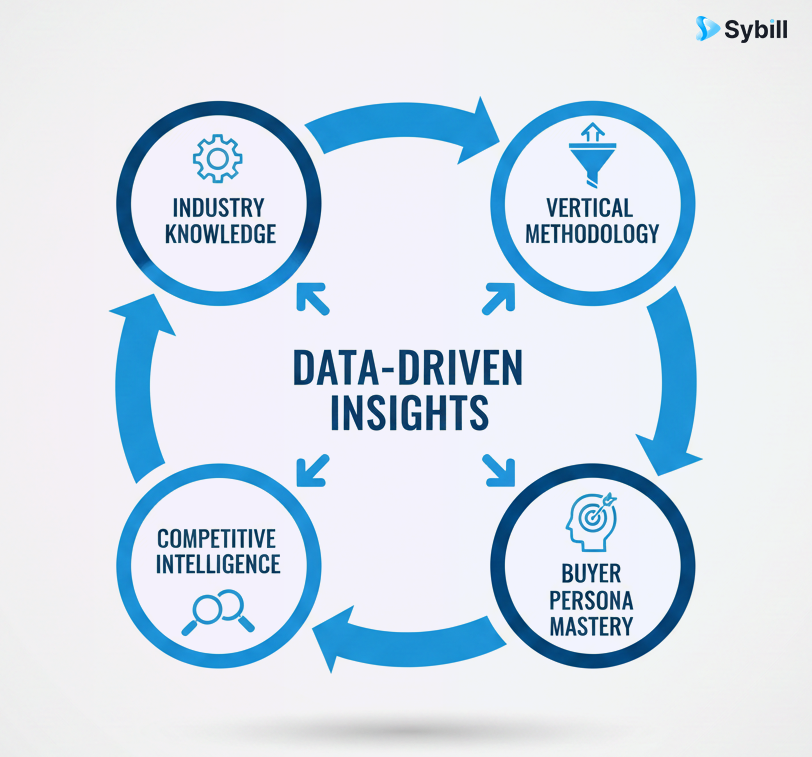
Effective vertical sales training isn't just product training with industry buzzwords sprinkled in. It's a comprehensive approach built around how deals actually close in specific markets.
This is your foundation. Reps need to understand the vertical as well as their prospects do.
Regulatory landscape and compliance requirements. If you're selling to healthcare, your reps better know HIPAA inside and out. Financial services? SOC 2, PCI-DSS, and relevant banking regulations. Manufacturing? OSHA requirements and industry-specific safety standards. This isn't optional background knowledge, it's table stakes for credibility.
Real training goes beyond "here's what HIPAA means." It covers how these regulations impact buying decisions, implementation timelines, and budget allocation. For example, knowing that healthcare organizations typically budget for compliance-related purchases in Q1 based on updated guidance from HHS fundamentally changes your timing strategy.
Industry-specific business models and metrics. SaaS companies care about MRR, churn, and CAC payback period. Hospitals track patient outcomes, readmission rates, and reimbursement models. Manufacturers optimize for OEE (Overall Equipment Effectiveness), throughput, and waste reduction. Your best sales training programs teach reps to speak in their buyers' metrics, not generic ROI calculations.
Market dynamics and trends. What's disrupting this vertical right now? Healthcare is grappling with value-based care transitions. Manufacturing is navigating supply chain fragility and reshoring pressures. Financial services is dealing with embedded finance competition and open banking regulations. Reps armed with this context can position solutions strategically instead of reactively.
Vertical-specific vocabulary and terminology. Nothing kills credibility faster than misusing industry jargon. It's not a "hospital," it might be an IDN (Integrated Delivery Network) or ACO (Accountable Care Organization). It's not "manufacturing equipment," it's OT (Operational Technology) or ICS (Industrial Control Systems). Professional sales training must include language immersion.
Generic sales methodologies fail because buying processes vary dramatically by industry. Smart companies adapt proven frameworks to vertical realities.
MEDDPICC for enterprise healthcare looks different than MEDDPICC for SMB retail. In healthcare, the "Economic Buyer" might be a CFO who never speaks to vendors directly. The "Champion" could be a physician who has influence but no budget authority. The "Decision Process" includes clinical validation committees that don't exist in other verticals.
Vertical-specific training teaches reps how to apply the methodology within the constraints and norms of each industry. For healthcare MEDDPICC, that means understanding clinical workflows, navigating complex stakeholder dynamics, and building business cases around patient outcomes, not just cost savings.
SPICED for product-led SaaS companies varies by target vertical. When selling dev tools to engineering organizations, the "Critical Event" might be a funding round or product launch deadline. For marketing tools sold to CMOs, it's campaign launches or seasonal planning cycles. Vertical training contextualizes methodology around real deadlines and pressures.
Solution selling requires vertical-specific problem understanding. The "problems" you solve for healthcare IT (interoperability, data security, clinical workflow efficiency) differ fundamentally from manufacturing problems (predictive maintenance, quality control, supply chain visibility). Sales training must teach the actual problems, not hypothetical ones.
Effective programs also incorporate vertical-specific variations of consultative selling, SPIN selling, and other frameworks. The questions change. The insights change. The entire conversation architecture changes.
Generic "VP of Sales" or "CTO" personas are useless. Vertical training builds deep understanding of who actually makes decisions and why.
Healthcare buyer personas might include:
Each persona has different pain points, evaluation criteria, and political dynamics. Your sales training services should teach reps how to identify, engage, and influence each one.
Manufacturing buyer personas look completely different:
The persona training isn't just "who they are" but "how they evaluate, what they fear, and what they're measured on." This depth transforms generic discovery calls into strategic business conversations.
Building your Ideal Customer Profile within each vertical goes further. Not all healthcare organizations are equal targets. Teaching reps to distinguish between community hospitals, academic medical centers, and integrated health systems (and which segments match your solution best) prevents wasted pipeline.
Get started for free with Sybill and analyze your call data to identify which buyer personas in each vertical actually convert, then build training around those winning patterns.
The competitive landscape shifts dramatically by industry, and training must reflect this reality.
Direct competitors vary by vertical. The companies you compete against in healthcare might have zero presence in manufacturing. Vertical training includes deep dives on who you actually face in each market, their positioning, and how to compete effectively.
Sales battle cards need vertical customization. Objection handling for "You're too expensive" in healthcare (where budgets are constrained by reimbursement rates) differs from the same objection in high-growth SaaS companies (where they're optimizing for speed to market). Your competitive collateral should reflect these nuances.
Industry-specific differentiators matter. What makes you "better" changes by vertical. Healthcare buyers might care most about clinical evidence and peer testimonials from similar institutions. Manufacturing buyers want proof of ROI through uptime metrics and case studies from their specific sub-vertical (automotive vs. food & beverage vs. pharma manufacturing).
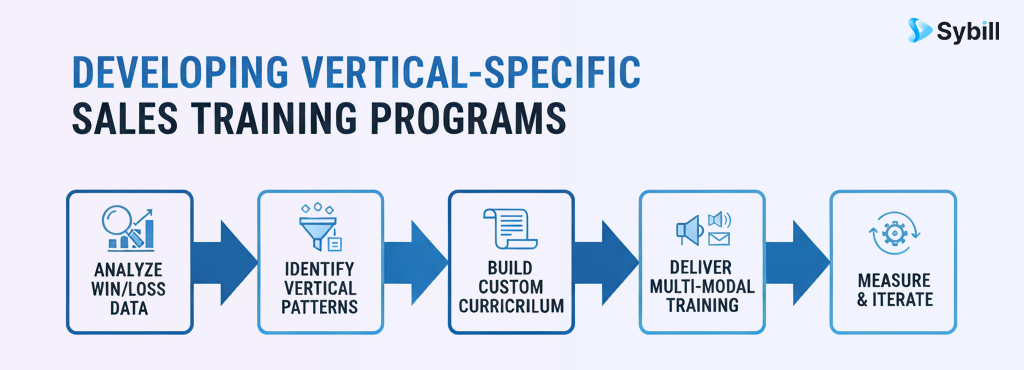
Theory is useless without execution. Here's how to actually build vertical sales training that creates revenue impact:
Before creating any training content, understand what actually works in each vertical.
Analyze win/loss patterns by industry. Use your CRM data and conversation intelligence platforms to identify:
Platforms like Sybill automate this analysis, showing you patterns across hundreds of calls. You might discover that in financial services deals, mentioning specific compliance frameworks in the first call increases win probability by 35%. That insight becomes training content.
Identify your best vertical performers and decode their approaches. Don't just look at quota attainment. Examine which reps consistently win in specific verticals and study their calls. What questions do they ask? How do they position value? What proof points do they use?
Tools like AI-powered sales coaching can surface these patterns automatically. You'll find that top performers in healthcare use different talk tracks than top performers in manufacturing, even when selling the same product.
Map the actual buyer journey in each vertical. Generic training teaches theoretical sales stages. Vertical training teaches the real path: "In healthcare, initial conversations happen with IT, but deals stall until you engage clinical stakeholders. In manufacturing, plant managers drive urgency but procurement controls contracts."
With data-driven insights in hand, build actual training modules.
Create industry immersion content. Start with fundamentals:
Make this content digestible and action-oriented. Nobody wants to sit through 40-hour compliance training. Focus on what reps need to know to have credible conversations.
Build vertical-specific talk tracks and plays. Generic training provides frameworks. Vertical training provides fills-in-the-blanks:
Healthcare discovery question template: "I understand you're currently managing patient data across [X systems]. How does that impact your clinicians' ability to access complete patient histories at the point of care? And when you think about recent regulatory changes around information blocking, how is that changing your interoperability priorities?"
Manufacturing discovery question template: "Walk me through what happens when you have unplanned downtime on [specific equipment type]. What's the typical root cause analysis process, and how long does it take to get back to full production? When you calculate the cost of that downtime, what factors are you including?"
These aren't generic "tell me about your pain points" questions. They demonstrate industry knowledge immediately.
Develop vertical-specific sales collateral and resources. Your healthcare sales deck should look nothing like your manufacturing sales deck. Different case studies, different metrics, different language, different visual approach.
Training includes how to use this collateral effectively, not just where to find it. "In healthcare demos, lead with workflow and integration, then discuss outcomes. In manufacturing demos, lead with ROI and productivity metrics, then discuss implementation."
Adult learning requires varied approaches, especially for complex vertical knowledge.
Classroom sessions for foundational concepts. Bring in industry experts (former customers, industry consultants, even hire someone with vertical experience) to teach basics. A former hospital CIO explaining healthcare buying committees provides credibility no sales trainer can match.
Role-playing and simulations with vertical scenarios. Don't practice generic discovery calls. Practice healthcare discovery calls with a "CIO" who throws real objections like "We're already committed to Epic for the next three years" or manufacturing calls where the "plant manager" is skeptical because "We tried something similar five years ago and it failed."
Shadowing and ride-alongs with vertical specialists. If you have reps who crush it in specific verticals, have newer reps shadow their calls. Record and analyze these sessions using conversation intelligence tools so the learning is ongoing, not one-time.
Continuous microlearning and reinforcement. Vertical knowledge degrades without use. Send weekly "industry updates" covering recent news, regulatory changes, or competitive moves. Include quick quizzes: "What does this new CMS ruling mean for hospital IT budgets?" This keeps knowledge fresh.
AI-powered personalized learning paths. Not all reps start with the same knowledge gaps. Use AI sales training platforms to identify where each rep struggles (maybe they nail healthcare terminology but fumble competitive positioning) and serve up targeted content.
Training fails when it's separate from selling. The best programs integrate vertical intelligence into every rep interaction.
CRM customization with vertical-specific fields. Your sales process should capture vertical-relevant information. For healthcare: "Clinical champion identified?" "Compliance review status?" "Go-live timeline tied to fiscal year?" For manufacturing: "Production schedule impact?" "Multi-site deployment planned?"
These fields don't just track progress, they remind reps what matters in each vertical.
Call preparation templates by vertical. Before a healthcare discovery call, the prep template prompts:
Before a manufacturing call:
Post-call analysis and coaching by vertical. When reviewing calls, don't just coach on discovery techniques. Coach on vertical execution: "You missed an opportunity to connect their current integration challenges to the information blocking rule we discussed in training. Next time, try..."
Get started for free with Sybill and get automated post-call coaching that identifies vertical-specific improvement opportunities based on your actual won deals.
What gets measured gets improved. Track metrics that actually matter:
Ramp time to first closed deal by vertical. How long does it take new reps to close their first healthcare deal versus their first manufacturing deal? Effective vertical training should reduce this significantly.
Win rates by vertical. Track whether trained reps show improvement in specific verticals. You might find that training works great for enterprise deals but needs refinement for mid-market.
Average deal size by vertical. Better vertical training often leads to larger deals because reps can articulate value in ways that resonate with senior decision-makers.
Competitive win rates by vertical. Are you beating your primary competitors more often after vertical training? This indicates your competitive intelligence training is working.
Talk track adoption. Using conversation intelligence, measure whether reps actually use the vertical-specific talk tracks you taught them. If they're not, either the training didn't stick or the content needs improvement.
Customer feedback on rep expertise. Ask prospects post-sale: "How knowledgeable did our rep seem about your industry?" Track this by vertical to identify training gaps.
Once you've nailed the fundamentals, these advanced approaches separate good programs from great ones:
Some companies create formal vertical specialization programs where reps become certified experts.
The "Healthcare Sales Specialist" certification might include:
Certified specialists get priority assignment for vertical deals, creating motivation to invest in deep learning. This also prevents the common problem of reps dabbling in multiple verticals without mastering any.
Bring in customers from each vertical to advise on training programs.
Quarterly sessions where customers provide feedback: "Here's what your reps get right about our industry" and "Here's where they sound clueless." This insight is invaluable for refining curriculum.
Customer participation in training. Have healthcare CIOs speak to your team about how they actually evaluate vendors. Manufacturing plant managers explain their real decision criteria. This creates authenticity no internal trainer can provide.
Don't just track win rates. Do deep dives on why you win or lose in each vertical.
Lost to competitor X in healthcare: Was it product capability, pricing, existing relationships, or poor positioning? Interview the prospect to understand. Then update training to address that specific gap.
Won against competitor Y in manufacturing: What did your rep do differently? Capture the exact conversation dynamics using call recordings and sales call analysis, then distribute as training material.
Use machine learning to identify patterns that humans might miss.
Machine learning for sales can analyze thousands of conversations to discover that in healthcare deals:
These insights become training directives: "Always surface clinical outcomes early" and "When prospects mention Epic or Cerner, immediately ask about integration pain points."
Formal vertical training extends beyond your four walls.
Sponsor reps to attend major industry conferences. Healthcare reps should attend HIMSS. Manufacturing reps should hit Automate or Pack Expo. Financial services reps belong at Money 20/20.
But don't just send them to collect swag. Give them assignments:
Encourage industry association participation. Some reps join Healthcare Information and Management Systems Society (HIMSS) or Association for Manufacturing Excellence (AME). This builds credibility and creates learning opportunities.
Even with good intentions, vertical training can go wrong. Avoid these traps:
Showing reps which product features matter to healthcare is not the same as teaching them how healthcare buying works. Product training is about your solution. Vertical training is about their world.
What it looks like: Training session titled "Healthcare Solutions Overview" that's actually 90% product features with healthcare logos on slides.
What it should be: "Understanding Healthcare Buying Committees" with actual buyer personas, political dynamics, evaluation criteria, and zero mention of your product until the final 10 minutes when you connect it all together.
Too many programs are built on what trainers think matters, not what actually drives wins.
What it looks like: Extensive training on regulatory compliance because "it's obviously important in healthcare" when your win/loss data shows deals are actually won or lost based on integration capabilities and implementation timelines.
What it should be: Start with data. Analyze actual deals. Build training around what high-performing reps actually do differently in each vertical.
"Healthcare" isn't monolithic. Community hospitals operate nothing like academic medical centers. Pharma manufacturing is completely different from automotive manufacturing.
What it looks like: One-size-fits-all "manufacturing sales training" that treats a food processing plant the same as an electronics assembly facility.
What it should be: Tiered training. Core vertical fundamentals for all, then specialized modules for sub-verticals. Or focus your go-to-market on specific sub-verticals and go deep rather than broad.
Industries evolve. Regulations change. Competitive dynamics shift. Training built in 2023 might be obsolete by 2026.
What it looks like: Still teaching healthcare reps about "meaningful use" requirements that were replaced years ago, or manufacturing content that doesn't mention recent supply chain disruptions.
What it should be: Quarterly curriculum reviews. Industry news monitoring. Continuous content updates based on recent wins/losses and market changes.
One-week bootcamp followed by nothing guarantees knowledge evaporation.
What it looks like: Intensive onboarding training, then reps are thrown into the field with no ongoing vertical education.
What it should be: Microlearning. Monthly vertical updates. Quarterly refreshers. Continuous coaching using AI-powered platforms that provide feedback on every call.
The biggest shift in vertical sales training isn't content, it's delivery and personalization through artificial intelligence.
Traditional approach: Sales leaders manually review calls from top performers, try to identify common patterns, and build training around hunches.
AI approach: Conversation intelligence platforms analyze thousands of calls across verticals, identifying patterns like:
These insights automatically become training recommendations and coaching points.
Traditional approach: Reps make mistakes on calls, hopefully someone reviews the recording later, feedback comes in next week's 1:1 (maybe).
AI approach: Real-time analysis during calls that can prompt reps:
This real-time coaching accelerates learning from months to minutes.
Traditional approach: Everyone gets the same training regardless of existing knowledge or performance gaps.
AI approach: Platforms analyze each rep's calls and identify specific vertical knowledge gaps:
This personalization dramatically improves training ROI.
Traditional approach: Training team manually monitors industry news and updates content quarterly (at best).
AI approach: Automated monitoring of industry news, regulatory changes, competitor moves, and customer feedback. When significant changes occur, training content automatically updates and alerts go to relevant reps.
Example: New CMS guidelines published affecting hospital budgets → Healthcare-focused reps receive alert with summary, talk track updates, and suggested outreach to active deals.
Every won or lost deal is a learning opportunity, but most of that intelligence never makes it into training.
AI approach: Automatically analyzes win/loss patterns, identifies what differentiated wins from losses in each vertical, and surfaces specific improvements:
Sybill's platform automatically extracts these insights from every call and email, creating a continuously evolving vertical playbook based on real-world results, not theory.
The gulf between mediocre sales training and exceptional training isn't effort, it's focus.
Generic sales training creates reps who can recite your value proposition and follow a sales process. They might even hit quota if your product is strong enough and the market is hungry enough.
The companies winning in competitive markets aren't the ones with the best product (though that helps). They're the ones whose reps sound like industry veterans from the first conversation, who anticipate objections before they're raised, who speak in their prospects' language naturally because they've invested in truly understanding each vertical.
This level of training requires commitment. You can't build it in a weekend workshop. But you also don't need to build it all manually anymore.
AI-powered platforms now automate the hardest parts: analyzing thousands of calls to identify vertical patterns, providing real-time coaching during conversations, personalizing learning paths to each rep's gaps, and continuously updating playbooks based on what's actually working in the field.
The question isn't whether to invest in vertical-specific sales training. The question is whether you'll build training that actually reflects how your verticals buy, or continue investing in professional sales training that works great in theory and fails in practice.
Your prospects can tell the difference in the first five minutes of conversation. Make sure your training ensures that difference works in your favor.
Leading indicators (improved industry knowledge, better discovery questions, higher engagement in calls) typically appear within 3-4 weeks. Lagging indicators (higher win rates, shorter sales cycles, larger deal sizes) generally take 60-90 days to materialize because trained reps need to work through their existing pipeline and apply new skills to fresh opportunities. The timeline varies by deal complexity - SMB-focused verticals show faster results than enterprise verticals with 6-9 month sales cycles. Companies using AI-powered coaching often see 30-40% faster improvement because reps receive continuous reinforcement rather than relying solely on periodic training sessions. The key is measuring both leading indicators (rep behaviors) and lagging indicators (revenue outcomes) to understand training impact comprehensively.
This depends on market size and go-to-market strategy. If you have large addressable markets in 2-3 core verticals, specialization creates deeper expertise and stronger customer relationships. Specialized reps develop reputations as industry experts, get referrals within verticals, and close deals faster because they've seen every objection and scenario before. However, if you're pursuing smaller opportunities across many verticals or have a small team, vertical generalists make more sense. The hybrid approach: train everyone on your top 1-2 verticals while identifying natural aptitudes (some reps just "get" healthcare, others thrive in manufacturing) and creating informal specialization over time. Most companies find that even in generalist models, reps naturally gravitate toward verticals where they have success, creating de facto specialization. Use your sales productivity tools to track which reps excel in which verticals and guide specialization accordingly.
Build evergreen content (core buyer personas, fundamental business models, basic regulatory landscape) that changes slowly, complemented by dynamic content (recent industry news, emerging trends, competitive moves) that updates continuously. Assign someone on your team to own each vertical - not full-time, but responsible for monitoring industry publications, attending key conferences, and flagging important changes. Create feedback loops from your reps: after every lost deal, capture why and whether it reveals training gaps. Set up automated Google Alerts and industry news monitoring for your key verticals. Most importantly, integrate conversation intelligence that automatically surfaces new patterns from your calls. When prospects start mentioning a new regulation or competitive threat across multiple deals, your system should flag it automatically rather than waiting for someone to notice manually.