Find us at booth #83, join us for a harbor side happy hour, or catch Gorish’s talk.

Sept, 16-18 > Learn more

%20(1).avif)
Mamta Tainwala

August 22, 2026
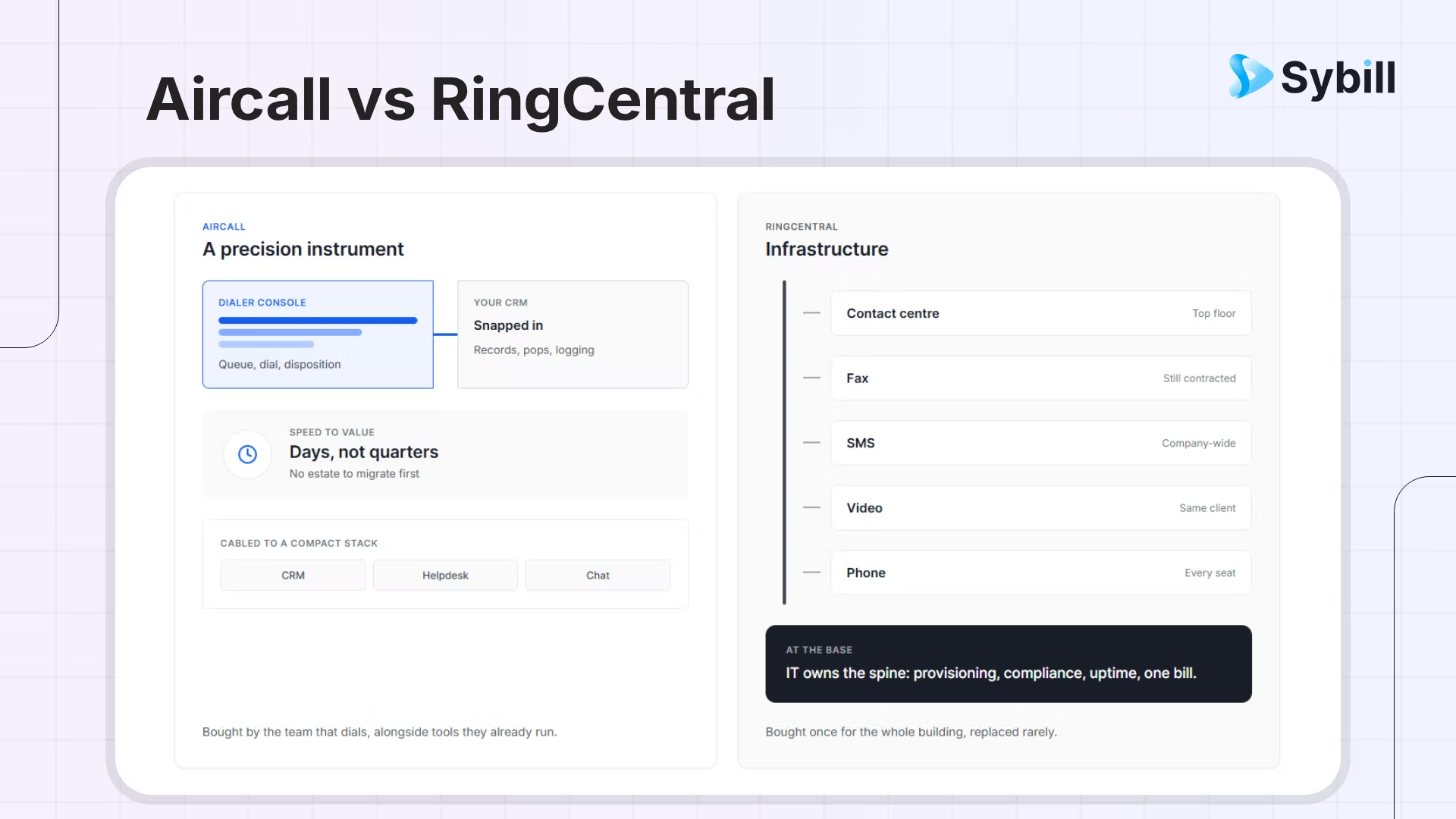
Aircall and RingCentral solve the same surface problem (business calls in the cloud) for different buyers. Aircall is the calling specialist: a sales- and support-first phone with a power dialer, routing an ops manager can edit visually, fast setup, and deep CRM integrations, deliberately not a full communications suite. RingCentral is the backbone: phone, video, SMS, fax, and contact center in one UCaaS platform on Tier-1 carrier infrastructure, built for organizations that want a single vendor for everything, with the weight that implies. The shorthand: speed-to-value versus single backbone.
This completes the phone-platform triangle alongside our Dialpad vs RingCentral and Dialpad vs Aircall comparisons, and it is the pair where the buyers overlap least, which makes the decision cleaner than the marketing suggests. As with the whole series: Sybill integrates with both, sees both platforms' calls daily, and wins nothing by tilting this.
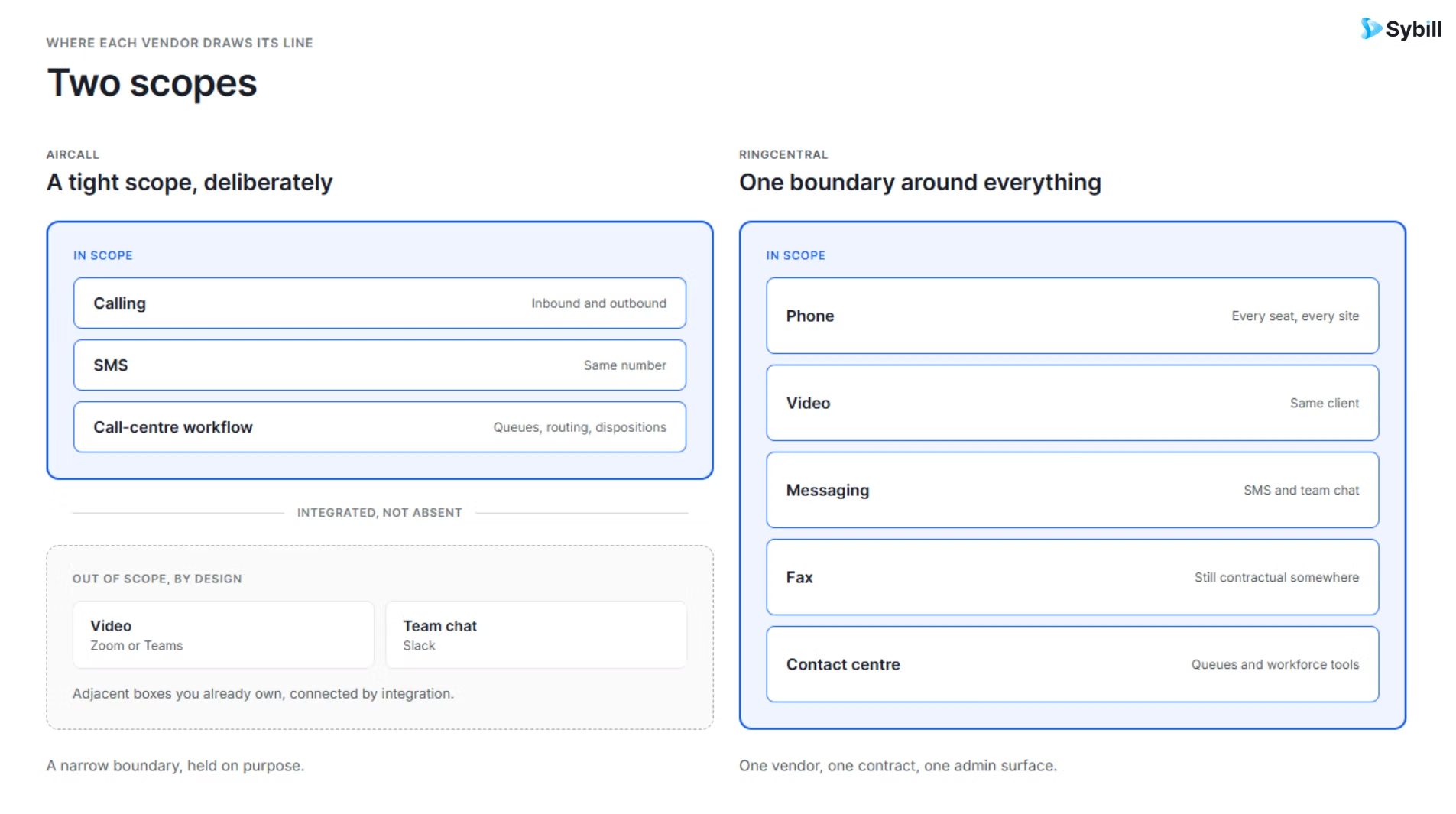
No, and this is the comparison in the series where the category difference is starkest: Aircall is a calling product (voice, SMS, and call-center workflow, with no native video meetings or team chat), betting your collaboration already lives in Zoom, Teams, or Slack. RingCentral is a unified communications platform where calling is one workload among video, messaging, fax, and contact center. You are not choosing between two phones; you are choosing between adding a phone to your stack and replacing your stack's communications layer.
Getting that framing right before the demo saves weeks. Teams that evaluate Aircall as a UCaaS find it "missing" video and chat, which is like faulting a scalpel for not being a toolbox: the omission is the design. Teams that evaluate RingCentral as a sales dialer find it heavy, because they are test-driving a building. The five dimensions below only make sense inside the right frame, so decide first which purchase you are actually making, then read on.
Aircall, and this is its home game: the power dialer works lists automatically, click-to-call and screen pops keep reps inside the CRM, and the routing, queues, and monitoring are editable by a non-technical manager through a visual interface. RingCentral covers calling fundamentals at genuine enterprise grade, but its deeper sales capabilities tend to live in higher tiers or its contact-center product, and complex routing changes more often require IT involvement. For a revenue team buying primarily a calling workflow, the specialist is the specialist.
The ops-runnability point is the underrated one, and it compounds weekly: outbound motions change (new campaign, new territory split, new routing rule), and the platform where the sales ops lead ships that change in ten minutes beats the platform where it enters an IT queue. Aircall's visual editors are consistently the thing its administrators praise; RingCentral's admin depth is powerful and correspondingly less self-serve at the edges.
One buying reality worth naming, because it shapes real evaluations of this pair: both platforms are frequently purchased jointly by sales and support, and the joint purchase changes the math. Aircall's call-center mechanics (queues, IVR, monitoring, a shared inbox) serve both teams from one product, which is often how it beats point-solution dialers in procurement: two departments, one tool, one bill. RingCentral extends the same logic further, adding the whole communications estate. If your evaluation committee includes a support leader, put their call volumes and routing needs in the pilot from day one, because a phone system that only one of the two teams adopts ends up renegotiated within a year.
Series-standard honesty about limits: a power dialer is not a parallel dialer, so genuinely volume-shaped SDR motions should read the specialists in our dialer roundup and the mode taxonomy in our full dialer guide before assuming either platform is the answer. And no platform buys you the craft layer: call timing and openers move connect-to-meeting rates more than the logo on the dialer.
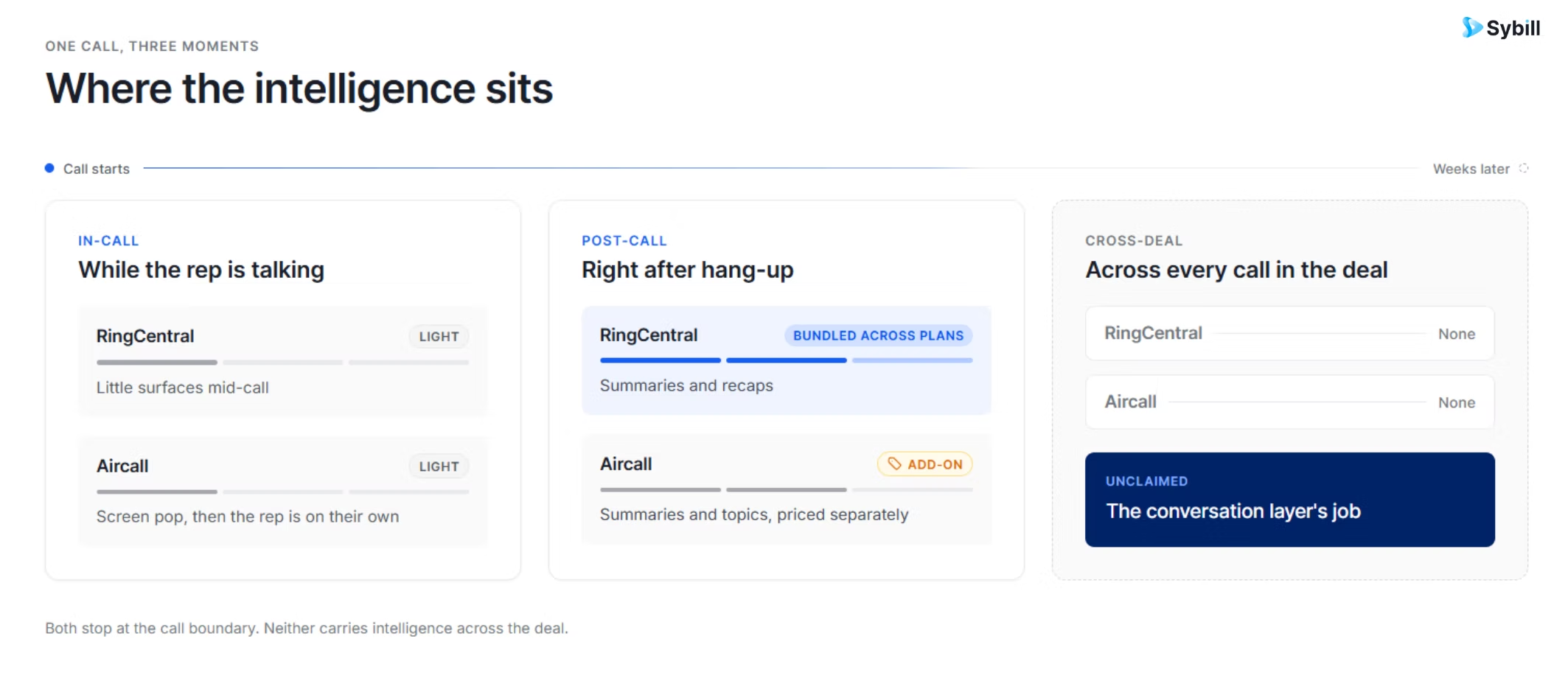
The AI positions from our Dialpad comparisons invert here, which surprises people: RingCentral bundles its AI capabilities (call summaries, transcription, meeting recaps, drafting) fairly broadly across plans, while Aircall packages its AI assistant as a paid add-on, so at comparable tiers RingCentral often includes more intelligence per seat. Neither is AI-native the way Dialpad is; both deliver call-level intelligence that helps record-keeping more than it changes in-call behavior. Verify current packaging on both, because this is exactly the detail that moves between quarters.
The buyer's translation: if AI bundling is your deciding dimension, this pair is the wrong final, and the AI-native option in our triangle deserves your shortlist instead. Between these two, treat AI as a cost-modeling line item (what does transcription and summarization cost per seat at your tier?) rather than a capability gap, and apply the series-standard boundary: platform AI on both sides is call-level. The cross-deal revenue workflow, what was said across every conversation on an account, written into CRM fields, follow-ups, and risk flags, is neither platform's job, and it is the layer that actually compounds for a sales team. More on that below.
RingCentral's home game: Tier-1 carrier networks with encrypted voice, the certifications strict procurement teams ask about, hardware and hot-desking support for physical offices, and the multi-site, policy-heavy administration a large organization requires. Aircall runs reliably at SMB and mid-market scale with strong uptime and clean role-based permissions, and offers international numbers from an impressively broad country list, but it is not built to be a 2,000-seat organization's entire communications estate, and does not pretend to be.
One assumption worth correcting with the current facts, because shortlists get this backwards: international reach is not automatically RingCentral's win. Aircall provisions local numbers across a very wide country footprint, often broader for number availability, while RingCentral's international strength is the infrastructure grade and governance underneath multi-entity global operations. A 40-rep team calling into Europe has a different "international" requirement than a multinational consolidating telephony across subsidiaries, and the two platforms serve those two sentences respectively.
Administration mirrors the series pattern: RingCentral's depth is the product for organizations that need estates, policies, and compliance regimes managed centrally; Aircall's shallowness in the good sense (an afternoon to set up, a visual editor to change) is the product for teams where the phone must never become an IT project. Whichever you pick, recording is where obligations start: both offer the controls, and the state-by-state consent map is yours to configure during the pilot, not after.
Both integrate with the major CRMs and help desks; Aircall's catalog is broader and more one-click across the revenue stack (its design thesis), while RingCentral's ecosystem is large and reaches enterprise systems Aircall does not, so the deciding test is your actual five daily tools against both catalogs. Cost posture: both per-seat and tiered; Aircall carries seat minimums and its AI add-on, while RingCentral's headline tiers are competitive with real sales capabilities living higher up and add-ons accumulating at enterprise ambition. Two-year math, not month-one math.
The pattern across the triangle holds: catalog size is marketing, catalog fit is diligence, and the thirty-minute homework of testing your own stack settles it more reliably than any comparison, ours included. Design the pilot to match: two weeks, live call lists, both teams if the purchase is shared, and three numbers checked at the end (connect rates, CRM logging completeness, and whether anyone had to file a ticket to change routing). The vendor that survives that fortnight without nagging has answered the question the pricing pages cannot. For revenue teams, the deeper integration question is what flows into the CRM: both platforms log activity competently, and activity logging is the floor, not the ceiling, a distinction our CRM automation guide unpacks. If your outbound runs through sequences, confirm how each phone coexists with the engagement layer, which owns the cadence either way.
Choose Aircall if: the purchase is a calling workflow, not a communications suite; your reps live in the CRM and the phone should appear there; your ops lead needs to change routing without a ticket; your collaboration already lives in Zoom, Teams, or Slack and does not need replacing; and speed-to-value is the constraint. The shape: a revenue team adding a specialist phone to a stack it likes.
Choose RingCentral if: you are consolidating communications onto one vendor and one backbone; you have physical offices, desk-phone estates, or multi-entity international operations; procurement requires infrastructure-grade certifications and governance; and the sales team's calling is one workload within a company-wide platform decision. The shape: an organization buying its communications layer, with sales along for the ride.
The tiebreaker barely exists in this pair, which is the point: if you are genuinely torn between these two, the confusion is usually about which purchase you are making, not which vendor makes it better. Answer the category question from the top and the vendor question answers itself.
Specialist or backbone, the calls still have to go somewhere. Sybill captures every Aircall and RingCentral conversation and turns it into summaries, CRM updates, follow-ups, and deal intelligence, automatically. Get started for free with Sybill.
The series refrain, earned again by this pair: the phone platform decides how calls happen; it does not decide what your team learns from them. Watch the calls flow through both platforms, as we do, and the pattern is identical: the objection in minute nine, the competitor mention, the budget hint, the promised next step, all spoken once, all evaporating at hang-up unless something captures them into the systems where deals are managed.
Sybill has analyzed around 33 million sales conversations across the platforms it connects to, and that capture layer is deliberately identical on both sides of this comparison: every call becomes a summary, CRM fields that fill themselves, a follow-up in the rep's voice, captured commitments, and cross-deal intelligence (risk flags, queryable history, coaching signals) that neither platform's call-level AI is built for, with pre-meeting briefs assembling account context before the next dial. The full integration list covers both.
Practical consequence, same as the whole series: settle the conversation layer independently, pick the phone by organizational shape, and the intelligence travels with you if the phone decision ever changes.
For revenue teams buying a calling workflow, Aircall is the sharper tool and the faster payback: the dialer, the screen pops, and the ops-runnable routing are exactly the job, delivered without platform weight. For organizations buying a communications backbone, RingCentral is the real product, and pretending a calling specialist can carry a 2,000-seat estate is how mid-quarter feature walls happen. This pair fails buyers mainly through category confusion, and almost never through picking the "worse" vendor within the right category.
Name the purchase. The vendor names itself.
Get started for free with Sybill or book a demo and make every call count on either one.
For the sales calling workflow itself, Aircall: power dialer, CRM screen pops, and routing an ops manager can edit visually, with fast setup. RingCentral is better when the sales team's phone is one workload inside a company-wide communications decision requiring enterprise infrastructure, governance, and a single vendor across voice, video, and messaging.
Category. Aircall is a calling specialist (voice, SMS, and call-center workflow, no native video meetings or team chat), designed to snap into your existing stack. RingCentral is a full unified-communications platform (phone, video, SMS, fax, contact center) designed to be your organization's communications backbone on carrier-grade infrastructure.
No, by design: Aircall bets your collaboration already lives in Zoom, Teams, or Slack and focuses entirely on calling workflows. Teams that need video meetings and messaging in the same platform as their phone should evaluate UCaaS products like RingCentral instead of treating the omission as a missing feature.
At comparable tiers, RingCentral typically bundles more: call summaries, transcription, and meeting recaps across plans, while Aircall packages its AI assistant as a paid per-user add-on. Neither is AI-native; both deliver call-level intelligence. Verify current packaging on both vendors' plan pages, as these details change frequently.
Yes, Sybill integrates natively with both, capturing every call from either platform and turning it into summaries, CRM updates, follow-up drafts, and deal intelligence automatically. The conversation layer works identically on both, so the phone decision can be made purely on organizational fit.
For the sales calling workflow itself, Aircall: power dialer, CRM screen pops, and routing an ops manager can edit visually, with fast setup. RingCentral is better when the sales team's phone is one workload inside a company-wide communications decision requiring enterprise infrastructure, governance, and a single vendor across voice, video, and messaging.
Category. Aircall is a calling specialist (voice, SMS, and call-center workflow, no native video meetings or team chat), designed to snap into your existing stack. RingCentral is a full unified-communications platform (phone, video, SMS, fax, contact center) designed to be your organization's communications backbone on carrier-grade infrastructure.
No, by design: Aircall bets your collaboration already lives in Zoom, Teams, or Slack and focuses entirely on calling workflows. Teams that need video meetings and messaging in the same platform as their phone should evaluate UCaaS products like RingCentral instead of treating the omission as a missing feature.