Find us at booth #83, join us for a harbor side happy hour, or catch Gorish’s talk.

Sept, 16-18 > Learn more

%20(1).avif)
Mamta Tainwala

August 21, 2026
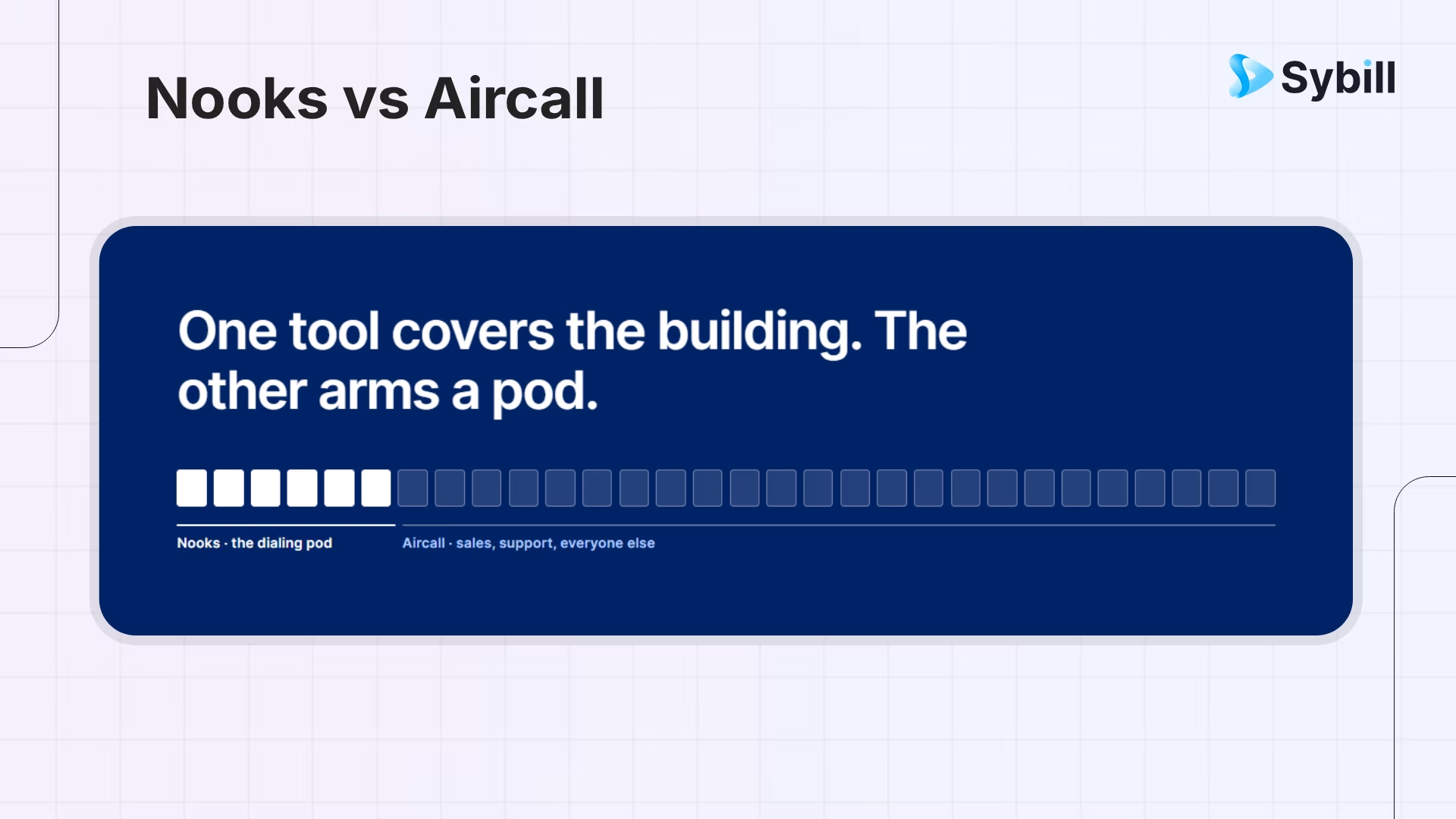
Nooks and Aircall both put sales calls in the cloud, at prices roughly an order of magnitude apart, and the gap is the honest summary of what each is. Nooks is the premium parallel-dialing specialist: multiple simultaneous lines, AI screening voicemails and dead numbers, and a virtual salesfloor, quote-priced with third-party reports putting list around $5,000 per user per year. Aircall is the workhorse cloud phone for sales and support: a power dialer, CRM screen pops, queue mechanics, and a very large integration catalog, published at $30 to $50 per user per month. One is a department's instrument; the other is infrastructure two teams share.
No: they overlap on exactly one workflow (outbound calling from lists) and diverge everywhere else. Nooks is an outbound specialist built for SDR floors measured in conversations per hour: parallel dialing, salesfloor coaching, signal-driven lists. Aircall is a business phone system for customer-facing teams: sales and support sharing queues, routing, and a phone that snaps into the CRM and helpdesk. The price gap is not a discount; it is two different products priced for two different jobs.
Frame first, as always in this series: evaluating Aircall as a volume machine finds a competent one-line power dialer where you wanted five parallel lines, and evaluating Nooks as a company phone finds a premium instrument that does not want to route your support tickets. The genuinely contested zone is a sales team with real outbound volume deciding whether the specialist's throughput justifies the specialist's posture, and that zone is where the rest of this post lives. The mode mechanics behind it (parallel versus power, and their trade-offs) are mapped in our dialer guide.
Nooks, structurally: parallel dialing works multiple lines at once and routes the first live human to the rep, AI filters the voicemails and dead numbers that eat a manual hour, and the salesfloor recreates the bullpen (live listening, shared energy, coaching in the moment) that remote SDR teams lost. Aircall's power dialer is a genuine list-working tool, one line at a time, with the screen-pop context Nooks connects sometimes lack. At high cold volume, the specialist nets more total conversations; at moderate volume, the power dialer covers the motion at a fraction of the cost.
The specialist's taxes, documented rather than rumored: current reviews and SDR communities consistently flag the parallel trade-offs, connection lag on pickups, limited prospect context at the moment of connect, and number-reputation work as a real operating discipline. One mid-market G2 reviewer, Jack B., put the context problem plainly: it can be "difficult to know when I am actively calling or being delivered to voicemail." Independent analyses this year make the same fundamental point: more dials, lower quality per dial, worth it for phone-primary teams and only them. Aircall's corresponding weakness runs the other way: reviewers and current roundups credit its calling workflow while noting its mobile apps have aged, and its advanced intelligence is add-on priced (more below).
The decision mechanics from our Nooks vs Dialpad comparison apply here unchanged: pull a month of call data, look at cold-list dials per rep per day, and let the volume tell you whether parallel machinery would be fed or would idle. Machinery that idles is the most expensive kind, and no opener or call-timing discipline rescues a tool mismatch.
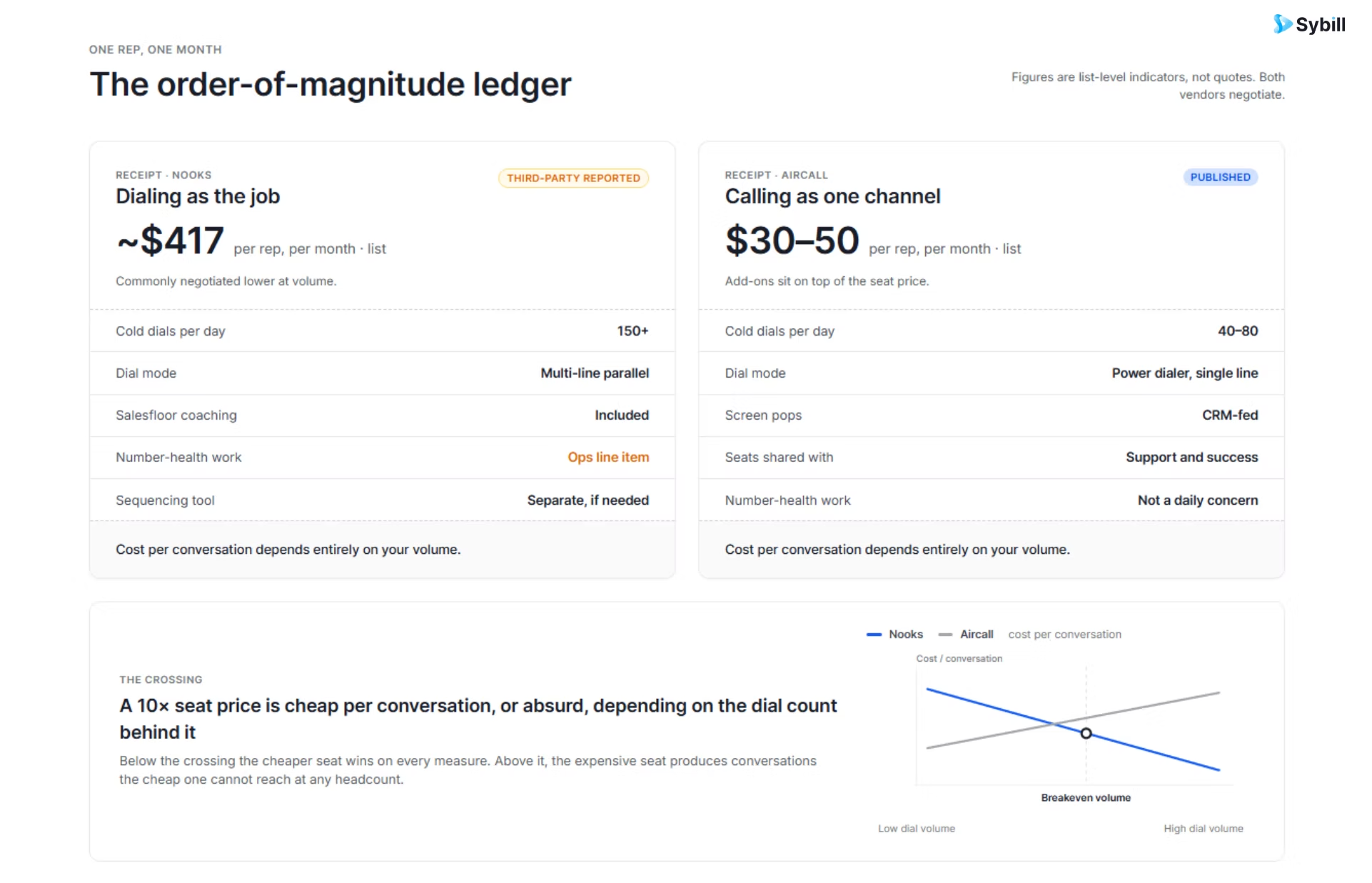
Aircall publishes its pricing: Essentials at $30/user/month billed annually (40 monthly) and Professional at $50 (70 monthly), with a three-license minimum on both, so the real entry point is $90 per month, plus a quote-based Custom tier that requires 25 licenses. The add-ons matter for sales teams: AI Assist Pro (real-time transcription and live coaching) runs $49 per license per month, nearly a second seat, and Analytics+ adds $15.
Nooks publishes nothing; every deal is a demo and a custom quote. Third-party buyer reports (OutboundSalesPro, SalesHive, and MarketBetter's 2026 analyses) consistently put list price around $5,000 per user per year, roughly $417 per month, while Vendr's anonymized deal data shows negotiated effective rates landing meaningfully lower, in the $65 to $150+ per user per month range depending on tier, seats, and term. Phone numbers are provisioned separately (roughly $10 to $15 per number per month via Twilio, per OutboundSalesPro), and number pools are a real line item at parallel volume.
The honest math, then: at negotiated mid-range rates, a Nooks seat costs two to four Aircall Professional seats, and at reported list it costs eight-plus. That multiple is rational for a floor whose entire output is cold conversations, and irrational for a team whose power-dialer volume never strains one line. Price both against your dial counts, not against each other.
Review platforms tell a consistent story on both sides. Nooks holds a 4.8 out of 5 on G2 across 1,202 reviews, skewing mid-market, with time savings the most-mentioned positive and G2's own review summary highlighting its contact-quality intelligence, such as flagging cold numbers unlikely to pick up. One current G2 reviewer, credits it as "faster than Orum in dialing" with an easy initial setup. The recurring criticisms are the parallel taxes above plus the price, with independent reviewers concluding it is excellent for phone-heavy teams and an expensive piece of a larger puzzle for multichannel motions.
Aircall sits in the 4.4 range on G2 across a similarly large review base, with standout sub-scores for ease of use (9.2) and quality of support (8.6), and G2's review summary crediting its call routing and CRM synchronization for improving daily operations, particularly among small businesses. The recurring criticisms in current roundups: aging mobile apps, the add-on tax on intelligence features, and the three-seat floor that makes the advertised entry price slightly theoretical. Neither product's critics contradict its fans; they describe the same tool from a different team's chair, which is exactly the point of this comparison.
Aircall's scope is its quiet advantage: it is frequently bought jointly by sales and support, amortizing one contract across two departments, with queues, IVR, and a marketplace of one-click integrations that snap into the engagement layer and helpdesk alike. Nooks' scope is deliberately the SDR floor, now extending into sequencing and prospecting from that core. And the coexistence configuration is real here too: companies run Aircall as the customer-facing phone while the SDR floor runs Nooks for blitzes, the same two-contract logic as every pairing in this series, justified only by genuine volume.
Whichever side wins, the series-standard pilot obligations travel along: recording consent configured during the pilot rather than after, CRM logging checked beyond activity counts, and number-health monitoring treated as weekly work on the parallel side. Smaller teams choosing one tool should match it to their dominant pattern per the SDR playbook principle: below a certain volume, targeting beats throughput, and the cheaper phone plus better lists outperforms the premium instrument.
Choose Nooks if: cold conversations per hour is the metric your floor lives on and your dial volume genuinely feeds parallel machinery; the salesfloor matches how you run and ramp reps; and you accept both the operating obligations and a specialist's price, negotiated hard, because the third-party deal data says negotiation moves it a lot. The shape: a phone-first SDR operation buying its core instrument.
Choose Aircall if: your outbound is real but moderate, and one intelligent line with screen pops covers it; sales and support can share the contract; your stack rewards its integration catalog; and $30 to $50 a seat (plus chosen add-ons) beats a premium instrument your volume would starve. The shape: a customer-facing org buying its phone, with solid outbound included.
The tiebreaker, empirical as this series demands: your cold-dial volume per rep per day, from last month's logs. The order-of-magnitude price gap means the breakeven is not subtle; teams below meaningful daily cold volume buy Aircall and invest the difference in lists and coaching, and teams well above it buy Nooks and staff the number-health discipline. The awkward middle pilots both for two weeks and lets cost per conversation, actually computed, make the call.
Premium instrument or shared phone, the conversations are the asset. Sybill captures every Nooks and Aircall call and turns it into summaries, CRM updates, follow-ups, and deal intelligence, automatically, on either side or both. Get started for free with Sybill.
Series refrain, priced edition: neither a $5,000 seat nor a $30 seat tells you what is happening to the account. The objection pattern hardening across this month's cold calls, the competitor surfacing in every enterprise conversation, the champion who sounded different on Thursday: these are cross-conversation signals, and they are invisible to parallel throughput and power-dialer pacing alike, because they live in what was said, not how fast the dialing went.
Sybill has analyzed around 33 million sales conversations across the dialer and meeting platforms it connects to, and the capture layer is identical on both sides of this page: every call becomes a summary, CRM fields that fill themselves, a follow-up in the rep's voice, captured commitments, and account-level intelligence (risk flags, queryable history, coaching signals) feeding the next list and the next prioritization pass. The full integration list covers both vendors, which is what buys this post its neutrality at either price point.
Practical consequence, unchanged: settle the conversation layer independently; it travels intact whether you buy the instrument, the phone, or eventually both.
For phone-first SDR floors with the volume to feed it, Nooks is the sharper buy at a defensible premium, negotiated properly and operated with the number-health discipline it demands. For most sales teams, whose outbound is real but not the whole job, Aircall's published $30 to $50/seat with a power dialer, screenpops and a shared sales - support contract is the rational answer, and buying a $417/month instrument for a 20-dial-a-day motion is the most expensive way to look outbound-serious. The price gap is the product gap; match it to your volume and stop translating between them.
Your call logs already know which one you are.
Get started for free with Sybill or book a demo and make every call count on either one.
At high daily cold volume, Nooks: parallel dialing, AI voicemail screening, and the virtual salesfloor are built for conversations per hour, priced accordingly. At moderate volume, Aircall's power dialer with CRM screen pops covers the motion at $30 to $50 per seat, and the saved budget buys better lists and coaching.
As of August 2026: Aircall publishes $30 (Essentials) to $50 (Professional) per user monthly on annual billing, three-seat minimum, with AI Assist Pro at $49 and Analytics+ at $15 as add-ons. Nooks is quote-only; third-party buyer reports put list around $5,000 per user per year, with anonymized deal data showing negotiated rates of $65 to $150+ monthly.
As of August 2026, Nooks holds 4.8/5 on G2 (1,202 reviews) with time savings the most-cited positive and connection lag, connect context, and price the recurring criticisms. Aircall sits around 4.4/5 with standout ease-of-use (9.2) and support (8.6) scores, with aging mobile apps and add-on costs the common complaints.
Yes, and the scopes barely overlap: Aircall as the customer-facing phone system shared by sales and support, with Nooks running the SDR floor's high-volume blitzes. The two-contract configuration is justified when genuine cold-call volume amortizes the specialist alongside the shared phone.
Yes, Sybill integrates natively with both, capturing every call on either platform (or both together) and turning it into summaries, CRM updates, follow-ups, and cross-deal intelligence automatically. The conversation layer works identically across configurations, so the calling-machinery decision can be made purely on volume and fit.
At high daily cold volume, Nooks: parallel dialing, AI voicemail screening, and the virtual salesfloor are built for conversations per hour, priced accordingly. At moderate volume, Aircall's power dialer with CRM screen pops covers the motion at $30 to $50 per seat, and the saved budget buys better lists and coaching.
As of August 2026: Aircall publishes $30 (Essentials) to $50 (Professional) per user monthly on annual billing, three-seat minimum, with AI Assist Pro at $49 and Analytics+ at $15 as add-ons. Nooks is quote-only; third-party buyer reports put list around $5,000 per user per year, with anonymized deal data showing negotiated rates of $65 to $150+ monthly.
As of August 2026, Nooks holds 4.8/5 on G2 (1,202 reviews) with time savings the most-cited positive and connection lag, connect context, and price the recurring criticisms. Aircall sits around 4.4/5 with standout ease-of-use (9.2) and support (8.6) scores, with aging mobile apps and add-on costs the common complaints.