Find us at booth #83, join us for a harbor side happy hour, or catch Gorish’s talk.

Sept, 16-18 > Learn more

%20(1).avif)
Mamta Tainwala

August 25, 2026
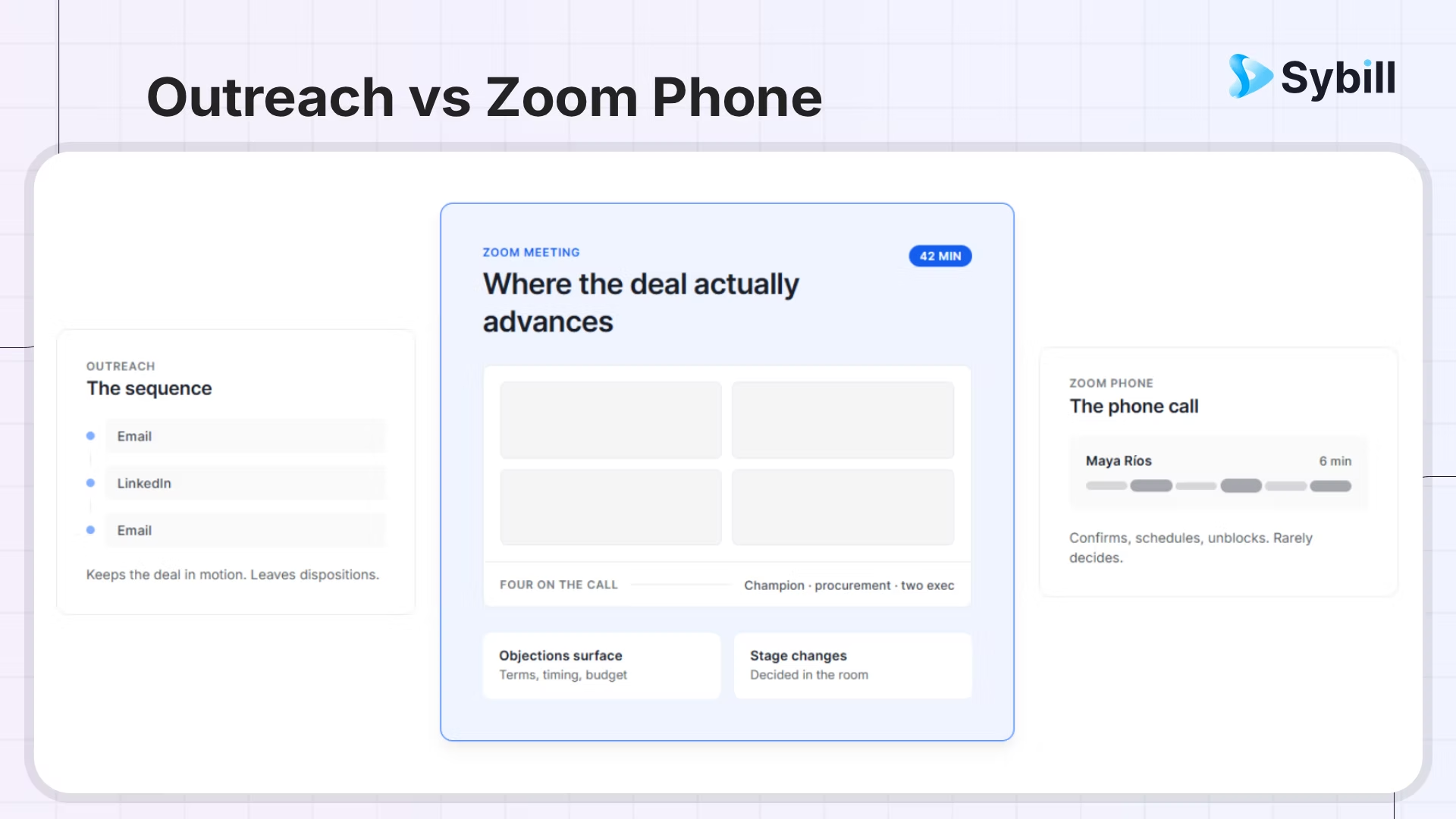
Outreach and Zoom Phone occupy opposite ends of the sales stack's price sheet, and there is a third character standing between them that neither comparison page mentions: the Zoom meeting. Outreach is the engagement platform, quote-priced at reported seats of $100 to $160 per user per month, orchestrating sequences with calling metered on top. Zoom Phone is the lightest credible business phone, from $10.50 per user per month, with AI notes included and no sales dialer in its plans. And for most B2B teams, the conversations that actually advance deals happen on neither: they happen in Zoom meetings, which turns this comparison from a versus into a map.
The map, drawn honestly, from the usual seat: Sybill integrates with both, sees both platforms' conversations daily, and tilts for neither.
Not remotely. Outreach is a revenue team's system of record for multichannel outbound; Zoom Phone is a calling utility attached to the meetings platform your company already runs. They meet at exactly one seam, the sales team's phone calls, and even there the roles differ: Outreach Voice is a sequence-native dialer, while Zoom Phone is the phone itself, with no list-working machinery, a gap it shares with its sibling matchup in Nooks vs Zoom Phone.
The useful frame is three conversation surfaces, not two products:
Buyers who frame this as Outreach-versus-Zoom-Phone usually discover they were deciding two smaller questions: whether the outbound motion justifies an engagement platform at all, and which surface should carry the dials.
Zoom Phone publishes the lightest entry in business telephony:
Outreach publishes nothing. The consistent picture from buyer and procurement analyses:
Two budget observations fall out. First, a Zoom Phone seat is a rounding error next to an Outreach seat, so where both are warranted, coexistence is budget-trivial and the only real decision is workflow. Second, the AI economics run opposite directions: Zoom bundles its intelligence into the seat, Outreach meters its AI by credits on top of a premium seat.
It follows the motion's shape, and the structural facts make the split clean:
The honest caveats, one per side, from the review record:
And on either surface, the craft outranks the carrier: timing, openers, and email that earns replies move the numbers more than routing ever will.
Here is the angle unique to this pairing: the conversations that decide B2B deals are disproportionately the scheduled meetings, and those already run on Zoom at most companies, whichever way this comparison goes. Outreach's job ends at booking them; Zoom Phone's job is adjacent to them. Neither tool's intelligence spans all three surfaces, and the deal, inconveniently, moves across all of them, dropping signals at every seam:
Deals turn on exactly these arcs, and per-surface AI, bundled or metered, cannot see an arc. The operational hygiene spans the seam too: recording consent configured wherever capture happens, and CRM logging audited for meaning rather than activity counts on every surface.
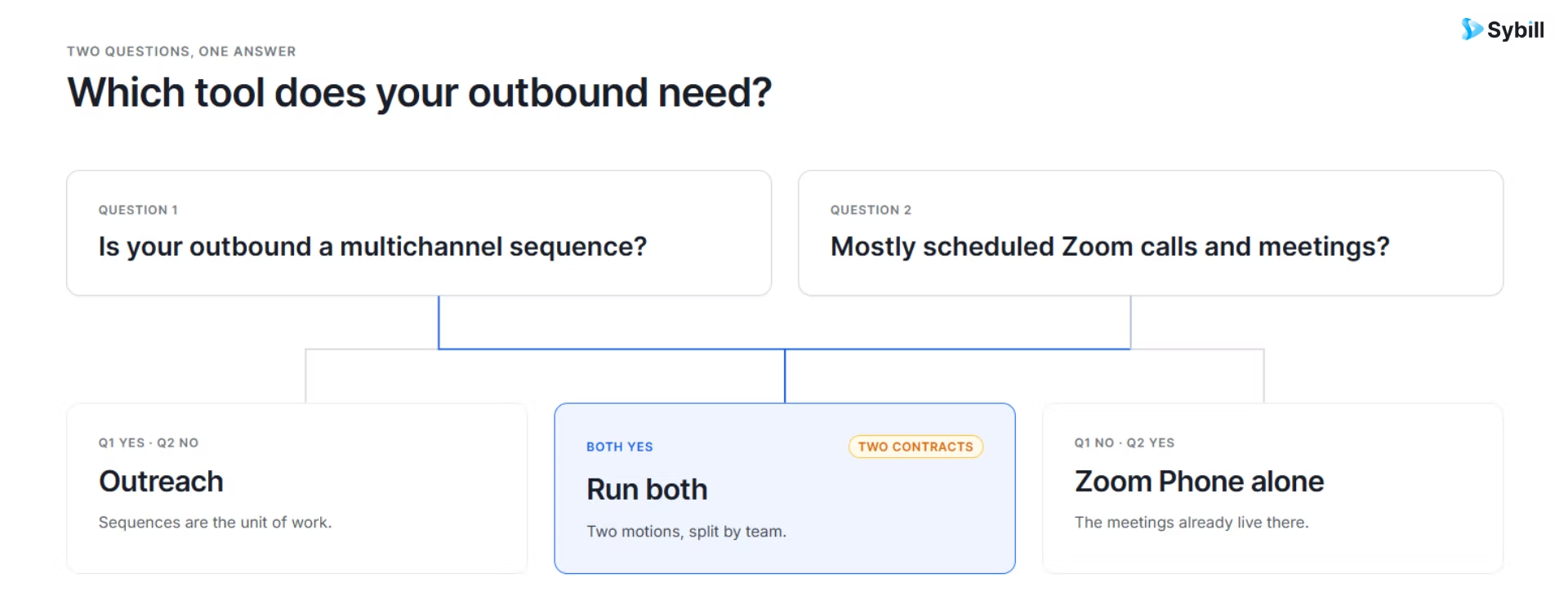
Choose Outreach if:
Choose Zoom Phone (alone) if:
Run both if:
One design note for the run-both case, because it is where most readers land: the riskiest handoff is the sequence-to-meeting seam. A prospect who answered a sequenced call and booked a demo arrives at that Zoom meeting with context the meeting owner often never sees, because it lives in cadence notes rather than the CRM record. Make the booking step write its context forward (what was discussed, what was promised, what objection surfaced) and the seam stops leaking before any intelligence layer is involved.
The tiebreaker: split last quarter's outbound touches by channel, and separately count what share of deal-advancing conversations were scheduled meetings. A motion that is mostly meetings booked by light touch does not need a $100 seat to orchestrate it; a motion that lives on multichannel pursuit does, and no $10.50 phone will substitute.
Sequence, call, or meeting, the conversation is the asset. Sybill captures every Outreach and Zoom Phone call, and the Zoom meetings between them, turning all of it into summaries, CRM updates, follow-ups, and deal intelligence, automatically. Get started for free with Sybill.
This pairing's whole geography is seams: the sequence knows the touches, the phone knows the calls, the meetings platform knows the meetings, and the deal moves across all three, shedding signal at every boundary. Per-surface AI cannot follow it; that is not a criticism of either vendor, it is the shape of the problem.
Sybill has analyzed around 33 million sales conversations across the engagement, dialer, and meeting platforms it connects to, and it is built for exactly this geography. Every conversation on every surface here becomes a summary, CRM fields that fill themselves, a follow-up in the rep's voice, captured commitments, and account-level intelligence (risk flags, queryable history, coaching signals) that follows the deal across the seams the tools cannot cross. The full integration list covers both vendors and the meetings besides.
Solve the seams once, and this page's decision relaxes into what it really is: a workflow split between a system of record and a utility, both replaceable, with the intelligence that outlives them both.
For teams with a genuine multichannel outbound motion, Outreach is the answer and the price is the price: seats, implementation, credits, and minutes, bought with an operator attached. For teams whose deals run on scheduled Zoom conversations booked with light touch, Zoom Phone alone is the quietly correct and dramatically cheaper answer, and reaching for an engagement platform first is buying orchestration before having anything to orchestrate. Most scaled teams land on both; the money question is trivial, and the seams question is not.
Map the surfaces. Then staff each one honestly.
Get started for free with Sybill or book a demo and make every conversation count on all of them.
They serve different surfaces: Outreach is the engagement platform for teams whose outbound runs on multichannel sequences (reported $100 to $160 per user monthly),while Zoom Phone is the lightest credible business phone ($10.50 to $24.50 published) for teams whose calls are mostly scheduled or ad hoc. Audit your motion's shape; many scaled teams correctly run both.
Zoom Phone publishes $10.50 per user monthly (metered, annual billing) to roughly $15 to $16 for Unlimited and $24.50 for its Business Plus bundle, with AI Companion included and no trial on Phone plans. Outreach is quote-only: buyer analyses report roughly $100 to $160 per user monthly plus implementation fees, an AI-credits layer, and usage-priced Voice calling.
No, Zoom Phone's plans include no sales dialer: outbound list-working is manual click-to-call, and advanced dialing lives in Zoom's separate contact-center products. Teams running sequenced outbound typically dial through their engagement platform's dialer, such as Outreach Voice, or a dedicated dialer alongside the phone.
Yes, and most scaled B2B teams effectively do: Outreach orchestrates the sequences and usually carries the sequenced dials through Voice, Zoom Phone handles the team's scheduled and inbound calling, and the deal's meetings stay on Zoom. The phone seat's marginal cost beside a platform seat is negligible; the workflow boundary is the real design work.
Yes, Sybill integrates natively with both, and with Zoom meetings besides, capturing every conversation across the sequence, the phone, and the meeting, and turning all of it into summaries, CRM updates, follow-ups, and cross-deal intelligence automatically. The conversation layer follows the deal across the surfaces the tools cannot cross.
They serve different surfaces: Outreach is the engagement platform for teams whose outbound runs on multichannel sequences (reported $100 to $160 per user monthly),while Zoom Phone is the lightest credible business phone ($10.50 to $24.50 published) for teams whose calls are mostly scheduled or ad hoc. Audit your motion's shape; many scaled teams correctly run both.
Zoom Phone publishes $10.50 per user monthly (metered, annual billing) to roughly $15 to $16 for Unlimited and $24.50 for its Business Plus bundle, with AI Companion included and no trial on Phone plans. Outreach is quote-only: buyer analyses report roughly $100 to $160 per user monthly plus implementation fees, an AI-credits layer, and usage-priced Voice calling.
No, Zoom Phone's plans include no sales dialer: outbound list-working is manual click-to-call, and advanced dialing lives in Zoom's separate contact-center products. Teams running sequenced outbound typically dial through their engagement platform's dialer, such as Outreach Voice, or a dedicated dialer alongside the phone.