Find us at booth #83, join us for a harbor side happy hour, or catch Gorish’s talk.

Sept, 16-18 > Learn more

%20(1).avif)
Mamta Tainwala

August 23, 2026
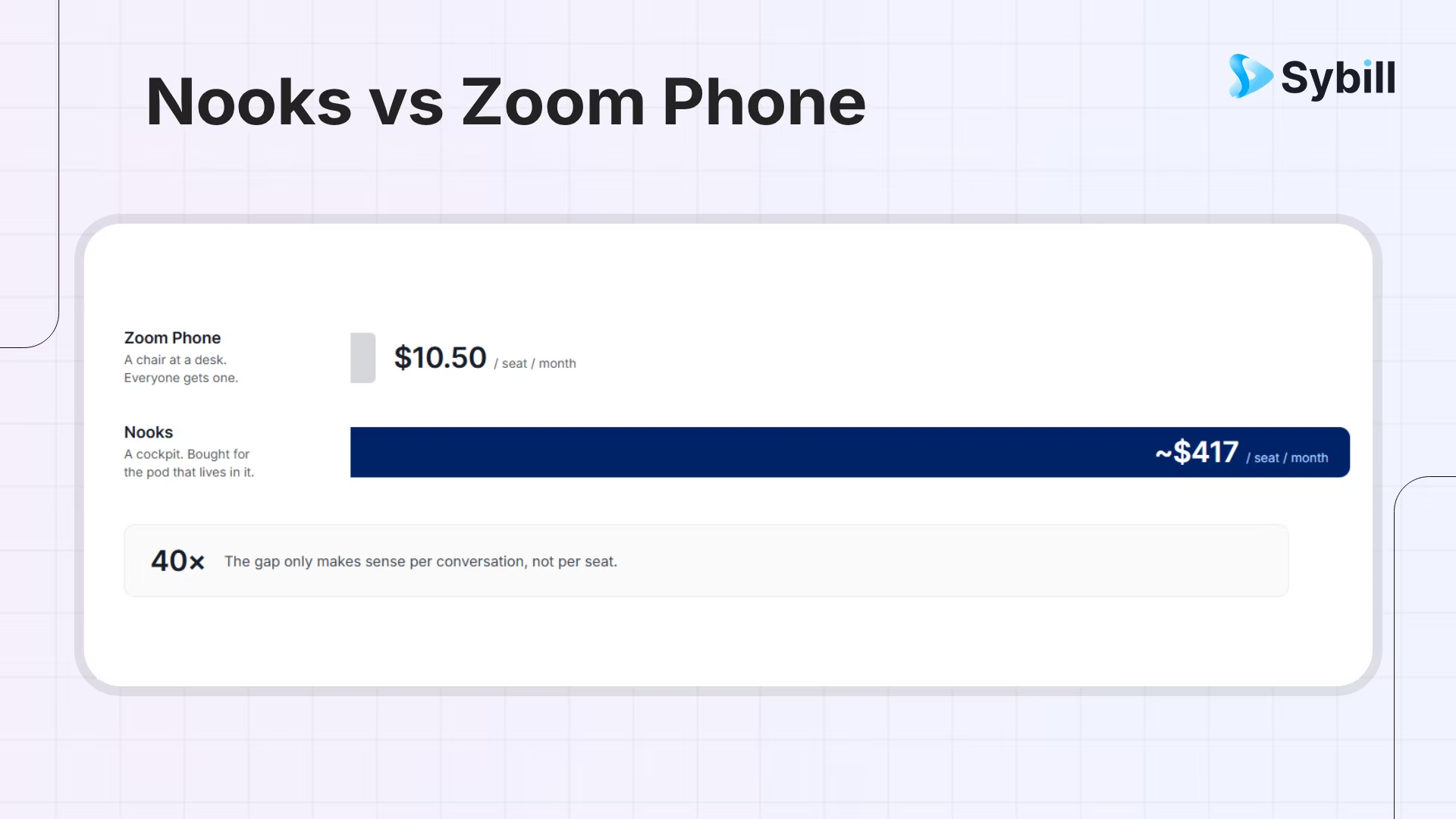
Nooks and Zoom Phone sit roughly forty-fold apart in price at list, and the gap is the most honest thing about this comparison. Zoom Phone is the lightest credible business phone in the category: from $10.50 per user per month, calling inside the app your team already meets in, AI notes included. Nooks is the premium parallel-dialing instrument, reported around $5,000 per user per year at list, built to multiply an SDR floor's cold conversations. Zoom Phone's plans include no sales dialer, and Nooks is not a phone system, so this is architecture, not versus.
What the 40x actually buys, from the usual seat: Sybill integrates with both, sees both platforms' calls daily, and tilts for neither.
No, and one line proves it each way: Zoom Phone's plans ship no sales dialer at all, and Nooks ships nothing but the dialing. A phone without a dialer, and a dialer without a phone. The only question a head-to-head can answer is which layer you are actually shopping for.
The shortlist happens anyway because both products touch the same SDR's day:
Like our Nooks vs RingCentral breakdown, the products are layers, not rivals. Everything below is about pricing the layers honestly.
Zoom Phone publishes the lightest entry in business telephony. The plans:
Nooks publishes nothing; every deal is a demo and a quote. The third-party picture:
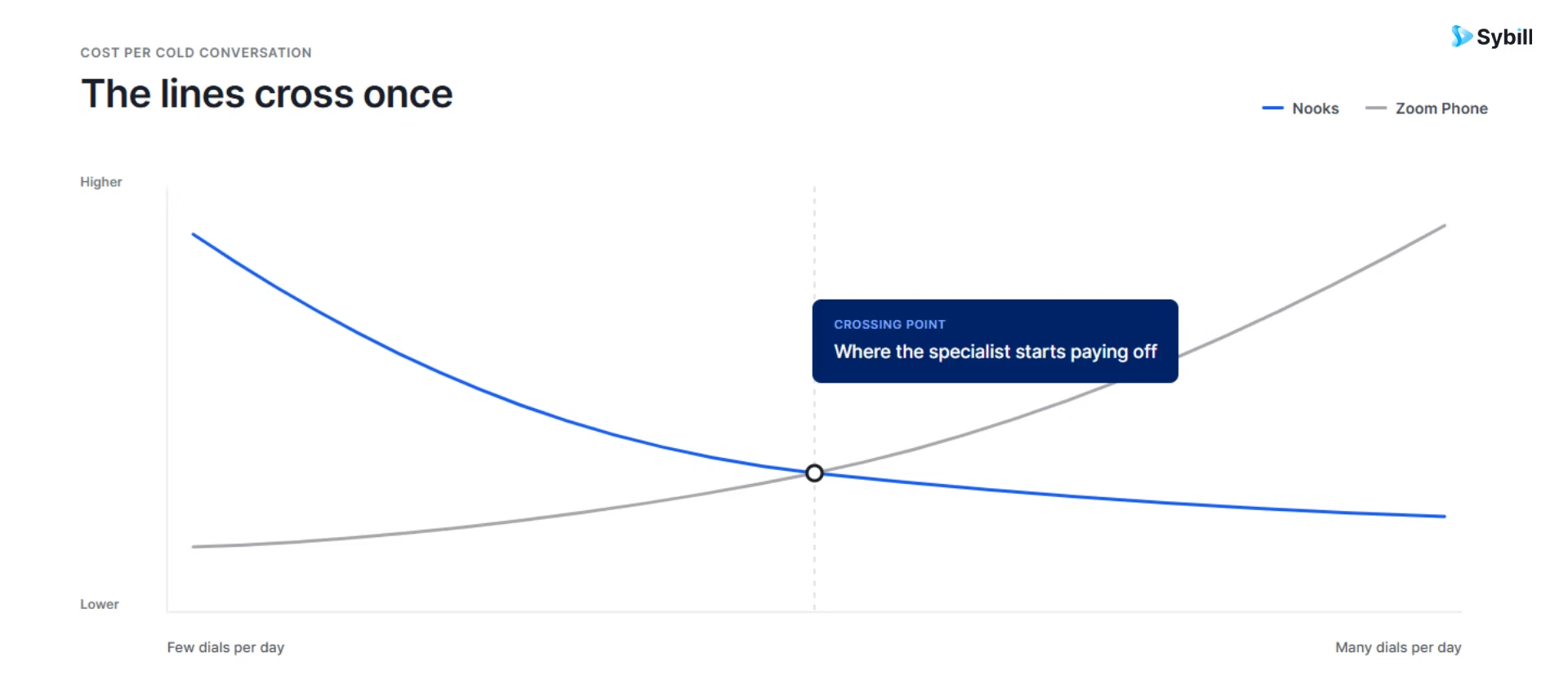
The math the 40x teaches: these are not alternatives at different prices; they are a utility bill and a production machine. The only comparison that means anything is cost per cold conversation at your actual volume. A rep making fifteen outbound calls a week makes the Nooks seat absurd; an SDR floor living on cold lists makes the manual-dialing hours behind a cheap phone seat the true expense. Price the conversation, not the seat.
Zoom's review picture comes with a split worth reporting honestly, because the two sites review different things:
Nooks holds 4.8 out of 5 on G2 across 1,202 reviews, skewing mid-market. The pattern:
The two products' complaint lists share nothing, which is the review data agreeing with the architecture: different layers, different failure modes.
For Zoom-native revenue teams, this stack is close to default architecture. Customer meetings already run on Zoom, Zoom Phone adds scheduled and inbound calling for the whole team at the category's lightest price, and Nooks runs the SDR floor's parallel blitzes as the dedicated instrument. Two contracts, sized to two workloads.
The boundary questions that make it work:
Choose Nooks (as your dialing layer) if:
Choose Zoom Phone (as your phone layer) if:
Stack them if:
The tiebreaker is empirical: compute cost per cold conversation at your actual volume, counting manual-dialing hours as rep time on the cheap side and the negotiated seat plus number pools on the premium side. A 40x sticker gap collapses into a single crossover point on that chart, and your call logs already know which side of it you live on.
Ten-dollar seat or four-hundred-dollar seat, the conversations are the asset. Sybill captures every Nooks and Zoom Phone call, and your Zoom meetings besides, turning all of it into summaries, CRM updates, follow-ups, and deal intelligence, automatically. Get started for free with Sybill.
Here is what neither end of the 40x buys: memory across the account. Zoom's included AI notes cover the call that just ended. Nooks' instrumentation covers the blitz. And the signals deals actually turn on live across conversations, where no phone seat or dialing seat is looking:
Sybill has analyzed around 33 million sales conversations across the meeting and dialer platforms it connects to, and it sits identically beneath both layers here, with a bonus specific to this pairing: on the Zoom side it captures the meetings themselves, where most B2B deals actually advance. Every call and meeting becomes a summary, CRM fields that fill themselves, a follow-up in the rep's voice, captured commitments, and account-level intelligence (risk flags, queryable history, coaching signals) spanning the layers the way deals actually do. The full integration list covers both vendors.
Three layers, priced honestly: the phone that carries calls, the instrument that multiplies the cold ones, and the intelligence that remembers what all of them meant.
There is no versus at a 40x spread; there is a budget. Zoom Phone is the right phone layer for Zoom-native teams, cheapest in the category with AI notes included, bought with eyes open about the metered plan's outbound economics and the billing complaints. Nooks is the right dialing layer for floors whose list volume feeds it, negotiated hard and operated with discipline. The only mistake available here is the category one: expecting the ten-dollar seat to run blitzes, or the four-hundred-dollar seat to be a phone.
Your call logs have already done the math.
Get started for free with Sybill or book a demo and make every call count on either layer.
For high-volume cold calling, Nooks, categorically: parallel dialing, AI call screening, and the virtual salesfloor are the entire product. Zoom Phone's plans include no sales dialer, so outbound list-working is manual; it is the phone layer, best for Zoom-native teams' scheduled, inbound, and moderate outbound calling.
No, Zoom Phone's plans do not include a sales dialer; working an outbound list means manually initiating each call, and advanced dialing capabilities live in Zoom's separate contact-center products. Teams with meaningful list volume should evaluate dedicated dialers alongside it rather than expecting the phone plans to carry an outbound motion.
Zoom Phone runs from $10.50 per user monthly (US & Canada Metered, annual billing, outbound billed per minute) through roughly $15 to $16 for Unlimited and up to $24.50 for the Business Plus bundle, with no free trial on Phone plans. Nooks is quote-only, with third-party reports around $5,000 per user per year list and negotiated rates of $65 to $150+ monthly.
Zoom's platform holds 4.5/5 across 56,000+ G2 reviews, with Zoom Phone users crediting the included AI Companion notes; billing and renewal complaints cluster on Trustpilot, and current reviewers flag call quality on weak networks. Nooks holds 4.8/5 on G2 (1,202 reviews), with time savings most cited and the parallel-dialing trade-offs the recurring criticisms.
Yes, Sybill integrates natively with both, and with Zoom meetings besides, capturing every conversation across layers and turning it into summaries, CRM updates, follow-ups, and cross-deal intelligence automatically. The conversation layer spans the phone, the dialer, and the meetings the way deals actually do.
For high-volume cold calling, Nooks, categorically: parallel dialing, AI call screening, and the virtual salesfloor are the entire product. Zoom Phone's plans include no sales dialer, so outbound list-working is manual; it is the phone layer, best for Zoom-native teams' scheduled, inbound, and moderate outbound calling.
No, Zoom Phone's plans do not include a sales dialer; working an outbound list means manually initiating each call, and advanced dialing capabilities live in Zoom's separate contact-center products. Teams with meaningful list volume should evaluate dedicated dialers alongside it rather than expecting the phone plans to carry an outbound motion.
Zoom Phone runs from $10.50 per user monthly (US & Canada Metered, annual billing, outbound billed per minute) through roughly $15 to $16 for Unlimited and up to $24.50 for the Business Plus bundle, with no free trial on Phone plans. Nooks is quote-only, with third-party reports around $5,000 per user per year list and negotiated rates of $65 to $150+ monthly.