Find us at booth #83, join us for a harbor side happy hour, or catch Gorish’s talk.

Sept, 16-18 > Learn more

%20(1).avif)
Mamta Tainwala

January 31, 2026
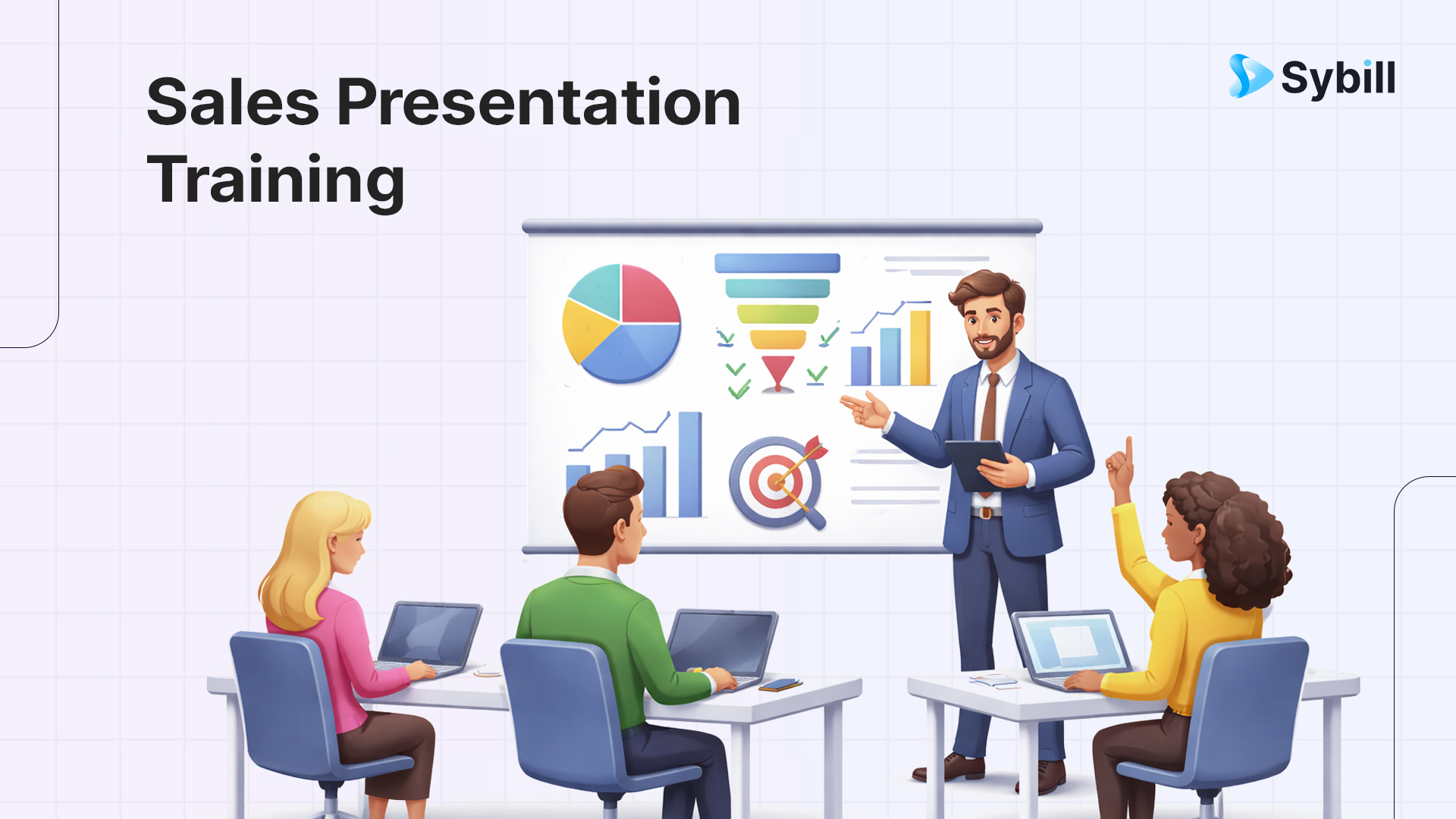
The quick wins: Stop leading with product features. Open with the prospect's pain in their words, pause after key points to let information land, and aim for 40-60% talk time (you're talking too much if it's higher). Record every presentation and review which slides lose attention. The game-changer: Use AI to analyze buyer engagement patterns across all your demos. You'll discover that prospects zone out during technical deep-dives but lean in during customer stories, or that your pricing slide consistently triggers questions you should answer proactively. Bottom line: Reps with structured presentation training close 70% more deals. The difference isn't charisma, it's knowing what actually resonates with your specific buyers and adapting in real-time.
Remember that scene in The Office where Michael Scott delivers his legendary "Diversity Day" presentation? The awkward pauses, the cringe-worthy examples, the complete disconnect from his audience? Yeah, we've all sat through sales presentations that felt exactly like that.
Most sales presentations are terrible. Not because reps lack passion or product knowledge, but because they've never received proper sales presentation training. They're winging it with outdated slide decks, generic value propositions, and zero awareness of whether their message is landing or falling flat.
The stakes are higher than ever. Your prospects are sitting through dozens of demos every quarter. They're multitasking during your presentation. They've already researched your competitors. And they'll make a judgment call about your solution in the first three minutes of your pitch.
This is where presentation skills training becomes your secret weapon. Not the kind that teaches you to stand up straight and make eye contact (though that helps). We're talking about training that helps you understand buyer psychology, leverage engagement data, and adapt your delivery in real-time based on what's actually resonating.
Let's dive into how modern sales presentation training is evolving beyond PowerPoint 101 and transforming how top-performing reps win deals.
The difference between a trained presenter and an untrained one isn't subtle. According to recent data, sales reps who undergo structured sales coaching close 70% more deals than their uncoached counterparts. That's not a marginal improvement, it's a complete game-changer.
Here's what effective presentation skills training actually delivers:
Confidence that doesn't crumble under pressure. When a prospect throws an unexpected objection during your demo, training ensures you don't freeze. You pivot smoothly, address the concern, and keep the momentum going. This isn't innate talent, it's a learnable skill that comes from proper coaching for effective presentation skills.
The ability to read the virtual room. In today's hybrid selling environment, you can't rely on traditional body language cues. Modern presentation training teaches reps to pick up on digital engagement signals: Are prospects asking questions? Taking notes? Or are they clearly checking email during your product demo?
Data-driven improvement, not guesswork. The best sales training programs now incorporate AI-powered analysis that shows you exactly which slides lost attention, which talking points generated questions, and which parts of your presentation actually moved the deal forward. This transforms vague "presentation feedback" into actionable intelligence.
Faster ramp time for new hires. Without structured training, new sales reps spend months figuring out what works through painful trial and error. With it, they can learn from successful presentations across the entire team and start delivering confident demos in weeks, not quarters.
Think about it this way: you wouldn't send a surgeon into an operating room without extensive training and supervision. Yet companies regularly throw new sales reps into high-stakes presentations with nothing more than a product slide deck and a "good luck." That's not a sales strategy, it's a recipe for lost revenue.
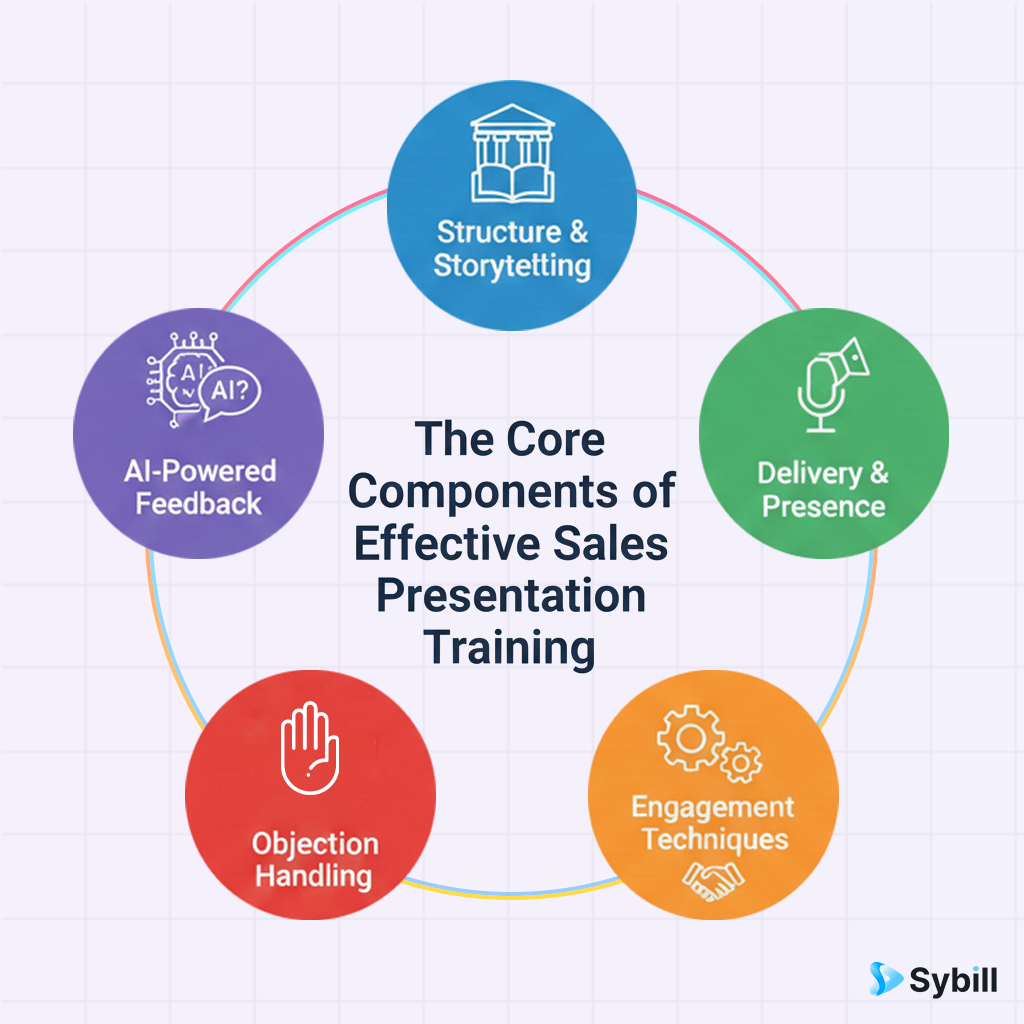
Presentation skills training has evolved way beyond "speak clearly and smile." Here's what a comprehensive training program actually needs to cover:
Your presentation structure makes or breaks engagement before you even open your mouth. The best sales presentations follow a proven narrative arc that mirrors how buyers actually think:
Start with their reality, not your solution. Too many reps jump straight into product features. Instead, open by articulating the prospect's current pain points in their own words. When you nail this, prospects think, "This person actually gets it."
Example opening: "Most sales teams we talk to are drowning in admin work. They're spending 3+ hours daily on CRM updates, follow-up emails, and meeting notes instead of actually selling. Sound familiar?"
Build tension around the cost of inaction. Before showcasing your solution, help prospects viscerally understand what happens if they do nothing. This isn't fear-mongering, it's creating urgency around a real business problem.
Introduce your solution as the inevitable answer. By the time you present your product, the audience should be thinking, "Okay, how does this solve our problem?" not "Why should I care about this tool?"
Use customer stories, not feature lists. The presentation skill that separates great reps from good ones? Storytelling. Instead of rattling off capabilities, share how similar companies overcame similar challenges. This makes your solution tangible and believable.
For a deeper dive into structuring compelling sales narratives, check out our guide on perfect discovery call structure, which applies the same storytelling principles to different sales scenarios.
Here's where traditional public presentation skills training meets sales-specific requirements:
Pace and timing matter more than speed. Nervous reps talk too fast. Bored audiences tune out slow speakers. Training helps you find the sweet spot: speaking with conviction at a pace that allows information to land without losing momentum.
Strategic pauses create impact. After making a key point, pause. Let it sink in. This gives prospects mental space to process and often prompts valuable questions.
Vocal variety keeps attention. Monotone delivery is the kiss of death in virtual presentations. Training teaches you to modulate your voice to emphasize important points, build excitement, and maintain engagement.
Screen sharing without losing connection. In virtual demos, many reps make the fatal mistake of hiding behind their screen share. Effective training teaches you how to maintain presence even when showing product features, whether through picture-in-picture video or strategic camera time.
The days of one-way presentation monologues are dead. Today's buyers expect interactive, conversational experiences.
Ask diagnostic questions during the presentation. Don't wait until the end for Q&A. Sprinkle strategic questions throughout: "Does this workflow match how your team currently operates?" These checkpoints ensure you're staying relevant and reveal important concerns early.
Create interactive moments. Live demos beat static slides every time. Let prospects drive the conversation. Ask them to share specific use cases. This transforms your presentation from a lecture into a collaborative problem-solving session.
Read and respond to engagement signals. This is where conversational intelligence becomes crucial. Modern presentation training teaches reps to pick up on verbal and non-verbal cues: Is the prospect leaning in or checking out? Are they asking clarifying questions or waiting for you to finish?
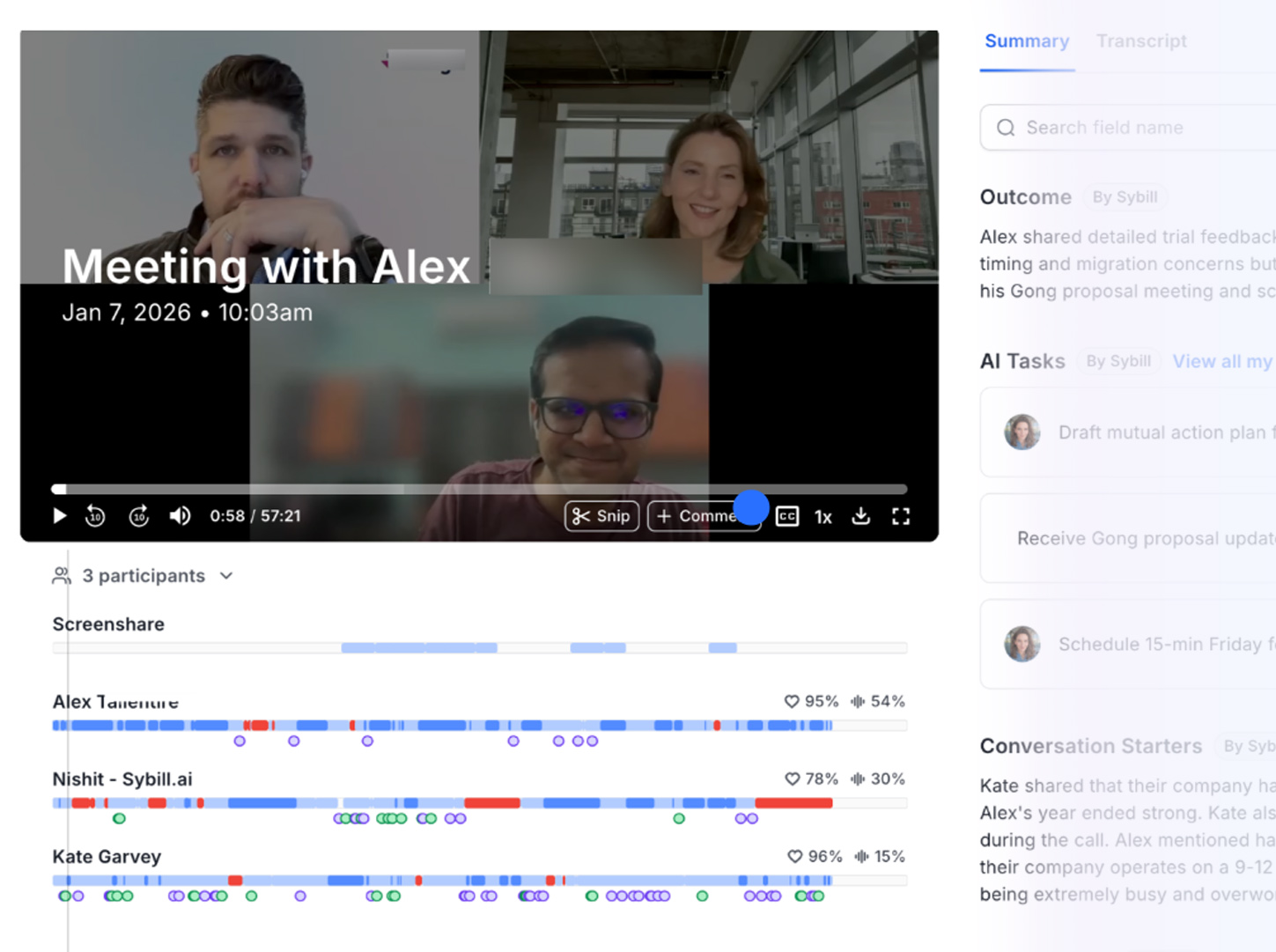
Tools like Sybill's behavioral AI analyze these engagement patterns automatically, showing you exactly when prospects were most interested, confused, or skeptical during your presentation. This data transforms your training from generic tips to specific, actionable improvements.
Get started for free with Sybill and discover which parts of your presentations actually resonate with buyers.
The best presentation training doesn't treat objection handling as a separate skill. It's woven throughout your entire delivery.
Anticipate and preempt common objections. If you know prospects always ask about implementation time, address it proactively during your presentation. This builds credibility and shows you understand their concerns.
Frame objections as opportunities for clarification. When a prospect raises a concern mid-presentation, it's not an interruption, it's engagement. Training teaches you to welcome these moments: "That's a great question, and it tells me you're thinking seriously about how this would work in your environment."
Use proof points strategically. Customer testimonials, case studies, and data points aren't just slide filler. They're objection insurance. Place them strategically to address skepticism before it hardens into a "no."
For specific objection handling frameworks and scripts, our sales battle cards guide provides ready-to-use responses for the most common presentation roadblocks.
Here's where presentation skills training gets transformative. Traditional training relies on manager observation and subjective feedback. AI-powered training provides objective, data-driven insights that pinpoint exactly what needs improvement.
Call analysis shows what actually happened. Instead of relying on your memory of how a presentation went, AI sales coaching platforms record and analyze every demo. You can review specific moments, see engagement patterns, and identify your strongest and weakest segments.
Slide-level engagement data reveals what works. Imagine knowing precisely which slides in your deck captured attention and which ones caused prospects to zone out. This isn't speculation, it's measurable data that shows you where to tighten your presentation.
Talk-to-listen ratios prevent monologuing. One of the biggest presentation mistakes? Talking too much. AI analysis reveals your exact talk-to-listen ratio and compares it to successful presentations, helping you find the right balance.
Sentiment analysis catches what you miss. Did that "sounds good" from your prospect indicate genuine interest or polite disengagement? AI-powered sentiment analysis helps you decode the true emotional state of your audience during different presentation segments.
The integration of AI into sales training represents the biggest shift in how presentation skills are developed. It's moving from art to science, from guesswork to data, from occasional coaching sessions to continuous, personalized improvement.
Theory is useless without implementation. Here's how to build a presentation skills training program that creates lasting behavior change:
Before any training begins, record and analyze current presentation performance. Use tools like Sybill to capture baseline metrics:
This data becomes your North Star. You can't improve what you don't measure.
Trying to master every presentation technique simultaneously is overwhelming. Break training into progressive modules:
Month 1: Foundation and Structure
Month 2: Engagement and Delivery
Month 3: Advanced Skills and Personalization
Role-playing with colleagues feels artificial. Instead, create practice scenarios that mirror actual selling situations:
Record practice presentations to real prospects. Use early-stage prospects or existing customers for product updates. The stakes are lower, but the learning is genuine.
Analyze these recordings together. Weekly sessions where reps review their own presentations (with AI insights) alongside a coach create powerful learning moments. You see what worked, what didn't, and what to try next.
Create a presentation playbook from winners. When a rep nails a particular segment, clip it and add it to your team's training library. This builds a repository of proven techniques that new reps can model.
The problem with traditional training? It happens in isolated sessions disconnected from real selling. AI-powered coaching solves this by providing feedback on every presentation, every time.
Automatic post-call summaries highlight what went well and what needs work. Reps don't wait for the next quarterly review to learn they're talking over prospects or rushing through key value propositions.
Personalized skill development paths emerge from the data. If a rep consistently struggles with handling pricing objections during presentations, the system can serve up specific training modules and successful examples from similar situations.
Manager dashboards show team-wide trends. Sales leaders can identify whether presentation issues are individual (this rep needs help with demos) or systemic (our entire team is losing engagement at the same slide).
Platforms like Sybill integrate this coaching directly into your existing workflow through conversation intelligence that analyzes presentations alongside other sales activities, creating a complete picture of rep performance.
Presentation skills improve through repetition and refinement, not perfection. Celebrate small wins:
Use these victories to reinforce that presentation training is a journey, not a destination.
Let's be blunt: delivering the same presentation training in 2026 that worked in 2016 is malpractice. Technology hasn't just changed how we present, it's transformed what effective presentation training looks like.
Traditional presentation training relied on managers manually observing calls, taking notes, and providing feedback in weekly 1:1s. This approach has three fatal flaws:
Managers can't watch every presentation. With rep loads of 8-12 direct reports, sales managers might observe one presentation per rep per month. That means 95% of presentations never get reviewed or improved.
Human observation is biased and inconsistent. What one manager considers a strong presentation, another might criticize. Personal preferences color feedback, making it hard for reps to know what actually works.
Feedback comes too late to be actionable. If you don't review a presentation until three days later, the learning moment has passed. Reps can't remember specific details or context.
AI-powered sales call recording and analysis solves all three problems:
Every presentation gets analyzed. AI doesn't get tired, doesn't play favorites, and doesn't miss calls. It provides comprehensive feedback on 100% of presentations.
Insights are objective and data-driven. You're not getting someone's opinion on whether you talked too much. You're getting the actual percentage breakdown of talk time, compared to benchmarks from thousands of successful presentations.
Feedback is immediate. Within minutes of ending a call, reps receive insights about engagement patterns, key moments, and areas for improvement while the presentation is still fresh in their minds.
Here's a capability that didn't exist in traditional presentation training: knowing exactly which slides in your deck drive engagement and which ones cause prospects to mentally check out.
Modern platforms analyze visual content alongside audio, tracking:
Attention patterns by slide. Did prospects lean in during your ROI calculator? Did they start multitasking during the technical architecture overview? This data tells you exactly which content resonates and which should be reworked or removed.
Question triggers. Certain slides or talking points consistently prompt questions. This signals high engagement and helps you identify the most impactful parts of your presentation.
Drop-off moments. If you consistently lose engagement at slide 12, something's wrong. Maybe it's too technical too soon. Maybe it doesn't connect to their stated pain points. Slide-level data helps you diagnose and fix these issues.
Sybill's behavioral AI takes this further by analyzing buyer reactions to specific content, showing not just when they paid attention, but when they showed excitement, concern, or skepticism. This transforms your presentation from a monologue into a data-informed dialogue.
Get started for free with Sybill and turn every presentation into a learning opportunity with AI-powered analytics.
One presentation fits all is dead. The best training programs now emphasize customization based on buyer persona, industry, and deal stage.
AI enables this personalization by analyzing patterns:
Which presentation approaches work best for different buyer types? CFOs respond differently than IT directors. Enterprise deals require different pacing than SMB sales. AI identifies these patterns across your entire team's presentation history.
How do successful reps adapt their presentations mid-call? When top performers pivot based on prospect feedback, AI captures those adaptation patterns and surfaces them as teachable moments for other reps.
What content combinations drive progression? Maybe presentations that combine customer testimonials with interactive demos convert 40% better than those relying heavily on feature walkthroughs. This insight becomes part of your training playbook.
The most effective presentation training doesn't exist in isolation. It connects to your entire sales ecosystem:
CRM integration ensures insights from presentations automatically update deal records, eliminating manual data entry and ensuring your pipeline reflects actual buyer engagement.
Email follow-up automation uses presentation insights to craft personalized next steps. If a prospect showed high interest in a specific feature during your demo, that becomes the focus of your follow-up email.
Content management systems flag which presentations use outdated collateral or are missing key competitive differentiators, keeping your entire team aligned with current messaging.
This connected approach, exemplified by platforms like Sybill, transforms presentation training from an isolated activity into a continuous improvement engine integrated with your daily sales workflow.
Let's talk about what doesn't work, because avoiding these landmines is just as important as implementing best practices:
Some training programs create word-for-word scripts that reps are expected to memorize and recite. This approach backfires spectacularly.
Why it fails: Scripted presentations sound robotic. They don't adapt to prospect reactions. And they collapse the moment someone asks an unexpected question.
What works instead: Provide presentation frameworks and key messaging points, but encourage natural delivery. Train reps to internalize the core narrative arc while maintaining conversational flexibility. The goal is authentic communication, not theater performance.
Many presentation skills courses still focus primarily on in-person delivery techniques that barely translate to Zoom calls.
Why it fails: Virtual presentations have fundamentally different dynamics. You can't walk around the room. You can't easily gauge body language. Screen fatigue is real.
What works instead: Build training specifically for virtual environments. Teach reps how to leverage screen sharing effectively, maintain energy through a camera, create interactive moments in digital formats, and read engagement signals in video calls. Our guide to conversational intelligence in the digital age explores these new dynamics.
Off-the-shelf presentation courses teach generic sales techniques that don't account for your specific product, market, or buyer personas.
Why it fails: What works for selling marketing software to CMOs doesn't work for selling infrastructure tools to CTOs. Generic training creates generic results.
What works instead: Customize training around your actual sales scenarios. Use real customer conversations as training material. Build sales battle cards specific to your competitive landscape. Develop presentation templates tailored to your different buyer personas and use cases.
The classic mistake: a two-day presentation skills workshop that everyone attends, then nothing for six months.
Why it fails: Skills decay without reinforcement. Markets change. Products evolve. A static training event becomes obsolete quickly.
What works instead: Create continuous learning programs with regular skill refreshers, new content updates, and ongoing coaching. Use AI-powered platforms to provide daily micro-feedback that reinforces training concepts in actual selling situations.
Many companies track whether reps completed training modules but never measure whether their actual presentation performance improved.
Why it fails: Completion rates don't correlate with capability. You can sit through 100 hours of presentation training and still deliver mediocre demos if the training isn't translating to behavior change.
What works instead: Define clear performance metrics before training begins. Track improvements in presentation-to-demo conversion rates, engagement scores, average deal velocity after presentation, and win rates on opportunities with formal presentations. Connect training directly to revenue outcomes.
Once your team has mastered fundamental presentation skills, there's an entire realm of advanced techniques that separate good presenters from revenue-driving superstars:
Most basic training focuses on presenting to a single decision-maker. Reality? You're often presenting to 5-8 people with different priorities, concerns, and levels of influence.
Advanced skill: Identifying and addressing different stakeholder needs within the same presentation. Read the room to understand who cares about ROI (CFO), who worries about implementation complexity (IT), and who needs user adoption evidence (department head). Weave elements that speak to each stakeholder throughout your presentation.
Advanced skill: Building consensus through inclusive techniques. Direct questions to specific stakeholders. "Sarah, from an operational perspective, how does this workflow compare to your current process?" This validates their participation and surfaces concerns before they become deal-blockers.
Advanced skill: Managing conflicting stakeholder priorities. When you sense tension between stakeholders (budget versus functionality, speed versus thoroughness), acknowledge it directly. "I'm hearing that time-to-implementation is critical for operations, while finance needs detailed ROI projections. Let me show you how we address both..."
Advanced reps don't just deliver great standalone presentations. They orchestrate a sequence of presentations that progressively build conviction and move deals forward.
The discovery call presentation focuses on diagnosis and education, not selling. You're presenting insights about their business that they might not have recognized. This establishes credibility and sets up the next presentation.
The demo presentation showcases solutions to specifically diagnosed problems. Because you've done discovery well, your demo is laser-focused on their stated needs, not a generic product tour.
The business case presentation to economic buyers translates product capabilities into financial impact. This presentation looks completely different from your demo, focusing on metrics, ROI, and strategic alignment.
For frameworks on structuring these different presentation types across your sales process, our comprehensive guide breaks down what content and approach works at each stage.
Most reps either ignore competitors completely or defensively respond when prospects bring them up. Advanced training teaches proactive competitive positioning.
Differentiation without disparagement. Frame your unique value in terms of different approaches to the same problem, not "we're better, they're worse." This maintains credibility while highlighting advantages.
Reframing evaluation criteria. If prospects are evaluating you primarily on a dimension where competitors are strong, shift the conversation to criteria that favor your strengths. This isn't manipulation, it's helping buyers think more comprehensively about their decision.
Leveraging competitive intelligence ethically. Know what prospects will hear in competitor presentations so you can preempt concerns and position your solution advantageously. Our sales ICP and playbook guide shows how to build this intelligence into your preparation.
Presenting to individual contributors requires different skills than presenting to C-level executives. Advanced training addresses these nuances.
Executive presentations are shorter and higher-level. You have 15-20 minutes maximum. Forget the detailed feature walkthrough. Focus on business outcomes, strategic fit, and competitive advantage.
Start with the conclusion. Executives don't want a mystery novel. Lead with your recommendation, then support it. "Based on our analysis, we believe you should consolidate your three current platforms into our single solution. Here's why..."
Anticipate the two questions every executive asks: "Why should we do this?" and "Why should we do this now?" Build your entire presentation to definitively answer both.
Speak their language. Learn basic financial terms. Understand how your solution impacts their key metrics. Connect product capabilities to board-level initiatives. This requires research and preparation that goes well beyond standard training.
Let's get tactical about measurement, because what gets measured gets managed:
These show whether training is being adopted and applied:
Presentation completion rates: Are reps actually scheduling and completing demos after initial calls?
Engagement scores: Using platforms like Sybill, track average prospect engagement levels during presentations. Are they increasing after training?
Talk-to-listen ratios: Is training shifting reps from monologues to dialogues? Target: 40-60% rep talk time, 40-60% prospect engagement.
Question frequency: Are prospects asking more questions during presentations? Higher question volume typically indicates better engagement and clearer value communication.
Follow-up quality: Are post-presentation follow-up emails more targeted and referencing specific presentation moments that resonated?
These show whether training is driving business results:
Presentation-to-next-stage conversion: What percentage of presentations advance to the next deal stage? Track this pre and post-training.
Average deal velocity: How quickly do deals progress after presentations? Better presentations should accelerate decision-making.
Win rates on presented opportunities: Are you closing a higher percentage of deals where formal presentations occurred?
Average deal size: More effective presentations often correlate with selling fuller solutions and larger contracts.
Customer retention: Presentations that set accurate expectations during the sales cycle lead to better customer retention post-sale.
Numbers tell part of the story. Complement them with:
Prospect feedback: Did they find the presentation valuable? Would they recommend talking to you based on the presentation experience?
Rep confidence surveys: Do reps feel more prepared and capable delivering presentations?
Manager assessment: Are sales managers seeing improvements in team presentation quality?
Peer recognition: Are certain reps being identified as presentation role models?
The most sophisticated approach combines all three measurement types into a comprehensive view of training impact, using AI-powered platforms to automate data collection and reporting.
Sales presentation training isn't about making everyone sound the same. It's about giving every rep the tools to be authentically effective in their own way.
The reps who win consistently aren't necessarily the most charismatic or the most polished. They're the ones who've mastered the fundamentals, developed situational awareness, and continuously refined their approach based on what actually works with real buyers.
In 2026 and beyond, this means embracing data-driven training that goes beyond generic best practices. It means using AI to understand precisely which elements of your presentations drive engagement and results. It means building continuous improvement into your daily workflow rather than treating training as an isolated event.
The transformation happens when presentation training becomes inseparable from selling itself. When every demo automatically generates insights. When every coach has access to comprehensive performance data. When every rep receives personalized guidance based on their specific strengths and development areas.
That's the future of sales presentation training. And it's already here for teams ready to embrace it.
Leading indicators like improved engagement scores typically appear within 2-4 weeks as reps apply new techniques. Lagging indicators like improved win rates generally take 60-90 days to materialize as trained presentations work through your sales cycle. The key is consistency: regular practice and feedback accelerate improvement. Teams using AI-powered coaching platforms like Sybill often see faster results because they get continuous feedback on every presentation rather than waiting for periodic training sessions.
General public speaking focuses on delivery techniques like vocal control, stage presence, and audience management that apply to any speaking situation. Sales presentation training builds on those foundations but adds critical skills specific to selling: reading buyer signals, handling objections during demos, adapting content based on prospect reactions, using data and proof points strategically, and creating interactive experiences that move deals forward. The best programs integrate both: teaching fundamental communication skills while contextualizing them for sales scenarios. Our guides on conversational intelligence and discovery call structure show how sales presentations require unique capabilities beyond general public speaking.
The most effective approach combines both. AI excels at providing objective, comprehensive feedback on every single presentation, identifying patterns across hundreds of calls, measuring precise metrics like talk time and engagement, and flagging specific moments for review. Human coaches provide context, address psychological barriers, model advanced techniques, and help reps internalize why certain approaches work. Think of AI as your always-on assistant coach that catches everything and provides data-driven insights, while human coaches serve as strategic advisors who help you apply those insights effectively. Platforms like Sybill's AI sales coaching combine both elements: AI-powered analysis with frameworks for human coaching conversations.