Find us at booth #83, join us for a harbor side happy hour, or catch Gorish’s talk.

Sept, 16-18 > Learn more

%20(1).avif)
Mamta Tainwala

August 25, 2026
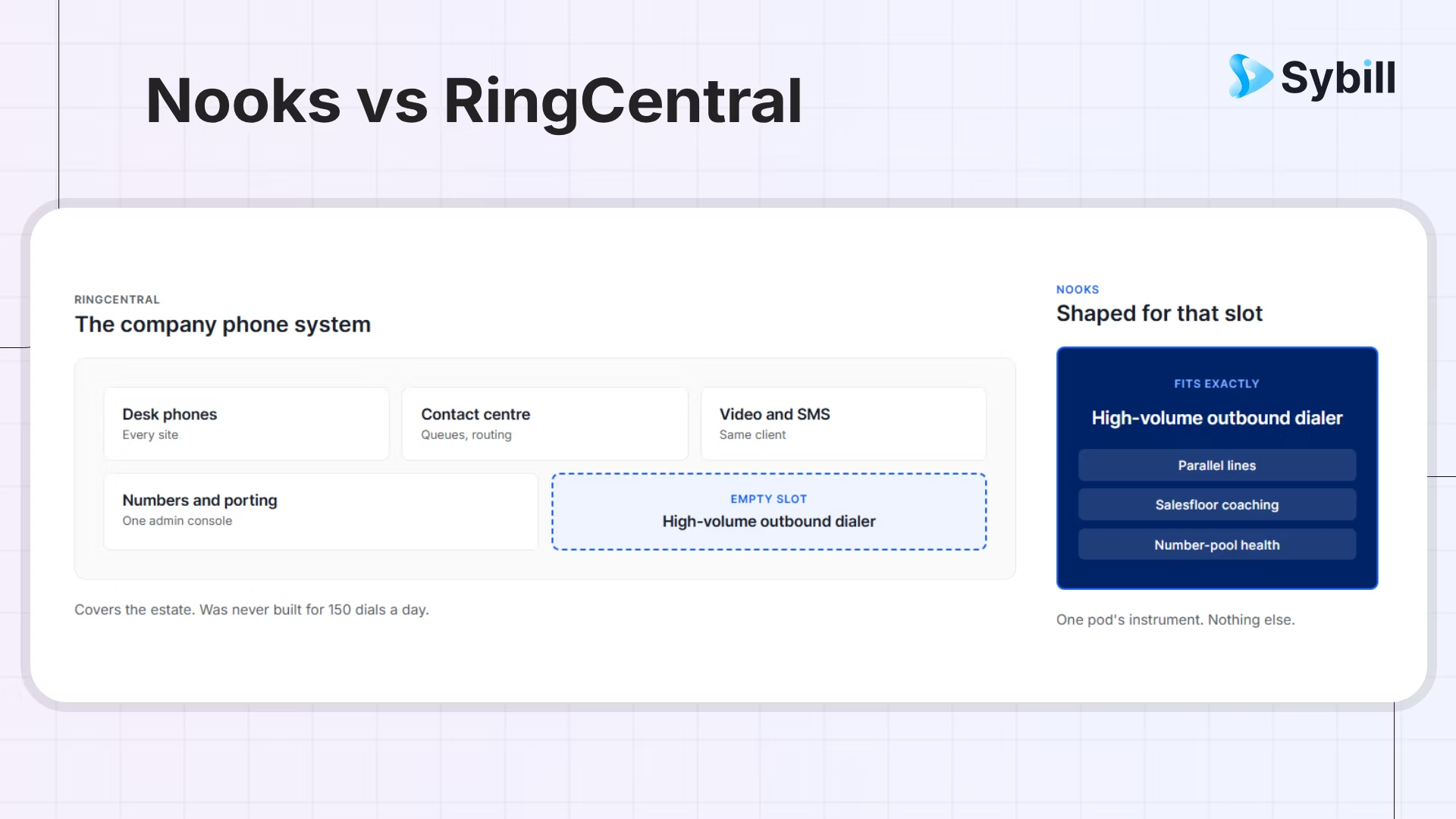
Nooks and RingCentral appear on the same dialer shortlists and share almost nothing, which makes this the most useful kind of comparison to get right. RingCentral's RingEX is enterprise-grade unified communications, phone, video, and messaging at $20 to $35 per user per month, and it includes no outbound sales dialer at any tier, Ultra included; outbound machinery lives in its separate RingCX contact-center product. Nooks is the premium parallel-dialing specialist, quote-priced around a reported $5,000 per user per year at list, and it is not a phone system at all. One is infrastructure with a dialer-shaped gap; the other is exactly the machine shaped for that gap.
So this post does something different from a feature scoreboard: it maps the architecture, prices both layers plainly, and names the two expensive traps buyers keep walking into. Usual seat: Sybill integrates with both, sees both platforms' calls daily, and tilts for neither.
No, more definitively than any pair in this series. RingEX is a company's communications backbone: calling, video, messaging, governance, and a marketed five-nines uptime posture, with no outbound dialer and no native sales AI in its plans, both of which RingCentral sells separately. Nooks is an SDR floor's volume instrument: parallel dialing, AI call screening, and the virtual salesfloor, answering none of a phone system's jobs. They are layers, not rivals.
Which surfaces the two traps this shortlist produces, both real and both expensive:
Both traps come from reading two layers as one category, and both are avoided by one question: which layer are you actually shopping for? The full layer map lives in our dialer guide.
RingCentral publishes RingEX at three tiers:
Nooks publishes nothing; every deal is a demo and a quote. The third-party picture:
The stacked math, since stacking is this pair's real story: a 10-rep SDR floor running RingEX Advanced ($250 monthly) plus Nooks at a negotiated 100-per-seat mid point (1,000 monthly) spends about $1,250 a month for the full architecture, phone system and volume instrument together, which is still less than three list-price Nooks seats. Priced as layers, the numbers stop being shocking and start being a budget.
The review data describes two well-liked products with completely different fans.
RingEX: 4.1 out of 5 on G2 across roughly 1,300 reviews, skewing small-business:
Nooks: 4.8 out of 5 on G2 across 1,202 reviews, skewing mid-market:
Two 4-plus-star products, zero overlapping complaints, which is the review data agreeing with the architecture: different layers, different failure modes.
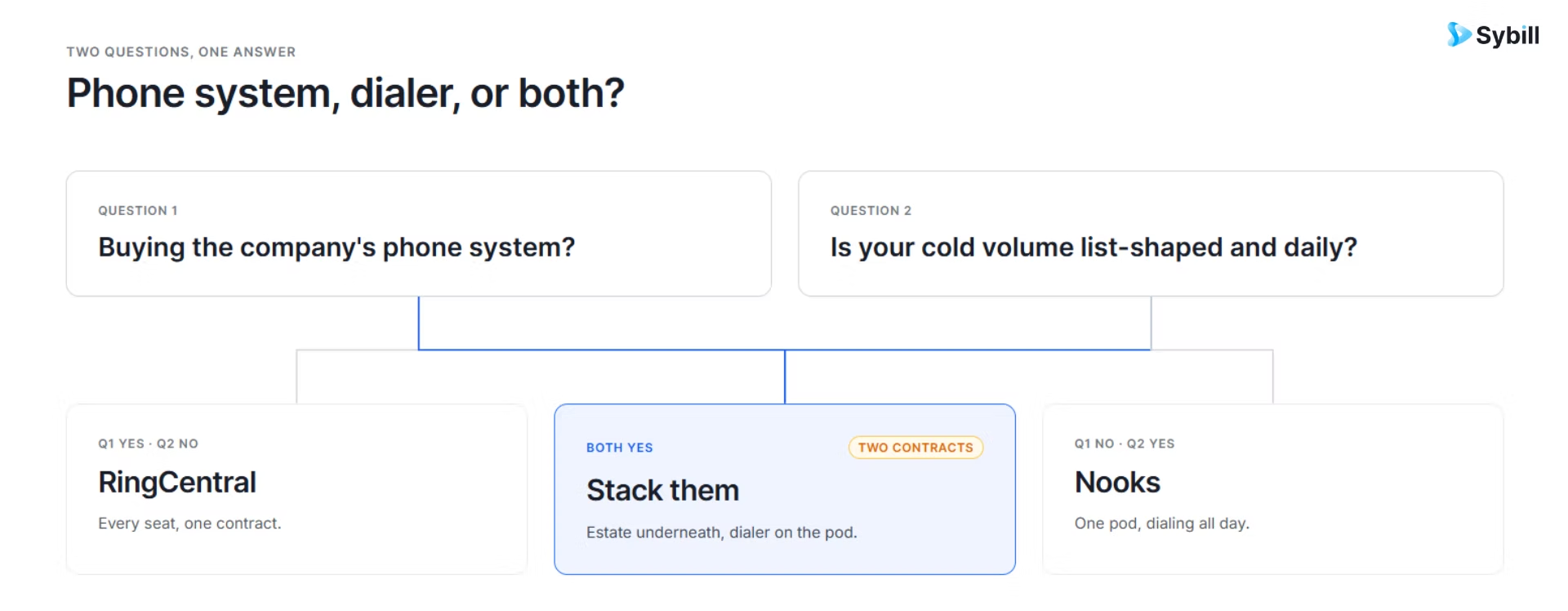
The stack configuration is not a compromise here; it is the design. RingEX (or a peer platform) carries the company's calling: AEs' scheduled calls, inbound routing, support lines, the estate. Nooks carries the SDR floor's cold-call blocks: parallel blitzes, salesfloor coaching, list-working at volume. Activity from both lands in the CRM, and there is no contested middle, because neither product can do the other's job even badly.
The boundary questions that make the stack work:
Choose Nooks (as your dialing layer) if:
Choose RingCentral (as your phone layer) if:
Stack them if:
The tiebreaker barely applies, and that is the verdict working early: if you are genuinely torn between these two, the confusion is about which layer you are shopping for, not which vendor serves it better. Name the layer; the shortlist rebuilds itself, and the parallel-specialist half of it runs through the matchups in Nooks vs Dialpad while the phone half runs through RingCentral vs Zoom Phone.
Backbone or instrument, the conversations are the asset. Sybill captures every Nooks and RingCentral call and turns it into summaries, CRM updates, follow-ups, and deal intelligence, automatically, on either layer or both. Get started for free with Sybill.
The series refrain lands differently on a zero-overlap pair, because here it completes the architecture instead of qualifying a choice: RingCentral moves the calls, Nooks multiplies the cold ones, and neither tells you what is happening to the account. The signals that decide deals are cross-conversation:
Sybill has analyzed around 33 million sales conversations across the dialer and meeting platforms it connects to, and it sits identically beneath both layers on this page: every call, blitz or scheduled, becomes a summary, CRM fields that fill themselves, a follow-up in the rep's voice, captured commitments, and account-level intelligence (risk flags, queryable history, coaching signals) that spans the layers the way deals actually do. The full integration list covers both vendors, which is what lets this post draw the architecture without a thumb on the scale.
Three layers, then, not two: the phone that carries calls, the instrument that multiplies them, and the intelligence that remembers what they meant. Price all three honestly and the stack stops being a shortlist fight.
There is no versus here, and pretending otherwise is how both traps get sprung. RingCentral is a strong communications backbone that ships no outbound dialer at any tier and sells its conversation AI on top; buy it as infrastructure, eyes open about the add-ons. Nooks is a strong volume instrument that is not a phone system and prices like the specialist it is; buy it for a floor whose dial volume feeds it, negotiated hard. Teams that need both should budget both, using the stacked math above, and teams comparing the two seats head-to-head should stop, because the only thing that comparison measures is a category confusion.
Name the layer you are shopping for. Everything else follows in a paragraph.
Get started for free with Sybill or book a demo and make every call count on either layer.
For high-volume cold calling, Nooks, categorically: parallel dialing, AI call screening, and the virtual salesfloor are the entire product. RingCentral's RingEX includes no outbound dialer at any tier; its outbound machinery lives in the separate RingCX contact-center product. The two serve different layers of the stack.
Not in RingEX: none of the Core, Advanced, or Ultra tiers includes an outbound sales dialer, and RingCentral's conversation AI (ACE, formerly RingSense) is a separate add-on from $60 per user monthly. Outbound dialing at scale is sold through RingCX, a separate contact-center product with its own contract and pricing.
RingCentral publishes RingEX at $20 (Core), $25 (Advanced), and $35 (Ultra) per user monthly on annual billing, with monthly billing at $30 to $45. Nooks is quote-only; third-party buyer reports place list around $5,000 per user per year, with anonymized deal data showing negotiated rates of $65 to $150+ monthly.
Yes, and the stack is the design rather than a compromise: RingCentral carries the company's calling (routing, estates, scheduled and inbound calls) while Nooks runs the SDR floor's parallel cold-call blocks, with both feeding activity to the CRM. The two products cannot do each other's jobs, which makes the pairing clean.
Yes, Sybill integrates natively with both, capturing every call on either layer (or both together) and turning it into summaries, CRM updates, follow-ups, and cross-deal intelligence automatically. The conversation layer spans the phone system and the dialing instrument the way deals actually do.
For high-volume cold calling, Nooks, categorically: parallel dialing, AI call screening, and the virtual salesfloor are the entire product. RingCentral's RingEX includes no outbound dialer at any tier; its outbound machinery lives in the separate RingCX contact-center product. The two serve different layers of the stack.
Not in RingEX: none of the Core, Advanced, or Ultra tiers includes an outbound sales dialer, and RingCentral's conversation AI (ACE, formerly RingSense) is a separate add-on from $60 per user monthly. Outbound dialing at scale is sold through RingCX, a separate contact-center product with its own contract and pricing.
RingCentral publishes RingEX at $20 (Core), $25 (Advanced), and $35 (Ultra) per user monthly on annual billing, with monthly billing at $30 to $45. Nooks is quote-only; third-party buyer reports place list around $5,000 per user per year, with anonymized deal data showing negotiated rates of $65 to $150+ monthly.