Find us at booth #83, join us for a harbor side happy hour, or catch Gorish’s talk.

Sept, 16-18 > Learn more

%20(1).avif)
Mamta Tainwala

August 23, 2026
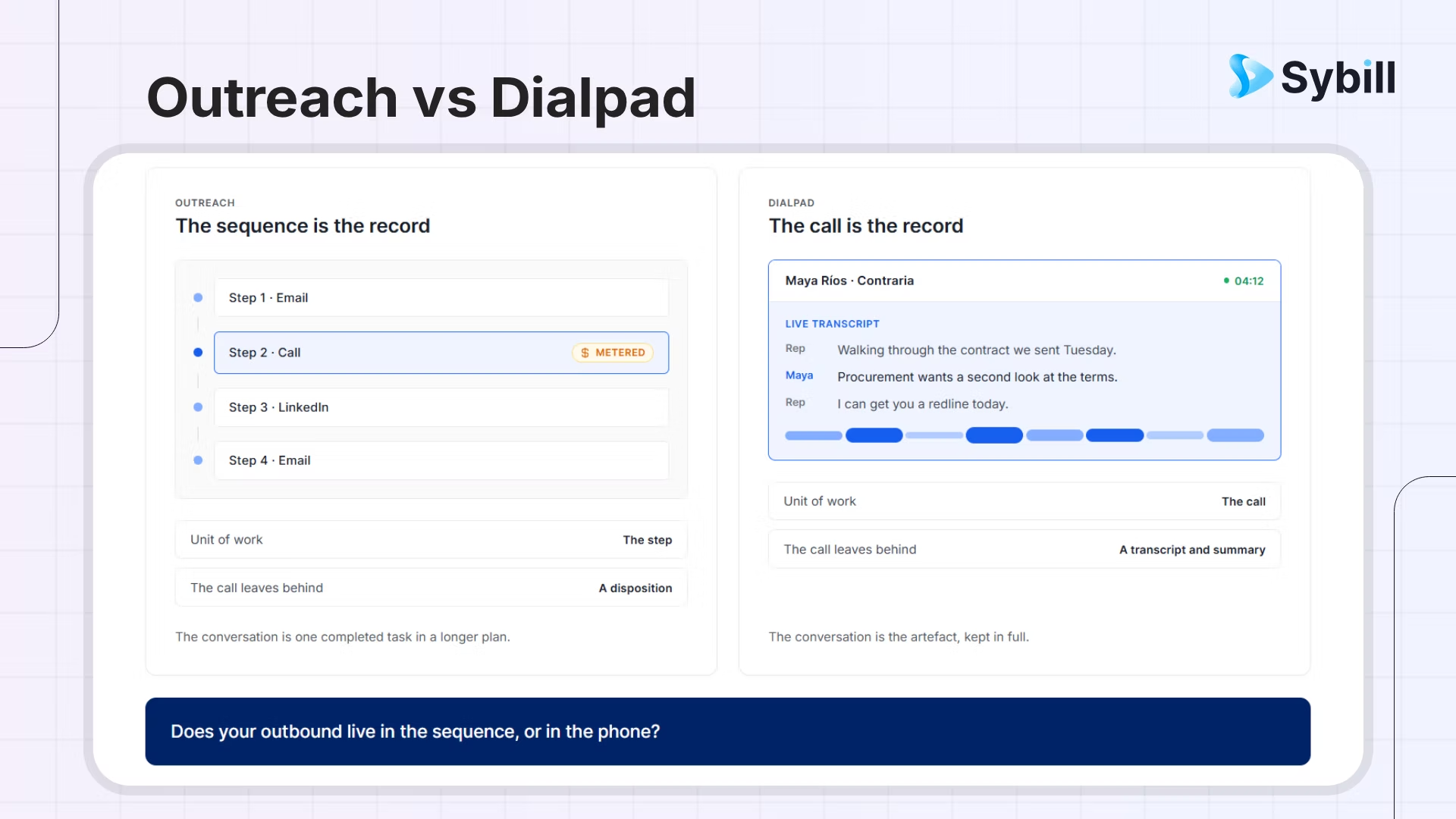
Outreach and Dialpad both sell "the platform your sales calls run on," from opposite architectures. Outreach is the enterprise engagement platform: multichannel sequences as the system of record, with calling (Voice) as a usage-priced step inside them, at reported seats of $100 to $160 per user per month. Dialpad is the AI-native phone: Connect at a published $15 to $25 per user per month with live transcription in every call, and a separate outbound product, Dialpad Sell, from $39 to $150. The real question is architectural: does your outbound live in the sequence, or in the phone?
From the usual seat: Sybill integrates with both, sees both platforms' calls daily, and tilts for neither.
No. Outreach is a sales engagement platform: the orchestration layer deciding who gets touched, when, on which channel, with what message. Dialpad is a communications platform: the phone layer, with AI woven through the calls themselves. The genuinely contested zone is the outbound calling workflow, which Outreach covers with Voice inside its sequences and Dialpad covers with its Sell product.
The 2026 market context matters here:
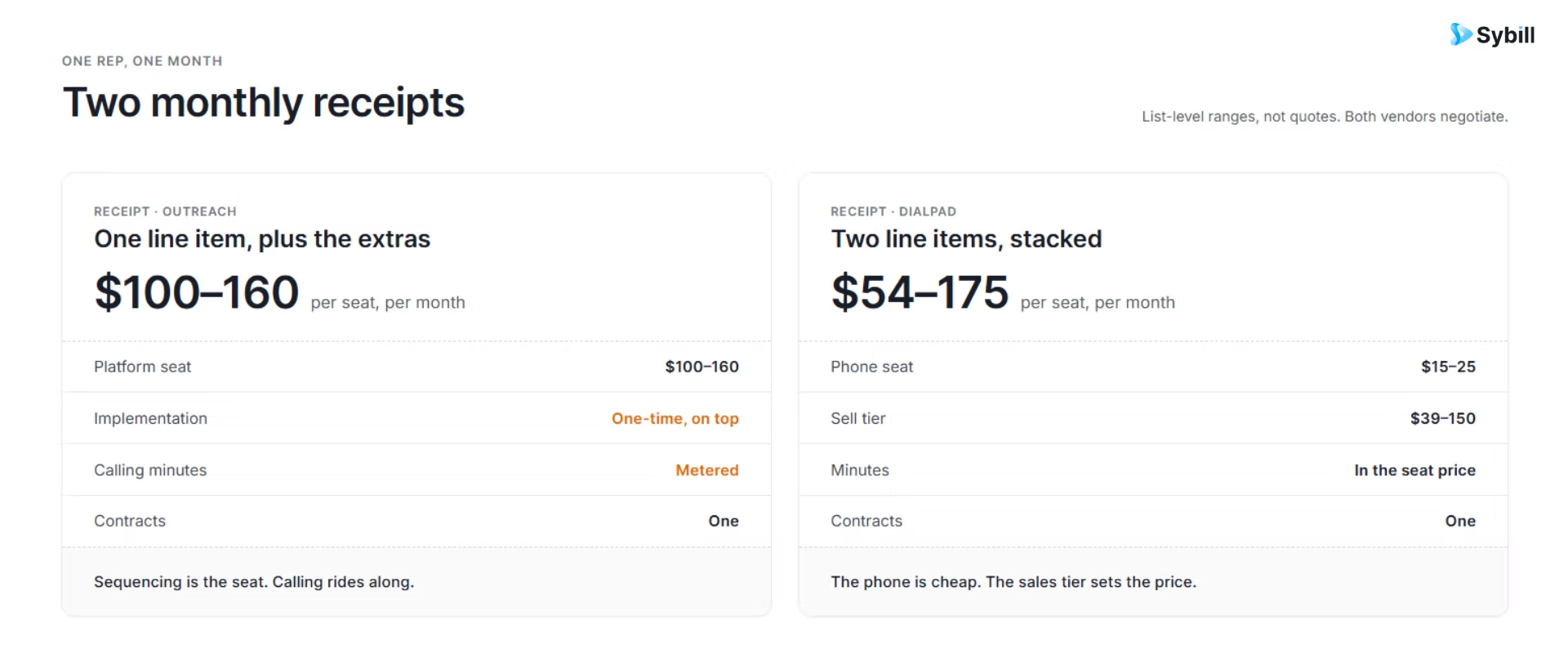
Outreach publishes no pricing; every deal is a sales conversation and an annual contract. The consistent picture from buyer and procurement analyses:
Dialpad publishes most of its pricing:
The architecture math in one line: a 20-rep outbound team runs roughly $2,000 to $3,200 monthly on Outreach seats before minutes and implementation, versus roughly $780 to $1,900 on Dialpad Sell tiers before the lifters. Neither is "cheaper" until you know which system of record your motion needs.
It follows the system of record. Outreach Voice makes the call a sequence step: the dial fires with full cadence context, every prior touch visible, and the outcome routes the prospect's next step automatically. Dialpad Sell makes the call the main event: live transcription on screen, assist prompts mid-conversation on its higher tiers, and telephony-grade calling underneath. Neither is a parallel-dialing volume machine; genuinely list-blitzing floors belong with the specialists in our dialer roundup, a triangle we mapped in Nooks vs Outreach.
The honest edge cases, one per side:
Either way, the craft layer stays yours: timing, openers, and email that earns replies move the numbers more than the logo does, and the full mode taxonomy lives in our dialer guide.
Outreach: 4.3 out of 5 on G2 across 3,533 reviews, nearly 60% mid-market. The pattern:
Dialpad: low-to-mid 4s across review platforms (4.2 on the Capterra family per current comparisons). The pattern:
More often than the versus framing admits. Outreach orchestrating the multichannel motion while Dialpad carries the company's telephony is a standard enterprise stack: the sequence fires call tasks, the phone layer executes them, and activity reconciles in the CRM. Which product owns the dial itself usually follows whichever contract the org already runs.
What the pairing does not solve, and neither product alone solves, is the layer after the call connects. Both ship call-level intelligence (Outreach's conversation intelligence inside Amplify, Dialpad's transcription and summaries), and call-level is not account-level. The shared homework:
Choose Outreach if:
Choose Dialpad if:
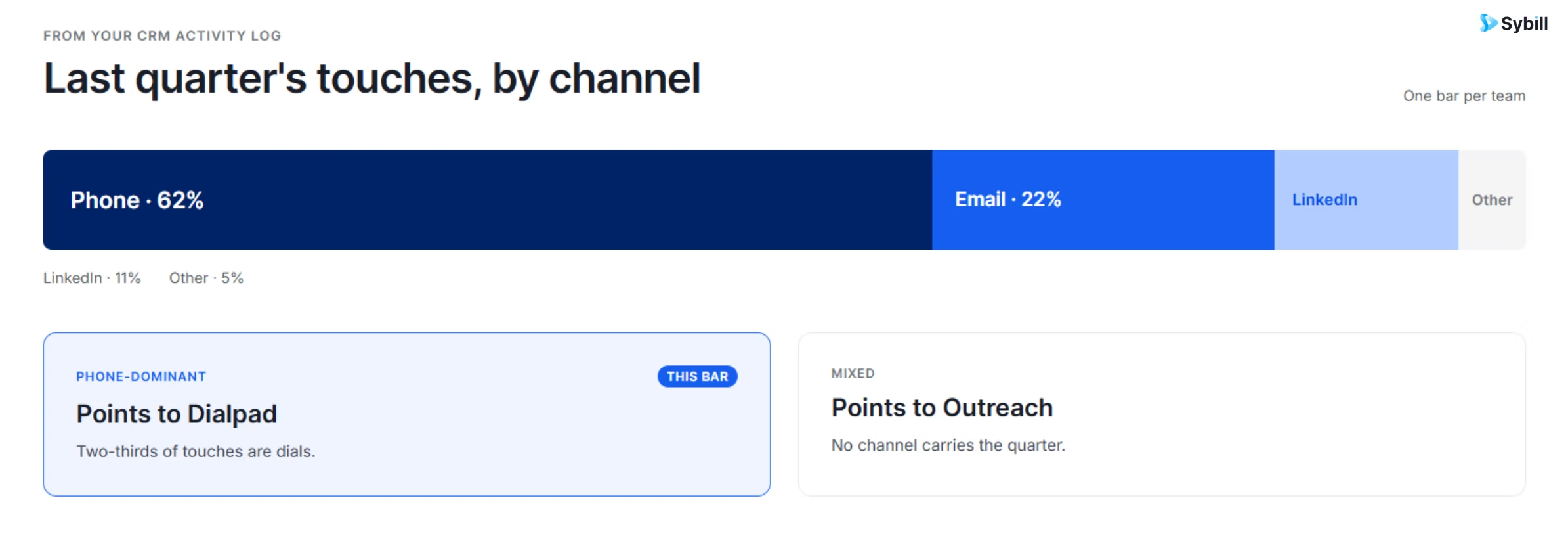
The tiebreaker is the audit that decides every orchestration-versus-calling question in this series: split last quarter's outbound touches by channel. Mostly mixed points at the platform; mostly phone points at the phone; and either answer beats buying the other side's architecture because a demo was impressive.
If the audit lands in the middle, pilot rather than debate: two weeks, live lists, and exit numbers instead of exit opinions. On the Outreach side, measure how long setup actually took and whether the mid-call stability reports show up on your stack. On the Dialpad side, measure whether reps open the live transcripts and what the fee lifters do to the quoted seat. The platform that survives the fortnight without nagging, at its real price, has answered the question the pricing pages cannot.
Sequence step or main event, the conversations are the asset. Sybill captures every Outreach and Dialpad call and turns it into summaries, CRM updates, follow-ups, and deal intelligence, automatically, on either architecture or both. Get started for free with Sybill.
Outreach knows every touch and Dialpad knows every call, and neither knows the account. The signals deals actually turn on live across conversations, invisible to cadence reporting and call transcription alike:
Sybill has analyzed around 33 million sales conversations across the engagement, dialer, and meeting platforms it connects to, and it sits identically beneath both architectures: every call becomes a summary, CRM fields that fill themselves, a follow-up in the rep's voice, captured commitments, and account-level intelligence (risk flags, queryable history, coaching signals) spanning the sequence's touches and the phone's conversations the way deals actually do. The full integration list covers both vendors, which is what keeps this comparison's scale level.
Settle that layer independently, and this decision shrinks to what it really is: an architecture choice the conversation intelligence survives either way.
For genuinely multichannel outbound organizations, Outreach remains the platform answer: the sequence is the system of record, the reported seat price buys orchestration nothing else here matches, and the setup effort is the admission fee, budgeted honestly. For phone-centered teams, Dialpad is the sharper buy: real AI in the call at a fraction of a platform seat, provided you price the Sell tiers and fee lifters rather than the homepage. The expensive mistake is architectural in either direction. Your channel mix has already voted.
Count the touches. Then buy the architecture they describe, and let the pilot confirm it on your own calls.
Get started for free with Sybill or book a demo and make every call count on either one.
It depends on your system of record. Outreach is better for multichannel outbound organizations whose truth is the sequence: orchestration, reporting, and calling as one step among many. Dialpad is better for phone-centered teams wanting AI in the call itself, at published prices well below a platform seat. Split last quarter's touches by channel; the mix decides.
Outreach is quote-only, with Amplify tiers reported at roughly $100 to 160perusermonthlyplusimplementation(1,000 to $25,000+), AI credits, and usage-priced Voice minutes. Dialpad publishes Connect at $15 to $25 per user monthly, with its Dialpad Sell outbound product at $39 to $150, and current guides note fees can lift effective bills 20 to 40%.
Yes: Outreach Voice provides calling as a step inside sequences, with usage-based pricing for minutes and numbers (reported add-ons of $10 monthly for 1,000 US/Canada minutes or $20 for unlimited), local presence, and automatic logging. It is a power-style sequence dialer, not a parallel-dialing volume machine; list-blitzing floors should evaluate specialists.
No. Clari acquired Salesloft, Outreach's longtime rival, in August 2025, with the merger completing that December. Outreach remains independent and restructured its offering into the Amplify agentic-AI suite in 2026, making it the major sales engagement platform still standing alone, a point buyers weighing platform stability should note in both directions.
Yes, Sybill integrates natively with both, capturing every call on either architecture (or both together) and turning it into summaries, CRM updates, follow-ups, and cross-deal intelligence automatically. The conversation layer spans sequenced calls and phone-first conversations the way deals actually do.
It depends on your system of record. Outreach is better for multichannel outbound organizations whose truth is the sequence: orchestration, reporting, and calling as one step among many. Dialpad is better for phone-centered teams wanting AI in the call itself, at published prices well below a platform seat. Split last quarter's touches by channel; the mix decides.
Outreach is quote-only, with Amplify tiers reported at roughly $100 to 160 per user monthly plus implementation (1,000 to $25,000+), AI credits, and usage-priced Voice minutes. Dialpad publishes Connect at $15 to $25 per user monthly, with its Dialpad Sell outbound product at $39 to $150, and current guides note fees can lift effective bills 20 to 40%.
Yes: Outreach Voice provides calling as a step inside sequences, with usage-based pricing for minutes and numbers (reported add-ons of $10 monthly for 1,000 US/Canada minutes or $20 for unlimited), local presence, and automatic logging. It is a power-style sequence dialer, not a parallel-dialing volume machine; list-blitzing floors should evaluate specialists.