Find us at booth #83, join us for a harbor side happy hour, or catch Gorish’s talk.

Sept, 16-18 > Learn more

%20(1).avif)
Mamta Tainwala

August 23, 2026
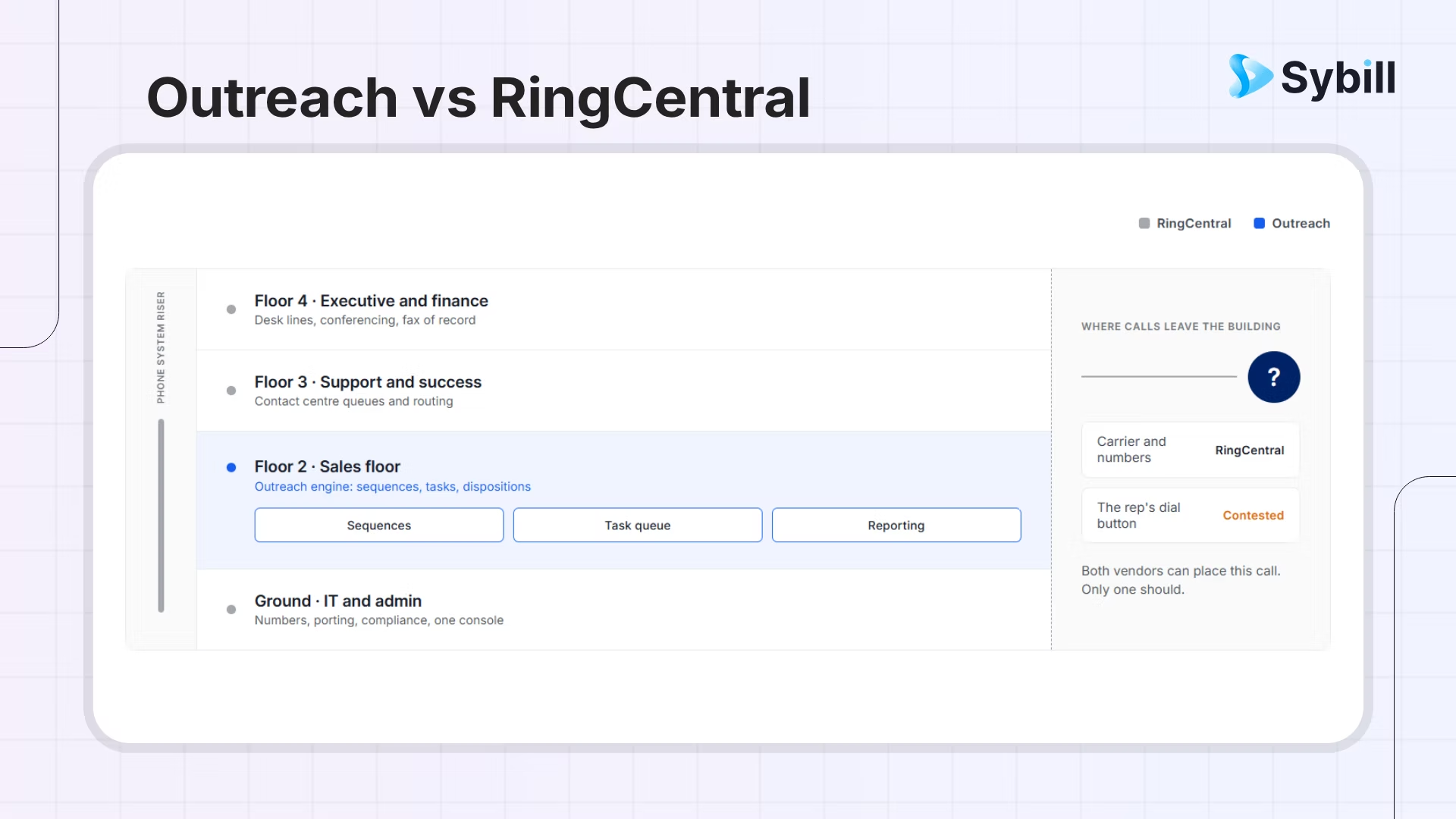
Outreach and RingCentral are rarely a choice; at most enterprises they are two line items on the same budget, doing two different jobs. RingCentral's RingEX is the communications backbone, phone, video, and messaging at a published $20 to $35 per user per month, and it ships no outbound sales dialer at any tier. Outreach is the sales engagement platform, quote-priced at reported seats of $100 to $160 per user per month, and its Voice module is often the actual dialer at companies whose phone is RingCentral.
So the real questions are narrower and more expensive than "which one": who owns the sales team's dial, and how do you avoid paying for conversation AI twice?
Both answered below, from the usual seat: Sybill integrates with both, sees both platforms' calls daily, and tilts for neither.
No, and unlike most cross-category pairs, they are not even competing for the same budget line:
The default configuration is therefore coexistence: RingCentral carries the company's calling estate while Outreach's sequences fire the sales team's outbound. The evaluation that matters is drawing the boundary well, and two boundary mistakes cost real money: routing the sales motion through a phone system with no dialer machinery, and buying conversation AI on both contracts at once. Both get their own sections.
RingCentral publishes RingEX at three tiers:
Outreach publishes nothing. The consistent picture from buyer and procurement analyses:
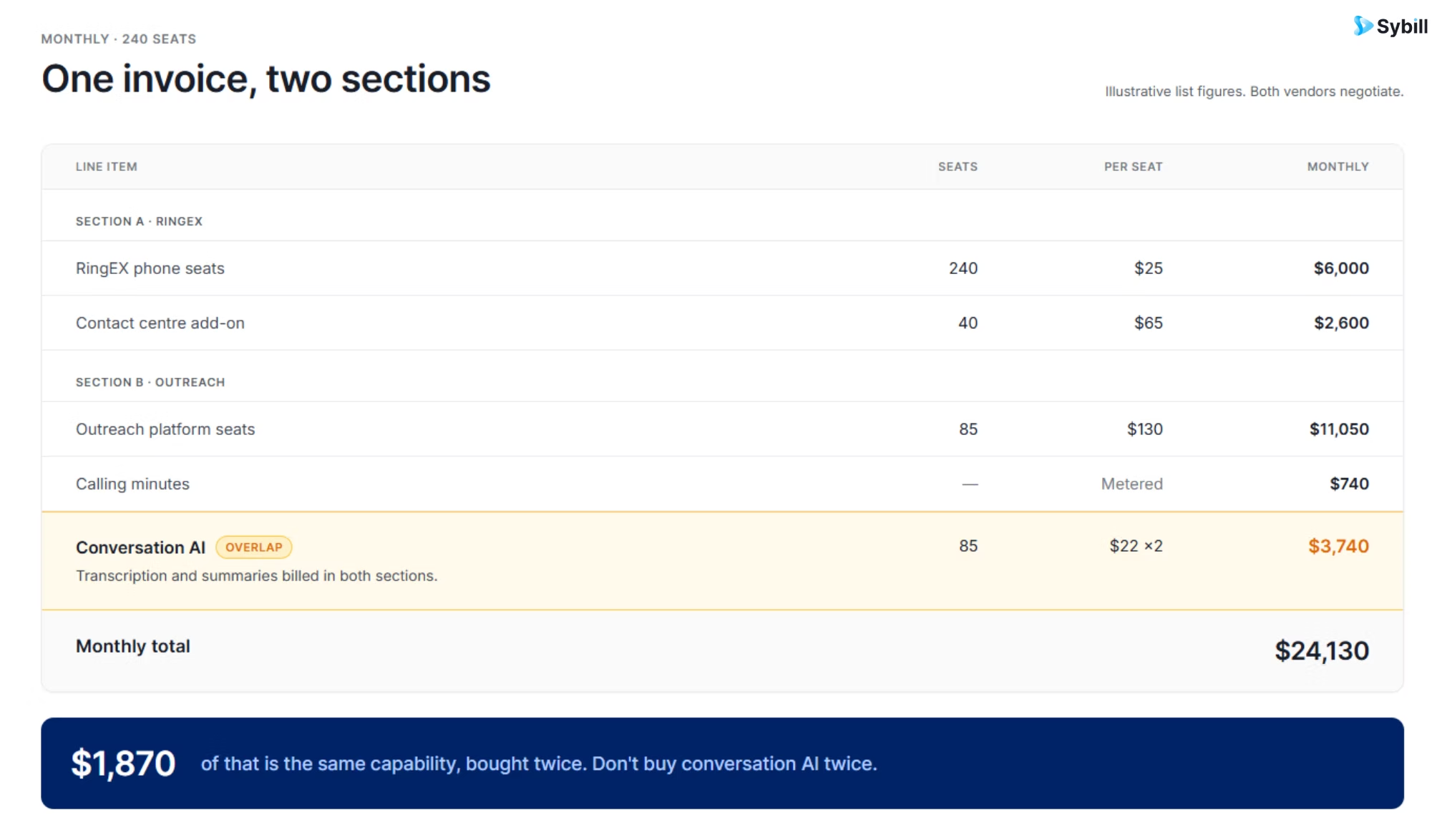
The combined bill for a 20-rep sales team inside a 500-person company is exactly why the boundary questions below are worth more than either sticker: neither contract is the extravagance. The overlap is.
Outreach, in most configurations where both contracts exist, and the reasoning is structural: RingEX has no dialer, so "dialing through RingCentral" means reps clicking numbers without list-working machinery, while Voice fires calls as sequence steps with every prior touch visible, local presence handled, and outcomes routing the next step automatically.
The exceptions and caveats that keep this honest:
And whichever system carries the dial, the craft still decides outcomes: timing, openers, and list quality move connect-to-meeting rates more than routing architecture ever will.
This is the quiet budget leak specific to this pairing. RingCentral sells ACE at $60 per user per month for call summaries, transcription, and conversation insights. Outreach's Amplify tiers include conversation intelligence of their own. An enterprise that signs both defaults ends up paying for call-level AI on two contracts, covering the same sales conversations.
The fix is a deliberate boundary, decided before signature:
RingCentral's review picture supports negotiating confidently: RingEX holds 4.1 on G2 across roughly 1,300 reviews and took the top spot in G2's Spring 2026 VoIP category, with praise clustering on the all-in-one platform and reliability, and complaints clustering on billing complexity and support experiences rather than the product. Buy it as infrastructure, negotiate the add-ons hard, and read the invoice line by line.
The series boundary completes the picture: both platforms' AI is call-level, and the account-level layer belongs to neither contract, which is where the closing section goes. The shared hygiene: recording consent configured once wherever capture happens, and the CRM logging check run on both systems.
Choose Outreach (for the revenue motion) if:
Choose RingCentral (for the phone layer) if:
Run both, boundary drawn, if:
One procurement note that saves real money: these two contracts renew on different calendars, owned by different teams, which is exactly how the AI overlap survives year after year. Put both renewal dates on one calendar, and thirty days before either one, have IT and sales ops read each other's line items. It is an hour of meeting that routinely finds a five-figure duplication, and it is the cheapest diligence in this entire comparison.
The tiebreaker barely exists, which is this pairing's verdict arriving early: if these two feel like alternatives, the evaluation has drifted a category. The channel-mix audit from our Outreach vs Dialpad breakdown settles whether the engagement platform is warranted at all; the phone decision runs on entirely different rails, mapped against Zoom's alternative in RingCentral vs Zoom Phone.
Backbone calls or sequence calls, the conversations are the asset. Sybill captures every Outreach and RingCentral conversation and turns it into summaries, CRM updates, follow-ups, and deal intelligence, automatically, across the boundary. Get started for free with Sybill.
Even bought once, call-level AI on either contract answers "what happened on this call," and deals do not live in single calls. What falls through the seam between two well-drawn contracts:
Sybill has analyzed around 33 million sales conversations across the engagement, dialer, and meeting platforms it connects to, and it sits beneath both contracts identically: every call, sequenced or scheduled, becomes a summary, CRM fields that fill themselves, a follow-up in the rep's voice, captured commitments, and account-level intelligence (risk flags, queryable history, coaching signals) that spans the boundary the two contracts draw. The full integration list covers both vendors, which is what lets this post referee their overlap without a side.
Answer the AI question once, at the account level, and both contracts get simpler: the phone carries calls, the platform orchestrates touches, and the intelligence lives where the deals do.
Stop comparing them; start bounding them. RingCentral is the phone layer, bought as infrastructure, negotiated hard on add-ons, and never expected to dial lists it has no machinery for. Outreach is the revenue motion's system of record where the motion genuinely spans channels, bought with the operator and implementation budgeted honestly, and it usually owns the sales dial by default of the alternative. The only losing move is the blurry boundary: the sales motion routed through a dialer-less phone, or conversation AI bought twice because neither contract owner read the other's invoice.
Draw the line. Then sign both, or one, or neither, on purpose.
Get started for free with Sybill or book a demo and make every call count on either side of it.
They do different jobs and usually coexist: RingCentral's RingEX is the company phone layer ($20 to $35 per user monthly published) and ships no outbound sales dialer at any tier, while Outreach is the sales engagement platform (reported $100 to $160 per user monthly) whose Voice module typically owns the revenue team's dialing. The real decision is the boundary, not the winner.
The standard enterprise configuration runs them in parallel: RingEX carries the organization's calling estate while Outreach orchestrates the sales team's sequences and usually its outbound dialing through Voice, with activity reconciling in the CRM. The boundary to draw deliberately is conversation AI, which both vendors sell and no team should buy twice.
RingCentral publishes RingEX at $20 (Core), $25 (Advanced), and $35 (Ultra) per user monthly on annual billing, with its ACE conversation AI as a $60-per-user add-on. Outreach is quote-only: buyer analyses report roughly $100 to $160 per user monthly across Amplify tiers, plus implementation fees and usage-priced Voice calling at $10 to $20 per user monthly.
Not in RingEX: no tier includes outbound dialing machinery, which is why sales teams at RingCentral shops typically run their dialing through an engagement platform like Outreach or a dedicated dialer. RingCentral's outbound capabilities live in RingCX, a separate contact-center product with its own contract.
Yes, Sybill integrates natively with both, capturing every call on either side of the boundary and turning it into summaries, CRM updates, follow-ups, and cross-deal intelligence automatically. The conversation layer spans sequenced calls and phone-system calls the way deals actually do.
They do different jobs and usually coexist: RingCentral's RingEX is the company phone layer ($20 to $35 per user monthly published) and ships no outbound sales dialer at any tier, while Outreach is the sales engagement platform (reported $100 to $160 per user monthly) whose Voice module typically owns the revenue team's dialing. The real decision is the boundary, not the winner.
The standard enterprise configuration runs them in parallel: RingEX carries the organization's calling estate while Outreach orchestrates the sales team's sequences and usually its outbound dialing through Voice, with activity reconciling in the CRM. The boundary to draw deliberately is conversation AI, which both vendors sell and no team should buy twice.
RingCentral publishes RingEX at $20 (Core), $25 (Advanced), and $35 (Ultra) per user monthly on annual billing, with its ACE conversation AI as a $60-per-user add-on. Outreach is quote-only: buyer analyses report roughly $100 to $160 per user monthly across Amplify tiers, plus implementation fees and usage-priced Voice calling at $10 to $20 per user monthly.